Imagen

AeroGenie — Tu copiloto inteligente.

Pregunta cualquier cosa. Analiza todo. Actúa al instante.

Tendencias

Categories

US and Leading Nations Accelerate AI Adoption in Global Air Transport
April 18, 2026By ePlane AI
US and Leading Nations Accelerate AI Adoption in Global Air Transport
0
0
Artificial Intelligence
Flight Operations
Autonomous Aircraft

US and Leading Nations Accelerate AI Adoption in Global Air Transport

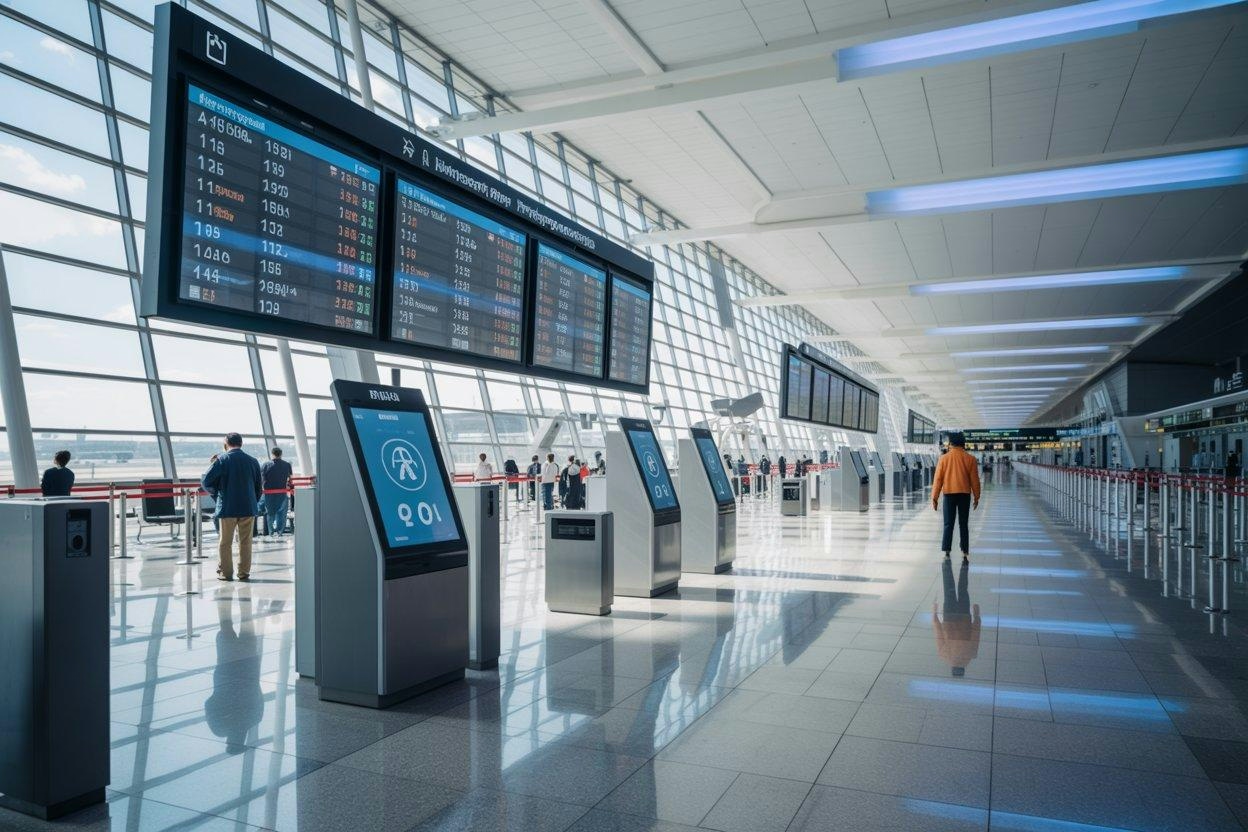
The global air transport industry is undergoing a profound digital transformation, with artificial intelligence (AI) emerging as a pivotal force in enhancing operational efficiency and passenger experience. The United States has joined other major economies—including India, Germany, the United Kingdom, France, Italy, Spain, and China—in intensifying efforts to integrate AI technologies across various facets of aviation. This collective momentum marks the beginning of a new era characterized by innovation in flight operations, cargo management, maintenance, and sustainability initiatives.

US Leadership in AI-Driven Aviation

In the United States, both governmental agencies and private enterprises are making substantial investments in AI and digital technologies. The Federal Aviation Administration (FAA), in collaboration with leading airlines such as American Airlines and Delta Air Lines, has incorporated AI into flight operations, customer service, and safety management systems. The US also stands at the forefront of autonomous aircraft testing and the automation of air traffic control, aiming to streamline operations and reduce delays.

According to the 2025 SITA Air Transport IT Insights report, American carriers are utilizing AI for real-time decision-making in disruption management, predictive maintenance, and operational efficiency. These technological advancements have contributed to shorter turnaround times, optimized flight scheduling, and improved fuel efficiency, thereby supporting broader environmental sustainability goals. The FAA continues to explore AI applications in autonomous flight technologies to enhance air traffic management and safety protocols, with plans to expand AI integration across both public and private aviation sectors.

India’s Digital Initiatives as a Model

India is rapidly emerging as a significant player in AI adoption within the air transport sector, propelled by government-led initiatives such as the National Digital Tourism Mission and the Incredible India Digital Platform. The Ministry of Civil Aviation has forged partnerships with AI firms to optimize flight operations, airport management, and passenger services. Prominent Indian airlines, including IndiGo and Air India, have invested heavily in AI-driven predictive maintenance and scheduling systems. Furthermore, the broader Digital India initiative is positioning the country as a global hub for AI innovation in aviation.

Global Momentum and Emerging Challenges

Across Europe and Asia, nations are similarly accelerating AI adoption to foster a more efficient, safe, and environmentally sustainable aviation ecosystem. However, this rapid transformation presents significant challenges. Regulatory complexities, concerns over data privacy, and the necessity for substantial investments in infrastructure and workforce training remain critical obstacles to widespread AI implementation.

The competitive landscape is intensifying, with technology providers such as Palantir, Thales, and Air Space Intelligence actively competing for FAA contracts to develop advanced AI systems for air traffic management. In response, companies are forming strategic partnerships—exemplified by collaborations between Pearson and Tata Consultancy Services—to prepare the workforce for AI integration. The aviation sector is also drawing lessons from the automotive industry’s early adoption of AI, which serves as a benchmark influencing strategic approaches.

Looking Ahead

As global travel demand recovers in the post-pandemic period, the pace of AI adoption in air transport is expected to accelerate further. While the benefits of AI—enhanced efficiency, improved safety, and greater sustainability—are increasingly evident, the industry must address regulatory, technical, and workforce challenges to fully harness AI’s transformative potential. The ongoing competition among nations and technology providers will play a decisive role in shaping the future landscape of global aviation.

More news
Why the Airbus A380 Remains the World's Most Recognizable Airliner

Why the Airbus A380 Remains the World's Most Recognizable Airliner

Why the Airbus A380 Remains the World's Most Recognizable Airliner The Airbus A380, despite having ceased production several years ago, continues to hold its place as the world’s most instantly recognizable airliner. In an industry where many widebody jets often appear similar to the general public, the A380’s distinctive design and imposing presence set it apart. Its enormous size, full-length double-deck configuration, and unique silhouette have established a visual identity unmatched by any other commercial aircraft. Design and Distinctiveness Introduced in the early 2000s to address increasing congestion at major hub airports, the A380 was conceived with a singular, ambitious objective: to transport unprecedented numbers of passengers on a single flight. This goal influenced every element of its design. Unlike the Boeing 747, which features an upper deck limited to the front section of the fuselage, the A380’s second deck extends along the entire length of the aircraft. This design choice results in a taller, fuller, and more commanding profile—one that is immediately recognizable even to casual observers. As the largest passenger airliner in the world and the only commercial jet with a full-length upper deck, the A380 is virtually impossible to mistake for any other aircraft. In typical multi-class configurations, it accommodates well over 500 passengers, with some all-economy layouts capable of seating more than 800. Its immense double-decked structure places it in a category of its own, distinguishing it even from the iconic Boeing 747. Passenger Experience and Market Challenges Beyond its striking appearance, the A380 quickly earned a reputation for delivering a quieter, more spacious, and distinctive onboard experience compared to most other jets. Airlines such as Emirates elevated the aircraft to flagship status for premium travel, and passengers came to associate the superjumbo with a unique style of flying—one that contrasted sharply with the more conventional twin-engine widebodies that followed. However, the A380 has faced considerable challenges. While its size and capacity enable airlines to maximize passenger numbers on long-haul routes, these benefits come with high operational costs and the requirement for specialized airport infrastructure. The market’s response has been mixed: some carriers have retired their A380 fleets due to economic pressures, whereas others continue to operate them, leveraging their unique appeal and capacity. Meanwhile, competitors have concentrated on developing more fuel-efficient widebody aircraft to rival the A380’s range and seating, further influencing the evolution of long-haul aviation. Continued Relevance Despite production having ended, the A380 remains relevant in ways few anticipated. Its return to service following the pandemic, the absence of a direct one-for-one replacement, and its ongoing deployment on flagship routes have ensured it remains prominent in the public consciousness. The A380’s status as commercial aviation’s most recognizable aircraft endures, a testament to a design and presence that no other airliner has been able to replicate.
Rolls-Royce’s Dual-Engine Approach to Collaborative Combat Aircraft

Rolls-Royce’s Dual-Engine Approach to Collaborative Combat Aircraft

Rolls-Royce’s Dual-Engine Approach to Collaborative Combat Aircraft Proven Power and Future Innovation Collaborative Combat Aircraft (CCA) signify a transformative shift in military aviation, integrating autonomous unmanned systems with crewed platforms to enhance range, survivability, and mission adaptability. In response to the growing demand for versatile and efficient propulsion systems, Rolls-Royce has adopted a dual-engine strategy aimed at addressing both current operational requirements and future technological advancements. At the core of this strategy is the established Allison Engine (AE) family, which has been widely deployed across various military platforms. These engines power a range of vehicles, including helicopters, tiltrotors, and unmanned systems. Notable examples include the Bell Boeing V-22 Osprey, equipped with the AE 1107C engine enabling tiltrotor capabilities; the Boeing MQ-25 Stingray, powered by the AE 3007N engine delivering over 10,000 pounds of thrust; the Bell V-280 Valor, utilizing the AE 1107F engine for extended range and speed; and the Textron Ship-to-Shore Connector hovercraft, which benefits from the AE 1107C MT7 gas turbine’s enhanced efficiency. Since the 1990s, Rolls-Royce has delivered more than 7,500 AE engines, underscoring its extensive experience and reliability across military and commercial sectors. Parallel to this, Rolls-Royce is developing the next-generation Orpheus engine family, designed to meet the complex demands of future CCAs. These scalable and configurable engines aim to support advanced sensors, autonomy, and survivability systems essential for sophisticated missions. While comprehensive prototype testing is underway, the AE family continues to provide a dependable propulsion solution until Orpheus reaches maturity. Kaare Erickson, Senior Vice President of Strategic Campaigns for Combat and Strategic Systems at Rolls-Royce, highlights the rationale behind this approach: “We strongly believe the fastest way to deliver capability to the warfighter is to leverage proven engines today while advancing next-generation architectures in parallel and injecting the technologies to add capability only as necessary.” Market Challenges and Competitive Dynamics Despite the strength of its dual-engine strategy, Rolls-Royce confronts significant challenges within the rapidly evolving CCA market. Competitors such as the XQ-58A Valkyrie and MQ-28 Ghost Bat have already established strong footholds, particularly in Europe, intensifying competition and potentially accelerating technological innovation and pricing pressures across the sector. Reactions to Rolls-Royce’s approach have been mixed. While some industry stakeholders appreciate the balance of proven reliability and incremental innovation, others question the company’s ability to deliver cost-effective and dependable engines amid persistent supply-chain disruptions. These factors may test Rolls-Royce’s capacity to sustain its leadership position as the CCA market continues to develop at pace. Rolls-Royce’s dual-engine strategy thus represents a careful balancing act between addressing immediate operational demands and investing in the propulsion technologies that will define the future of collaborative combat aviation.
India Invests in Sarla Aviation to Launch 15-Minute Air Taxi Service Between Gurugram and Noida

India Invests in Sarla Aviation to Launch 15-Minute Air Taxi Service Between Gurugram and Noida

India Invests in Sarla Aviation to Launch 15-Minute Air Taxi Service Between Gurugram and Noida IndiGo Ventures, the investment arm of IndiGo Airlines, has announced a ₹10 crore (INR 100 million) investment in Sarla Aviation, a Bengaluru-based startup focused on developing electric vertical take-off and landing (eVTOL) aircraft for air taxi services. This strategic funding, disclosed on April 17, 2026, aims to accelerate the establishment of India’s first air taxi network, which promises to reduce travel times between key business hubs such as Gurugram and Noida to just 15 minutes. Air Taxis: Addressing Urban Congestion India’s major metropolitan areas are plagued by severe traffic congestion, with commutes between cities like Gurugram and Noida frequently exceeding an hour. The introduction of eVTOL air taxis offers a transformative solution by significantly cutting travel times and providing a faster, greener, and more efficient alternative to traditional road transport. By circumventing ground traffic, these air taxis have the potential to revolutionize daily commutes for millions, making urban travel more predictable and less stressful. IndiGo’s Strategic Investment and Industry Challenges IndiGo’s investment in Sarla Aviation reflects a broader commitment to sustainable and innovative urban mobility solutions. Electric air taxis not only promise to reduce travel durations but also present an environmentally friendly alternative to conventional vehicles, addressing the pressing issue of urban pollution in cities such as Delhi, Mumbai, and Bangalore. Nonetheless, the path to widespread adoption of air taxis in India faces significant challenges. The emerging market contends with competition from established global players like Joby and Archer, both currently embroiled in legal disputes involving trade secrets and import violations. These ongoing legal battles may influence the pace of technological development and market entry strategies within India. Market responses to the proposed air taxi service have been mixed. While some stakeholders express optimism about the potential to alleviate congestion and enhance connectivity, others raise concerns regarding the reliability and safety of these novel services. Competitors are expected to intensify efforts to secure regulatory approvals and expand their market presence, potentially leading to aggressive pricing strategies and rapid technological innovation. Furthermore, India’s broader aviation sector faces structural constraints, including a shortage of widebody aircraft and escalating costs of sustainable aviation fuel. These factors could affect the scalability and long-term viability of air taxi operations, as operators navigate the balance between innovation, economic feasibility, and regulatory compliance. Future Prospects If successfully implemented, the air taxi initiative could redefine urban travel for both commuters and tourists, enabling swift transfers between suburban cities and major airports. As global cities explore urban air mobility, India’s early investment in eVTOL technology positions it as a potential leader in this emerging sector. However, the ultimate success of the 15-minute air taxi service will depend on overcoming regulatory, competitive, and operational challenges in the coming years.
Pratt & Whitney PW500 Engine to Power Northrop Grumman YFQ-48 Autonomous Fighter

Pratt & Whitney PW500 Engine to Power Northrop Grumman YFQ-48 Autonomous Fighter

Pratt & Whitney PW500 Engine Selected for Northrop Grumman YFQ-48 Autonomous Fighter Northrop Grumman has announced the selection of Pratt & Whitney’s PW500 turbofan engine to power its new YFQ-48A Talon Blue autonomous fighter. This marks the first instance of a Pratt & Whitney engine being integrated into an uncrewed fighter prototype. The announcement, made on April 17, underscores a growing trend among developers of Collaborative Combat Aircraft (CCA) to adopt business jet engines. This approach aims to meet the stringent cost and production targets set by the U.S. Air Force and other potential operators. Adapting a Proven Engine for Military Use The PW500 engine, widely recognized for its reliability in commercial aviation, has accumulated over 24 million flight hours powering small and mid-sized business jets. Pratt & Whitney undertook an extensive testing program to adapt the engine for military applications. Jill Albertelli, president of military engines at Pratt & Whitney, emphasized that the company leveraged a proven production engine, investing in key validation and capability enhancements to integrate it into the autonomous platform. The first YFQ-48A prototype, registered as N444LX, is currently undergoing ground trials in preparation for its initial flight test campaign. Northrop Grumman, which self-funded the Talon Blue’s development after being excluded from a previous Air Force competition, received the YFQ-48A designation from the U.S. Air Force in recognition of the design’s potential. The company confirmed that the Talon Blue continues its progression toward first flight in collaboration with the Air Force. The Growing Role of Business Jet Engines in Autonomous Combat Aircraft The adoption of commercial business jet engines has become increasingly prevalent among CCA developers. These engines offer a cost-effective alternative to the expensive propulsion systems found in modern fourth- and fifth-generation fighters. This cost advantage is critical for the “optionally attritable” role envisioned for CCAs, which are designed to operate alongside manned fighters such as the Lockheed Martin F-22. These autonomous jets can be deployed on high-risk missions where their recovery is not assured. Despite Pratt & Whitney’s early lead, the company faces significant competition in this emerging market. Other engine manufacturers, including Honeywell Aerospace and GE Aerospace, are developing new small turbofans in the 800 to 1,600-pound thrust range. The U.S. Air Force has recently awarded contracts for the SkyShot1600 and GEK1500 engines, intensifying the competitive landscape. Additionally, companies like Anduril Industries and General Atomics are advancing their own CCA prototypes, the YFQ-44A and YFQ-42A respectively, utilizing the Williams International FJ44 engine through existing partnerships. Industry Challenges and Market Implications The dynamics of the CCA propulsion market are further complicated by broader supply chain and production challenges. Recent disputes between engine manufacturers and airframers, such as ongoing issues between Airbus and Pratt & Whitney over engine delays and supply priorities, highlight the fragility of the supply chain. Moreover, CFM International’s LEAP engine represents another competitive factor as manufacturers vie for market share in this rapidly evolving sector. As Northrop Grumman and Pratt & Whitney advance the YFQ-48A program, the market’s response will hinge on the ability of engine suppliers to deliver reliable and cost-effective propulsion solutions at scale. This capability is essential to fulfilling the U.S. Air Force’s vision for affordable, mass-produced autonomous combat aircraft.
Survey Finds AI Less Trusted Than Social Media and Airlines, With Grok Ranking Lowest

Survey Finds AI Less Trusted Than Social Media and Airlines, With Grok Ranking Lowest

Survey Reveals AI Platforms Lag Behind Social Media and Airlines in Public Trust A recent American Customer Satisfaction Index (ACSI) survey has found that artificial intelligence platforms continue to face significant public skepticism, ranking below social media, airlines, and mortgage lenders in customer satisfaction. The survey, released on Thursday, assigned AI platforms an overall satisfaction score of 73 out of 100, marginally trailing social media’s 74 and matching energy utilities. Trust Ratings Among AI Platforms and Competitors Among the five AI platforms evaluated, Google Gemini emerged as the most trusted, achieving a score of 76. It was followed by Microsoft Copilot with 74, Claude and ChatGPT tied at 73, and Grok alongside Perplexity at the lower end with 71. In comparison, social media platforms TikTok and YouTube outperformed all AI services, scoring 77 and 78 respectively, underscoring the higher level of trust users place in these platforms. Despite Google Gemini’s extensive availability across devices such as smart speakers, televisions, phones, and computers, and ChatGPT’s widespread use through web and mobile applications, the survey highlights persistent public concerns about AI. The most frequently cited worry, expressed by 43% of respondents, is the reduction of human-to-human interaction. Other significant concerns include potential job losses for future generations (37%) and personal job security (31%). Demographic Insights and Public Perception The survey, which gathered responses from 2,711 U.S. adults, revealed notable demographic differences in attitudes toward AI. Baby Boomers emerged as the most skeptical group, with 35% expressing strong apprehension about AI’s impact, in stark contrast to only 6% who hold an extremely favorable view. Overall, just 21% of respondents reported an “extremely favorable” outlook on AI, while an equal proportion expressed deep concern about its consequences. These findings align with a recent YouGov poll indicating that only 29% of Americans believe AI’s benefits outweigh its risks, whereas 36% perceive its net effects as negative. More than half of those surveyed (56%) reported no recent experience with AI, but among the 44% who had engaged with AI technologies, half use them at least daily. This daily usage is particularly prevalent among individuals earning over $100,000 annually. Challenges in Bridging the Trust Gap The survey results underscore a broader challenge facing the AI industry: the disconnect between rapid technological adoption and public trust. Despite platforms like ChatGPT reportedly reaching up to one billion weekly users, widespread anxieties persist regarding privacy, misinformation, and employment disruption. Forrest Morgeson, associate professor of marketing at Michigan State University and ACSI’s director of research emeritus, observed that consumers’ longstanding distrust of social media’s data practices appears to have extended to AI, contributing to its lower privacy scores. The competitive landscape for AI adoption is further complicated by controversies surrounding certain platforms. Elon Musk’s efforts to promote his Grok chatbot, including targeting SpaceX IPO investors and advertising on his social media platform X, have been overshadowed by allegations of generating non-consensual explicit deepfakes and legal investigations in France. Prosecutors there suspect Musk of artificially inflating X’s value through these controversies, which have damaged Grok’s reputation. This growing divide between AI experts’ optimism and public apprehension, as highlighted in Stanford’s recent AI report, illustrates the ongoing challenge for the industry: to build trust and effectively address the concerns shaping public perception of artificial intelligence.
Aviation Capital Group CFO to Depart

Aviation Capital Group CFO to Depart

Aviation Capital Group CFO to Depart Amid Industry Leadership Changes Aviation Capital Group LLC (ACG) has announced that Craig Segor, its Executive Vice President and Chief Financial Officer, will step down from his position effective May 31, 2026. The company has initiated a search for his successor and will provide updates as the process advances. Thomas Baker, Chief Executive Officer and President of ACG, expressed gratitude for Segor’s leadership, highlighting his significant contributions over the past four years. Baker noted that Segor played a key role in enhancing the company’s financial and operational discipline, helping to build a more dynamic business and supporting ACG’s ongoing success and growth. In his departure statement, Segor reflected positively on his tenure at ACG, praising the company and its team. He expressed pride in their collective achievements and conveyed best wishes for the company’s future, while also indicating his readiness to pursue new opportunities. Industry Context and Implications Segor’s departure occurs amid a period of notable leadership transitions within the aviation finance sector. Recent CFO changes at other major players, including Embraer, have drawn attention to the potential effects such shifts can have on market sentiment and corporate strategy. Observers suggest that Segor’s exit may raise questions regarding leadership stability and financial management at ACG, with possible repercussions for investor confidence and the company’s market valuation. Such executive changes often contribute to increased volatility in stock prices as investors reassess the implications for a company’s direction. Competitors may also view this transition as an opportunity to strengthen their own financial positions or negotiate more advantageous terms within the aviation finance market. Consequently, ACG’s forthcoming appointment of a new CFO is expected to be closely monitored by investors and industry peers alike. About Aviation Capital Group Founded in 1989, Aviation Capital Group is a leading global aircraft asset manager, overseeing approximately 450 owned, managed, and committed aircraft as of December 31, 2025. The company leases aircraft to around 85 airlines across approximately 50 countries, offering commercial aircraft leasing, asset management services, and aircraft financing solutions. ACG operates as a wholly owned subsidiary of Tokyo Century Corporation. For further information, visit aviationcapitalgroup.com.
EASA's AI Framework Set to Transform Aviation Safety

EASA's AI Framework Set to Transform Aviation Safety

EASA's AI Framework Set to Transform Aviation Safety The European Union Aviation Safety Agency (EASA) has introduced its Notice of Proposed Amendment (NPA) 2025-07, establishing the first comprehensive regulatory framework for the integration of artificial intelligence (AI) across all sectors of aviation. Departing from previous methods that adapted existing regulations, EASA’s proposal presents technology-independent requirements tailored to address the distinct challenges posed by AI. These include ensuring transparency, maintaining human oversight, and guaranteeing safety throughout the AI system lifecycle. A New Regulatory Paradigm for AI in Aviation The new framework aims to provide clarity on the safe adoption of AI technologies within aviation, encompassing training, operations, and air traffic management. Rather than modifying sector-specific rules, EASA has articulated high-level requirements that emphasize the expected degree of automation, the extent of human supervision, and the identification and mitigation of AI-related risks. The framework does not seek to define AI technology itself but focuses on ensuring that any AI-based system introduced into the aviation environment adheres to stringent safety standards. The Central Role of Human Oversight The European Cockpit Association (ECA), representing pilots, underscores that AI must serve strictly as a supportive tool in civil aviation. While AI can enhance analysis and operational efficiency, human operators must retain exclusive decision-making authority, complete oversight, and ultimate responsibility. The ECA warns against regulatory interpretations that might confer operational control to AI systems in safety-critical contexts, given the current state of technological maturity. Furthermore, the ECA insists that AI systems—whether deployed onboard aircraft, within safety systems, air traffic control, or maintenance—must be regulated and certified to the same rigorous standards as all other civil aviation systems. Transparency is essential; AI operations and outputs must be fully accessible for scrutiny, particularly in the event of failures or for continuous system improvement. Systems characterized as “black box” AI, whose internal processes are opaque and untraceable, are deemed unsuitable for aviation applications. Emphasis on Safety, Training, and Data Governance Andrew Mitchell, head of training at FTE Jerez, highlights that the NPA addresses a broad spectrum of considerations, including AI scope and techniques, classification, operational domains, risk assessment, and human-centric design principles. The EASA AI roadmap, which informed the NPA, prioritizes a human-centered approach and examines the potential impact of AI—especially machine learning—on flight crew training. The guidelines extend across multiple domains such as air traffic management, flight operations, crew training, environmental protection, and airport management. Industry Challenges and Market Responses The integration of advanced AI technologies into aviation presents several challenges, including the preservation of existing safety protocols, concerns over potential job displacement—particularly among air traffic controllers—and the economic and regulatory complexities associated with widespread AI adoption. Initial industry reactions have been mixed, with skepticism focused on the implications for employment and operational control. Nevertheless, as the framework demonstrates clear safety enhancements and operational efficiencies, broader acceptance and increased investment in AI-driven solutions are anticipated. Competitors within the sector may respond through collaborative initiatives aimed at elevating safety standards or by pursuing competitive strategies that leverage AI to secure market advantage. Despite ongoing concerns regarding the economic impact of AI, the prevailing trend in aviation is toward embracing these technologies to improve both safety and operational performance. EASA’s proposed framework marks a significant milestone in the integration of AI into aviation, carefully balancing technological innovation with the sector’s uncompromising commitment to safety.
Comparing the Staircases of the Airbus A380 and Boeing 747

Comparing the Staircases of the Airbus A380 and Boeing 747

Comparing the Staircases of the Airbus A380 and Boeing 747 The Boeing 747 and Airbus A380 are emblematic double-deck aircraft, each reflecting distinct design philosophies that extend even to their staircases. These differences are shaped by a combination of engineering challenges, regulatory requirements, and market demands, revealing broader trends in the evolution of commercial aviation. Design Evolution and Engineering Challenges The original Boeing 747 featured a signature spiral staircase that was more than a mere functional element; it symbolized exclusivity and luxury. This staircase led to a premium upper-deck lounge designed to evoke the ambiance of a high-end hotel. Pan Am, the launch customer for the 747, championed this design to enhance the aircraft’s glamorous appeal. Over time, as the 747 evolved, so did its staircase. The introduction of the 747-300 replaced the spiral with a straight, wider staircase, reflecting a shift toward accommodating more passengers and improving crew efficiency. Despite this change, the 747’s staircase remained relatively compact, consistent with its partial upper deck and lower passenger capacity compared to the A380. In contrast, the Airbus A380 was conceived from the outset to efficiently transport large numbers of passengers across two full-length decks. This scale allowed Airbus to incorporate two wide staircases—one at the front and one at the rear—each spacious enough to allow two passengers to pass comfortably side by side. The unprecedented size of these staircases required special regulatory considerations; the Federal Aviation Administration (FAA) issued unique conditions because existing rules were inadequate for an aircraft of the A380’s magnitude. These engineering and regulatory challenges underscore the complexity involved in designing safe and efficient staircases for modern superjumbo aircraft. Reflecting Broader Industry Trends The contrasting staircase designs also mirror broader shifts within the aviation industry. The 747’s upper deck was historically a symbol of exclusivity, catering to a premium passenger experience. By contrast, the A380 democratized this space, integrating the upper deck as a seamless part of the overall passenger environment. This is further reflected in the A380’s emphasis on comfort, with its upper deck noted for exceptional quietness—noise levels can be as low as 68 decibels—and stability, achieved through advanced insulation, strategic engine placement, and massive wings that reduce turbulence. Market dynamics continue to influence the competitive landscape for these aircraft. Airbus recently reported a decline in first-quarter deliveries for 2026, while Boeing achieved a nine-year high in February deliveries, signaling shifting demand and operational performance. These trends are shaped not only by passenger preferences but also by broader geopolitical and economic factors. For example, Boeing’s sales to China remain complicated by ongoing trade negotiations, affecting its competitive position in the global market. The global aircraft floor panels market further illustrates the bifurcated environment facing manufacturers. Intense cost competition characterizes the narrowbody fleet segment, while widebody and VIP completions offer higher profit margins. Although staircase design represents a small component of the overall aircraft, it exemplifies the engineering, regulatory, and market pressures that continue to shape the future of commercial aviation. The staircases of the Boeing 747 and Airbus A380 thus serve as more than architectural features; they encapsulate decades of evolving design priorities, regulatory adaptation, and market realities, providing a unique perspective on the changing nature of long-haul air travel.
Why Howmet Aerospace’s Engine Leadership Is Increasingly Important

Why Howmet Aerospace’s Engine Leadership Is Increasingly Important

Why Howmet Aerospace’s Engine Leadership Is Increasingly Important As the aviation industry experiences a robust recovery fueled by accelerating airline orders and rising defense expenditures, Howmet Aerospace has emerged as a pivotal player. The company’s critical components place it at the heart of this resurgence, offering U.S. investors targeted exposure to the industrial sector’s rebound and the long-term expansion of global air travel. Howmet distinguishes itself within the industrials sector by supplying essential engineered products for jet engines and fastening systems, which are vital to both commercial and defense aviation. Its strategic focus on high-margin, specialized components that aircraft manufacturers cannot easily source elsewhere positions the company as a reliable beneficiary of aviation’s structural growth, particularly as global air traffic is expected to double by 2040. Core Business Model and Product Portfolio Howmet Aerospace’s expertise lies in the production of complex metal components critical to aircraft engines, airframes, and fastening systems. Its product range includes nickel-based superalloys used in turbine blades, titanium structural parts, and precision fasteners engineered to endure extreme operational conditions. The advanced metallurgy and engineering required to manufacture these components create significant barriers to entry, limiting competition. The company’s business model is underpinned by long-term contracts with leading original equipment manufacturers (OEMs) such as GE Aviation, Pratt & Whitney, and Rolls-Royce, which provide stable and recurring revenue streams. Additionally, Howmet’s aftermarket services, which involve supplying replacement parts throughout the lifecycle of engines, contribute to enhanced margins and predictable cash flows, even amid the cyclical nature of aviation demand. Beyond its strong presence in commercial aviation, Howmet also serves the defense sector by supplying components for military jets and missile systems, thereby diversifying its revenue base. The company’s business mix comprises approximately 70% commercial aerospace, 20% defense, and 10% industrial gas turbines, striking a balance between growth potential and stability. Investments in digitally engineered manufacturing processes have further improved operational efficiency and product quality, supporting margin expansion as production volumes recover in the post-pandemic environment. Industry Drivers and Emerging Challenges The primary driver of Howmet’s growth is the ongoing rebound in commercial aviation, with passenger traffic approaching pre-pandemic levels and airlines placing record orders for new aircraft. Engine manufacturers are increasing production of fuel-efficient models such as the LEAP and GEnx, which in turn boosts demand for Howmet’s forgings and castings as fleets modernize to comply with stricter emissions regulations. In parallel, rising defense spending, particularly in the United States, provides an additional growth impetus. Howmet benefits from multi-year contracts supplying critical components for programs like the F-35, which offer a degree of insulation from budgetary fluctuations. Heightened geopolitical tensions and shifting military procurement priorities further enhance revenue visibility for the company. However, Howmet’s leadership in engine components faces emerging challenges due to a surge in demand for aero-derivative gas turbines, driven by the rapid expansion of artificial intelligence data centers. This trend is placing considerable strain on manufacturing capacity across the industry, as technology firms and aviation customers compete for similar high-performance components. Supply-chain constraints have prompted competitors to prioritize production of high-margin aero-derivative gas turbines, which share production lines and raw materials with flight-ready jet engines. Despite these pressures, Howmet remains well-positioned to capitalize on immediate demand and maintain robust margins, as reflected in significant secondary market growth within the Aerospace & Defence sector. Broader industry trends, including supply chain reshoring, also favor U.S.-based manufacturers like Howmet by reducing dependence on overseas suppliers and enhancing operational resilience. Outlook Howmet Aerospace’s specialized focus, diversified product portfolio, and operational efficiencies contribute to resilient profitability for its shareholders. As the aviation and technology sectors continue to drive unprecedented demand for advanced engine components, Howmet’s leadership and adaptability will play an increasingly critical role in shaping the future landscape of aerospace and defense manufacturing.
Virgin Atlantic and Boeing to Revamp 787-9 Cabins, Phasing Out Herringbone Seating

Virgin Atlantic and Boeing to Revamp 787-9 Cabins, Phasing Out Herringbone Seating

Virgin Atlantic and Boeing to Revamp 787-9 Cabins, Phasing Out Herringbone Seating Virgin Atlantic is embarking on a comprehensive modernization of its Boeing 787-9 Dreamliner cabins, marking a significant shift in its premium travel offering. As part of a $17 billion fleet transformation scheduled for completion by 2028, the airline will retire the long-criticized herringbone seating layout in Upper Class. This initiative, developed in collaboration with Boeing, will redesign all three cabin classes to enhance privacy and comfort for premium passengers. Redesigning the Upper Class Experience The current Upper Class configuration on Virgin Atlantic’s 17 Boeing 787-9 aircraft features a herringbone layout, where seats face away from the windows toward the aisle. This design has faced considerable criticism for its limited privacy and lack of sliding doors, falling short of evolving passenger expectations and industry standards. Competitors such as United Airlines and El Al have invested in more advanced premium cabins, highlighting the need for Virgin Atlantic to update its product. Under the new agreement, Virgin Atlantic will introduce forward-facing Upper Class seats inspired by those on its Airbus A330neo fleet. These seats are designed to offer greater privacy, improved window access, and a more contemporary aesthetic. A notable addition will be the debut of the Retreat Suite on the 787-9, providing eight exclusive seats in every Upper Class cabin. Matt Sharp, Virgin Atlantic’s Vice President of Engineering & Maintenance, emphasized the airline’s response to growing demand for premium travel, stating, “By increasing the number of Upper Class and Premium seats and introducing our Retreat Suite for the first time on the 787-9, we’re responding to growing demand for premium travel.” Expanding Premium Capacity Amid Trade-offs The cabin overhaul will substantially increase premium seating capacity. Upper Class seats will rise from 31 to 44 per aircraft, a 42% increase, while premium economy seats will grow from 35 to 56, representing a 60% jump. These adjustments align the 787-9’s cabin layout more closely with Virgin Atlantic’s Airbus A350-1000s, reflecting the airline’s strategic focus on affluent travelers. However, this premium expansion comes at the expense of economy class capacity, which will decrease from 192 to 127 seats on the 787-9. This reduction may affect the airline’s revenue mix and market positioning, particularly as competitors continue to enhance their premium offerings. The move underscores a broader industry trend where airlines are intensifying competition for high-yield passengers by prioritizing comfort and exclusivity. Market observers anticipate that Virgin Atlantic’s strategy will prompt rivals to further upgrade their cabins, intensifying the battle for premium travelers. While the airline aims to set a new standard for its 787-9 fleet, it faces the challenge of balancing exclusivity with overall capacity in a rapidly evolving and highly competitive market.
line










