image

AeroGenie: Su copiloto inteligente.

Pregunta cualquier cosa. Analiza todo. Actúa al instante.

Tendencias

Categories

U.S. Requests Immediate Software Update for Airbus Systems
December 1, 2025By ePlane AI
U.S. Requests Immediate Software Update for Airbus Systems
0
0
Airbus A320
Software Update
Emergency Airworthiness Directive

U.S. Requests Immediate Software Update for Airbus Systems

Critical Vulnerability Discovered in Airbus A320 Family

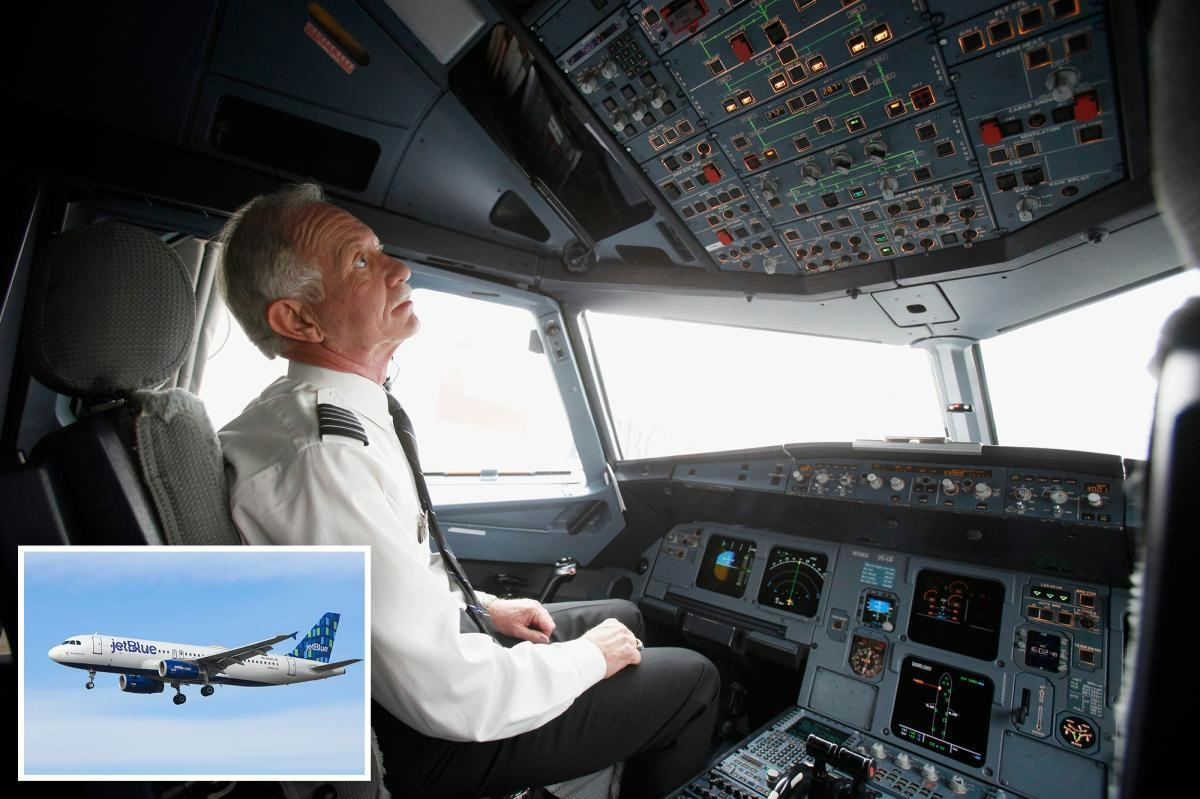
In late November, commercial aviation authorities identified a significant technical vulnerability affecting the Airbus A320 family’s attitude-control system. The flaw, located within the aircraft’s elevator and aileron control unit (ELAC), posed a risk of uncommanded in-flight descent. This issue came to light following an incident in late October when an A320 experienced an unexpected pitch-down, an abrupt nose-drop that necessitated emergency maneuvers and prompted a thorough technical investigation.

Regulatory Response and Industry Action

The Federal Aviation Administration (FAA) responded swiftly by issuing an Emergency Airworthiness Directive (EAD), requiring airlines to immediately update or modify the affected software before returning the aircraft to service. Airbus, in collaboration with European regulators, released an Alert Operators Transmission (AOT) and provided a software update alongside necessary hardware measures to mitigate the failure. The European Union Aviation Safety Agency (EASA) subsequently issued its own emergency directive, mandating prompt action from airlines.

This urgent situation triggered a global response, with airlines worldwide initiating extensive inspection and update protocols. Efforts focused on applying the software fix, rolling back problematic versions, or installing temporary safeguards. Airbus reported that the majority of the approximately 6,000 affected A320-family aircraft have now received the required updates. Nevertheless, these measures have caused operational disruptions, particularly during a period of heightened travel demand.

Impact on U.S. Carriers and Technical Insights

The operational impact has varied among U.S. airlines. Delta Air Lines anticipates only limited disruptions, while United Airlines confirmed its fleet remains unaffected. Conversely, American Airlines expects delays, as the software issue affects 340 of its aircraft.

Technical analysis indicates that the failure stemmed from data corruption within the ELAC, potentially triggered by a combination of intense solar radiation and specific software timing interactions. This rare confluence may have compromised critical flight control parameters, highlighting the susceptibility of complex aircraft systems to external environmental influences.

For most aircraft, the resolution has involved straightforward software updates or rollbacks to restore safe control logic. However, some cases have required hardware interventions, prolonging repair times and further impacting airline schedules.

Industry Coordination and Safety Implications

The coordinated response among manufacturers, regulators, and operators underscores the aviation industry’s robust safety protocols, characterized by rapid detection, transparent communication, and swift corrective action. At the same time, the incident serves as a reminder of the complex interaction between advanced aircraft software and environmental conditions, emphasizing the necessity for agile and well-coordinated responses to maintain operational safety and public confidence.

More news
Delta Flight DL162 Diverts to Detroit After Engine Failure

Delta Flight DL162 Diverts to Detroit After Engine Failure

Delta Flight DL162 Diverts to Detroit Following Engine Failure Delta Air Lines Flight DL162, en route from Minneapolis-Saint Paul International Airport (MSP) to Amsterdam Schiphol Airport (AMS), was compelled to divert to Detroit Metropolitan Wayne County Airport (DTW) on Sunday, November 30, 2025. The decision followed a precautionary shutdown of one engine due to a mechanical malfunction detected during the flight. Incident Overview The aircraft involved, an Airbus A330-900neo adorned with the “Team USA” livery and registered as N411DX, departed Minneapolis in the evening. Approximately one hour into the flight, while cruising at an altitude of 37,000 feet, the flight crew received an alert indicating a loss of hydraulic pressure in the right engine, specifically related to the hydraulic pump 16 system. In adherence to established safety protocols, the crew promptly shut down the affected engine to mitigate any potential risk. Emergency Procedures and Diversion Following the engine shutdown, the flight crew declared an emergency and requested priority handling. The aircraft was diverted to Detroit, a key maintenance hub for Delta Air Lines. The plane landed safely on runway 04R roughly two hours after departure. Emergency response teams were on standby upon arrival and conducted routine inspections. No injuries were reported among passengers or crew members. Subsequently, travelers were transferred to a replacement aircraft to continue their journey to Amsterdam. Operational Challenges in the Industry This incident adds to a series of mechanical difficulties recently experienced by Delta and other major carriers. Earlier this year, the same flight number, DL162, was involved in a mechanical diversion to Japan. Additionally, a Delta flight from Paris to Minneapolis was forced to return to its origin due to a flap-related mechanical alert. Beyond Delta, United Airlines has also encountered operational disruptions following an Airbus A320 recall that affected six of its aircraft, leading to minor delays and cancellations. These events highlight the ongoing complexities airlines face in maintaining fleet reliability amid rigorous maintenance demands. Leadership and Industry Response Delta’s Chief Executive Officer, Ed Bastian, has publicly condemned the recent government shutdown, describing it as "completely unnecessary" and emphasizing the additional strain it imposed on airline operations and passengers. Bastian underscored that such disruptions are unacceptable, particularly as airlines grapple with mechanical issues and regulatory challenges. Passenger Impact and Response Despite the unforeseen diversion, Delta’s flight crew managed the situation with professionalism and efficiency, prioritizing passenger safety and minimizing inconvenience. The prompt emergency response and the provision of a replacement aircraft enabled travelers to continue their journey with minimal delay. Safety and Operational Implications The safe diversion and landing of Flight DL162 in Detroit underscore the effectiveness of established aviation safety protocols and the critical importance of rapid response during in-flight emergencies. As the airline industry continues to confront operational and regulatory pressures, ensuring passenger safety and maintaining service reliability remain paramount concerns.
Army Honors Small Business for Innovation

Army Honors Small Business for Innovation

Army Recognizes Small Business for Pioneering Innovation in Aviation Training On November 18, 2025, the Army Aviation Association of America (AAAA) awarded Mass Virtual the 2025 Materiel Readiness Award for a Contribution by a Small Business Organization. This accolade honors small enterprises that make significant advancements in logistics support and materiel readiness for Army Aviation. Mass Virtual received the award in recognition of its development and deployment of the Virtual Aerial Systems Training (VAST) platform, a critical tool supporting the 204th Military Intelligence Battalion (Aerial Reconnaissance), which operates the Army’s sole jet Aircrew Training Program (ATP). Advancing Training Through Virtual Technology The VAST platform has delivered more than 6,250 hours of instruction and sustained an operational tempo of approximately 450 flight hours per month for Bombardier Global 6500 aircraft operations. It is integrated into the training regimen for non-rated crewmember deployment preparation and Day Zero pilot training, enabling essential training activities prior to the delivery of mission-ready aircraft. By transferring key instructional components into an extended reality environment, VAST has enhanced aircraft availability, optimized maintenance scheduling, and accelerated qualification timelines for Army jet intelligence, surveillance, and reconnaissance (ISR) missions. Angel R. Acevedo, Project Support Manager within Project Director, Sensor-Aerial Intelligence (PD SAI), emphasized the significance of this collaboration, stating, “Mass Virtual’s partnership with the 204th MI Battalion has set the standard for how industry can support Army modernization. The VAST platform not only enhances readiness today but also builds a foundation for the Army’s future ISR training enterprise.” As the Army transitions to the jet-powered High Accuracy Detection and Exploitation System (HADES), VAST continues to evolve in support of emerging ISR training requirements. Small Business Innovation Amidst a Changing Defense Landscape Mass Virtual’s accomplishment emerges against a backdrop of increasing challenges for small businesses in the defense sector, including navigating complex procurement processes and adhering to stringent regulatory standards. Despite these obstacles, the success of platforms like VAST demonstrates how smaller firms can effectively leverage commercial technologies to fulfill military needs, thereby fostering greater competition within the defense industry. In response, major defense contractors are adjusting their business models to align with the Army’s emphasis on accelerated procurement cycles and right-to-repair policies, signaling a broader transformation in the sourcing and delivery of defense innovation. The recognition of Mass Virtual highlights the expanding role of agile, technology-driven small businesses in advancing Army readiness and modernization, even as the defense sector adapts to evolving procurement and operational demands.
Azul Airlines Pursues $30 Million Engine Financing from AerCap

Azul Airlines Pursues $30 Million Engine Financing from AerCap

Azul Airlines Seeks $30 Million Engine Financing from AerCap Amid Bankruptcy Proceedings Brazilian carrier Azul SA has filed a request with a U.S. bankruptcy court to obtain $30 million in financing from AerCap Ireland Ltd. The funds are intended to support the overhaul of Azul’s aircraft engines, a critical component of maintaining operational reliability during the airline’s ongoing restructuring. The proposal, submitted on November 29 to the U.S. Bankruptcy Court for the Southern District of New York, would grant AerCap—Azul’s largest aircraft lessor—an unsecured priority claim within the airline’s Chapter 11 bankruptcy case. Context of the Financing and Industry Dynamics This financing request forms part of a broader settlement reached in August between Azul and AerCap, a subsidiary of AerCap Holdings. The agreement focuses on restructuring Azul’s aircraft and lease portfolio, a necessary step as the airline seeks to emerge from bankruptcy protection. The $30 million loan is specifically earmarked for essential engine maintenance, underscoring the importance of fleet readiness amid the company’s financial reorganization. Azul’s pursuit of new financing occurs against a backdrop of intense competition and evolving conditions in the aircraft leasing market. Demand for leased aircraft remains robust, while production delays at major manufacturers Boeing and Airbus have limited airlines’ ability to expand their fleets through new purchases. These constraints have enhanced the negotiating power of lessors such as AerCap, influencing the terms and availability of financing for carriers like Azul. Market Implications and Broader Leasing Sector Activity Industry analysts are closely monitoring Azul’s financial position and its capacity to manage additional debt obligations. The airline’s success in securing and servicing this loan could affect investor confidence and shape future lease negotiations. Other carriers facing similar supply chain challenges may also pursue comparable financing arrangements with AerCap or other leasing companies. The aircraft leasing sector has recently experienced notable activity, reflecting its strong market position. A prominent example includes the approval of a $7.4 billion buyout offer for Air Lease by a consortium led by Sumitomo Corporation and SMBC Aviation Capital, signaling sustained investor interest. Such developments may influence financing conditions for airlines like Azul, as lessors balance risk and opportunity in a competitive environment. Azul’s proposed financing deal with AerCap remains subject to court approval. If authorized, the loan is expected to play a crucial role in supporting the airline’s fleet operations and restructuring efforts as it navigates the challenges of emerging from bankruptcy protection.
Airbus Identifies New A320 Metal Panel Defect Following Software Issue

Airbus Identifies New A320 Metal Panel Defect Following Software Issue

Airbus Identifies New Metal Panel Defect in A320 Aircraft Following Software Recall Airbus has disclosed a supplier-related quality defect affecting metal panels installed on certain A320-family aircraft, just days after addressing a significant software issue impacting thousands of jets globally. This latest revelation raises fresh operational concerns for airlines and investors, given the A320’s status as the world’s most widely operated single-aisle aircraft. Details of the Metal Panel Defect and Inspection Efforts The European manufacturer traced the metal panel defect to a supplier and confirmed that the issue is now fully contained. Airbus is currently conducting inspections across the potentially affected segment of the global A320 fleet, emphasizing that only a subset of aircraft will require remedial action. The company stated it is adopting a conservative approach by inspecting all aircraft that might be impacted, while assuring that all newly produced panels meet the requisite safety and performance standards. Although Airbus has not disclosed the precise number of aircraft affected, industry sources suggest that the defect could involve dozens of jets. This announcement follows closely on the heels of a major software recall involving modifications to flight control systems on approximately 6,000 A320-family aircraft. That recall was initiated after findings revealed that intense solar radiation could corrupt critical flight data, marking the largest such action in Airbus’s history. Impact on Operations and Market Response The General Civil Aviation Authority reported that over 100 UAE-registered aircraft were affected by the software malfunction. Airbus has indicated that the vast majority of the global A320 fleet has now received the necessary software updates, with fewer than 100 aircraft still awaiting return to service. Airlines are managing both the software and metal panel issues concurrently to minimize operational disruptions. The timing of these two safety-related developments has unsettled investors. Airbus shares dropped as much as 10% following initial reports of the new quality defect, ultimately closing nearly 6% lower on Monday. While Airbus acknowledged that the supplier-related issue could affect delivery targets, the company reiterated that its delivery pipeline remains on track and that both the software and panel concerns are being addressed without interrupting manufacturing output. Strategic Importance of the A320 Family The A320 family remains central to Airbus’s long-term strategy, with over 19,000 orders placed worldwide. The manufacturer aims to deliver 820 aircraft in 2024, following 766 deliveries to 86 customers in 2023 and 878 gross new orders. Despite recent market volatility, Airbus continues to express confidence in its quality assurance processes and ongoing fleet inspections. Given the A320’s critical role in global airline operations, any technical or quality issues attract significant industry scrutiny. Airbus maintains that safety and reliability are its foremost priorities as it collaborates with airlines to resolve both the software and metal panel issues promptly.
Corsair Reports Financial Recovery

Corsair Reports Financial Recovery

Corsair Reports Financial Recovery Amid Market Uncertainties Financial Performance and Operational Challenges Corsair has announced a significant financial recovery, building on its break-even performance last year. For the 2024–2025 fiscal year, the French airline recorded a modest revenue increase to €712 million. More notably, operating profit surged to €26.4 million, up from €3 million the previous year, while net profit rose to €15.2 million compared to €1.1 million. The company attributes these improvements to the successful implementation of its ongoing transformation plan. Despite these positive results, Corsair encountered several operational difficulties. Flight activity declined by 6% following the discontinuation of its Montreal route. Additionally, social unrest in the French West Indies and disruptions caused by Cyclone Chido in Mayotte adversely affected operations. However, the second half of the year, particularly the peak summer months, saw strong demand. The airline’s load factor increased by 2.4 percentage points year-over-year, supported by a strategic shift towards higher-yield markets, robust ancillary revenue, and sustained cargo demand. Market Context and Future Risks Corsair’s financial recovery occurs amid broader market volatility impacting both the aviation and technology sectors. Corsair Gaming Inc., a separate company, is also forecasting a 16.4% revenue increase to $354.049 million and earnings of 9 cents per share. Nevertheless, both Corsair entities face uncertainties linked to fluctuating investor sentiment, especially following mixed reactions to Nvidia’s recent earnings report. Competitors across industries are closely monitoring market trends, with investor attention increasingly focused on AI-related companies and speculation over a potential Federal Reserve rate cut in December contributing to market unpredictability. While Corsair’s operational improvements and financial gains are encouraging, the airline continues to confront challenges. The European Commission’s ongoing investigation into state aid received during the Covid-19 pandemic remains unresolved, posing a potential threat to future stability. As market conditions evolve, Corsair’s capacity to manage both sector-specific and broader economic challenges will be crucial to maintaining its recovery trajectory.
Luxair Receives First Embraer E195-E2 Aircraft

Luxair Receives First Embraer E195-E2 Aircraft

Luxair Receives First Embraer E195-E2 Aircraft Luxair marked a significant milestone in its fleet modernization and expansion strategy with the official delivery of its first Embraer E195-E2 aircraft at Luxembourg’s Findel Airport on November 29. The jet, registered LX-LEA, arrived from Embraer’s São José dos Campos facility in Brazil, landing under overcast skies. This delivery initiates the arrival of six E195-E2s on firm order, alongside three additional purchase rights that Luxair may exercise for either the E195-E2 or the E190-E2 models. Fleet Integration and Operational Plans The new aircraft features a 136-seat single-class cabin and is slated for deployment on European routes originating from Luxembourg. It will complement Luxair’s existing fleet, which includes Boeing 737NGs, 737 MAXs, and Dash 8-Q400s. The E195-E2 is scheduled to commence commercial operations on January 15, 2026, with its inaugural flight planned to Vienna. This addition reflects Luxair’s commitment to enhancing its competitiveness while addressing environmental concerns. The E2 family is recognized for its superior fuel efficiency and reduced emissions compared to previous-generation aircraft, aligning with broader industry efforts to promote sustainability. Nonetheless, the integration of new technology and the pursuit of operational efficiency present challenges that Luxair must navigate as it adapts to the latest advancements in regional aviation. Industry Context and Market Dynamics Luxair’s fleet renewal occurs amid a dynamic market environment where competitors are also adjusting their strategies. For instance, Avelo Airlines has recently consolidated its network in anticipation of its own E2 deliveries, demonstrating a cautious approach to fleet expansion. Embraer’s recent announcement regarding a “turning point” for the E2’s Pratt & Whitney GTF engines, highlighting improved reliability, may further influence airline decisions and market competition. Other carriers are pursuing different fleet strategies in response to evolving market conditions. Etihad Airways, for example, is expanding its widebody Airbus fleet, reflecting a preference among some airlines for alternative aircraft types to meet their operational requirements. As Luxair prepares to integrate the E195-E2 into its operations, the airline positions itself at the forefront of regional aviation modernization in Europe. The successful deployment of this aircraft will be critical to achieving anticipated gains in efficiency, sustainability, and passenger experience.
Qatar Airways Enhances Qatar Grand Prix Weekend with Aviation Innovation and Sporting Excellence

Qatar Airways Enhances Qatar Grand Prix Weekend with Aviation Innovation and Sporting Excellence

Qatar Airways Enhances Qatar Grand Prix Weekend with Aviation Innovation and Sporting Excellence Qatar Airways showcased a compelling fusion of aviation innovation and sporting grandeur during the Qatar Grand Prix, transforming the Lusail International Circuit into a vibrant platform of global ambition and precision. As the official Title Partner of Formula 1, the airline utilized the event to reaffirm its leadership in international travel while celebrating the Grand Prix champion through a series of high-profile moments. A Spectacular Display of Aviation and Brand Storytelling The weekend commenced with a dramatic aerial display as a Qatar Airways aircraft executed a meticulously coordinated flypast above the circuit, captivating thousands of spectators. This flyover marked the debut of the airline’s new Formula 1-themed livery, designed to reflect the speed, power, and innovation emblematic of both Formula 1 and Qatar Airways. Select media representatives and guests experienced the flypast from inside the aircraft, which was equipped with advanced high-speed Wi-Fi, enabling real-time broadcasting and underscoring the airline’s commitment to in-flight connectivity. The livery unveiling continued at the Qatar Airways hangar, where an immersive reveal event featuring a theatrical, racing-inspired entrance attracted global partners and prominent attendees. This showcase quickly became one of the most talked-about highlights of the race weekend, demonstrating Qatar Airways’ expertise in large-scale brand storytelling and its growing influence in the world of sport. Throughout the event, Qatar Airways also highlighted its recent recognition as the World’s Best Airline for the ninth time in 2025, emphasizing its dedication to service, hospitality, and innovation. These core values were evident in every aspect of the airline’s presence during the Grand Prix. Expanding Horizons Amid Operational Challenges Looking forward, the newly liveried Boeing 777, registered as A7-BEG, is scheduled for a season of international travel, carrying the spirit of Formula 1 to major cities including London, Melbourne, New York, and Tokyo. Aviation enthusiasts will be able to track the aircraft’s journey worldwide, extending the Grand Prix celebration well beyond Qatar’s borders. However, Qatar Airways’ ambitious enhancements to the Grand Prix weekend coincide with significant operational challenges. The airline is expanding its winter schedule by nearly 3,000 flights and launching new services to key markets such as Kuala Lumpur, Lagos, Shanghai, and Singapore. This rapid growth demands careful coordination with local authorities and infrastructure, particularly in Asia and Africa, to manage increased demand and logistical complexity. While the expansion strategy has been praised for its boldness, it also raises concerns regarding over-extension and the sustainability of such large-scale initiatives. Market reactions have been mixed. Some industry observers commend Qatar Airways’ pursuit of global leadership, while others question the environmental and operational costs associated with increased airline capacity, especially during major events like the Grand Prix. Competitors may respond by enhancing their regional services or focusing on improving existing offerings, thereby intensifying competition in key markets. Qatar Airways Group Chief Executive Officer, Engr. Badr Mohammed Al-Meer, remarked, “This weekend, Qatar Airways brought together innovation and passion by engaging with leading forces in sport and the arts to offer an unmatched community experience. The debut of our latest F1 livery drew massive interest from sport enthusiasts, creatives, and aviation buffs—making our flypast the most tracked flight for an entire 24-hour cycle on Flightradar24.” As Qatar Airways continues to integrate aviation innovation with global sporting events, the airline faces both opportunities and challenges in maintaining its momentum on the international stage.
Arlington’s Flying Taxi Plan Delayed Ahead of World Cup

Arlington’s Flying Taxi Plan Delayed Ahead of World Cup

Arlington’s Flying Taxi Ambitions Delayed Ahead of 2026 World Cup Regulatory Challenges Stall Advanced Air Mobility Plans Arlington’s aspiration to introduce flying taxis in time for the 2026 FIFA World Cup has encountered significant setbacks due to regulatory delays and evolving industry priorities. City officials, including Mayor Jim Ross, had initially envisioned Arlington as the first U.S. city to deploy electric vertical take-off and landing (eVTOL) aircraft, transporting visitors directly into the city’s Entertainment District. During his October 2024 State of the City address, Ross expressed optimism that air taxis would be operational by the World Cup. However, a year later, both the mayor and industry experts concede that this timeline is no longer attainable. The primary impediment remains the absence of finalized Federal Aviation Administration (FAA) regulations governing eVTOL aircraft. Without federal certification, commercial passenger flights cannot proceed. Ernest Huffman, aviation planning and education program coordinator for the North Central Texas Council of Governments, noted ongoing efforts to organize an advanced air mobility demonstration during the World Cup. Such an event would serve as a catalyst for the city’s Emerging Innovative Pilot Program (EIPP). Nevertheless, the FAA’s repeated postponements of eVTOL program approvals cast doubt on even a demonstration flight taking place during the tournament. Industry Shifts and Local Implications Arlington’s Entertainment District, home to prominent venues such as the National Medal of Honor Museum, Texas Live!, Choctaw Stadium, and Globe Life Field, was considered an ideal setting to showcase this cutting-edge technology. With millions of visitors expected for the World Cup, the inability to offer air taxi services represents a missed opportunity. Mayor Ross suggested that, at best, the city might host a limited “World’s Fair type demo” featuring a single aircraft in flight. The delay in Arlington reflects broader challenges within the eVTOL industry. Leading manufacturers like Archer Aviation and Joby Aviation have shifted focus toward the Middle East, pursuing regulatory approvals in the United Arab Emirates ahead of securing U.S. or European certifications. Meanwhile, companies such as Vertical Aerospace and Electra are concentrating on the UK and European markets. This strategic pivot has drawn criticism from some observers who question the prudence of prioritizing international launches over domestic regulatory compliance. Others argue that these moves are essential to demonstrate the technology’s viability and build momentum globally. Compounding Arlington’s difficulties, the city must now identify a new manufacturing partner after its original collaborator, Overair, allowed its agreement to lapse. Alicia Winkelblech, Arlington’s director of transportation, indicated that the first FAA certifications for passenger-carrying air taxis may not be expected until 2027. Despite these obstacles, city officials remain steadfast in their commitment to advanced air mobility. Mayor Ross affirmed that Arlington has not abandoned its goal of becoming one of the first U.S. cities to operate flying taxis. For the time being, however, the vision of air taxis ferrying World Cup attendees remains grounded by regulatory and industry realities.
Jamco Acquires Iacobucci HF Aerospace

Jamco Acquires Iacobucci HF Aerospace

Jamco Corporation to Acquire Iacobucci HF Aerospace, Expanding Global Cabin Interiors Portfolio Jamco Corporation, a Bain Capital portfolio company and Japan’s foremost manufacturer of cabin interior equipment for commercial aviation, has announced the signing of definitive agreements to acquire Iacobucci HF Aerospace S.p.A. (IHFA), a leading Italian supplier of galley inserts and seating products. The transaction, supported by Bain Capital, is anticipated to close by the end of 2025, subject to customary regulatory approvals. Strategic Expansion in Cabin Interiors Founded in 1994 and headquartered in Ferentino, Italy, IHFA is renowned for its innovative range of galley equipment, including espresso and beverage makers, trash compactors, ovens, and other inserts widely used by airlines globally. Under the leadership of CEO Lucio Iacobucci, the company also holds a significant position in VVIP seating and customized trolleys, supported by a global network of authorized repair centers that provide comprehensive after-sales service to its airline customers. The acquisition will see Jamco acquire 100% of IHFA’s shares from Lichtenberg Capital and other investors. Despite the change in ownership, IHFA will continue to operate independently, retaining its executive team while coming under the oversight of Kate Schaefer, Executive Chair of Jamco Corporation. Kate Schaefer described the acquisition as “highly strategic,” highlighting that the integration of Jamco’s galley systems with IHFA’s galley inserts, alongside potential collaboration in premium seating, is expected to generate significant value for widebody aircraft customers. She emphasized that the partnership leverages the combined strengths of both companies in engineering, design, certification, and customer service. Lucio Iacobucci expressed optimism about IHFA’s future under Jamco and Bain Capital, noting that the expanded resources and global reach will enable the company to reinforce its leadership in galley inserts and related product categories. He stated, “As premium widebody customers invest in the passenger experience, IHFA will continue to set the standard in food and beverage equipment.” Stefan Hamm, Managing Director at Lichtenberg Capital, reflected on the firm’s support for IHFA throughout the pandemic and expressed confidence in the company’s next phase of growth under Jamco and Bain Capital’s stewardship. Challenges and Industry Context While the acquisition positions Jamco to accelerate its transformation into a leading partner for widebody cabin interiors, it also presents several challenges. The successful integration of IHFA’s technologies and operations, adherence to regulatory requirements, and the management of cultural differences between the Japanese and Italian organizations will be critical to realizing the full potential of the deal. Industry analysts have noted that market reactions may include skepticism regarding the strategic fit and the realization of anticipated synergies. Competitors may respond by enhancing their own product offerings or emphasizing their unique strengths to protect market share. This transaction occurs amid broader trends in the aerospace sector, including a growing emphasis on localization and supply chain resilience, factors that could influence competitive dynamics following the acquisition. Advisory Roles The transaction was supported by Mediobanca, which served as exclusive financial advisor to Lichtenberg Capital and IHFA management, with Nunziante Magrone Studio Legale providing legal counsel. Jamco and Bain Capital were advised by Seabury Securities, with legal support from Ropes & Gray and financial and tax diligence conducted by New Deal Advisors. About Iacobucci HF Aerospace Iacobucci HF Aerospace is a global leader in the development, production, and distribution of galley inserts, trolleys, and seating products for commercial and business aviation markets.
Cosmic Rays Disrupt Aircraft Systems, Grounding Fleet

Cosmic Rays Disrupt Aircraft Systems, Grounding Fleet

Cosmic Rays Disrupt Aircraft Systems, Grounding Fleet Incident Overview and Immediate Consequences On October 30, 2025, a JetBlue Airbus A320 en route from Cancun, Mexico, to Newark, New Jersey, experienced a sudden and unexpected loss of altitude. The pilot urgently contacted air traffic control, requesting medical equipment onboard. The incident resulted in head lacerations for three passengers, with at least fifteen individuals requiring hospitalization after the flight was diverted to Florida. Initially perceived as an isolated event, this occurrence soon revealed a far more extensive problem affecting the aviation industry. Within a month, over 6,000 aircraft were grounded in what has become one of the largest recalls in aviation history. The widespread grounding caused significant disruption, leading to numerous flight cancellations during the critical post-Thanksgiving travel period in the United States. The scale of the response highlighted the severity of the underlying issue and its impact on both passenger and cargo air transport. Cause and Technical Investigation Airbus conducted an internal investigation and identified cosmic rays—high-energy particles originating from outer space—as the root cause of the malfunction. On the day of the incident, a surge in cosmic radiation triggered a failure in one of the aircraft’s onboard computers, specifically those responsible for controlling the wing’s moving parts. This malfunction directly contributed to the abrupt loss of altitude and the injuries sustained by passengers. The findings underscore the vulnerability of modern aircraft systems to rare but powerful cosmic events. The incident has prompted renewed scrutiny of the resilience of avionics and flight control systems to space weather phenomena, raising concerns about the potential for similar disruptions in the future. Broader Impact on Aviation and Air Cargo The repercussions of the grounding extended beyond passenger flights, affecting the air cargo sector as well. Major carriers UPS and FedEx were compelled to ground their MD-11 fleets following a UPS crash linked to the same issue. Despite these operational challenges, analysts at Stifel have noted that the impact on overall air cargo capacity has been limited. UPS responded by acquiring additional aircraft and consolidating flight routes to optimize available capacity. While the removal of MD-11 aircraft from service could exert upward pressure on air cargo rates during the peak holiday shipping season, analysts do not foresee significant disruptions. UPS has refrained from imposing additional surcharges for the season, and the extent of any shipping delays will largely depend on the duration of the grounding and the effectiveness of carriers’ adaptive measures. The unprecedented grounding of thousands of aircraft highlights the aviation industry’s exposure to external cosmic influences and the critical need for enhanced safeguards against such rare but impactful events. As airlines and cargo operators strive to resume normal operations, the incident serves as a stark reminder of the challenges posed by space weather to modern aviation infrastructure.
Ask AeroGenie










