
Orquesta conocimientos de IA para convertirlos en acción

Tendencias
Categories
Virgin Atlantic and Boeing to Revamp 787-9 Cabins, Phasing Out Herringbone Seating
Virgin Atlantic and Boeing to Revamp 787-9 Cabins, Phasing Out Herringbone Seating
Virgin Atlantic is embarking on a comprehensive modernization of its Boeing 787-9 Dreamliner cabins, marking a significant shift in its premium travel offering. As part of a $17 billion fleet transformation scheduled for completion by 2028, the airline will retire the long-criticized herringbone seating layout in Upper Class. This initiative, developed in collaboration with Boeing, will redesign all three cabin classes to enhance privacy and comfort for premium passengers.
Redesigning the Upper Class Experience
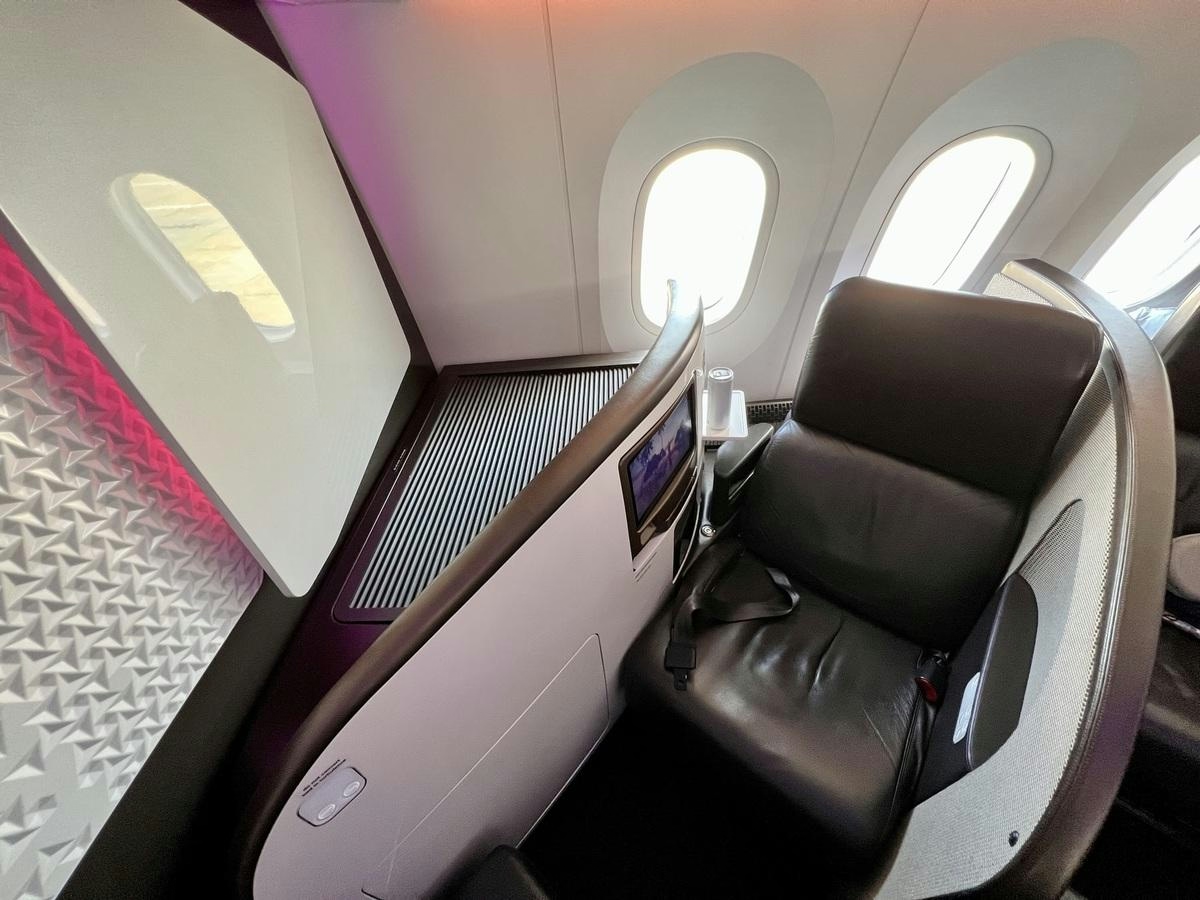
The current Upper Class configuration on Virgin Atlantic’s 17 Boeing 787-9 aircraft features a herringbone layout, where seats face away from the windows toward the aisle. This design has faced considerable criticism for its limited privacy and lack of sliding doors, falling short of evolving passenger expectations and industry standards. Competitors such as United Airlines and El Al have invested in more advanced premium cabins, highlighting the need for Virgin Atlantic to update its product.
Under the new agreement, Virgin Atlantic will introduce forward-facing Upper Class seats inspired by those on its Airbus A330neo fleet. These seats are designed to offer greater privacy, improved window access, and a more contemporary aesthetic. A notable addition will be the debut of the Retreat Suite on the 787-9, providing eight exclusive seats in every Upper Class cabin. Matt Sharp, Virgin Atlantic’s Vice President of Engineering & Maintenance, emphasized the airline’s response to growing demand for premium travel, stating, “By increasing the number of Upper Class and Premium seats and introducing our Retreat Suite for the first time on the 787-9, we’re responding to growing demand for premium travel.”
Expanding Premium Capacity Amid Trade-offs
The cabin overhaul will substantially increase premium seating capacity. Upper Class seats will rise from 31 to 44 per aircraft, a 42% increase, while premium economy seats will grow from 35 to 56, representing a 60% jump. These adjustments align the 787-9’s cabin layout more closely with Virgin Atlantic’s Airbus A350-1000s, reflecting the airline’s strategic focus on affluent travelers.
However, this premium expansion comes at the expense of economy class capacity, which will decrease from 192 to 127 seats on the 787-9. This reduction may affect the airline’s revenue mix and market positioning, particularly as competitors continue to enhance their premium offerings. The move underscores a broader industry trend where airlines are intensifying competition for high-yield passengers by prioritizing comfort and exclusivity.
Market observers anticipate that Virgin Atlantic’s strategy will prompt rivals to further upgrade their cabins, intensifying the battle for premium travelers. While the airline aims to set a new standard for its 787-9 fleet, it faces the challenge of balancing exclusivity with overall capacity in a rapidly evolving and highly competitive market.

Etihad Airways Suspends Airbus A380 Flights on Key Route

Aditya Birla Group Seeks Approval for Aircraft Leasing in GIFT City

Qatar Airways Highlights Innovation and Connectivity at Arabian Travel Market 2026

Hong Kong's Five-Year Plan Includes Andrew Fan's Aircraft Parts Processing Hub Proposal

ACIA Aero Leasing Delivers ATR72-600 to Air Nostrum

RTX Appoints Jill Albertelli as Head of Pratt & Whitney

TAT Technologies Joins Beyond Aero Hydrogen Aircraft Program

AURAK Study Highlights Barriers to Air Taxi Adoption in Emerging Economies

Xiamen Air Selects Altitude for 787 Maintenance at Heathrow

Etihad and Swissport Extend Global Partnership
