Imagen

Orquesta conocimientos de IA para convertirlos en acción

¡Únete hoy a la lista de espera de AeroGenie!

Tendencias

Categories

Volantio Introduces Vector, a New Operating Platform for Airlines
June 25, 2026By ePlane AI
Volantio Introduces Vector, a New Operating Platform for Airlines
0
0
Volantio
AI Airline Platforms
Alaska Airlines

Volantio Unveils Vector, an AI-Powered Operating Platform for Airlines

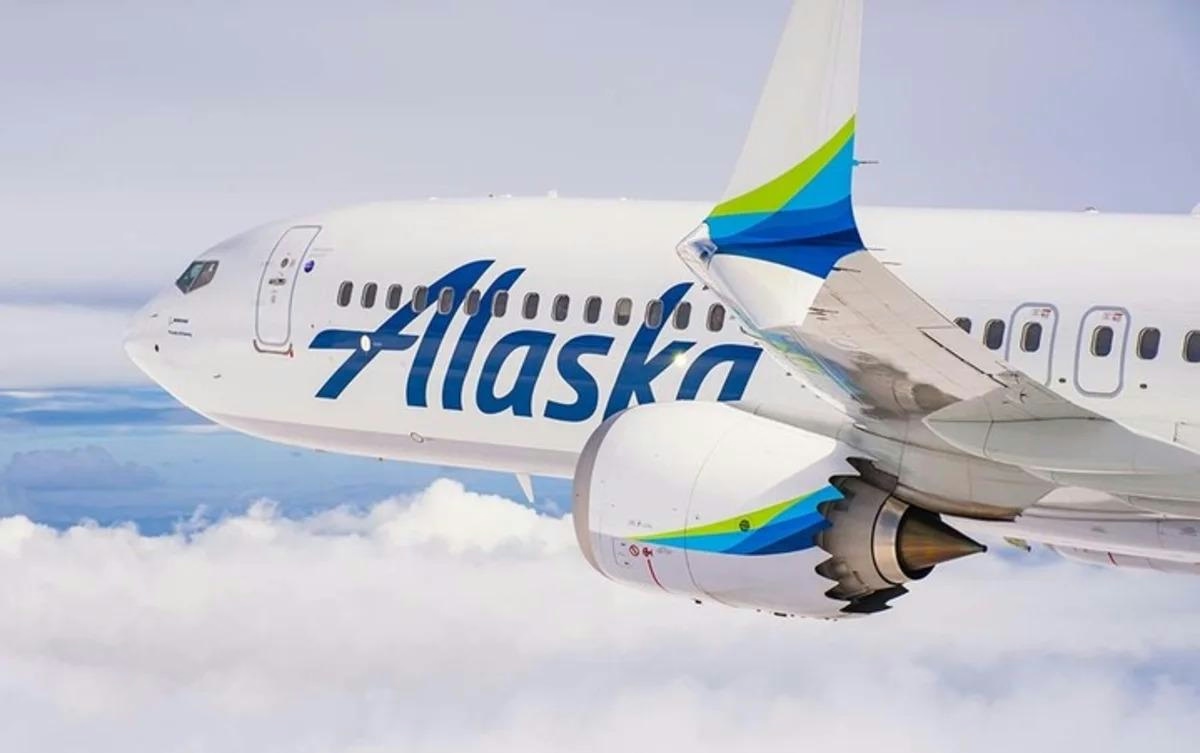
Volantio, a global leader in airline demand reallocation, has introduced Vector, a new operating platform designed to enable airlines to swiftly transform demand insights into coordinated operational actions. Alaska Airlines is the first carrier to implement Vector as part of its initial rollout, marking a significant advancement in airline operational technology.

Addressing Demand and Capacity Misalignment

The airline industry has long struggled with the challenge of aligning demand and capacity. When these elements are out of sync, airlines face lost revenue, increased operational pressures, and a decline in passenger satisfaction. Vector leverages specialized artificial intelligence agents to identify and act on reallocation opportunities in real time. This includes opening additional capacity to accommodate sudden demand surges, rerouting passengers during weather disruptions, and consolidating flights to mitigate rising fuel costs.

Azim Barodawala, Co-Founder and CEO of Volantio, emphasized the transformative potential of the platform: “AI is transforming industries around the world, and travel is no exception. Vector responsibly puts the power of this technology into the hands of leading airlines, enabling them to turn intelligence into real operational action at scale.”

Shane Tackett, Incoming President and CFO of Alaska Airlines, underscored the platform’s value, noting that it unlocks opportunities previously unattainable. He highlighted the anticipated benefits across productivity, revenue generation, cost reduction, and customer experience improvements throughout Alaska Airlines’ network.

Industry Context and Future Implications

The launch of Vector comes amid a challenging period for the aviation sector. Global airline profitability is under pressure due to war-related disruptions in the Middle East and persistently high fuel prices, with net profits for 2026 now projected at $23 billion—significantly lower than earlier forecasts of $41 billion. In Europe, airline consolidation is accelerating as major groups seek to fortify their positions amid rising costs and geopolitical uncertainty.

In response to these pressures, airlines are increasingly adopting AI-driven solutions like Vector to enhance operational efficiency and customer service. However, the integration of such technologies raises important considerations regarding the maintenance of customer relationships, as carriers balance the advantages of automation against potential risks. Competitors are expected to respond by leveraging their own platforms or accelerating AI initiatives to sustain competitive advantage.

Despite these headwinds, Volantio and Alaska Airlines view Vector as a critical tool for adapting to rapidly evolving market conditions. By optimizing operations and improving passenger experiences, the platform may play a pivotal role in supporting the resilience and growth of airlines in an uncertain future.

More news
Flytrex and Wing Report No Airspace Conflicts in Multi-Operator Drone Deliveries

Flytrex and Wing Report No Airspace Conflicts in Multi-Operator Drone Deliveries

Flytrex and Wing Achieve Seamless Airspace Coordination in Multi-Operator Drone Deliveries Flytrex and Wing have announced a milestone in drone delivery operations, reporting zero airspace conflicts across thousands of multi-operator flights each month in the Dallas–Fort Worth metroplex. Less than a year after becoming the first commercial drone operators in the United States to share airspace under an automated Unmanned Traffic Management (UTM) system, both companies have successfully scaled their operations while maintaining safety and efficiency. Automated UTM System Enables Conflict-Free Operations The automated UTM system employed in Dallas–Fort Worth has effectively deconflicted 100% of operational flight intents within shared airspace zones, with no incidents reported to date. This collaboration, initiated in May 2025, has allowed Wing to expand its Walmart delivery partnership to seven additional U.S. markets, with plans to serve over 270 Walmart locations by 2027. This growth reflects increasing confidence in automated drone delivery technology amid intensifying competition and efforts by other providers to scale their services. The Dallas–Fort Worth operations are conducted under the Federal Aviation Administration’s UTM Operational Evaluation, a component of the broader U.S. UTM Implementation initiative. As of January 2026, the program included 17 UTM service providers and operators. Participating companies share real-time flight intent data and automatically adjust flight paths to prevent conflicts, eliminating the need for manual coordination. The system is based on the ASTM F3548-21 USS Interoperability standard, representing a pioneering proof of concept for autonomous air traffic control in low-altitude, shared airspace. Operational Success and Industry Impact Between January and February 2026, Flytrex and Wing completed approximately 8,000 drone deliveries within overlapping airspace at two Texas locations: Little Elm and Wylie. The operators flew simultaneously on 30 of 31 active days, with more than 10 hours of overlapping daily flights. During this period, the UTM system successfully managed all flight operations without conflict, while combined daily flights increased by 215% from January to February. In Little Elm, Flytrex’s delivery zone overlaps with a nearby Wing location, and in Wylie, the two operators operate just 1.36 miles apart, creating one of the most densely shared commercial drone airspaces in the United States. Shai Karassikov, Product Manager at Flytrex and Co-Chair of the U.S. UTM Technical Committee, described these results as “a proof of concept for the entire industry.” He emphasized that scaling from a limited number of overlapping flights to thousands per month demonstrates the potential for multi-operator drone delivery to expand across urban centers nationwide. Despite these achievements, Flytrex and Wing continue to navigate challenges related to regulatory compliance, evolving airspace management requirements, and growing competition from other drone delivery services. The technical framework they have established—including route allocation, four-dimensional trajectory coordination, and real-time deconfliction—positions both companies to operate effectively in increasingly dense urban environments. Flytrex has completed over 200,000 deliveries across the United States, highlighting the expanding viability of autonomous drone delivery as traditional human-based air traffic control systems face mounting operational pressures.
FL Technics acquires Sensus Aero to expand MRO software

FL Technics acquires Sensus Aero to expand MRO software

FL Technics Acquires Sensus Aero to Expand MRO Software Capabilities FL Technics, a leading global provider of aircraft maintenance, repair, and overhaul (MRO) services, has announced the acquisition of Sensus Aero, an aviation software developer. This strategic move integrates Sensus Aero into the FL Technics group, enhancing the company’s digital and technological offerings. Sensus Aero is recognized for its Sensus MRO platform, a comprehensive software solution tailored for MRO providers specializing in base and heavy airframe maintenance. The platform replaces fragmented systems and manual workflows with a unified, real-time, data-driven approach, designed to improve operational efficiency and increase visibility across maintenance activities. Strategic Significance and Industry Context The acquisition represents a pivotal development for both companies. Sensus Aero has previously supported maintenance operations within the broader Avia Solutions Group, and under FL Technics, its platform will be further developed and made available to a wider array of aviation organizations seeking to digitalize and optimize their maintenance processes. Paulius Cegis, CEO of Sensus Aero, emphasized the company’s close collaboration with FL Technics from the outset, highlighting their deep understanding of the challenges faced by aviation maintenance organizations in a competitive market. He noted that joining FL Technics would enable the expansion of proven, industry-focused technology solutions to a broader market. This transaction occurs amid increasing pressure on the aviation MRO sector to enhance efficiency, reduce turnaround times, and improve transparency in maintenance operations. As digital transformation accelerates across the industry, there is growing demand for integrated software platforms capable of streamlining workflows, connecting maintenance processes, and delivering actionable insights in real time. Challenges and Market Implications Despite the clear benefits, integrating Sensus Aero’s technology into FL Technics’ existing operations presents challenges. The complexity of merging new software into an already intricate supply chain environment may pose risks to seamless operations and service continuity. While some industry observers view the acquisition as a strategic effort to strengthen FL Technics’ competitive position in the MRO software market, others express concerns about potential disruptions during the transition period. Competitors are expected to respond by enhancing their own software solutions or adopting more aggressive pricing strategies to protect market share. The acquisition also unfolds against a backdrop of heightened geopolitical tensions and supply chain vulnerabilities, factors that continue to influence the strategic decisions of FL Technics and its peers. Žilvinas Lapinskas, CEO of FL Technics, underscored the value of Sensus Aero’s combination of aviation expertise and technology specifically developed for the MRO industry. He stated that integrating the platform into FL Technics would enable further development of its capabilities and create additional value for customers both within and beyond the organization. As FL Technics advances with the integration, the company aims to leverage Sensus Aero’s technology to foster innovation and efficiency, while navigating the complexities of a rapidly evolving and increasingly digital aviation maintenance landscape.
Northern Ireland Tech Demonstrates Sustainable Aviation Fuel to Belfast Airport Executives

Northern Ireland Tech Demonstrates Sustainable Aviation Fuel to Belfast Airport Executives

Northern Ireland Technology Demonstrates Sustainable Aviation Fuel to Belfast Airport Executives Northern Ireland-based net zero technology company Catagen recently hosted 170 senior executives from the VINCI Airports network at its Net Zero Campus in Belfast to showcase its modular sustainable aviation fuel (SAF) production system. The event, attended by VINCI Airports’ president and chief executive, underscored Catagen’s commitment to accelerating aviation decarbonisation through locally generated, renewable-powered fuel. Innovative Modular SAF Production Catagen’s SAF subsidiary, ClimaHtech Green Flight, introduced its patented Biohgen and E-fuel Gen reactor technologies during the demonstration. Unlike conventional SAF facilities, which tend to be centralised, capital-intensive, and slow to deploy, ClimaHtech Green Flight’s modular and decentralised approach allows for rapid deployment of prefabricated systems powered directly by renewable electricity. This enables fuel production to be situated near renewable energy sources, sustainable feedstocks, and airports themselves. The model is designed to facilitate compliance with emerging UK and European SAF mandates by bringing production closer to points of demand. VINCI Airports is actively expanding SAF availability across its global portfolio as part of its broader strategy to decarbonise air transport. Currently, sustainable aviation fuel is accessible at 18 airports within the VINCI network, providing airlines with opportunities to incrementally increase their use of lower-carbon fuels. Challenges and Industry Perspectives Despite widespread enthusiasm for SAF, the transition faces significant challenges. Airline executives have expressed concerns regarding the high costs and limited supply of sustainable aviation fuel, raising doubts about its short-term feasibility. While some carriers welcome government funding initiatives aimed at stimulating SAF development, many remain cautious about whether supply can meet regulatory requirements. In response, industry competitors are making strategic investments in SAF technologies and forming partnerships to secure supply chains amid rising operating costs and ongoing geopolitical uncertainties. Mel Courtney, chief executive of ClimaHtech Green Flight, highlighted the critical role of airports in advancing lower-carbon fuels. He stated, “Our decentralised SAF production model is designed to integrate with renewable energy and sustainable biomass resources, enabling fuel production closer to where it may ultimately be used. Through our collaboration with VINCI Airports, we look forward to exploring how this approach could support airport decarbonisation ambitions in the UK and internationally.” Daniel Owens, chief executive of Belfast International Airport, expressed support for the initiative, noting, “We are very pleased to see local innovative companies working with the wider VINCI group to demonstrate how SAF can be supplied to airports such as Belfast International.” As the aviation sector continues its transition toward greener fuels, Catagen’s modular SAF system offers a promising approach to addressing supply and cost challenges, supporting both local and international decarbonisation objectives.
The Trijet Behind the Growth of European Long-Haul Airlines

The Trijet Behind the Growth of European Long-Haul Airlines

The Trijet Behind the Growth of European Long-Haul Airlines During the late 1960s and early 1970s, European flag carriers confronted a significant challenge in expanding their long-haul operations. The introduction of the Boeing 747, with its unprecedented passenger capacity, proved ill-suited for many intercontinental routes that prioritized frequency over volume. Airlines required a versatile, long-range widebody aircraft capable of serving thinner transatlantic, African, and Asian routes without the financial risk associated with operating large, half-empty jets. The McDonnell Douglas DC-10 emerged as the solution to this pressing need. This extended-range trijet, equipped with upgraded engines and essential structural modifications to accommodate heavier fuel loads, quietly revolutionized the intercontinental strategies of Europe’s leading airlines. It became the operational backbone for cross-continental expansion during a period marked by economic volatility and rising operating costs. A New European Standard in Collaboration and Innovation The substantial financial demands of acquiring and maintaining modern widebody fleets prompted unprecedented cooperation among European carriers. Four major airlines—KLM, Swissair, SAS, and Union de Transport Aériens (UTA)—formed the KSSU consortium, which standardized aircraft specifications down to galley inserts and cockpit layouts. This collaboration achieved significant economies of scale and operational efficiencies. Maintenance responsibilities were strategically divided: KLM took charge of overhauling the powerful General Electric CF6 engines, Swissair managed heavy airframe work in Zurich, and SAS specialized in component overhauls across Scandinavia. The long-range DC-10 variant adopted by the KSSU consortium required extensive structural enhancements to support the additional fuel necessary for demanding transatlantic and trans-Asian flights. The aircraft’s maximum takeoff weight increased to 580,000 pounds (263,084 kilograms), necessitating the addition of a two-wheel landing gear leg on the fuselage centerline. This modification was critical to protecting airport runways from the stresses imposed by heavy arrivals and departures. Navigating Engineering Challenges and Industry Transformation Despite its operational advantages, the DC-10’s early service years were overshadowed by serious engineering flaws. The most critical issue involved a cargo door design that could appear locked even when internal pins were not fully engaged, leading to catastrophic failures such as the Turkish Airlines Flight 981 disaster. European operators responded with rigorous inspections and demanded permanent design corrections. McDonnell Douglas ultimately installed inspection windows and reinforced locking mechanisms, restoring confidence in the aircraft’s safety. As the DC-10 facilitated the expansion of European airlines’ global reach, the broader industry landscape continued to evolve. Rising operating costs, geopolitical uncertainties, and increasing sustainability pressures began to reshape airline strategies. These challenges accelerated consolidation within the sector, with major groups such as Lufthansa, Air France-KLM, and International Airlines Group strengthening their market positions to withstand economic headwinds. Competitors also adjusted their strategies in response. For instance, American Airlines withdrew from the Doha market to concentrate on more promising long-haul routes, while Asia-Pacific carriers experienced moderating growth amid economic and geopolitical pressures. The era of the trijet thus not only marked a technical and operational turning point for European aviation but also laid the groundwork for the ongoing transformation of the global airline industry. In retrospect, the legacy of the DC-10 extends beyond its engineering achievements; it lies in how the aircraft enabled European carriers to adapt, collaborate, and compete effectively in a rapidly changing world.
IATA Calls for Immediate Measures to Address Engine MRO Delays

IATA Calls for Immediate Measures to Address Engine MRO Delays

IATA Calls for Immediate Measures to Address Engine MRO Delays Escalating Challenges in Engine Maintenance and Repair The International Air Transport Association (IATA) has issued a stark warning regarding the growing delays in the maintenance, repair, and overhaul (MRO) of next-generation single-aisle aircraft engines. These delays are increasingly disrupting airline operations on a global scale. A recent IATA study, *Single Aisle Aircraft Engines MRO: Strategic Levers to Address Supply Chain Challenges*, identifies critical issues affecting the latest CFM LEAP and Pratt & Whitney Geared Turbofan (GTF) engines. Airlines are confronting a range of difficulties, including engine durability concerns, shortages of spare parts, limited availability of spare engines, and restricted access to aftermarket services. These factors have culminated in costly operational setbacks, such as reduced engine time on wing, heightened demand for engine shop visits, and more complex maintenance scheduling. The situation has already reached a critical point. In March 2025, the number of grounded Pratt & Whitney GTF-powered aircraft peaked at 648, accounting for 28% of the global GTF fleet. These aircraft were sidelined while awaiting engine shop visits, spare engines, or necessary parts. In response, airlines have resorted to retaining older aircraft, extending leases, leasing additional planes, and adjusting capacity to sustain operations. Industry Response and Calls for Reform IATA’s Director General, Willie Walsh, has strongly criticized engine Original Equipment Manufacturers (OEMs), accusing them of “gouging” airlines and profiting from supply chain disruptions. Walsh highlighted extended turnaround times and a lack of competition in the aftermarket as key issues, urging OEMs to produce more reliable engines and promote fairer market practices. He emphasized that while manufacturers are investing in additional capacity, this alone will not resolve the problem. Airlines require improved access to spare parts, more approved repair options, equitable access to MRO capacity, and increased competition within the aftermarket. These concerns are echoed by industry leaders such as United Airlines CEO Scott Kirby, who has identified engine shortages as a significant constraint for the next five years. In response to rising demand, companies like Collins Aerospace are expanding their presence in the Asia-Pacific region, while Turkish Technic anticipates a long-term shift in aftermarket demand toward engine and component maintenance. Future Outlook and Strategic Recommendations The challenge is expected to intensify as single-aisle aircraft fleets continue to grow. In 2024, deliveries of single-aisle aircraft engines reached 2,000 units, comprising 800 GTF and 1,200 LEAP engines. Between 2030 and 2040, annual deliveries are projected to stabilize at approximately 3,700 engines, significantly increasing maintenance requirements. Annual shop visits for LEAP engines are forecast to rise from 600–800 in 2025 to over 5,000 by 2040, while GTF engine shop visits are expected to double from 1,000 to more than 2,000. To mitigate these pressures, IATA has renewed its call for liberalization of the engine maintenance market and outlined several key actions. These include accelerating the development and approval of repair solutions, expanding licensed production of critical components, and improving access to used serviceable materials. IATA also advocates for removing barriers that limit independent MRO participation and ensuring fair access to parts, repair information, and tools. The recently renewed IATA-CFM agreement serves as a model for supporting customer choice and fostering fair competition. Furthermore, IATA urges the inclusion of provisions in acquisition contracts to guarantee predictable spare parts pricing and protections for selected MRO providers, including independents. Finally, the association calls on all OEMs to adopt transparent and competitive aftermarket principles that uphold customer choice. IATA cautions that without immediate and coordinated action across the value chain, ongoing engine MRO delays will continue to jeopardize airline reliability and growth as the industry recovers and expands.
Eduardo Amato Appointed CFO of STS Aviation Group

Eduardo Amato Appointed CFO of STS Aviation Group

Eduardo Amato Appointed CFO of STS Aviation Group Amid Industry Challenges STS Aviation Group has announced the appointment of Eduardo Amato as its new Chief Financial Officer, reinforcing its executive leadership during a period of significant transformation within the global aviation services sector. Amato brings over twenty years of senior financial leadership experience, with a strong track record in scaling finance operations, integrating acquisitions, and enhancing enterprise systems. Navigating a Complex Aviation Landscape Amato’s appointment arrives at a critical juncture for the aviation industry, particularly in Europe, where companies are contending with escalating operating costs, geopolitical uncertainties, and mounting pressure to adopt sustainable practices. The sector is undergoing notable consolidation, exemplified by Lufthansa’s recent acquisition of ITA, alongside a growing focus on the development and use of greener, more efficient aviation fuels. In this challenging environment, STS Aviation Group faces increased demands to refine its financial strategies and improve operational efficiencies. Expertise Aligned with Strategic Priorities Before joining STS Aviation Group, Amato held the position of CFO at MRS-CMC and American Elevator Group and occupied senior finance roles at Schindler Elevator Corporation. His extensive expertise encompasses ERP implementation, acquisition integration, shared services, treasury management, executive reporting, financial planning, pricing strategy, working capital optimization, and operational restructuring. This diverse background equips him to address the complex financial and operational challenges confronting STS Aviation Group. PJ Anson, Chief Executive Officer of STS Aviation Group, emphasized Amato’s suitability for the role, stating, “Eduardo is the right financial leader for this stage of STS Aviation Group’s growth. He brings extensive experience across complex, multi-site service organizations and has a proven ability to build the systems, controls, and financial visibility that growing companies need. Just as importantly, Eduardo understands that finance must support the operation. His leadership will help us move faster, make better decisions, and continue building STS the right way.” STS Aviation Group is actively responding to industry pressures through strategic initiatives, including the expansion of STS Engine Services in targeted repairs and a commitment to innovation in maintenance and repair operations. Amato’s leadership is anticipated to enhance the company’s capacity to adapt and succeed amid increasing market demands. Academic and Linguistic Credentials Eduardo Amato holds an MBA from Penn State University and a Bachelor of Science in Economics from Brigham Young University. He has also completed postgraduate studies in Finance and Financial Planning & Analysis at UniFae in Brazil. Fluent in Portuguese, English, and Spanish, Amato’s linguistic skills complement his international professional experience.
IATA Unveils Plan to Address Aircraft Delays and Supply Chain Challenges

IATA Unveils Plan to Address Aircraft Delays and Supply Chain Challenges

IATA Unveils Plan to Address Aircraft Delays and Supply Chain Challenges Montreal and Geneva have emerged as pivotal centers in a critical global aviation dialogue as the International Air Transport Association (IATA) introduces a comprehensive framework designed to reinforce airline supply chains. This initiative responds to a surge in international air travel demand, which has outpaced aircraft deliveries, maintenance capacity, and industrial output. Airlines worldwide are contending with delayed aircraft arrivals and overstretched repair systems, resulting in widespread disruptions across global travel networks. Manufacturing Bottlenecks and Operational Impacts A central challenge confronting the aviation sector is the persistent inability of aircraft manufacturers to meet rising demand. Production backlogs continue to impede fleet modernization efforts, compelling airlines to operate older, less fuel-efficient aircraft and thereby increasing operational costs. Shortages of engines and critical components remain significant hurdles. Some engine manufacturers have faced accusations of exploiting the crisis for profit, a concern highlighted by outgoing IATA Director General Willie Walsh. Major carriers, including United Airlines, anticipate that engine shortages will persist as a major constraint for at least the next five years, complicating network expansion and route development. Strain on Maintenance and Repair Systems The Maintenance, Repair, and Overhaul (MRO) sector is similarly under considerable pressure. Airlines’ dependence on manufacturers for spare parts and certified repairs restricts operational flexibility and has led to delays in returning aircraft to service, particularly during peak travel periods. Independent maintenance providers encounter limited access to certified components, which diminishes competition and prolongs turnaround times. Consequently, grounded aircraft and operational inefficiencies have become increasingly common, directly affecting flight schedules, passenger capacity, and ticket pricing. Enhancing Data Transparency and Digital Integration Fragmented information flows across the aviation supply chain present another significant obstacle. Disconnected systems among manufacturers, airlines, and service providers hinder visibility into production, logistics, and maintenance processes, complicating efforts to anticipate shortages or respond swiftly to disruptions. IATA’s plan prioritizes the development of digital systems to improve coordination and data sharing, aiming to reduce unexpected groundings and enhance forecasting accuracy. Increased transparency is expected to stabilize scheduling, improve aircraft availability, and minimize disruptions during peak travel seasons. Workforce Challenges and Industry Consolidation The industry is also grappling with a growing skills gap, as experienced engineers and technicians retire more rapidly than new talent can be trained. This shortage affects production, maintenance, and aircraft turnaround times, with training programs struggling to keep pace with evolving aviation technologies. Concurrently, market dynamics reflect the challenging environment, with European airline giants such as Lufthansa, Air France-KLM, and International Airlines Group pursuing further consolidation. This trend toward greater market concentration signals carriers’ efforts to build resilience amid ongoing supply chain disruptions. Business leaders across the sector remain deeply concerned, underscoring the urgency of IATA’s strategic response. Outlook IATA’s newly unveiled framework seeks to restore equilibrium to an industry essential for global connectivity. By addressing manufacturing bottlenecks, enhancing maintenance flexibility, improving data transparency, and confronting workforce shortages, the plan aims to stabilize airline operations and support the sector’s long-term growth amid persistent challenges.
Seven Airlines Operating the Longest Boeing 737 MAX Flights in 2026

Seven Airlines Operating the Longest Boeing 737 MAX Flights in 2026

Seven Airlines Operating the Longest Boeing 737 MAX Flights in 2026 Boeing’s 737 MAX family, developed as the successor to the 737 Next Generation series, comprises four variants: the MAX 7, MAX 8, MAX 9, and MAX 10. Currently, only the MAX 8 and MAX 9 are in active service, while the MAX 7 and MAX 10 await FAA type certification. This delay is a direct consequence of the 2018 and 2019 MAX crashes, which prompted rigorous regulatory scrutiny of Boeing’s MCAS software and production processes. The resulting heightened oversight and quality control measures continue to influence the program’s development and delivery timelines. The MAX 8 offers a maximum range of up to 3,500 nautical miles (4,027 miles/6,480 km), with the longer MAX 9 variant capable of flying up to 3,300 nautical miles (3,450 miles/6,110 km). These extended ranges represent an increase of approximately 700 nautical miles over previous models, enabling airlines to operate longer routes that were previously impractical for single-aisle aircraft. Longest Scheduled Boeing 737 MAX Flights in 2026 According to aviation analytics firm Cirium, seven airlines will operate the longest scheduled Boeing 737 MAX flights in 2026. Each airline is represented by its single longest route to illustrate the diversity of operators utilizing the aircraft’s extended capabilities. Mauritania Airlines, the national carrier of Mauritania, operates a modest fleet that includes one 737 MAX 8. Its longest route connects Nouakchott, the capital, to Medina in Saudi Arabia, covering 3,592 miles (5,780 km). This route primarily serves religious pilgrims traveling to Islamic holy sites, with a limited schedule of five flights in each direction and a total seating capacity of 800. The service highlights the MAX 8’s potential to open new long-haul markets for smaller carriers. Alaska Airlines, the fifth-largest U.S. airline and a significant Boeing 737 operator, maintains a fleet of 252 Boeing 737 aircraft, including 18 MAX 8s and 80 MAX 9s. Its Seattle to Reykjavík route, spanning 3,622 miles, exemplifies how the MAX’s extended range allows U.S. carriers to connect secondary cities with international destinations, expanding their global reach beyond traditional hubs. Industry Outlook and Competitive Landscape Operating ultra-long flights on the 737 MAX presents several challenges for airlines. They must contend with ongoing supply chain disruptions, production quality concerns, and intensified regulatory oversight. In response, Boeing has announced plans, in consultation with the FAA, to increase 737 production rates from 42 to 47 jets per month to meet growing demand. Market competition is expected to intensify as new variants enter service. Southwest Airlines is preparing to introduce the 737 MAX 7 in 2027, while Virgin Australia anticipates receiving its first MAX 10 aircraft in late 2027. Additionally, carriers such as Arajet are expanding their MAX fleets, with plans to operate 17 jets by the end of the year. As airlines continue to push the operational limits of the 737 MAX, the industry remains focused on balancing ambitious route expansion with stringent safety, reliability, and regulatory compliance standards. The coming years will be critical in testing Boeing’s production capabilities and airlines’ ability to leverage the MAX’s extended range to capture new market opportunities.
Industry Leaders Discuss AI at Scientia 2026

Industry Leaders Discuss AI at Scientia 2026

Industry Leaders Discuss AI at Scientia 2026 On June 18, 2026, Air Link International Aviation College (ALIAC) hosted the Scientia Knowledge Hub Convention 2026, a virtual event that attracted over 680 participants via Zoom. Centered on the theme “Train. Sustain. Explain: Artificial Intelligence for Smarter Skies,” the convention convened leading figures from aviation education, institutional leadership, AI integration, gender equity, and peace education for a day of in-depth dialogue on the evolving role of artificial intelligence in aviation and related sectors. The event commenced at 9 a.m. with Engr. Ivan Lance Casupang and Ms. Ma. Amiella Agpaoa Ablola serving as Masters of Ceremonies. ALIAC President and CEO Atty. Gomeriano Amurao opened the proceedings by reaffirming the institution’s dedication to pioneering advancements in aviation education. This was followed by a succinct overview of Scientia’s history and vision delivered by Dr. Lina Constante, Vice President for Academic Affairs. Navigating AI’s Promise and Challenges The first plenary session featured Mr. Mugunthan Muniandy, founder and CEO of NextGen Pilot Sdn Bhd (Malaysia), who presented “TrAIn: Developing AI-Ready Aviation Professionals.” Muniandy highlighted the pervasive integration of AI within aviation, noting its critical role in adaptive pilot training, predictive maintenance, fuel optimization, and real-time safety monitoring. He cautioned, however, that while automation reshapes human responsibilities, it does not absolve them. Introducing the T.R.A.I.N. Framework—comprising Technical Foundations, Risk and Decision Thinking, Adaptability, Interaction with AI Systems, and Non-Technical Skills—he advocated for a human-centered approach to AI adoption that balances technological innovation with human oversight. This perspective resonated with broader industry debates observed throughout the convention. Participants expressed divergent views: some emphasized AI’s capacity to enhance productivity, while others raised concerns about reputational risks and the imperative for transparency. Media organizations such as USA Today Co. utilize AI to improve operational efficiency but underscore the necessity of accuracy and openness. In the hospitality sector, AI has become indispensable for distribution and customer experience, with transparent AI interactions emerging as a competitive advantage. Similarly, the travel industry is undergoing transformation as AI reshapes customer engagement and operational processes, though challenges in deployment remain. The insurance sector, meanwhile, confronts a digital divide, as AI-driven search results frequently overlook specific brands, presenting opportunities for companies willing to strengthen their digital presence. Diversity, Ethics, and AI’s Role in Aviation’s Future The second plenary session was delivered by Mireille Goyer, founder and CEO of the Institute for Women of Aviation Worldwide (iWOAW). Drawing on her transition from information technology to aviation, Goyer emphasized the critical intersection of AI, sustainability, and inclusion. She argued that diversity extends beyond fairness, serving as a fundamental driver of safety, innovation, and resilience within the industry. Goyer urged students and professionals alike to prioritize ethics and responsibility, underscoring that the future of aviation will be shaped as much by values as by technological advancements. The convention’s plenary sessions concluded with a presentation by Dr. Ma. Eugenia M. Yangco, President of Rizal Technological University, titled “AI on the Flight Deck: Your New Co-Pilot.” Dr. Yangco sought to demystify AI for emerging aviation leaders, stressing the importance of practical understanding and responsible application of AI technologies. As Scientia 2026 drew to a close, a clear message emerged: while AI holds transformative potential across industries, its successful integration hinges on a careful balance between technological progress, human judgment, ethical standards, and institutional transparency.
IATA and IATP Partner to Strengthen Airline Supply Chain Resilience

IATA and IATP Partner to Strengthen Airline Supply Chain Resilience

IATA and IATP Partner to Strengthen Airline Supply Chain Resilience Collaborative Efforts to Address Supply Chain Challenges The International Air Transport Association (IATA) and the International Airlines Technical Pool (IATP) have formalized a partnership designed to enhance airlines’ access to critical aircraft parts and reinforce supply chain resilience amid persistent industry challenges. Airlines worldwide continue to grapple with operational and financial pressures stemming from ongoing supply chain disruptions, escalating fuel costs, and delays in engine production. These factors have compelled carriers to adopt cost-cutting measures and seek more flexible maintenance solutions, while competitors increasingly rely on third-party logistics providers and innovative supply chain strategies to sustain operational continuity. In response to these challenges, IATA and IATP will focus their collaboration on two principal areas. First, they aim to improve access to aircraft materials by supporting IATP’s established technical materials pooling programs. This initiative enables airlines to share essential parts, equipment, and maintenance capabilities, a critical advantage in the face of shortages and rising costs. Complementing this effort, IATA’s MRO SmartHub platform will enhance visibility and valuation of available parts, facilitating more efficient identification and sourcing of serviceable materials. Second, the partnership seeks to strengthen cooperation in technical, safety, and quality domains. This includes the exchange of expertise and best practices in maintenance operations, safety protocols, and quality assurance. Leveraging IATA’s programs such as the Operational Safety Audit Program (IOSA) and the Safety Connect community channel, the collaboration aims to uphold and advance industry-wide standards. Stuart Fox, IATA’s Director of Flight and Technical Operations, underscored the necessity of industry-wide cooperation, stating, “The ongoing constraints in the aerospace supply chain require practical, industry-wide cooperation. By combining IATP’s pooling expertise with IATA’s technical resources, we can help airlines access the materials they need and reinforce maintenance resilience.” Giorgio Pietra, CEO of IATP, highlighted the enduring value of pooling models, noting, “For decades, IATP has enabled airlines to share critical technical resources. In today’s environment, pooling and digital materials visibility are complementary tools that help airlines maintain operations despite supply chain disruptions.” Expanding Access to the MRO SmartHub Platform As part of the partnership, IATA will extend no-cost access to the core features of its MRO SmartHub platform to airlines participating in a data-sharing program. Initially available to eligible airlines affiliated with IATA, IATP, and ALTA, this program may be expanded in the future. The MRO SmartHub, launched in 2019 and recently enhanced, provides advanced analytics on materials availability, usage patterns, and parts shortages. It also connects airlines with accredited suppliers, streamlining materials planning and procurement processes. Fox emphasized the importance of improved materials visibility, stating, “Improving visibility of available aircraft materials is essential for managing today’s supply chain challenges. Broader access to MRO SmartHub will help airlines identify serviceable parts more efficiently, support better materials management, and complement existing pooling programs.” As the aviation industry continues to navigate supply chain disruptions and evolving market pressures, the IATA-IATP partnership represents a strategic effort to deliver practical solutions that bolster operational resilience and support the sector’s ongoing recovery.
line