
Orquesta conocimientos de IA para convertirlos en acción

Tendencias
Categories
What Is the Salary of Widebody Pilots?
What Is the Salary of Widebody Pilots?
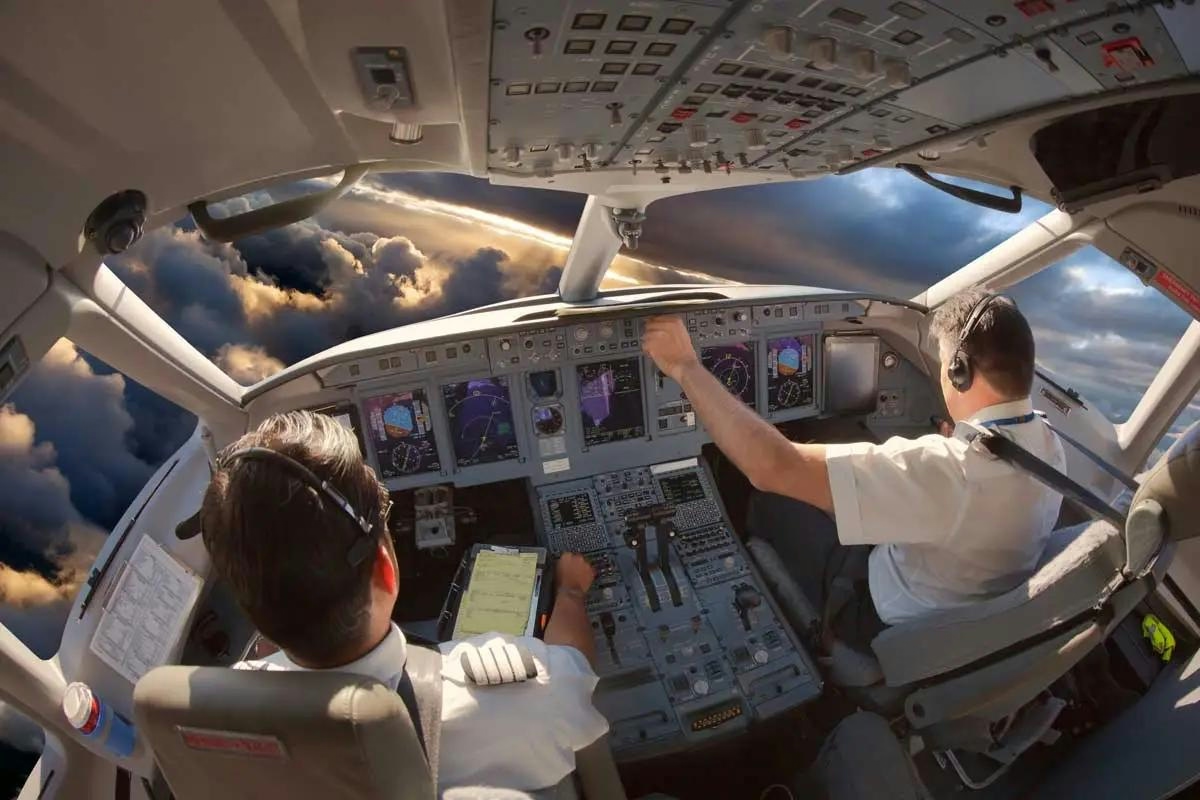
Widebody pilots, who operate the largest aircraft on long-haul international routes, occupy one of the most prestigious and demanding positions within the aviation industry. These professionals bear significant responsibility, managing complex aircraft across vast distances and often adhering to rigorous schedules. Alongside the challenges of the role, there is considerable interest in understanding the compensation associated with such a high-level position. This article explores the salary ranges for widebody pilots and the factors influencing their pay.
Salary Ranges and Industry Trends
At major U.S. legacy carriers such as Delta Air Lines, United Airlines, and American Airlines, senior widebody captains typically earn between $350,000 and $500,000 annually. This broad range is influenced by several factors, including the specific aircraft type, years of experience, and the extent of premium or overtime flying undertaken. First officers on widebody fleets also command substantial salaries, generally ranging from $150,000 to $320,000, positioning them among the highest-paid pilots worldwide.
Recent years have seen a marked increase in these figures, driven largely by post-pandemic contract negotiations and a persistent shortage of qualified long-haul pilots. To attract and retain talent amid an impending wave of retirements among senior pilots, major airlines have raised pay by 30 to 40 percent. By comparison, regional pilots often begin their careers earning around $90,000, making the transition to a widebody fleet at a major airline a significant financial advancement—often doubling their income. A decade ago, a $300,000 salary was considered the upper echelon for pilots; today, it frequently represents the baseline for mid-career widebody captains. The combination of strong passenger demand and intense competition for experienced crew members has elevated widebody pilots to some of the most valuable roles in commercial aviation.
Compensation Structure and Market Influences
Widebody pilot compensation differs from traditional salaried roles, as it is calculated on a trip-by-trip basis. Pilots are paid for "block time," which spans from the moment an aircraft’s brakes are released at the departure gate until they are set at the arrival gate. Time spent in pre-flight briefings, airport terminals, or layovers is generally unpaid. Beyond base hourly rates, pilots receive per diem allowances and international overrides, which can substantially increase total earnings, particularly on long-haul and overnight flights.
The salary environment is also shaped by broader industry dynamics, notably the competition between aircraft manufacturers Airbus and Boeing. In January 2026, Boeing delivered eight widebody aircraft compared to just one from Airbus, highlighting Boeing’s current dominance in this market segment. This dominance has heightened demand for Boeing-trained pilots, potentially driving their salaries higher as airlines vie for qualified personnel.
Looking ahead, the landscape may evolve as Airbus’s new head of commercial aircraft, Lars Wagner, has announced plans to significantly increase widebody production. Should Airbus succeed in expanding its market share, demand for Airbus-qualified pilots could rise, potentially altering salary structures and opportunities across the sector.
Conclusion
The financial rewards for widebody pilots reflect both the expertise required and the competitive forces within the aviation industry. As airlines and manufacturers continue to compete and adapt, pilot salaries will remain a critical factor in attracting and retaining talent at cruising altitudes.

Etihad Airways Suspends Airbus A380 Flights on Key Route

Aditya Birla Group Seeks Approval for Aircraft Leasing in GIFT City

Qatar Airways Highlights Innovation and Connectivity at Arabian Travel Market 2026

Hong Kong's Five-Year Plan Includes Andrew Fan's Aircraft Parts Processing Hub Proposal

ACIA Aero Leasing Delivers ATR72-600 to Air Nostrum

RTX Appoints Jill Albertelli as Head of Pratt & Whitney

TAT Technologies Joins Beyond Aero Hydrogen Aircraft Program

AURAK Study Highlights Barriers to Air Taxi Adoption in Emerging Economies

Xiamen Air Selects Altitude for 787 Maintenance at Heathrow

Etihad and Swissport Extend Global Partnership
