
Orquesta conocimientos de IA para convertirlos en acción

Tendencias
Categories
What We Know About Turkey’s F-35-Class Aircraft Engine
What We Know About Turkey’s F-35-Class Aircraft Engine
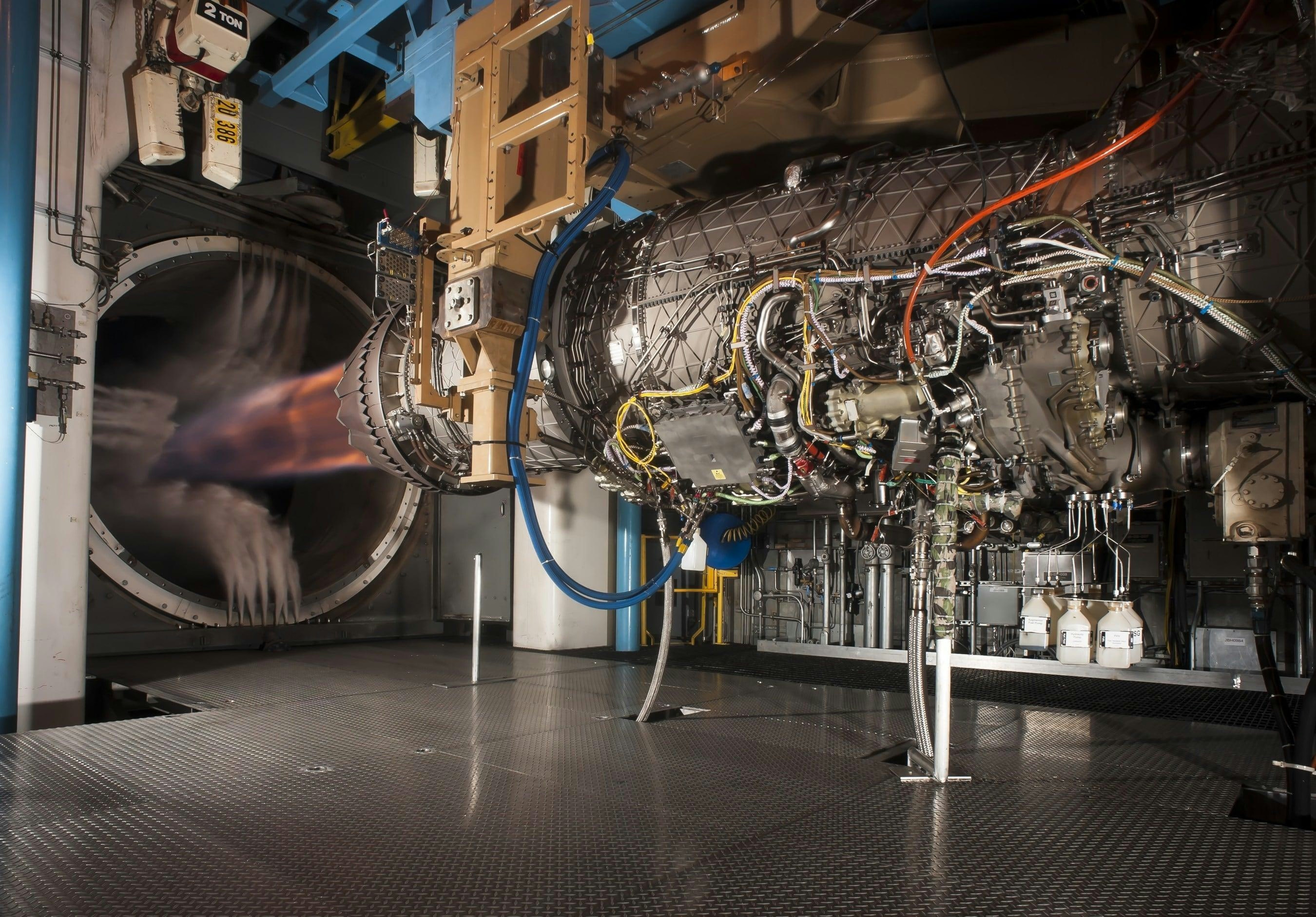
Turkey has unveiled plans to develop a new fighter jet engine capable of producing 42,000 pounds of thrust, placing it in the same performance category as the single-engine F-35. This initiative reflects Turkey’s broader ambition to expand its domestic defense aerospace industry, aiming to achieve greater self-reliance and reduce dependence on foreign suppliers amid shifting geopolitical dynamics.
The Complexity of Fighter Jet Engine Development
The design and manufacture of advanced fighter jet engines represent one of the most challenging endeavors in aerospace engineering. Currently, only a select group of countries possess the comprehensive capability to develop these engines from inception to production. Leading manufacturers include the United States, with Pratt & Whitney and GE Aerospace; the United Kingdom’s Rolls-Royce; France’s Safran; Russia’s NPO Saturn and Klimov; and China’s Shenyang. Other notable contributors to the field include Ukraine’s Ivchenko-Progress and Motor Sich, Japan’s IHI Corporation, and Germany’s MTU Aero Engines.
Most nations developing advanced combat aircraft continue to rely on foreign engine suppliers. For instance, Sweden’s Saab Gripen E is powered by the American GE F414 engine, South Korea’s KF-21 and India’s Tejas utilize the GE F404, and the Sino-Pakistani JF-17 Thunder operates with Russia’s Klimov RD-93. Turkey’s own Kızılelma combat drone employs the Ukrainian Ivchenko-Progress AI-322F engine.
Breaking into this elite group of engine producers is a formidable challenge. China’s journey to field carrier-capable engines involved decades of reverse engineering, international collaboration, and substantial investment. Similarly, India’s development of the GTRE GTX-35VS Kaveri engine has spanned over thirty years, with operational deployment still pending.
Turkey’s KAAN Fighter Jet and Engine Development Efforts
Following its removal from the F-35 program in 2017 due to the acquisition of Russian S-400 air defense systems, Turkey accelerated efforts to develop the indigenous KAAN fighter jet. The KAAN, which completed its maiden flight in 2024, incorporates some low-observability features and is projected to enter service between 2028 and 2030. The aircraft has attracted export interest, notably from Indonesia, although prospective buyers have expressed concerns regarding potential U.S. export restrictions, particularly those related to American-made engines.
Turkey has consistently emphasized its goal for the KAAN to operate free from U.S. International Traffic in Arms Regulations (ITAR), which would necessitate a fully domestic engine. Despite these ambitions, the KAAN currently remains dependent on U.S.-supplied engines, and Turkey has publicly voiced frustration over delivery delays—a challenge similarly faced by India in its indigenous fighter programs.
Implications for Turkey’s Defense Industry and the Global Market
Turkey’s pursuit of a domestically produced F-35-class engine forms part of a wider strategy to bolster its defense industrial base, leveraging key companies such as TUSAŞ, ASELSAN, ROKETSAN, and HAVELSAN. This drive toward self-sufficiency has the potential to alter the global defense landscape by intensifying competition among established aerospace contractors. In response, major industry players like Boeing are increasing production of platforms such as the F-15EX, which is positioned as a complementary asset to the F-35.
Concurrently, shifts in U.S. Air Force procurement priorities—such as the planned replacement of the A-10 Warthog with the F-35 for combat search-and-rescue missions—underscore the F-35’s growing centrality in modern air combat. These developments may further influence market dynamics as new competitors emerge.
Turkey’s success in developing a homegrown fighter jet engine would represent a significant technological and industrial milestone. However, the path ahead remains challenging, and the coming years will be critical in determining whether Turkey can surmount the technical and industrial obstacles to join the ranks of the world’s elite engine producers.

Etihad and Swissport Extend Global Partnership

Sepehran Airlines B737 Returns to Mashhad After Tyre and Engine Issues

Etihad Deploys Widebody Fleet to Meet Strong Demand

Korean Air Finalizes $36.2 Billion Deal with Boeing

Australia’s RFDS Queensland Section Orders Six King Air 260Cs

Korean Air Finalizes Order for 103 Boeing Jets and Engines

Embraer E195-E2 Features Distinctive Engine Placement Among Regional Jets

What Passengers Can Expect on Boeing’s New 777X Jet

How Ethiopian Airlines Became Africa’s Leading Carrier Amid Gulf Competition

Joby Aviation Extends Autonomous Flight Capabilities with Cross-Country Tour
