Imagen

AeroGenie — Tu copiloto inteligente.

Pregunta cualquier cosa. Analiza todo. Actúa al instante.

Tendencias

Categories

Will Delta Eventually Order Boeing 787 Dreamliners?
July 13, 2025By ePlane AI
Will Delta Eventually Order Boeing 787 Dreamliners?
0
0
Delta Air Lines
Boeing 787 Dreamliner
Widebody Fleet Strategy

Will Delta Eventually Order Boeing 787 Dreamliners?

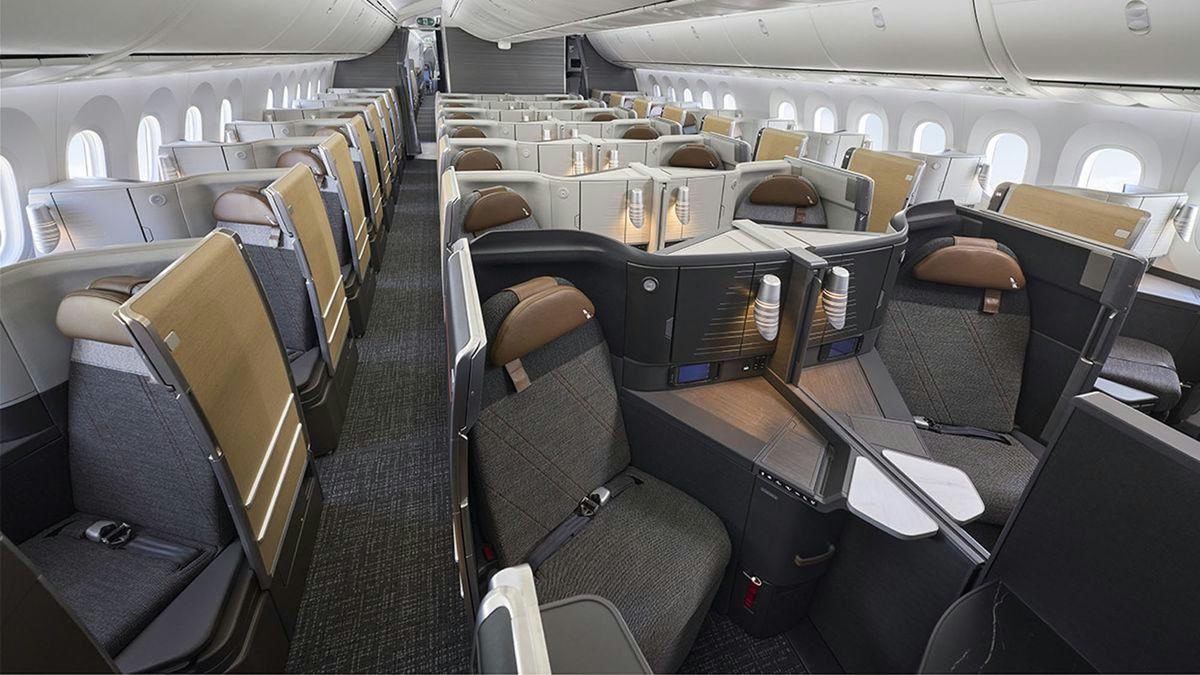
Speculation is growing within the aviation industry regarding whether Delta Air Lines will place an order for Boeing 787 Dreamliners, particularly the largest -10 variant. Although no official announcement has been made, industry analysts and frequent commentators have identified indicators suggesting that Delta may be approaching an agreement with Boeing. Such a move would represent a notable shift in the airline’s widebody fleet strategy.

Current Fleet Composition and Renewal Strategy

Delta’s recent long-haul fleet renewal efforts have predominantly focused on Airbus aircraft. The airline currently operates 38 Airbus A350-900s, with an additional six on order, and has committed to acquiring 20 A350-1000s. These aircraft serve as the cornerstone of Delta’s transpacific and ultra-long-haul operations. For transatlantic routes, Delta relies on 36 Airbus A330-900neos, supplemented by three more jets on order.

Despite these modern additions, Delta continues to operate a significant number of older widebody aircraft. This includes 42 Airbus A330ceos—comprising 11 A330-200s and 31 A330-300s—with an average age between 16 and 20 years. The airline also maintains a fleet of 60 Boeing 767s, split between 39 767-300ERs and 21 767-400ERs, which average 25 to 30 years in service. The 767-300ERs, in particular, are expected to be retired from international routes by the end of the decade, underscoring the need for replacement aircraft.

The Boeing 787-10: Suitability and Challenges

The Boeing 787-10, the largest variant of the Dreamliner family, offers compelling per-seat economics and is well-suited for transatlantic and South American routes. However, its shorter range compared to other Dreamliner models may limit its deployment on some of Delta’s longest-haul flights. An order for the 787-10 would not only diversify Delta’s widebody fleet but also signal a potential renewal of its partnership with Boeing.

Nevertheless, several challenges remain. The Dreamliner program has encountered production delays and quality control issues in recent years, raising concerns about operational reliability and customer satisfaction. These ongoing issues could influence Delta’s decision-making process, given the airline’s strong emphasis on operational consistency.

Market Implications and Competitive Pressures

Market reactions to a potential Delta order for the 787-10 are likely to be mixed. Some investors and industry analysts may interpret such a move as a positive indicator of Boeing’s recovery and the broader widebody aircraft market, especially in light of Boeing’s projections for strong future demand. Conversely, others may remain cautious due to the Dreamliner’s recent production challenges.

Meanwhile, competitors such as American Airlines have been expanding their Dreamliner fleets, which could exert pressure on Delta to act in order to maintain competitiveness in the long-haul segment. Ultimately, Delta’s decision will depend on a combination of operational requirements, financial considerations, and confidence in Boeing’s ability to deliver reliable aircraft. While the airline has favored Airbus in recent fleet renewals, the imperative to replace aging 767s and preserve flexibility in its international network may make a Boeing 787 order increasingly probable in the coming years.

Comments

  • G

    Gill

    @Dan - with the XE. Future needs fuel sustainability as well as mega comfy seats.

  • D

    Dan

    Will they become the first trent 1000 us operator

More news
Four Gateway Towns to Lake Clark National Park

Four Gateway Towns to Lake Clark National Park

Four Gateway Towns to Lake Clark National Park Lake Clark National Park, one of the least-visited national parks in the United States, owes its relative obscurity not to a lack of natural beauty but to its remote and challenging location in Alaska. Visitors who undertake the journey are rewarded with breathtaking landscapes, including the Neacola and Chigmit mountain ranges, active volcanoes, expansive glaciers, and pristine lakes teeming with salmon. Access to the park is primarily by small charter planes departing from several nearby towns, with boat travel possible only under favorable conditions. Careful planning is essential, as the specific area of the park a visitor wishes to explore influences the choice of aircraft and charter operator. Gateway Towns and Their Roles Each of the four principal gateway towns—Kenai, Homer, Kodiak, and Anchorage—provides charter services and local guides that facilitate direct access to Lake Clark National Park. These communities, while serving as vital links to the park, face distinct challenges and opportunities as they navigate changing economic landscapes and evolving patterns of tourism. Kenai, a peaceful town with a population of approximately 7,770, is renowned for its world-class salmon fishing along the Kenai River. It functions as a practical base for visitors to Lake Clark, offering air-taxi services such as Alaska West Air, which operates charter flights into the park’s remote wilderness. Natron Air, based at nearby Soldotna Airport, also provides scenic flights over glaciers, volcanoes, and wetlands. Given the high demand during summer months, advance booking is strongly advised. After excursions into the park, visitors can enjoy local dining options like Louie’s Steak and Seafood, arrange fishing charters, or unwind at accommodations such as the Quality Inn Kenai. Homer, often referred to as the “Halibut Fishing Capital of Alaska,” is situated on Kachemak Bay and draws anglers and outdoor enthusiasts alike. The Land’s End Resort offers waterfront lodging with panoramic views of the Kenai Mountains. Charter operators including Adventure Airways, Smokey Bay Air, and Stellar Air Service provide flights into Lake Clark National Park and nearby bear-viewing sites. Adventure Airways specializes in bear-viewing excursions, while other operators require advance arrangements for charters. Beyond the park, Homer features attractions such as Bishop’s Beach Park, the Beluga Slough Trail, and the Pratt Museum, enriching the visitor experience. Kodiak, located on Kodiak Island, serves as another critical transportation hub for accessing Lake Clark National Park. The town is distinguished by its rich fishing heritage and abundant wildlife viewing opportunities, with charter flights connecting visitors directly to the park. Anchorage, Alaska’s largest city, acts as a primary gateway for travelers bound for Lake Clark. The Ted Stevens Anchorage International Airport offers a broad range of charter services. Recent developments, including seasonal nonstop flights from Boise to Anchorage, have enhanced the region’s accessibility. This improved connectivity is expected to stimulate tourism, benefiting local economies while also intensifying competition among the gateway towns. Economic Outlook and Future Considerations Looking ahead to 2026, the gateway towns may encounter increased economic volatility influenced by internal divisions within the Federal Reserve and extreme market valuations. Anticipated Federal Reserve rate cuts and heightened market fluctuations could affect local tourism and business operations. In response, these communities and charter operators are likely to adapt their strategies to attract visitors, capitalizing on new airline routes and enhancing local amenities to maintain competitiveness amid economic uncertainties. For travelers, a thorough understanding of the unique access points and local conditions of each gateway town is essential for planning a successful visit to Lake Clark National Park—one of Alaska’s most spectacular yet secluded natural treasures.
PRM Assist Secures €500,000 in Funding

PRM Assist Secures €500,000 in Funding

PRM Assist Secures €500,000 to Accelerate Global Expansion Dublin-based aviation technology company PRM Assist has successfully raised €500,000 in new funding to support its international growth and enhance its software platform designed for airport passenger-assistance operations. The investment round, backed by Enterprise Ireland and technology investor Paul McKeon, will facilitate the company’s entry into new markets and further development of its platform, which optimizes services for passengers with reduced mobility. Founded in 2021, PRM Assist currently employs ten staff members across its Dublin and Dubai offices, with plans to increase its workforce to fifteen by the end of next year in response to growing demand from airports and airlines. The company’s technology replaces traditional manual processes with real-time tools that coordinate live tasking, monitor passenger flows, and generate compliance reports. Presently, PRM Assist’s platform is operational in 15 airports across Europe and the Middle East, and the company is actively collaborating with airlines to improve accessible aviation workflows. Conor Halpin, co-founder and director of business development, emphasized the significance of the new funding, stating, “With the support of both Paul and Enterprise Ireland, we can accelerate our mission to improve the passenger journey for people requiring assistance and set new standards for accessible aviation operations.” The capital injection will be directed towards expanding the engineering and customer-success teams, enhancing real-time operational capabilities, and exploring the integration of artificial intelligence and machine learning technologies into the platform. Strategic Outlook and Market Challenges Investor Paul McKeon underscored PRM Assist’s focus on addressing a critical operational need within the aviation sector, noting that the company’s technology “delivers real value to airports and airlines” by improving both efficiency and the passenger experience. Amanda Ward, head of digital technologies at Enterprise Ireland, described PRM Assist as a prime example of Irish innovation with significant global potential. She added, “Their novel platform provides an effective approach for airlines to manage real-time assistance for passengers with reduced mobility in busy and high-traffic airport settings.” Despite the successful funding round, PRM Assist faces several challenges as it scales its operations. Market acceptance remains a key factor, particularly as airports and airlines carefully evaluate new technologies amid ongoing global economic pressures such as tariffs and inflation. Additionally, the competitive landscape is intensifying, with rival companies expected to increase their own funding efforts and accelerate product development in response to heightened investor interest in aviation and fintech solutions. As airports worldwide continue to invest in real-time assistance tools to comply with regulatory requirements and meet passenger expectations, PRM Assist aims to establish itself as a leader in accessible aviation technology. The company’s future growth will depend on its ability to navigate complex market dynamics, differentiate its offerings, and consistently deliver measurable value to both operators and travelers.
InterGlobe Aviation Shares Rise 4.3% Following January Portfolio Rebalancing

InterGlobe Aviation Shares Rise 4.3% Following January Portfolio Rebalancing

InterGlobe Aviation Shares Rise 4.3% Following January Portfolio Rebalancing InterGlobe Aviation, the parent company of IndiGo, experienced a notable 4.3% increase in its share price, reaching a high of INR 4,946. This rise occurred despite a broader market decline of 100 points, underscoring the stock’s relative strength. The surge follows the January 2026 portfolio rebalancing by InvestingPro’s ProPicks AI, which added InterGlobe Aviation to its Bharat Market Outperformers strategy at a price of INR 5,111. AI-Driven Investment Strategy and Market Impact ProPicks AI employs advanced Artificial Intelligence and Machine Learning techniques to analyze historical data alongside more than 50 financial metrics, identifying stocks with significant rally potential. The inclusion of InterGlobe Aviation in the portfolio highlights the tool’s capacity to detect promising investment opportunities even amid market volatility. This timely addition appears to have contributed to renewed investor interest in the company’s shares. Operational Challenges and Market Response InterGlobe Aviation’s recent stock performance follows a difficult period marked by a major operational disruption in December 2025. IndiGo faced widespread flight cancellations and delays, resulting in compensation payouts exceeding 5 billion rupees to affected customers. This incident raised concerns regarding the airline’s operational resilience and attracted increased scrutiny from investors. The positive market reaction in January suggests a partial restoration of confidence, although the episode may continue to influence investor sentiment and prompt strategic responses from competitors within the airline industry. Performance of the Bharat Market Outperformers Strategy Despite these challenges, InterGlobe Aviation’s recovery underscores the effectiveness of ProPicks AI’s early identification of potential growth stocks. The Bharat Market Outperformers portfolio, which includes several other high-performing stocks, has delivered impressive returns since its inception. Since launching in 2019, the strategy has achieved a cumulative return of 972.4%, equating to an annualized return of 40.1%. To illustrate, an initial investment of INR 10,000 in this portfolio would have grown to INR 1,07,236, compared to INR 23,551 in the benchmark Nifty 50 index. It is important to note that returns prior to January 2025 are based on backtesting, as the strategy went live in 2025. As InterGlobe Aviation continues to navigate the aftermath of its operational setbacks, its recent stock performance reflects both the company’s resilience and the predictive capabilities of AI-driven investment tools. The evolving competitive landscape, shaped by investor sentiment and strategic moves by rival airlines, will remain a critical factor to watch in the coming months.
Key Market Segments Shaping Airline Route Profitability Software

Key Market Segments Shaping Airline Route Profitability Software

Key Market Segments Shaping Airline Route Profitability Software The airline route profitability software market is garnering considerable attention as carriers worldwide strive to enhance operational efficiency and maximize revenue streams. Fueled by rapid technological advancements and an increasing reliance on data-driven decision-making, this sector is anticipated to experience significant growth in the coming years. Market Size and Growth Outlook Industry projections estimate the airline route profitability software market will reach $25.33 billion by 2030, expanding at a compound annual growth rate (CAGR) of 10.8%. This growth is largely attributed to the widespread adoption of artificial intelligence-powered analytics, which facilitate more accurate assessments of route profitability. The integration of real-time operational and financial data into software platforms further strengthens decision-making capabilities. Cloud-based solutions are gaining prominence due to their scalability and flexibility in network planning, while advanced forecasting tools have become indispensable for navigating unpredictable demand patterns and market volatility. The market expansion is also supported by comprehensive service offerings, including software updates, customization, and continuous performance monitoring. Key trends shaping the industry encompass real-time route profitability measurement, the integration of multi-channel fare data into pricing engines, and the rising demand for modular, adaptable profitability platforms. Additionally, there is notable growth in integrated scenario modeling for new route development and increased adoption of cloud-based route analytics, particularly among regional carriers. Industry Leaders and Recent Developments The competitive landscape is dominated by major players such as The Boeing Company, IBM, Infosys, Wipro, Amadeus IT Group, Sita Aero, Lufthansa Systems, Pros Inc., and Travelport Worldwide Ltd. These companies are heavily investing in innovation to sustain and enhance their market positions. A significant development occurred in July 2024 when Portside, a US-based provider of cloud-based aviation software, acquired Takeflite, a New Zealand firm specializing in airline route profitability solutions. This strategic acquisition aims to broaden Portside’s portfolio, enabling airlines to better manage complex and dynamic operational demands through enhanced software capabilities. Innovations and Emerging Trends Industry participants are increasingly leveraging AI-driven tools to optimize flight schedules, thereby improving route efficiency, maximizing revenue, and refining operational decisions. These sophisticated algorithms analyze data related to scheduling, aircraft utilization, crew assignments, and route planning to enhance profitability while minimizing delays. An illustrative example is the October 2024 partnership between Alaska Airlines and UP.Labs, which resulted in the launch of Odysee. This innovative tool can execute hundreds of simulations within seconds, significantly improving travel planning and enhancing the customer experience. Market Challenges and Strategic Responses Despite promising growth prospects, the market faces several challenges. Heightened competition and geopolitical volatility, underscored by concerns from carriers such as Korean Air, compel airlines to continuously adapt their strategies. Economic downturns pose particular risks to low-cost carriers that depend heavily on price-sensitive travelers, necessitating adjustments in routes, pricing structures, and service offerings. In response, competitors are differentiating themselves through initiatives such as launching new routes, upgrading airport lounges, and modifying frequent flyer programs to sustain profitability. Furthermore, uncertainty in regions like Latin America and the Caribbean complicates route planning and profitability forecasting, demanding agile, data-driven approaches from airline executives. Outlook As airlines operate within a landscape characterized by rapid technological innovation and external uncertainties, the demand for sophisticated route profitability software is expected to accelerate. Providers capable of delivering adaptable, data-rich, and scalable solutions will be best positioned to support airlines in maintaining profitability and operational resilience amid an evolving global market.
Locatory.com Gains Traction Among Aviation MROs and Suppliers

Locatory.com Gains Traction Among Aviation MROs and Suppliers

Locatory.com Gains Traction Among Aviation MROs and Suppliers In the dynamic aviation sector, maintenance, repair, and overhaul (MRO) providers along with their suppliers are increasingly adopting digital platforms to enhance procurement processes, accelerate sales, and broaden their global reach. With nearly two-thirds of aviation professionals exploring artificial intelligence and automation to minimize unexpected downtime through predictive maintenance, digital solutions have become indispensable for operational efficiency. Locatory.com’s Expanding Role in Aviation Procurement Locatory.com has established itself as a significant contributor to this digital transformation by offering tools that align with current industry trends and deliver measurable improvements. The platform now supports over 25,000 aviation professionals, facilitating the sourcing of aircraft parts, consumables, chemicals, equipment, and related services. Users have reported a transition from slow, reactive supply chains to systems characterized by speed, transparency, and actionable performance metrics. A notable example is Cyprus-based MRO provider C.A.S., which utilized Locatory.com to revamp its procurement process. This overhaul resulted in faster response times, enhanced inventory management, and access to a wider supplier network. These improvements have reduced operational delays and unlocked new business opportunities, underscoring the tangible benefits of digital procurement platforms. On the supplier side, companies such as Executive Jet Support have experienced increased international visibility and more streamlined sales processes. Users emphasize that Locatory.com fosters trust and transparency—critical elements for repeat business and sustainable growth within aviation supply chains. Market Trends, Challenges, and Competitive Dynamics The global MRO market is projected to reach approximately US$137 billion by 2032, while aerospace parts manufacturing could surpass US$1.5 trillion. Despite this promising growth, the industry faces significant challenges. Inefficient request-for-quote (RFQ) processing often results in slow and disorganized quoting, leading to missed business opportunities. Buyers frequently have limited visibility into the full spectrum of available suppliers, while operational bottlenecks in production and logistics disrupt schedules and inflate costs. Additionally, prolonged sales cycles caused by manual quote tracking hinder timely decision-making and reduce conversion rates. These inefficiencies contribute to late deliveries, inventory imbalances, and restricted market access, collectively costing the industry billions annually through supply chain disruptions and aircraft downtime. Locatory.com addresses these issues by functioning as a centralized digital marketplace tailored specifically for aviation maintenance and supply. Its key features include instant connectivity to a global network of over 25,000 professionals and rapid RFQ initiation, averaging just 17 minutes. Despite its growing momentum, Locatory.com faces considerable challenges. Competition from established MRO platforms remains intense, and continuous innovation is essential to maintain a competitive edge amid rapid technological advancements. Seamless integration with the diverse systems already employed by aviation MROs and suppliers also presents a significant hurdle. Market responses have been mixed; while early adopters embrace the platform’s efficiencies, more traditional players remain cautious about new entrants. In turn, competitors are expected to enhance their own offerings, intensifying market competition and driving further innovation. As the aviation industry continues its digital evolution, platforms like Locatory.com are positioned to play a pivotal role, contingent upon their ability to adapt to shifting demands and sustain their advantage in an increasingly competitive landscape.
58 Pilots Graduate from Ethiopian University

58 Pilots Graduate from Ethiopian University

Ethiopian Aviation University Graduates 58 New Pilots Amidst Growing Global Demand On January 17, 2025, Ethiopian Aviation University, the academic institution owned by Ethiopian Airlines, celebrated the graduation of 457 aviation professionals, including 58 newly qualified pilots. Representing 12 countries, this diverse cohort marks a significant milestone as they prepare to enter an industry undergoing rapid technological and operational transformation. A Diverse and Skilled Cohort The graduating class comprised 58 pilots, 115 aircraft maintenance technicians, and 284 cabin crew members. The students hailed from Ethiopia, Cameroon, Chad, Gabon, Italy, Madagascar, Malawi, Nigeria, Senegal, Tanzania, Uganda, and Yemen, underscoring the university’s international reach and influence. Ethiopian Airlines Group CEO Mesfin Tasew highlighted the institution’s pivotal role in the airline’s success and the broader aviation sector. He remarked, “Ethiopian Aviation University has been the backbone of Ethiopian Airlines’ success for decades, training the skilled professionals behind the airline’s operations. By training aviation professionals from around the world, we proudly share our expertise and contribute to the growth of the global aviation industry.” Tasew further emphasized the graduates’ potential as future leaders in aviation, reflecting the university’s commitment to shaping the sector’s next generation. Preparing for a Technologically Advanced Aviation Industry As the aviation industry increasingly integrates artificial intelligence and digital technologies, the demand for highly trained and adaptable professionals is intensifying. The entry of these new pilots and specialists into the workforce comes at a time when airlines worldwide are competing to secure talent capable of navigating complex technological changes. This competition has prompted many carriers to invest in their own training programs or establish partnerships with educational institutions to ensure a reliable pipeline of qualified personnel. Industry experts note that the success of institutions like Ethiopian Aviation University is critical to developing a workforce prepared for the future challenges of aviation. Continuous investment in education and training is essential to sustaining growth, resilience, and innovation within the sector. Expanding Educational Excellence in Africa Ethiopian Aviation University has broadened its academic offerings in recent years, providing a comprehensive range of short-term, medium-term, undergraduate, and graduate programs. Recognized by the International Civil Aviation Organization (ICAO) as a Regional Training Center of Excellence, it stands as the largest aviation training center on the African continent. The latest graduates are expected to play a vital role in advancing the aviation industry both regionally and globally, as the sector adapts to evolving technologies and market demands.
The Engine Behind Boeing’s Latest Widebody Aircraft

The Engine Behind Boeing’s Latest Widebody Aircraft

The Engine Behind Boeing’s Latest Widebody Aircraft When Boeing unveiled the 787 Dreamliner, it marked a transformative moment in the evolution of long-haul air travel and widebody aircraft design. More than a mere successor to models like the Boeing 767 and Airbus A330, the Dreamliner introduced a fundamental shift through its extensive use of composite materials, advanced aerodynamic features aimed at reducing fuel consumption, and a modern cockpit equipped with standard head-up displays. Central to the aircraft’s promise of enhanced efficiency was the performance of its engines. The 787-10: Efficiency and Innovation in Focus The 787-10, the largest and most capable variant of the Dreamliner family, embodies Boeing’s commitment to efficiency and innovation. Launched in 2013 and taking flight in 2017, this model extends the composite airframe to its maximum length, accommodating approximately 330 passengers in a typical two-class configuration. Although its range is shorter than that of the 787-9, the 787-10 is optimized for high-density, long-haul, and premium regional routes. This makes it an attractive option for airlines aiming to replace aging widebodies such as the Airbus A330-300, Boeing 777-200, and early Airbus A340 models. Major international carriers including Singapore Airlines, United Airlines, Etihad Airways, and ANA have incorporated the 787-10 into their fleets, valuing its balance of capacity, efficiency, and reliability. The aircraft’s economic viability depends heavily on high utilization rates, which in turn place considerable importance on engine durability and extended time-on-wing performance. Consequently, engine selection for the 787-10 is especially critical, often more so than for its smaller Dreamliner counterparts. Engine Options and Market Preferences Boeing offers two exclusive engine choices for the 787 family: the Rolls-Royce Trent 1000 and the GE Aerospace GEnx. Both engines were developed specifically to meet the Dreamliner’s unique performance and environmental requirements. Initially, orders for the 787’s engines were fairly evenly divided between the two manufacturers. However, the 787-10 variant has seen a noticeable shift in airline preference, with market adoption increasingly favoring one engine over the other. Boeing’s dual-supplier strategy was designed to encourage competition and innovation while providing airlines with flexibility. The Rolls-Royce Trent 1000 employs the company’s signature three-shaft architecture, a design honed through multiple widebody programs. In contrast, the GE GEnx incorporates technological advancements tailored to the Dreamliner’s high bypass ratio and stringent environmental targets. Challenges Facing Boeing’s Widebody Portfolio Despite the technological advancements embodied in the 787-10, Boeing faces significant challenges in scaling up production and maintaining its market position. Lingering concerns from past safety incidents—including the 737 Max crashes and the midair door plug event—have affected the company’s reputation and disrupted delivery schedules. Regulatory scrutiny remains intense, with the Federal Aviation Administration (FAA) closely overseeing certification timelines for new models such as the 737 MAX 10. Decisions regarding emissions waivers also carry implications for Boeing’s stock performance. Additionally, Boeing’s 777F freighter model confronts difficulties in meeting evolving fuel-efficiency standards, prompting the company to seek regulatory waivers to sustain air cargo operations. Market dynamics are further complicated by intensifying competition from Airbus in the long-haul widebody segment. Some carriers, including Southwest Airlines, have postponed the introduction of new Boeing models amid ongoing certification challenges, reflecting a cautious stance in an uncertain industry environment. As Boeing navigates these multifaceted challenges, the performance and reliability of the 787-10 and its engines remain pivotal to the company’s efforts to restore confidence and uphold its competitive standing in the global widebody aircraft market.
UBTech Shares Rise After Airbus Orders Humanoid Robots

UBTech Shares Rise After Airbus Orders Humanoid Robots

UBTech Shares Rise Following Airbus Order for Humanoid Robots Shares of UBTech Robotics, a China-based robotics manufacturer, surged by as much as 8% in Hong Kong trading after the company announced that Airbus SE has placed an order for its Walker S2 humanoid robots. The robots are intended for deployment at Airbus’s aircraft manufacturing facilities, although specific details regarding the order’s size, pricing, delivery schedule, and the number of units involved were not disclosed by either party. Strategic Expansion and Industry Implications This agreement represents a significant milestone for UBTech, underscoring China’s strategic ambitions in the humanoid robotics sector. The company has reported securing over 1.4 billion yuan (approximately US$201 million) in orders for humanoid robots slated for 2025. UBTech has set ambitious production targets, aiming to manufacture 5,000 units in 2026 and doubling that output to 10,000 units in 2027. This rapid scale-up reflects the company’s commitment to commercializing humanoid robotics on a large scale, despite concerns within the industry about potential market saturation and regulatory scrutiny over a possible bubble. UBTech and Airbus have indicated plans to explore broader applications of robotics within aviation manufacturing, suggesting the potential for a long-term partnership. However, it remains unclear whether the Walker S2 robots will be introduced initially through a limited pilot phase or integrated more extensively across Airbus’s production lines. The Airbus deal follows UBTech’s earlier agreement with Texas Instruments, where its robots were deployed in semiconductor manufacturing. This cross-sector demand highlights the increasing appeal of humanoid robotics among major industrial players. The trend has contributed to a doubling of the Solactive China Humanoid Robotics Index over the past two years, as Chinese robotics firms continue to secure contracts with global manufacturers. Regulatory and Competitive Landscape Should the Walker S2 robots be deployed at Airbus facilities in Europe, they will be subject to the EU Machinery Regulation (EU) 2023/1230, which comes into effect in January 2027. This regulation introduces mandatory health and safety requirements, expanded oversight for autonomous mobile robots and AI-based safety functions, and conformity assessment procedures including CE marking. UBTech has yet to disclose how it plans to address these regulatory requirements. The new rules also create opportunities for system integrators, compliance consultancies, and service providers to assist with EU deployments and regulatory compliance. UBTech faces competition from other robotics firms, notably AGIBOT, which has established global sales leadership and made significant technological advances. According to Morgan Stanley, approximately 25 companies are positioned to dominate the humanoid robot market, which is projected to exceed $5 trillion by 2050. Nonetheless, analysts anticipate that widespread adoption will remain gradual until at least 2035, as the industry contends with technical, regulatory, and market challenges. Investor enthusiasm for the sector is further reflected in the rise of the RISE US Humanoid Robot ETF, signaling growing expectations for expansion within the US robotics industry. UBTech’s latest deal with Airbus not only elevates its market profile but also highlights the accelerating integration of humanoid robotics into global manufacturing, even as the industry navigates regulatory hurdles and intensifying competition.
Boeing’s Widebody Jet Sales Surge Signals Shift in Global Air Travel

Boeing’s Widebody Jet Sales Surge Signals Shift in Global Air Travel

Boeing’s Widebody Jet Sales Surge Signals Shift in Global Air Travel Boeing, the United States’ premier aerospace manufacturer, is witnessing a remarkable resurgence in commercial aircraft sales, particularly within the widebody jet segment. In 2025, the company secured approximately 1,175 gross aircraft orders—more than double the previous year’s total and surpassing its chief competitor, Airbus. This surge is largely driven by renewed demand for widebody aircraft such as the Boeing 787 Dreamliner, which experienced one of its strongest order years since its launch, alongside sustained interest in large twin-aisle jets designed for long-haul international routes. Industry Recovery and Market Outlook This increase in orders coincides with the global aviation industry’s recovery from the disruptions caused by the COVID-19 pandemic. Airlines are actively seeking efficient, long-range aircraft to rebuild capacity and accommodate the resurgence in travel demand. Boeing’s Commercial Market Outlook for 2025–2044 projects that global air traffic will more than double over the next two decades, necessitating a significant expansion of the world’s aircraft fleet. Widebody and long-range jets, including the 787 and the forthcoming 777X, are expected to be instrumental in connecting international markets and supporting this anticipated growth. Challenges Amid Growth Despite this positive momentum, Boeing continues to face considerable challenges. The company is working to scale up production following recent setbacks, including two fatal crashes involving the 737 Max and a widely publicized midair door plug incident. These events have led to heightened regulatory scrutiny, with the Federal Aviation Administration (FAA) closely overseeing emissions waivers and certification timelines for new models such as the 737 MAX 10. Nevertheless, investor confidence has rebounded, with JPMorgan recently raising its stock target for Boeing to $245, citing expectations of a cash-flow turnaround by 2026. Competitive Dynamics and Passenger Benefits The competitive landscape remains intense as airlines worldwide expand their long-haul fleets, incorporating not only Boeing’s Dreamliner but also Airbus’ A330 and A350 models. This rivalry is influencing airline strategies as carriers seek to offer more direct, long-distance routes and enhanced passenger experiences. For travelers, the surge in widebody jet orders translates into tangible benefits. New aircraft enable airlines to launch more direct, long-haul flights between major cities, reducing the need for layovers. Modern jets like the Boeing 787 feature advanced cabin amenities, including improved climate control systems, larger windows, and enhanced noise reduction, all of which contribute to greater comfort on extended journeys. Additionally, newer widebody models offer improved fuel efficiency and lower emissions compared to older fleets, aligning with the aviation industry’s growing emphasis on sustainability. While Boeing’s sales surge signals renewed strength in global air travel, the company’s ability to meet this demand will depend on overcoming production challenges and navigating complex regulatory requirements. As airlines continue to invest in next-generation widebody jets, passengers can anticipate expanded route options, improved comfort, and greater access to international destinations—heralding a significant shift in the future of global aviation.
French Aircraft Design Claims to Reduce Energy Consumption by Elevenfold

French Aircraft Design Claims to Reduce Energy Consumption by Elevenfold

French Startup Unveils Aircraft Design Claiming Elevenfold Energy Reduction As the aviation industry grapples with the urgent need to reduce its environmental footprint amid escalating climate change concerns, innovative solutions are emerging to address the sector’s complex decarbonization challenges. Despite growing adoption of sustainable aviation fuels (SAF), energy-efficient designs, and electric propulsion, the high costs and long service lives of aircraft continue to impede rapid transformation. Against this backdrop, Eenuee, a startup based in Saint-Étienne, France, has introduced a bold new concept aimed at revolutionizing regional air mobility. The Gen-ee Project: A Leap in Efficiency and Accessibility Eenuee’s Gen-ee project envisions a 100% electric aircraft capable of carrying up to 19 passengers over distances of 500 kilometers while consuming eleven times less energy than conventional planes. This dramatic improvement in energy efficiency could significantly reshape short-haul aviation, particularly in regions where rail and public transport infrastructure are limited or impractical. By combining accessibility with sustainability, the Gen-ee aims to open new routes and connect remote areas without the need for extensive airport infrastructure. Central to the Gen-ee’s innovation is its lifting-body fuselage, developed in partnership with Duqueine Group, a specialist in composite materials. Departing from the traditional tubular aircraft design, this aerodynamic form enhances performance and reduces energy consumption. The aircraft’s all-electric propulsion system promises quieter, cleaner flights, aligning with global efforts to reduce aviation’s environmental impact. Further expanding its versatility, Eenuee is developing a variant of the Gen-ee capable of water takeoffs and landings. This model incorporates hydrofoils—underwater wings that minimize drag at high speeds—drawing inspiration from high-speed racing boats. Such a design could facilitate smoother operations on water, enabling access to remote locations otherwise difficult to reach by conventional means. Industry Context and Challenges The aviation sector is accelerating its transition toward cleaner technologies, with SAF adoption playing a pivotal role in reducing greenhouse gas emissions without necessitating new airport infrastructure. Manufacturers are also deploying advanced systems to optimize flight paths, improve air traffic management, and adjust trajectories to minimize contrail formation—an often-overlooked contributor to global warming comparable in effect to carbon dioxide emissions. Despite these advances, the path to decarbonized air travel remains fraught with challenges. Industry leaders, including Bill Gates and the International Air Transport Association, stress the critical need for continued innovation and robust government policies to drive emissions reductions. Competitors are investing heavily in similar efficiency measures and exploring emerging technologies to maintain competitiveness in a rapidly evolving market. Eenuee’s Gen-ee project, with its targeted first flight in 2029, offers a certified, efficient, and low-noise solution tailored to regions such as Auvergne-Rhône-Alpes, where mountainous terrain complicates transport connectivity. By enabling economically viable routes that were previously unprofitable, the initiative supports both regional development and environmental stewardship. As the aviation industry confronts the dual imperatives of climate responsibility and market demand, projects like Gen-ee underscore both the potential and the obstacles inherent in achieving a zero-carbon future. The race continues for innovative solutions capable of delivering cleaner skies without sacrificing connectivity.
line










