
Orchestrer les insights d’IA pour les transformer en actions

Tendances
Categories
Advances in Air Taxis and Urban Air Mobility
Advances in Air Taxis and Urban Air Mobility
Joby Aviation’s Strategic Acquisition
Joby Aviation is poised to expand its footprint in the urban air mobility sector through the acquisition of Blade Air Mobility, a helicopter and seaplane operator, in a deal valued at up to $125 million. Blade’s operations, which span the New York City region and Southern Europe, will enhance Joby’s customer base and urban presence as it prepares to transition from demonstration flights to commercial air taxi services. This acquisition underscores the intensifying competition among companies striving to establish the first viable commercial air taxi networks.
Progress Toward Commercial Air Taxi Services
Air taxis, electrically powered vertical takeoff and landing (eVTOL) aircraft that blend characteristics of helicopters and small planes, are approaching commercial viability. Leading U.S. developers such as Joby Aviation and Archer Aviation have successfully completed piloted demonstration flights, a crucial step toward obtaining Federal Aviation Administration (FAA) certification to carry paying passengers. Major metropolitan areas including Los Angeles, Miami, New York City, and San Francisco are anticipated to be among the initial launch sites, with commercial operations targeted as early as 2026.
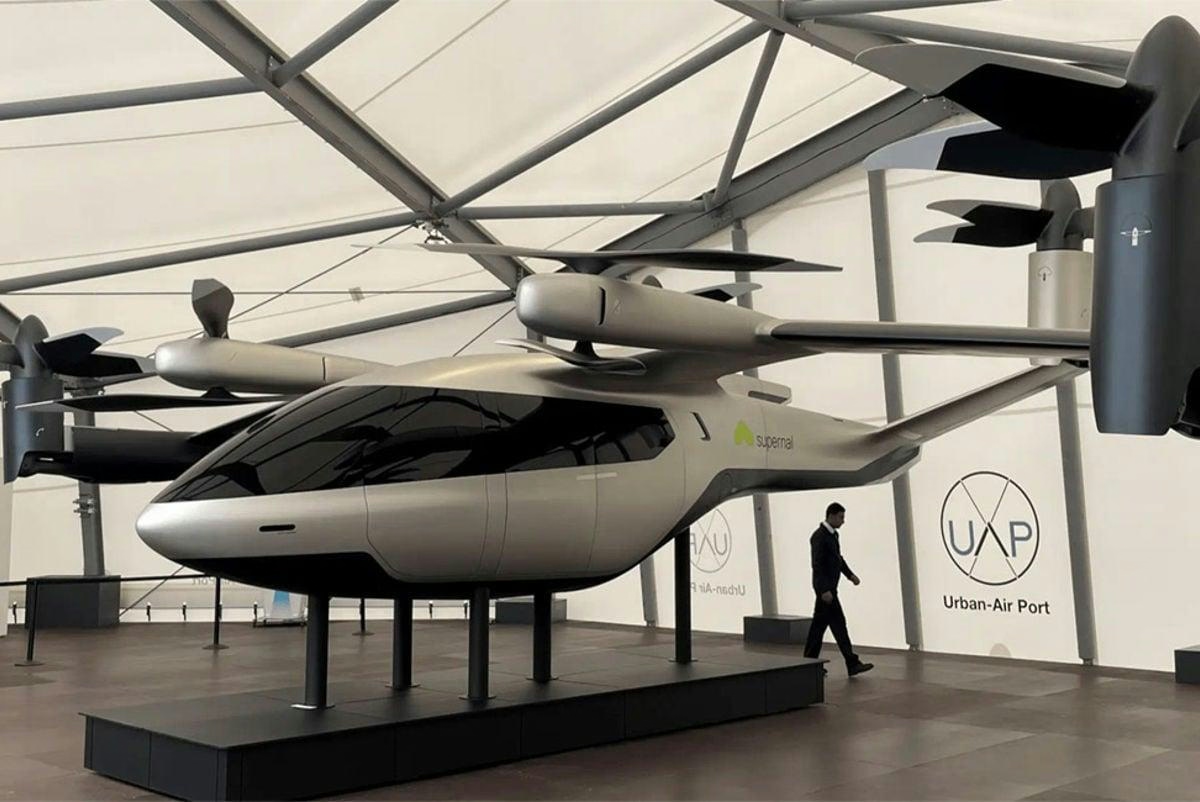
Archer Aviation, supported by Stellantis and United Airlines, and Joby Aviation, backed by Toyota Motor Corporation, are at the forefront of this emerging industry. Other significant participants include Wisk Aero, a Boeing subsidiary aiming for a 2030 launch, and Supernal, affiliated with Hyundai Motor Group. These companies are driving innovation in urban air mobility, seeking to transform the future of city transportation.
Technical and Regulatory Challenges
Despite promising advancements, the development of urban air mobility faces notable technical challenges. One key issue involves the integration of advanced communication systems, particularly 5G networks. Recent NASA testing revealed that aircraft propellers can interfere with 5G signals, indicating the need for further research to ensure reliable communication within existing aviation frequency bands.
The regulatory environment is evolving to support these innovations. The European Union Aviation Safety Agency (EASA) has introduced new regulations governing innovative air mobility, encompassing both eVTOL aircraft and drones. These rules establish a framework for certifying and integrating air taxi services into urban settings, complementing ongoing regulatory efforts by the FAA in the United States.
Shifting Competitive Landscape
The competitive landscape is rapidly evolving beyond traditional air taxi developers. In addition to Joby’s acquisition of Blade, companies like Uber are investing in premium robotaxi services through partnerships with electric vehicle manufacturer Lucid and autonomous vehicle startup Nuro. This signals a broader industry shift toward automated and electrified urban transportation solutions, reflecting the convergence of multiple technologies and business models.
As the sector advances, stakeholders continue to navigate technical, regulatory, and market challenges in their efforts to transition air taxis from experimental demonstration flights to routine urban transportation services.

Etihad Airways Suspends Airbus A380 Flights on Key Route

Aditya Birla Group Seeks Approval for Aircraft Leasing in GIFT City

Qatar Airways Highlights Innovation and Connectivity at Arabian Travel Market 2026

Hong Kong's Five-Year Plan Includes Andrew Fan's Aircraft Parts Processing Hub Proposal

ACIA Aero Leasing Delivers ATR72-600 to Air Nostrum

RTX Appoints Jill Albertelli as Head of Pratt & Whitney

TAT Technologies Joins Beyond Aero Hydrogen Aircraft Program

AURAK Study Highlights Barriers to Air Taxi Adoption in Emerging Economies

Xiamen Air Selects Altitude for 787 Maintenance at Heathrow

Etihad and Swissport Extend Global Partnership
