
Orchestrer les insights d’IA pour les transformer en actions

Tendances
Categories
AI and Robotics Transform Aviation Maintenance
AI and Robotics Transform Aviation Maintenance
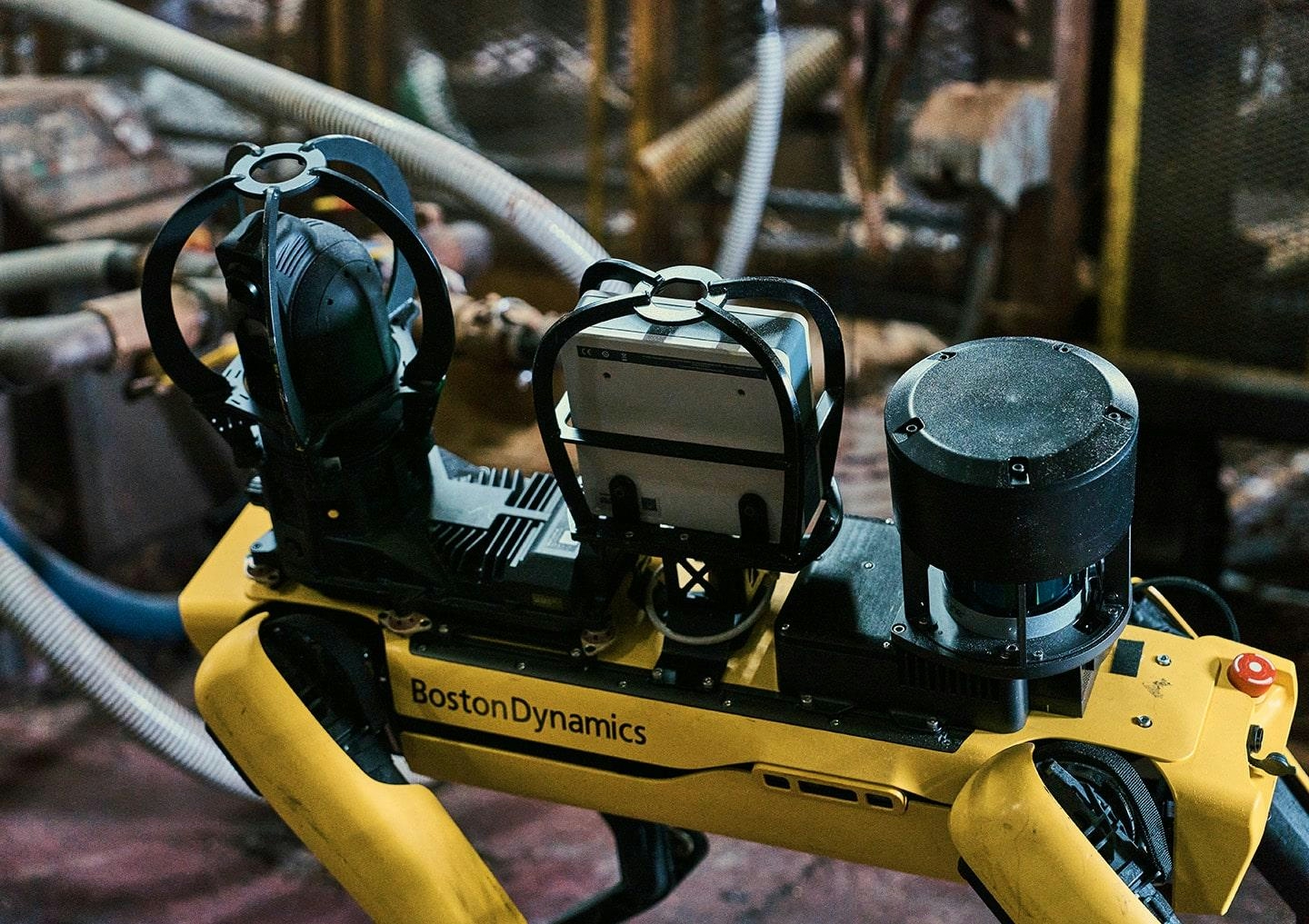
Artificial intelligence (AI), robotics, and blockchain technologies are increasingly reshaping aviation maintenance, offering the promise of enhanced efficiency, transparency, and safety. Historically, the aviation sector has been slower than other industries to adopt advanced AI solutions, despite possessing extensive operational data. However, recent advancements indicate a significant shift toward digital transformation within this critical field.
Blockchain: Enhancing Security and Transparency in Aviation Records
Blockchain technology, a decentralized form of distributed ledger, records data across multiple computers, making retroactive alterations virtually impossible. Each transaction, or “block,” is cryptographically linked to the previous one, creating a continuous, time-stamped chain. This structure ensures transparency, traceability, and data integrity without dependence on a central authority. Originally developed for digital currencies, blockchain has found applications in sectors requiring rigorous verification and auditability, including aviation.
Given the aviation industry's stringent safety standards and complex supply chains, blockchain’s attributes of immutability and cryptographic trust are particularly valuable. Currently, aviation compliance often relies on paper-based or siloed digital systems. International studies reveal that up to 60% of critical documents—such as licenses, certificates, and training records—remain in non-integrated formats. This fragmentation results in costly verification delays, documentation inconsistencies, and heightened risks of fraud or counterfeit parts. Blockchain’s tamper-evident audit trails and cryptographic verification mechanisms have the potential to streamline compliance processes, reduce human error, and enable instant authentication of credentials on a global scale.
Mindaugas Rainys, CEO of AERVIVA, emphasizes the importance of blockchain in aviation safety: “Compliance and verification are fundamental to safety. Blockchain introduces a layer of trust that is both technological and procedural. It ensures that every credential, entry, and certification can be authenticated instantly, anywhere in the world.”
Several industry pilots are already underway. SITA, in collaboration with the International Civil Aviation Organization (ICAO), has demonstrated privacy-preserving, offline verification of electronic personnel licenses, setting the stage for global standards. Meanwhile, the International Air Transport Association (IATA) is advancing digital identity initiatives that leverage blockchain and decentralized identifiers to create trusted, portable credentials for both staff and passengers. Active pilots are exploring the use of these technologies for staff authentication across various operations.
AI and Robotics: Tackling Workforce Shortages and Improving Efficiency
Despite the transformative potential of AI and robotics, skepticism remains among airline executives, shaped by previous disappointments and the slow maturation of applied AI technologies. Nonetheless, recent deployments of AI-driven engine technologies, such as those introduced by International Airlines Group (IAG), have been met with cautious optimism, helping to rebuild confidence in AI’s practical capabilities.
In response, competitors are making substantial investments in robotics, focusing on humanoid robots and AI-enabled enterprise automation. These innovations aim to address critical challenges, including the global shortage of maintenance technicians. Solutions like Zymbly are being introduced to enhance workforce productivity by simplifying documentation and administrative tasks, thereby allowing technicians to concentrate on essential maintenance activities.
Outlook for Digital Transformation in Aviation Maintenance
Market indicators reflect a growing interest in digital transformation within the aviation sector. Industry surveys from 2021 reveal that nearly 59% of airlines had planned blockchain pilot or research programs. As AI, robotics, and blockchain technologies continue to evolve, their integration is expected to deliver safer, more efficient, and more reliable aviation maintenance—contingent on the industry’s ability to overcome persistent skepticism and operational challenges.

Etihad Airways Suspends Airbus A380 Flights on Key Route

Aditya Birla Group Seeks Approval for Aircraft Leasing in GIFT City

Qatar Airways Highlights Innovation and Connectivity at Arabian Travel Market 2026

Hong Kong's Five-Year Plan Includes Andrew Fan's Aircraft Parts Processing Hub Proposal

ACIA Aero Leasing Delivers ATR72-600 to Air Nostrum

RTX Appoints Jill Albertelli as Head of Pratt & Whitney

TAT Technologies Joins Beyond Aero Hydrogen Aircraft Program

AURAK Study Highlights Barriers to Air Taxi Adoption in Emerging Economies

Xiamen Air Selects Altitude for 787 Maintenance at Heathrow

Etihad and Swissport Extend Global Partnership
