
Orchestrer les insights d’IA pour les transformer en actions

Tendances
Categories
AI Challenges NTSB Efforts to Keep Cockpit Audio Recordings Private
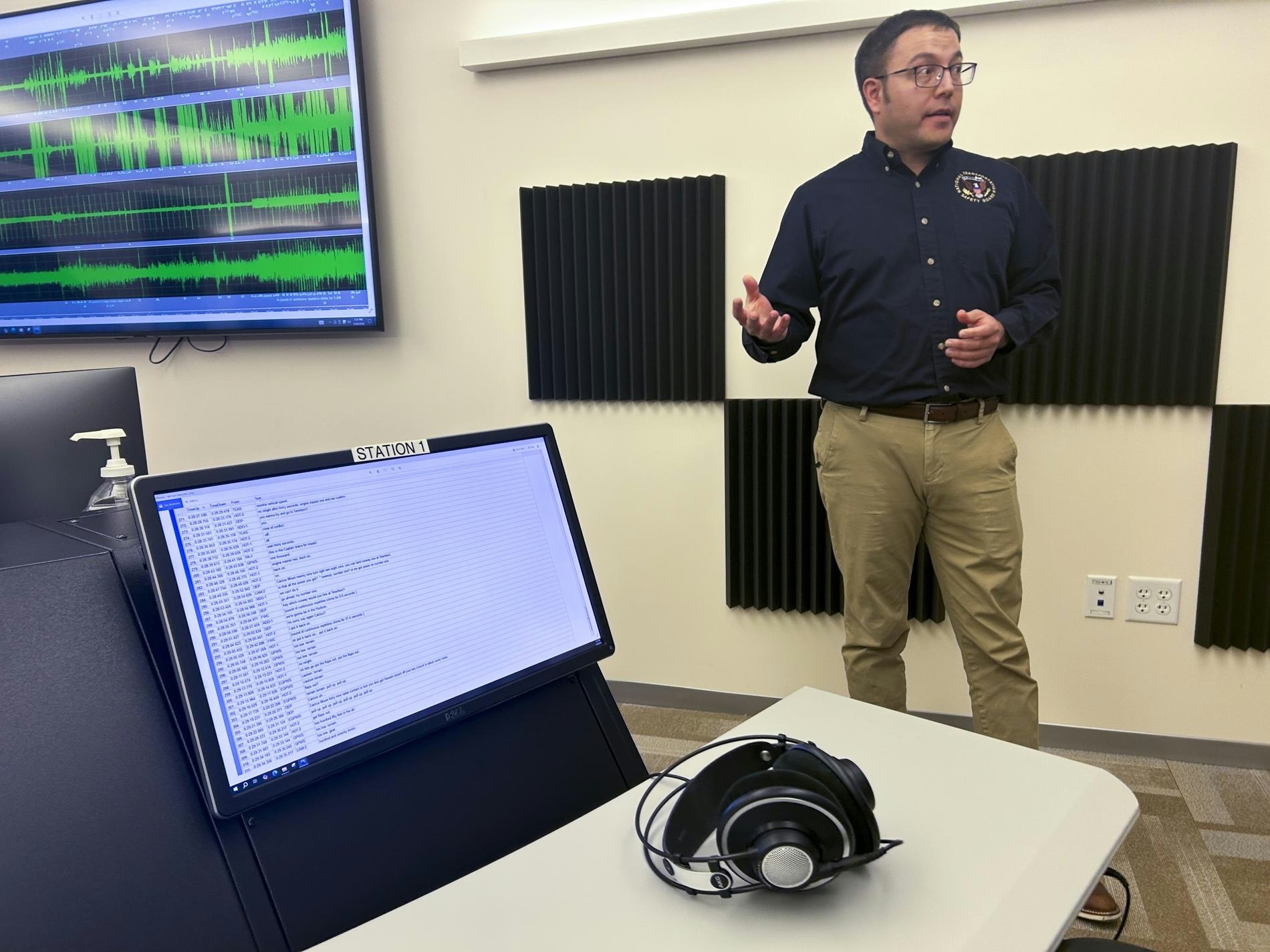
AI Advances Challenge NTSB’s Efforts to Protect Cockpit Audio Privacy
Reconstruction of Cockpit Audio from Visual Data
The National Transportation Safety Board (NTSB) is confronting unprecedented challenges in safeguarding the confidentiality of cockpit audio recordings due to recent advancements in artificial intelligence (AI). This issue came to light following the investigation of UPS flight 2976, which tragically crashed shortly after takeoff in Louisville, Kentucky last year, resulting in the deaths of all 15 people on board, including three pilots.
By law, the NTSB is prohibited from releasing cockpit voice recordings to the public. However, during its investigation into the UPS crash, the agency published spectrograms—visual representations of audio frequencies—on its website. These images were intended to assist investigators in analyzing a mysterious high-pitched ringing sound captured in the cockpit recording. The spectrograms were meant solely to provide insight into the crash and not to disclose the actual audio.
AI-Enabled Audio Reconstruction and Public Concern
The potential for reconstructing audio from these spectrograms was first identified by Scott Manley, an engineer and YouTuber, who noted that the visual data might allow the original sounds to be recovered. Manley explained that investigators examine not only spoken words but also ambient sounds, which can offer critical clues. He raised concerns on social media that the NTSB may have inadvertently exposed cockpit audio through the published spectrograms.
Following Manley’s observation, some individuals attempted to reconstruct the audio using AI tools. John McElhone, an operator of a small electrical turbine company with experience in AI applications, reported that it took him approximately ten minutes to convert the spectrograms back into audio using existing software. McElhone emphasized that while manual reconstruction is possible, AI significantly accelerates the process. Although he did not share his reconstructions publicly, others did, sparking widespread apprehension about the potential breach of sensitive information.
NTSB’s Response and Broader Implications
In response, the NTSB acted swiftly and decisively, temporarily removing its entire public docket system. This measure affected not only the UPS flight 2976 investigation but also thousands of other cases, aiming to prevent further unauthorized disclosures of sensitive cockpit recordings.
This incident highlights the increasing difficulty faced by the NTSB in maintaining the privacy of critical crash investigation data amid rapidly evolving AI technologies. As AI tools grow more sophisticated and accessible, regulatory agencies must confront new challenges related to data security and privacy, even when adhering to established protocols.
The UPS flight 2976 case exemplifies how technological progress can outstrip existing protective measures, compelling investigators and regulators to reevaluate their approaches to handling and disseminating information in the digital age.

Etihad Airways Suspends Airbus A380 Flights on Key Route

Aditya Birla Group Seeks Approval for Aircraft Leasing in GIFT City

Qatar Airways Highlights Innovation and Connectivity at Arabian Travel Market 2026

Hong Kong's Five-Year Plan Includes Andrew Fan's Aircraft Parts Processing Hub Proposal

ACIA Aero Leasing Delivers ATR72-600 to Air Nostrum

RTX Appoints Jill Albertelli as Head of Pratt & Whitney

TAT Technologies Joins Beyond Aero Hydrogen Aircraft Program

AURAK Study Highlights Barriers to Air Taxi Adoption in Emerging Economies

Xiamen Air Selects Altitude for 787 Maintenance at Heathrow

Etihad and Swissport Extend Global Partnership
