
Orchestrer les insights d’IA pour les transformer en actions

Tendances
Categories
AI is learning to fly airplanes — and aviation is starting to embrace it
AI is Learning to Fly Airplanes — and Aviation Is Starting to Embrace It
Advancements in AI-Driven Flight
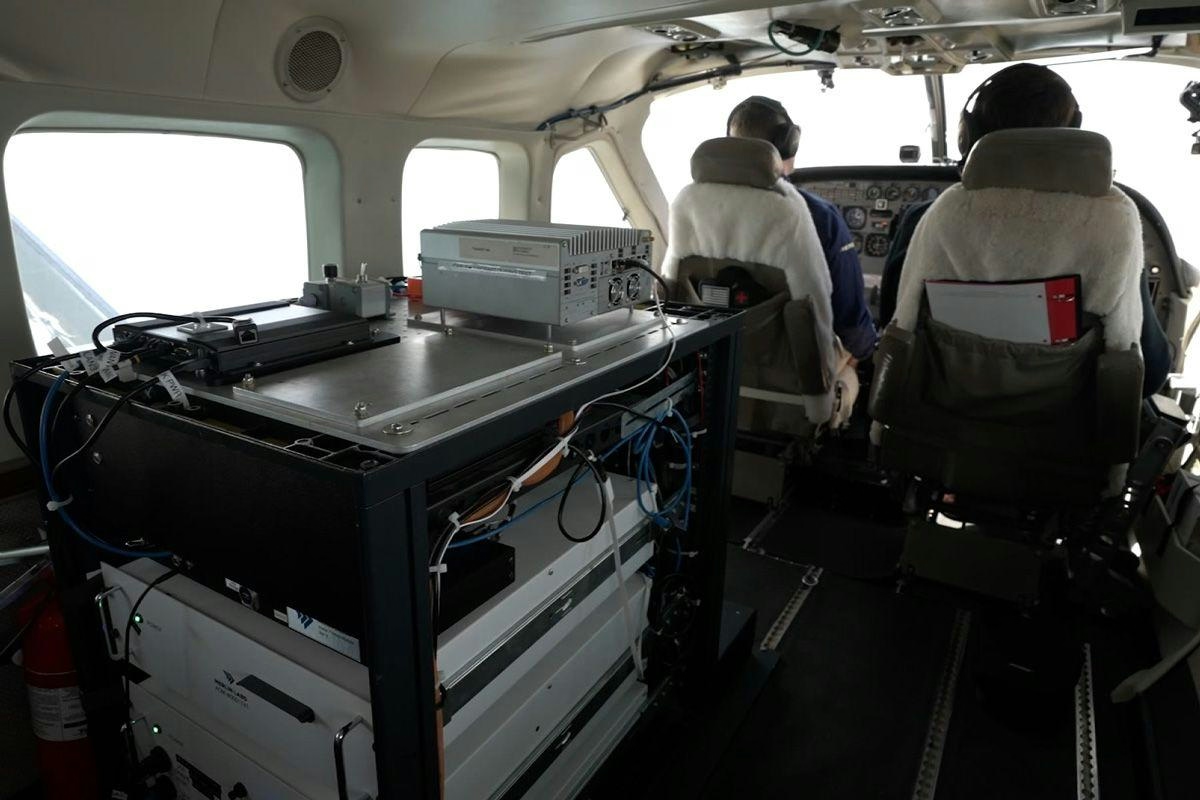
At Quonset State Airport in Rhode Island, a small Cessna Caravan takes off with its pilot, Matt Diamond, deliberately keeping his hands off the controls. The aircraft is guided entirely by an artificial intelligence system developed by Merlin Labs, marking a significant step forward in aviation automation. Unlike traditional autopilot systems, the Merlin Pilot employs natural language processing to interpret instructions from a simulated air traffic controller and responds via a computerized voice. When Diamond issues the command “Authorize,” the plane adjusts its heading autonomously, demonstrating a level of operational independence that challenges conventional pilot roles.
This hands-off approach represents a profound shift for aviators accustomed to manual control, but it is gaining momentum amid growing industry pressures. Airlines worldwide are confronting a severe pilot shortage, with Boeing forecasting a demand for over 600,000 new pilots in the next twenty years. Concurrently, air traffic control systems are under strain, grappling with increased traffic and a series of recent safety incidents. These challenges have intensified interest in integrating AI both in the cockpit and within air traffic management.
Industry and Regulatory Responses
In the United States, efforts to incorporate AI into aviation infrastructure are advancing. Transportation Secretary Sean Duffy has advocated for artificial intelligence as a tool to modernize the nation’s aging air traffic control systems. While emphasizing that human controllers will retain ultimate authority over the national airspace, Duffy highlighted the potential for AI to alleviate workload and enhance operational efficiency. The Federal Aviation Administration (FAA) is actively piloting AI projects aimed at supporting controllers without supplanting human judgment.
Merlin Labs contends that AI could also mitigate the persistent safety risks associated with human error, which accounts for approximately 80 percent of aviation accidents. CEO Matthew George argues that reducing these errors through AI assistance represents a valuable investment in safety. Nonetheless, the prospect of fully autonomous flight remains contentious. Although automation has steadily advanced in commercial aviation—culminating in sophisticated fly-by-wire systems—the introduction of AI capable of independent decision-making raises complex regulatory and safety questions.
Challenges and Future Implications
The path toward widespread AI adoption in aviation is fraught with challenges. Regulatory bodies demand rigorous testing and validation to ensure that AI systems meet or exceed the reliability of human operators. While market responses have been cautiously optimistic, some aviation companies are accelerating their AI integration efforts to remain competitive. The evolving technological landscape also carries significant implications for the workforce. Pilots and air traffic controllers will likely need to develop new skills to collaborate effectively with AI systems.
Investors remain vigilant, aware of potential risks including slower growth, heightened competition, and margin pressures affecting suppliers of AI hardware and software, such as Nvidia. For the moment, the image of a pilot relinquishing control to AI remains a rarity. However, as artificial intelligence continues to demonstrate its capabilities in both cockpits and control towers, the future of aviation may increasingly involve a partnership between human expertise and machine intelligence.

Etihad Airways Suspends Airbus A380 Flights on Key Route

Aditya Birla Group Seeks Approval for Aircraft Leasing in GIFT City

Qatar Airways Highlights Innovation and Connectivity at Arabian Travel Market 2026

Hong Kong's Five-Year Plan Includes Andrew Fan's Aircraft Parts Processing Hub Proposal

ACIA Aero Leasing Delivers ATR72-600 to Air Nostrum

RTX Appoints Jill Albertelli as Head of Pratt & Whitney

TAT Technologies Joins Beyond Aero Hydrogen Aircraft Program

AURAK Study Highlights Barriers to Air Taxi Adoption in Emerging Economies

Xiamen Air Selects Altitude for 787 Maintenance at Heathrow

Etihad and Swissport Extend Global Partnership
