Image

Orchestrer les insights d’IA pour les transformer en actions

Inscrivez-vous dès aujourd’hui sur la liste d’attente d’AeroGenie !

Tendances

Categories

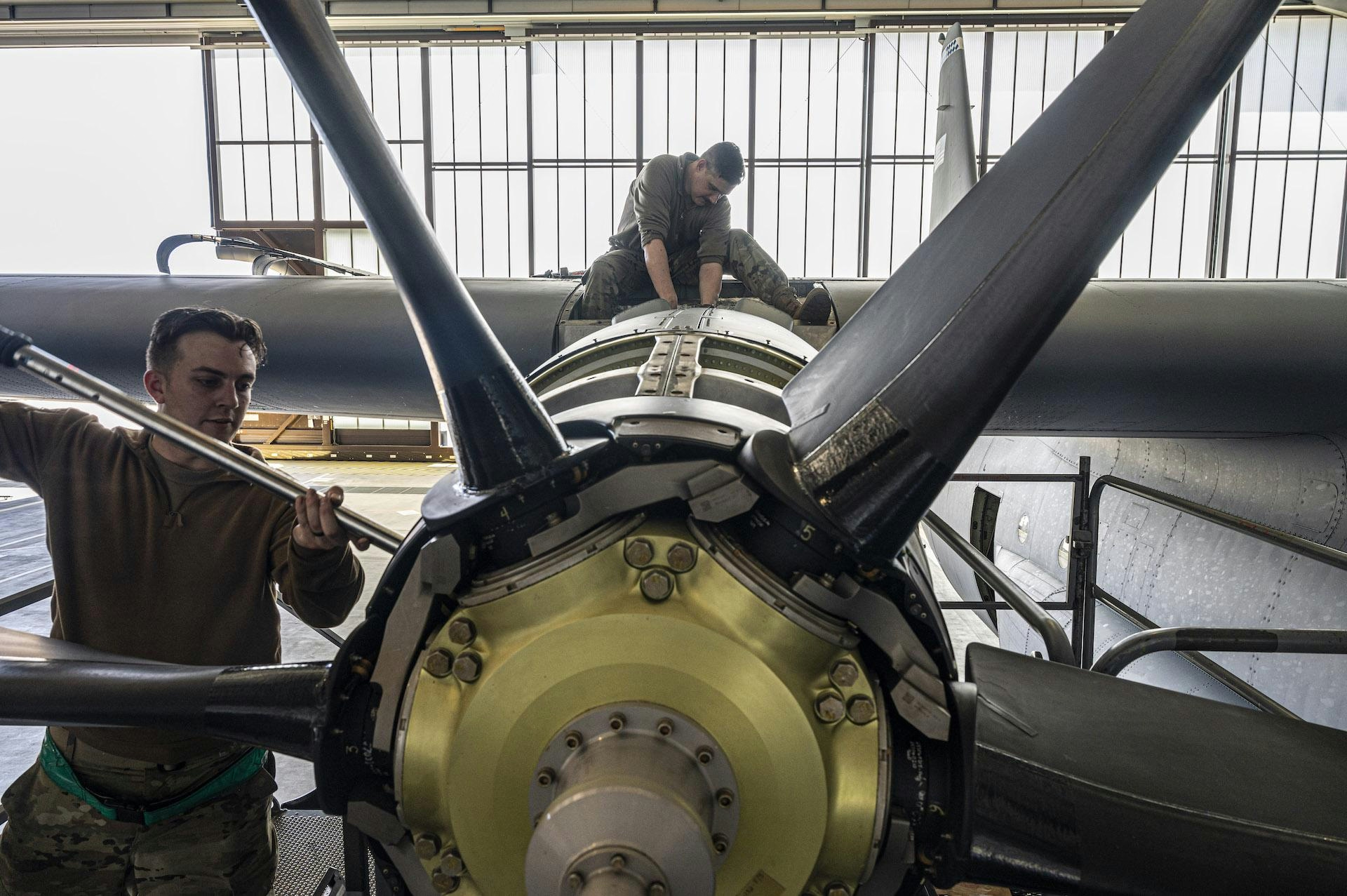
AI Training Program for Aircraft Mechanics
March 2, 2026By ePlane AI
AI Training Program for Aircraft Mechanics
0
0
Aircraft Mechanic Training
AI In Aviation
Flight Safety

AI Training Program for Aircraft Mechanics Faces Scrutiny Over Safety and Quality Concerns

Canada’s aviation industry is confronting a looming shortage of qualified aircraft mechanics, with projections indicating a deficit of thousands in the near future. In response, the federal government has committed $25 million to support industry-led training initiatives designed to bridge this gap and uphold the safety standards of Canadian air travel.

Allegations of Plagiarized and Inaccurate Training Materials

Despite these efforts, a recent investigation by Canadaland has revealed serious concerns regarding the use of this funding. A whistleblower alleges that some training materials acquired with government support were plagiarized and subsequently processed through ChatGPT, an AI language model. This process reportedly produced content fraught with inaccuracies and so-called “AI hallucinations,” errors that could have dire consequences if incorporated into aviation training programs. Jeff Weeks, an aviation executive, emphasized the gravity of the situation, stating, “Everybody needs to know about this. We need to shut this down. This is aviation. This is training. There are safety issues here.”

The Challenges of Integrating AI in Aviation Training

The adoption of artificial intelligence in training programs is not confined to Canada; it reflects a broader global trend within the aviation sector. AI-driven solutions are increasingly viewed as tools to streamline operations, modernize outdated curricula, and address workforce shortages. However, the development of effective AI-based training requires access to extensive, high-quality data and substantial computational resources. Ensuring the accuracy and reliability of AI-generated content is especially critical in aviation, where safety cannot be compromised.

The recent controversy underscores the risks associated with deploying AI tools without stringent oversight and validation. The aviation industry’s cautious approach to AI integration reflects concerns about maintaining rigorous safety standards amid rapid technological change.

Industry Reactions and the Path Forward

Reactions within the market have been mixed. Established training providers express skepticism, fearing that AI could disrupt traditional methods and potentially undermine quality standards. Some competitors have begun incorporating AI into their own programs to enhance efficiency, while others resist, perceiving AI as a threat to their established roles.

As the aviation sector evolves, the debate over AI’s role in mechanic training highlights the urgent need for robust quality controls and transparent governance. While the government’s investment aims to secure the future of Canada’s aviation workforce, the current controversy raises critical questions about the implementation of new technologies and accountability when safety is at stake.

More news
Engine Selection Could Determine Outcome of Boeing 777-8F and Airbus A350F Competition

Engine Selection Could Determine Outcome of Boeing 777-8F and Airbus A350F Competition

Engine Selection Could Determine Outcome of Boeing 777-8F and Airbus A350F Competition The future landscape of long-haul air cargo is poised to be shaped by two advanced freighter models: the Airbus A350F and the Boeing 777-8F. Both aircraft promise significant improvements in payload capacity, fuel efficiency, and operational range. However, a decisive factor influencing airline procurement decisions lies in the exclusive engine choices each manufacturer has made. With only one engine option available per aircraft, operators must carefully consider not only the airframe capabilities but also the long-term performance, reliability, and support associated with these powerplants. Exclusive Engine Choices and Their Implications The Boeing 777-8F will be exclusively powered by General Electric’s GE9X engine, while the Airbus A350F will rely solely on the Rolls-Royce Trent XWB-97. This exclusivity compels airlines to make substantial long-term commitments to the respective engine technologies, evaluating critical factors such as Time-On-Wing, durability under various operating conditions, and the comprehensiveness of maintenance and support packages offered by the manufacturers. Airbus benefits from the Trent XWB-97’s established commercial service record, as it currently powers the widely operated A350-1000 passenger aircraft. This operational history provides airlines with a measure of confidence regarding the engine’s performance and reliability. Nevertheless, the Trent XWB-97 has encountered scrutiny in certain environments, particularly hot and arid climates, where reports indicate potential accelerated wear and tear. Conversely, the GE9X engine, while not yet in commercial operation due to ongoing certification delays associated with the 777X program, has undergone extensive ground and flight testing. Boeing’s recent announcement of increased range capabilities for the 777-8 and 777-9 models enhances the appeal of the 777-8F variant. This development has been met with positive market response, exemplified by China Southern Airlines’ commitment to acquire five 777-8Fs, signaling robust interest in Boeing’s new freighter. However, Boeing’s continued efforts to resolve technical challenges within the 777X program may result in further delays, potentially affecting the aircraft’s competitive standing. Technical and Market Considerations From a technical perspective, the GE9X offers higher thrust and greater payload capacity, attributes that may attract operators prioritizing maximum cargo volume. The 777-8F also presents advantages in fleet integration for existing Boeing customers, given its lineage as a successor to the popular 777-F. Meanwhile, the Trent XWB-97 is lauded for its operational efficiency, as demonstrated in service on the A350-1000. | Specification | Rolls-Royce Trent XWB-97 | General Electric GE9X | |-----------------------|--------------------------|----------------------| | Thrust | 97,000 lbf | 110,000 lbf | | Bypass Ratio | 9.3:1 | 10:1 | | Fan Diameter | 118 inches (3 meters) | 134 inches (3.4 meters)| Ultimately, the decision between the Airbus A350F and Boeing 777-8F will depend not only on the aircraft’s inherent performance but also on the long-term reliability, efficiency, and manufacturer support associated with their respective engines. As both companies continue to refine their offerings and airlines weigh their options, the outcome of this competition may hinge as much on the engines beneath the wings as on the aircraft themselves.
What Aviation Teaches Us About Trustworthy AI

What Aviation Teaches Us About Trustworthy AI

What Aviation Teaches Us About Trustworthy AI Artificial intelligence is swiftly evolving from experimental applications to integral components of critical operations, where errors can have profound consequences. Today, AI systems assist in diagnosing diseases, authorizing financial transactions, managing infrastructure, detecting cybersecurity threats, and supporting decisions that affect millions of lives. As the adoption of AI accelerates, organizations confront a vital challenge: how to uphold accountability when machines increasingly influence high-stakes decisions. The commercial aviation industry offers a valuable model. For decades, it has operated some of the most advanced automated systems globally. Modern aircraft depend on sophisticated software, predictive analytics, and autonomous functions. Yet, aviation has never relinquished human accountability. Instead, it has developed a governance framework that integrates automation with human oversight, transparency, rigorous training, and clearly defined responsibilities. This model is particularly instructive as organizations across various sectors establish AI governance frameworks. The future of responsible AI may hinge less on full autonomy and more on the “human-in-the-loop” principles that have contributed to making aviation one of the safest industries worldwide. Automation Supports, But Does Not Replace, Human Judgment A widespread misconception is that modern aircraft essentially operate themselves. In truth, while automation reduces pilot workload and enhances consistency, pilots remain responsible for monitoring systems, validating decisions, and intervening when conditions deviate from expectations. Aviation regulations and procedures are designed to support—not supplant—human decision-making. Ultimate accountability invariably rests with trained professionals. This principle translates directly to enterprise AI. Although automation can improve efficiency, the most consequential decisions—those involving safety, security, finance, healthcare, or regulatory compliance—demand human judgment, contextual understanding, and ethical consideration. AI may identify patterns or generate recommendations, but responsibility for critical outcomes must remain with accountable human operators. The essential question is not whether humans can be removed from the process, but whether organizations have clearly defined when human intervention is necessary and who bears accountability when automated systems provide recommendations. Transparency, Trust, and Brand Visibility in the Age of AI Aviation’s approach also underscores challenges that extend beyond the cockpit. As AI-generated information becomes increasingly prevalent, ensuring transparency and control over these outputs is paramount. Recent data reveals significant consumer skepticism toward AI-generated content, driven by a lack of transparency and clear source attribution. This distrust highlights the necessity for organizations to openly disclose their use of AI and to maintain brand visibility and credibility in AI-driven search results. Market dynamics are evolving accordingly. Brands that prioritize transparency and provide clear, verifiable sources for AI-generated content are poised to gain greater consumer trust and demand. Meanwhile, competitors are refining digital content strategies to ensure their information is incorporated into AI-generated answers, thereby preserving visibility and authority in a rapidly changing landscape. Lessons for Responsible AI Deployment The aviation industry’s experience illustrates that trustworthy AI depends on more than technical sophistication. It requires transparent systems, clear accountability, and a steadfast commitment to human oversight. As organizations deploy AI in contexts where decisions carry significant consequences, embracing these principles—and proactively addressing transparency and trust—will be essential to fostering confidence in AI-powered systems.
Redbird Introduces G1000 NXi Emulator and Updated Simulator Panel

Redbird Introduces G1000 NXi Emulator and Updated Simulator Panel

Redbird Introduces G1000 NXi Emulator and Updated Simulator Panel Redbird Flight has announced significant enhancements to its aviation training portfolio with the introduction of a new G1000 NXi software emulator and the E001 Enhanced Aircraft panel. These upgrades, unveiled on Tuesday, are designed to provide more realistic and flexible training solutions for pilots and flight schools, addressing the growing demand for advanced simulation technology. Advanced G1000 NXi Emulation Set for release on August 17, the G1000 NXi emulator has been developed from the ground up to offer improved graphics, faster processing speeds, and expanded training capabilities tailored to technically advanced aircraft. Notable features include Synthetic Vision Technology, horizontal situation indicator (HSI) mapping on the primary flight display, and Garmin SafeTaxi airport diagrams. Charlie Gregoire, CEO of Redbird, emphasized the importance of realism in training devices, stating that flight training providers—from local schools to large Part 141 academies—seek simulators that closely replicate the avionics and experience of their actual aircraft fleets. Modular E001 Simulator Panel Expected to be available in early 2027, the E001 Enhanced Aircraft panel incorporates hardware components that simulate two Garmin GDU 1054B displays, a GMA 1347 audio panel, and controls for three analog standby instruments. This panel is engineered to detect other hardware installed within a training device, enabling it to accurately represent various aircraft configurations. Redbird intends to broaden support to include additional Garmin and Avidyne avionics systems, such as the GTN and IFD series. The new hardware will be modular and backward compatible with existing Redbird devices, including the original FMX 1, facilitating seamless integration for current users. Market Context and Competitive Landscape These product introductions come amid intensifying competition in the aviation training sector, particularly from Garmin’s G2000 PRIME Integrated Flight Deck, which is recognized for its advanced connectivity and user interface. Industry analysts suggest that Garmin and other competitors may respond by enhancing their own product features or adjusting pricing strategies to maintain market share. As avionics systems grow increasingly sophisticated, pilot preferences are expected to favor platforms offering the most advanced capabilities, a dynamic that could influence Redbird’s positioning and sales performance. Upcoming Demonstrations Redbird plans to showcase the new G1000 NXi software and an E001 prototype at booth 301 during the EAA AirVenture Oshkosh event. The company will also present a prototype yoke designed for Cirrus SR20 and SR22 aircraft and discuss forthcoming upgrades to throttle assemblies. These demonstrations underscore Redbird’s commitment to innovation in flight training technology as it navigates a rapidly evolving market.
CFM LEAP Engines Surpass 1,000 Deliveries in First Half of Year

CFM LEAP Engines Surpass 1,000 Deliveries in First Half of Year

CFM LEAP Engines Surpass 1,000 Deliveries in First Half of Year CFM International has reached a significant milestone by delivering 1,030 LEAP engines in the first half of the year, marking the first time the program has exceeded 1,000 units within a six-month period. This achievement represents a 41 percent increase compared to the same period last year, underscoring a robust recovery from previous supply chain disruptions that had constrained production. Steady Growth Amid Industry Challenges Since entering service in 2016 with just 11 deliveries, the LEAP engine program has demonstrated consistent growth despite ongoing challenges in the aviation sector. Deliveries have steadily increased over recent years, with 729 engines delivered in the first half of 2025, 664 in 2024, 785 in 2023, 465 in 2022, and 399 in 2021. The current delivery pace positions CFM International to surpass its full-year target of more than 2,000 LEAP engine deliveries, reflecting strong market demand. Nevertheless, the surge in deliveries occurs against a backdrop of persistent supply chain difficulties that continue to affect the aviation industry. Willie Walsh, Director General of the International Air Transport Association (IATA), has emphasized the financial strain these disruptions impose on airlines, which have had to absorb substantial additional costs. This environment has heightened the demand for dependable engine supply and comprehensive maintenance solutions. Expanding Aftermarket Support and Industry Collaboration In response to these challenges, CFM International and its partners are actively expanding their aftermarket support networks to better serve operators worldwide. Safran Aircraft Engines recently inaugurated a new maintenance, repair, and overhaul (MRO) facility in Mexico, aimed at addressing the increasing service requirements for LEAP engines. Concurrently, MTU Aero Engines is intensifying its role in the CFM aftermarket, enhancing its collaboration with GE Aerospace to bolster service capabilities and competitiveness. Airlines and MRO providers are also adopting strategic initiatives to secure reliable engine support. Iberia Maintenance’s launch of IAG Engine Tech, a dedicated engine MRO business, exemplifies the growing industry focus on specialized LEAP engine services. These developments reflect a broader shift within the global engine maintenance and support ecosystem, as stakeholders seek to navigate supply chain complexities while meeting rising market demand. As CFM International continues to scale production and expand support infrastructure, its ability to manage these challenges will be pivotal. The record-breaking delivery figures not only attest to the resilience of the LEAP program but also highlight evolving dynamics in the aviation engine sector.
Boeing Showcases Portfolio at Major Aviation Event

Boeing Showcases Portfolio at Major Aviation Event

Boeing Highlights Comprehensive Portfolio at EAA AirVenture Oshkosh Amid America’s 250th Anniversary Boeing [NYSE: BA] is set to showcase its extensive commercial, defense, and services offerings at the forthcoming EAA AirVenture Oshkosh, one of the world’s premier aviation events, scheduled from July 20 to 26 in Oshkosh, Wisconsin. This year’s gathering holds particular significance as it coincides with the celebration of America’s 250th anniversary, attracting over 10,000 aircraft and an estimated 700,000 visitors representing more than 90 countries. Engaging the Aviation Community and Inspiring Future Generations Throughout the week-long event, Boeing will engage a diverse audience including pilots, customers, families, students, and industry professionals through a variety of activities designed to demonstrate its engineering expertise and dedication to innovation. The company’s pavilion will host interactive demonstrations, panel discussions, and informational sessions led by Boeing executives. A prominent element of Boeing’s participation is its focus on youth outreach, featuring STEM initiatives and KidVenture programs aimed at inspiring the next generation of aviation professionals. Chris Broom, vice president of Commercial Training Solutions at Boeing Global Services, emphasized the importance of the event, stating, “As one of aviation’s largest gatherings, Oshkosh brings together people across the industry and flying public. The event gives Boeing a chance to share our work, hear from customers, and connect with the next generation of aviation professionals.” Aircraft Displays and Commemorative Activities Boeing’s display at Boeing Plaza will include a range of aircraft such as the 737-800, 737-BBJ, 777-300, P-8, F/A-18, F-15, MV-22, and B-52. In recognition of the nation’s semiquincentennial, the company will present special activations including a Freedom Plane flyover and a historical walk that highlights Boeing’s pivotal role in U.S. aerospace history. Additionally, the Safety Dojo on-the-go, a mobile interactive safety learning center, will be featured to promote aviation safety awareness. Boeing’s participation in AirVenture occurs amid a competitive and evolving global aerospace landscape. While the company continues to emphasize its engineering capabilities and youth STEM engagement, competitors are adapting their strategies. Notably, China is investing heavily in high-speed rail for dense short-haul travel and advancing its aerospace sector through companies like COMAC, potentially affecting Boeing’s market share in the region. Other industry players, such as Amentum focusing on UK defense priorities and Textron Aviation’s presence at AirVenture 2026, further underscore the competitive environment Boeing faces both domestically and internationally. Commitment to Accessibility and Industry Leadership Demonstrating its commitment to fostering future talent, Boeing will offer free admission to all attendees aged 18 and under, a program that has enabled nearly 500,000 young people to attend since 2019. The Boeing Store will feature event-exclusive merchandise, and a media briefing will provide insights into the company’s annual Pilot and Technician Outlook. As a leading global aerospace company and one of the top U.S. exporters, Boeing develops, manufactures, and services commercial airplanes, defense products, and space systems for customers in more than 150 countries. The company remains steadfast in its commitment to safety, quality, and integrity while driving innovation and economic opportunity worldwide. For further details on Boeing’s participation at EAA AirVenture Oshkosh, visit boeing.com/airshows/airventure.
'Up to' 875 orders predicted at Farnborough as airlines race for delivery slots

'Up to' 875 orders predicted at Farnborough as airlines race for delivery slots

Up to 875 Aircraft Orders Predicted at Farnborough 2026 as Airlines Compete for Delivery Slots Market intelligence firm IBA Insight projects that as many as 875 commercial aircraft orders and commitments could be announced at the 2026 Farnborough International Airshow. Dr. Stuart Hatcher, Chief Economist and Chief Data Officer at IBA, presented the forecast, highlighting a surge in order activity driven by airlines worldwide racing to secure increasingly scarce delivery slots amid tightening production schedules. Order Composition and Market Context Narrowbody aircraft are expected to dominate the anticipated orders, accounting for approximately 480 units, or 55% of the total. Widebody aircraft follow with around 280 orders (32%), alongside 75 regional jets, 25 turboprops, and 15 widebody freighters. The forecast encompasses firm orders, memoranda of understanding, letters of intent, options, and previously undisclosed commitments likely to be revealed during the event. If these projections materialize, the 2026 Farnborough Airshow would see a significant increase from the 601 aircraft ordered at the 2025 Paris Air Show and the 438 at Farnborough 2024, though still below the record 1,338 orders recorded at Paris in 2023. This heightened activity is less a result of new aircraft program launches and more a reflection of airlines’ urgent need to secure future capacity amid constrained delivery schedules. Delivery Constraints and Market Dynamics Production slots for new Airbus A320neo-family and Boeing 737 MAX aircraft are largely booked until around 2033, while widebody delivery slots from Airbus and Boeing extend only to 2032–2034. Similarly, the China-built COMAC C919 faces delivery backlogs extending to at least 2034 or 2035. In contrast, regional and crossover aircraft offer more accessible near-term delivery opportunities. This scarcity is compelling airlines to plan fleet replacements further in advance or to rely on leased and used aircraft to bridge capacity gaps until new production capacity becomes available. Dr. Hatcher emphasized that Farnborough 2026 could signal a return to more substantial airshow order activity, driven by the pressing need for airlines to secure future capacity. He noted that many carriers are reaching a point where fleet replacement decisions can no longer be deferred, despite delivery positions extending well into the next decade. Infrastructure Challenges and Competitive Pressures The competition for delivery slots is further complicated by infrastructure constraints. Tony Lefebvre, CEO of Signature Aviation, recently raised concerns about airport and maintenance capacity bottlenecks, warning that these limitations could strain manufacturers’ and operators’ ability to meet demand. As airlines vie for limited delivery positions, market responses may include price adjustments and operational shifts. Manufacturers are also adapting strategically. The ongoing duopoly between Airbus and Boeing has resulted in fluctuating backlogs and deliveries since Farnborough 2024, with both companies exploring increased production rates and strategic partnerships to secure orders. These dynamics are expected to intensify as airlines seek to lock in future capacity amid a constrained market. Early 2026 Trends and Outlook The forecast coincides with a strong start to 2026 for commercial aircraft orders, particularly among flag carriers and with Chinese airlines gradually resuming fleet investment. Airbus A320neo-family aircraft have led the market so far, although a potential deal for approximately 200 Boeing jets for China could alter the balance if confirmed. Order activity is also expanding beyond the largest narrowbody programs, with AirAsia’s anticipated A220 order indicating growing interest in smaller aircraft. With delivery slots tightening and infrastructure under pressure, Farnborough 2026 is shaping up to be a pivotal event that reflects both the urgency and complexity of airlines’ fleet planning in an increasingly constrained market.
Skyports Expands Air Taxi Plans in Korea Through Beta Partnership

Skyports Expands Air Taxi Plans in Korea Through Beta Partnership

Skyports Advances Electric Air Taxi Initiative in South Korea Through Strategic Partnership Skyports is intensifying its efforts to establish electric air taxi services in South Korea by forming a strategic alliance with aircraft manufacturer Beta Technologies and local operator UI Helicopter. This collaboration aims to create a comprehensive national network for advanced air mobility, integrating aircraft supply, infrastructure development, and operational expertise to support commercial operations. Partnership Framework and Initial Focus on Jeju Island Building on its prior engagement with the Jeju Provincial Government—where Skyports has been developing South Korea’s inaugural vertiport network—the UK-based vertiport developer has formalized a memorandum of understanding with UI Helicopter and Vermont-based Beta Technologies. UI Helicopter, a prominent South Korean helicopter operator and maintenance provider, plans to acquire up to 20 electric aircraft from Beta. This non-binding order contemplates both Beta’s conventional take-off and landing (CTOL) aircraft and its vertical take-off and landing (VTOL) air taxi variant, with initial deliveries anticipated by 2029. The partnership will initially focus on Jeju Island, which benefits from strong governmental support and is currently the most advanced site for implementation. Yun Yuan Tay, Head of Asia Pacific at Skyports, highlighted the significance of this collaboration, stating, “This isn’t just a partnership with a hypothetical output. We already have an established government partner onboard which gives us a clear route to activation.” The integration of Beta’s manufacturing capabilities, UI Helicopter’s operational experience, and Skyports’ infrastructure development expertise establishes a solid foundation for commercial air taxi services on the island. Expansion Prospects and Industry Context Following the successful launch of the Jeju network, Skyports anticipates that other regions within South Korea will adopt similar models as interest grows. The precise composition of Beta’s aircraft fleet—balancing CTOL and VTOL models—will be adapted to meet evolving network requirements. Beta’s CTOL aircraft can operate from existing runways, facilitating earlier deployment, while the VTOL variant is designed to leverage future vertiport infrastructure, enabling electric aviation services to commence even before dedicated facilities are fully established. This agreement represents a pivotal transition in South Korea’s advanced air mobility landscape, moving beyond initial technology demonstrations and regulatory pilots toward building a viable commercial ecosystem. Nonetheless, the initiative faces challenges including regulatory approval processes, technological maturity, and intensifying competition from other air taxi providers. Notably, companies such as Joby Aviation and Uber—through its partnerships with Nissan and Wayve Technologies—may accelerate their own commercial timelines and enhance service offerings in response. Investor interest in the urban air mobility sector has increased in light of Skyports’ expansion, reflecting broader momentum within the industry. The recent approval of Dubai’s first vertiport is also expected to influence expectations and the pace of commercial air taxi operations across Asia, including South Korea. Skyports’ Growing Footprint in South Korea Over the past two years, Skyports has steadily expanded its presence in South Korea. Beyond the Jeju vertiport initiative, the company recently entered into an agreement with Korean Air to explore the integration of vertiport operations, flight management, and low-altitude airspace systems into a unified platform for future advanced air mobility services. This latest partnership positions Skyports at the forefront of South Korea’s emerging air taxi market as the sector continues to evolve.
Rolls-Royce Joins Boeing and Lufthansa in Fuel-Efficiency Flight Tests

Rolls-Royce Joins Boeing and Lufthansa in Fuel-Efficiency Flight Tests

Rolls-Royce Collaborates with Boeing and Lufthansa on Fuel-Efficiency Flight Tests Rolls-Royce has announced a strategic partnership with Boeing and Lufthansa to conduct flight tests aimed at advancing fuel efficiency and reducing aircraft noise. This initiative forms part of a wider effort to drive next-generation aerospace innovation and supports the U.S. Federal Aviation Administration’s Continuous Lower Energy, Emissions and Noise (CLEEN) programme. The CLEEN initiative leverages both public and private sector resources to promote sustainable aviation technologies. Flight Testing and Technological Innovations The flight tests are scheduled to commence later this month at Boeing’s facility in Glasgow, Montana, and will continue through mid-August. The trials will utilize a Boeing 787-9 Dreamliner fitted with Rolls-Royce Trent 1000 engines, designated as the 2026 ecoDemonstrator Explorer. This aircraft, slated for eventual delivery to Lufthansa, will serve as a platform to evaluate two primary innovations. The first is a next-generation engine inlet, featuring a shortened design with advanced acoustic treatments intended to reduce both weight and drag while maintaining noise reduction performance. The second innovation involves intelligent operations flight paths, which employ algorithmically generated departure and arrival procedures designed to minimize community noise around airports. Alan Newby, Rolls-Royce’s Director of Research and Technology, described the programme as the culmination of a decade-long collaboration with Boeing, emphasizing its focus on noise reduction and enabling more sustainable flight operations. Boeing’s Chief Technology Officer, Lane Ballard, highlighted the potential for these innovations to enhance the value of Boeing’s aircraft to its partners. Meanwhile, Lufthansa’s Chief Technology Officer, Grazia Vittadini, underscored the importance of validating new technologies through real-world operational testing. Industry Challenges and Broader Context Despite the promising technological advancements, the initiative faces significant challenges. Rolls-Royce must ensure the reliability and performance of advanced concepts such as the UltraFan engine under operational conditions. The aerospace industry at large contends with skepticism from investors and stakeholders regarding the feasibility and timeline for achieving meaningful fuel efficiency improvements. Market responses have been mixed, reflecting both optimism and caution, as competitors including Safran and Pratt & Whitney intensify their development of advanced propulsion systems. Another critical challenge lies in the transition to sustainable aviation fuels (SAF). Although SAF is widely regarded as essential to the industry’s decarbonization efforts, its current global production represents less than 1% of total jet fuel consumption, underscoring the magnitude of the task ahead. Since its inception in 2012, Boeing’s ecoDemonstrator programme has tested over 260 technologies, demonstrating the scale and ambition of these sustainability efforts. For Rolls-Royce, this collaboration complements ongoing enhancements to the Trent 1000 engine family, including the latest Trent 1000 XE standard, which will power all future Boeing 787 deliveries. As Rolls-Royce seeks to reinforce its technological leadership and long-term value proposition, the outcomes of these flight tests will be closely monitored by industry experts and investors alike.
Lufthansa Uses Boeing 787 as Flying Laboratory to Test Next-Generation Technologies

Lufthansa Uses Boeing 787 as Flying Laboratory to Test Next-Generation Technologies

Lufthansa Deploys Boeing 787 as Flying Laboratory for Next-Generation Aviation Technologies Lufthansa has embarked on an ambitious initiative to transform one of its Boeing 787 aircraft into a flying laboratory dedicated to testing and developing next-generation aviation technologies. This move underscores the German carrier’s commitment to innovation and sustainability, positioning it at the forefront of efforts to create greener and more efficient air travel amid increasing industry pressure to reduce emissions and modernize fleets. Advancing Innovation Amid Industry Challenges Equipped with advanced sensors and experimental systems, the Boeing 787 will serve as a platform for evaluating new materials, propulsion methods, and digital solutions. Lufthansa’s program aligns with a broader trend among major European airlines, which are pooling resources and investing heavily in research to remain competitive in a rapidly evolving market. However, the initiative faces significant challenges, including rising operating costs and ongoing geopolitical uncertainties that could complicate the deployment of new technologies. The consolidation trend within the airline industry highlights the financial pressures carriers endure, with stakeholders closely monitoring how such investments will affect Lufthansa’s financial performance. Market responses to Lufthansa’s flying laboratory have been varied. Environmental advocates and some investors have praised the airline’s proactive approach to sustainability, while others have expressed concern over the substantial financial commitments required for experimental programs of this nature. Striking a balance between innovation and fiscal responsibility remains a delicate task, particularly as airlines continue to recover from the disruptions caused by recent global events. Competitive Landscape and Operational Considerations Lufthansa’s initiative has prompted reactions from competitors, some of whom are exploring similar testing programs, while others focus on leveraging their existing technological advancements to maintain a competitive edge. The race to adopt and commercialize next-generation aviation technologies is intensifying, with airlines seeking to differentiate themselves in an increasingly crowded market. Operational reliability remains a critical concern for Lufthansa. The airline recently faced scrutiny following an incident involving a missing nose-gear locking pin during maintenance, raising questions about safety protocols and potentially affecting market perception. As Lufthansa advances its flying laboratory program, maintaining rigorous safety standards will be essential to preserving stakeholder confidence. Despite these uncertainties, Lufthansa’s use of the Boeing 787 as a testbed for innovation signals a clear commitment to shaping the future of air travel. The outcome of this initiative could influence industry standards and accelerate the adoption of sustainable technologies across the aviation sector. For now, Lufthansa’s progress will be closely watched as it navigates the complex interplay of technological advancement, financial stewardship, and operational excellence.
Virgin Atlantic Recruits RAF Pilots Maintaining Britain’s F-35 Fleet

Virgin Atlantic Recruits RAF Pilots Maintaining Britain’s F-35 Fleet

Virgin Atlantic’s Recruitment of RAF Fighter Pilots Amid UK Pilot Shortage The United Kingdom is currently grappling with a significant shortage of trained fighter jet pilots, particularly those qualified to operate advanced aircraft such as the F-35B Lightning II and the Eurofighter Typhoon. With only around 48 pilots certified for the F-35B and approximately 150 for the Typhoon, the RAF faces a critical deficit in its fast jet pilot cadre. The departure of even a few of these highly specialized aviators to commercial airlines represents a substantial loss, especially considering the considerable investment involved in training each F-35 pilot—estimated at $10 million—and the slow throughput of new graduates, which typically numbers only a handful annually. In 2024, Virgin Atlantic escalated its efforts to attract these elite pilots, directly targeting RAF fast jet personnel in its recruitment campaigns. The airline has reportedly offered former F-35B and Typhoon FGR4 pilots salaries up to twice their RAF pay, coupled with the appeal of flying long-haul routes to destinations such as Barbados and New York. The recruitment advertisements explicitly require candidates to have operated one of these advanced RAF aircraft within the past three years, promising a transition to piloting Virgin Atlantic’s modern widebody fleet based at London Heathrow. Challenges Facing the RAF and the Broader Implications This aggressive recruitment strategy by Virgin Atlantic comes at a particularly challenging moment for the RAF, which is already stretched thin compared to larger air forces like that of the United States. The US military fields approximately 37,000 pilots across all branches, whereas the UK’s armed forces have around 2,500 pilots in total, with roughly 1,500 serving in the RAF. Official figures from 2014 indicated 1,760 trained regular RAF pilots, a number believed to have declined since then. Compounding the pilot shortage are ongoing sustainment issues with the F-35 fleet. A recent report from the U.S. Government Accountability Office highlighted declining mission capable rates and escalating maintenance costs for the F-35, raising concerns about the long-term readiness and viability of the UK’s fleet. Meanwhile, the UK government continues to review its commitment to acquiring additional F-35As for potential nuclear deterrence roles, with debates ongoing regarding the optimal fleet size and operational requirements. In parallel, the RAF is pursuing ambitious modernization initiatives. The StormFighter program aims to position the RAF as Europe’s first sixth-generation air force, potentially shifting focus and resources away from traditional pilot roles. Additionally, the RAF is assessing upgrades to its Voyager tanker fleet, including the integration of refueling boom capabilities, which may further influence pilot deployment and training priorities. While commercial airlines have traditionally sought military transport pilots with experience on aircraft such as the A330 MRTT and A400M, Virgin Atlantic’s direct recruitment of fast jet pilots underscores the intensifying competition for highly skilled aviation talent. For the RAF and Royal Navy, the loss of these irreplaceable pilots not only threatens operational readiness but also complicates efforts to sustain and modernize Britain’s air power amid an increasingly complex security environment.
line









