
Orchestrer les insights d’IA pour les transformer en actions

Tendances
Categories
Air Charter Service Reports $845 Million Revenue in First Half
Air Charter Service Reports $845 Million Revenue in First Half Amid Market Challenges
Aircraft charter company Air Charter Service (ACS) has announced a strong financial performance for the first half of its fiscal year, with revenues increasing by 38% to exceed $845 million. The company, whose financial year commenced on February 1, also reported a rise in the number of charter flights, underscoring robust demand across its operations.
Growth Across Divisions and Regions
Chris Leach, Chairman and Founder of ACS, emphasized the solid results achieved across the company’s three primary divisions, which collectively saw a 16% increase in charter contracts. Leach attributed the revenue growth not only to higher charter volumes but also to a strategic shift toward securing higher-value contracts. Regionally, ACS experienced notable expansion in its US, European, and Greater China offices. The six new offices opened in 2025 contributed positively to the company’s performance, while three additional offices launched in the past six months—in Brussels, Monaco, and Stuttgart—have expanded ACS’s global presence to 43 locations.
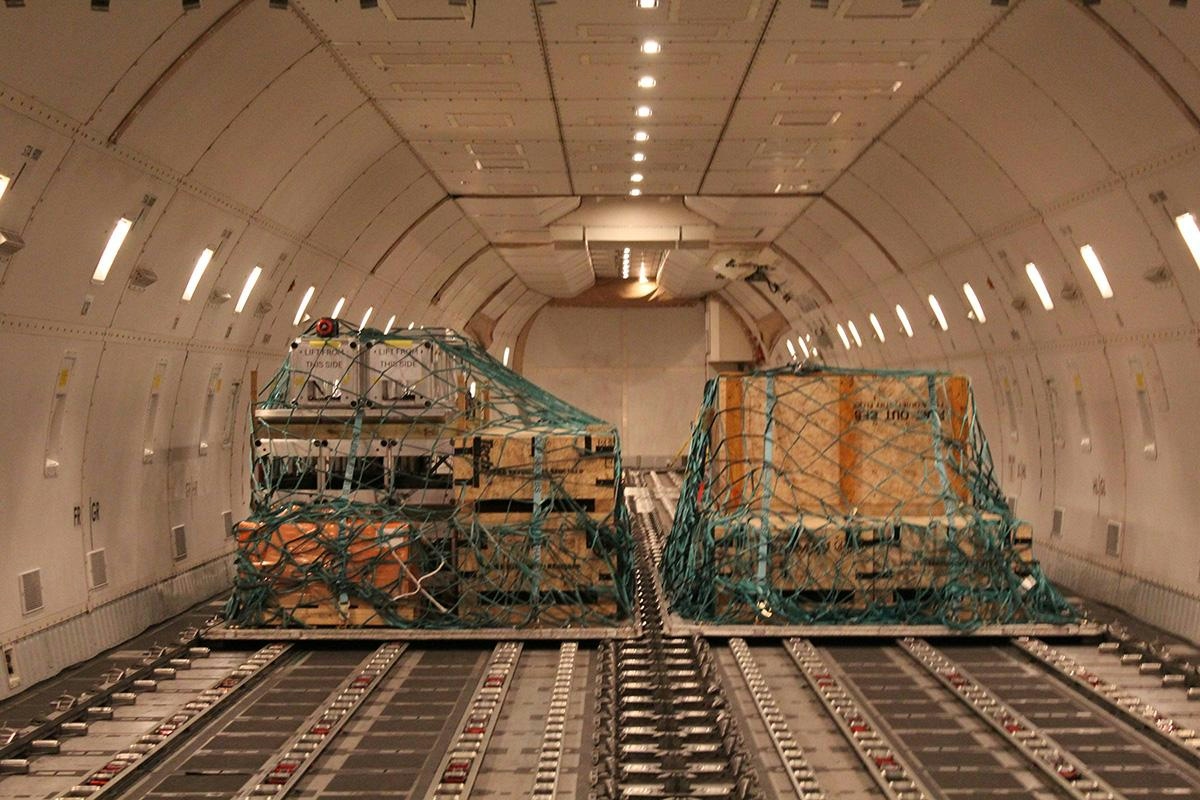
Among the divisions, the cargo segment demonstrated the most significant growth, with charter numbers rising 49% and revenue increasing by 38% compared to the same period last year. Leach identified several contributing factors, including supply chain disruptions linked to the conflict in Iran, port closures in Morocco caused by Storm Marta, and relief efforts in Venezuela. While these events accounted for a portion of the increased activity, Leach stressed that the underlying demand for cargo charters remains strong and diverse.
The private jet division also recorded healthy gains, with charter contracts and revenue up 26%. This growth was driven by the use of larger aircraft and longer flight sectors, as major clients increasingly sought ACS’s global reach. Jet Card sales surged by 85%, generating nearly 60% more revenue. However, margins experienced slight compression due to the company absorbing higher fuel costs.
The group charter division performed robustly as well, with charter contracts rising 34% and revenue increasing by 48%. The logistics surrounding the World Cup played a significant role in this growth, involving hundreds of flights across the US, Canada, and Mexico. ACS was responsible for transporting nearly 40% of World Cup squads back home. Additionally, the company participated in mass evacuations from the Middle East in March, further demonstrating its operational capacity in complex scenarios.
Financial Strength Amid Industry Pressures
Leach reported that earnings before interest, taxes, depreciation, and amortization (EBITDA) for the first half of 2026 rose by 35-40%, aligning with the revenue growth, while profit before tax continued to reflect the company’s financial resilience. Despite these strong results, the broader market environment remains challenging. Fluctuating petrochemical prices, as highlighted in Phillips 66’s recent earnings call, pose potential risks to operational costs for charter companies. Meanwhile, competitors such as Forward Air have reported significant operating losses, underscoring the pressures within the sector.
These market conditions are likely to prompt increased scrutiny of operational efficiencies and pricing strategies across the industry, with competitors expected to adjust their approaches to maintain market share. Leach acknowledged that while exceptional events can temporarily boost activity, ACS’s growing role during market disruptions highlights the company’s resilience and adaptability in a volatile sector.

Etihad Airways Suspends Airbus A380 Flights on Key Route

Aditya Birla Group Seeks Approval for Aircraft Leasing in GIFT City

Qatar Airways Highlights Innovation and Connectivity at Arabian Travel Market 2026

Hong Kong's Five-Year Plan Includes Andrew Fan's Aircraft Parts Processing Hub Proposal

ACIA Aero Leasing Delivers ATR72-600 to Air Nostrum

RTX Appoints Jill Albertelli as Head of Pratt & Whitney

TAT Technologies Joins Beyond Aero Hydrogen Aircraft Program

AURAK Study Highlights Barriers to Air Taxi Adoption in Emerging Economies

Xiamen Air Selects Altitude for 787 Maintenance at Heathrow

Etihad and Swissport Extend Global Partnership
