
Orchestrer les insights d’IA pour les transformer en actions

Tendances
Categories
Air China Shares Rise After $9.5 Billion Airbus Jet Order
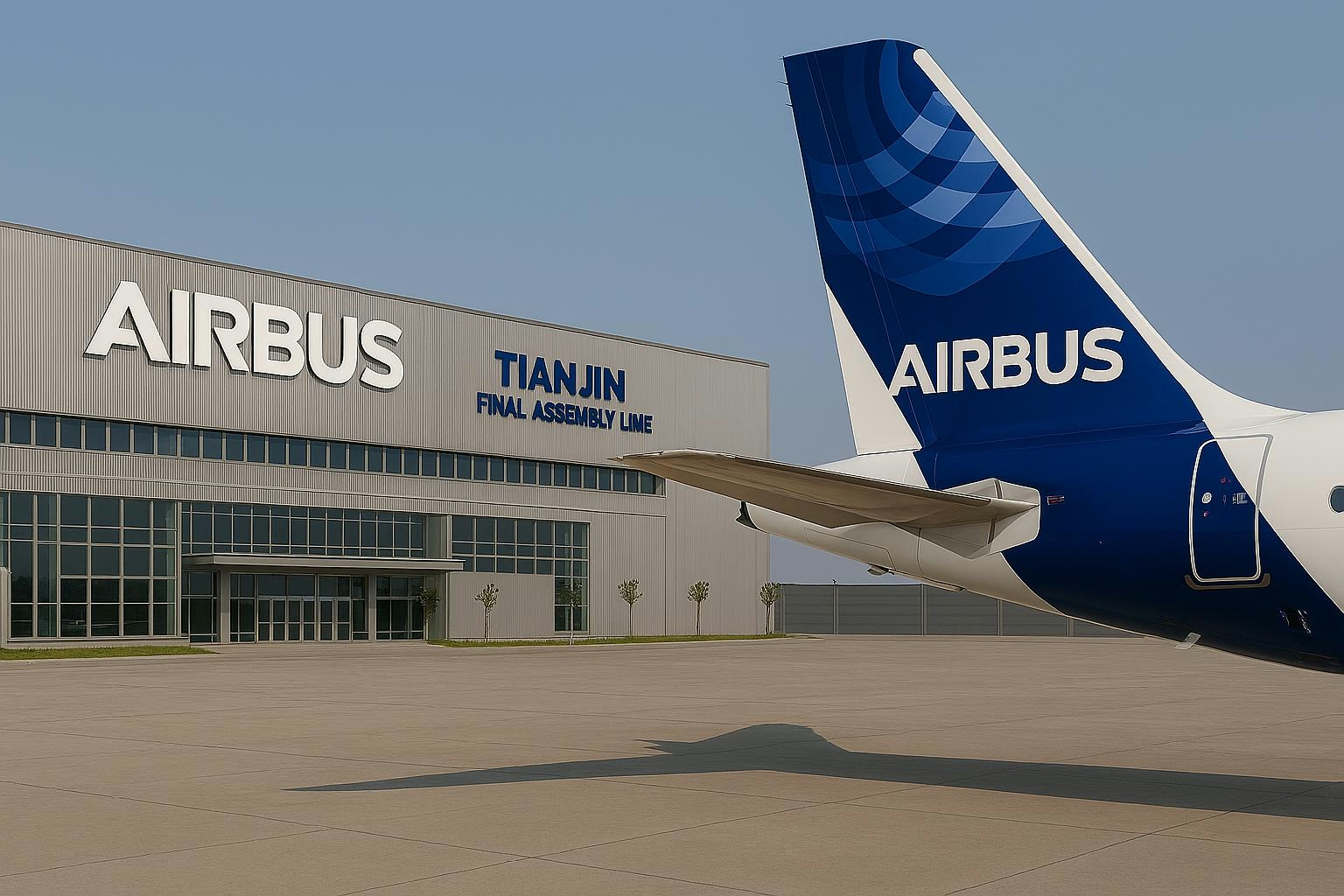
Air China Shares Rise Following $9.5 Billion Airbus Jet Order
Air China’s shares listed in Shanghai closed 3.3% higher at 9.37 yuan after the airline announced a significant order for 60 Airbus A320neo aircraft, valued at approximately $9.5 billion at list prices. The jets are scheduled for delivery between 2028 and 2032, according to a filing with the Shanghai Stock Exchange. This purchase, revealed just before the Chinese stock markets closed for the New Year holiday, underscores the airline’s commitment to fleet expansion despite ongoing challenges in the aviation sector, including fare pressures and intense competition.
Growing Demand for Airbus Amid Industry Challenges
The order adds to a recent wave of Airbus purchases by Chinese carriers, with Spring Airlines and Juneyao Airlines also announcing substantial acquisitions of Airbus aircraft in recent weeks. This trend reflects strong demand for the A320neo, Airbus’s updated, fuel-efficient single-aisle model, even as the manufacturer grapples with operational difficulties. Airbus is currently addressing a software issue affecting approximately 6,000 A320-family jets, alongside quality concerns related to fuselage panels. These problems have contributed to a sharp decline in Airbus’s share price and raised doubts about its ability to meet delivery targets for 2025. Nevertheless, the positive market reaction to Air China’s order indicates sustained confidence in Airbus’s product offerings.
The purchase is part of a broader 2022 framework agreement between China Aviation Supplies Holding Company and Airbus, which encompasses 132 A320-family aircraft and eight A350 widebodies. Li Hanming, a U.S.-based independent aviation analyst, noted that “negotiations for individual contracts take time,” highlighting the ongoing nature of these procurement discussions.
Strategic Shifts in China’s Aviation Market
The order also reflects shifting dynamics within China’s aviation industry, where Airbus has gained a competitive edge over Boeing amid persistent geopolitical tensions between Beijing and Washington. These tensions have hindered Boeing’s ability to secure new orders in China, thereby strengthening Airbus’s market position.
Investor attention remains focused on Air China’s long-term capital expenditure and fleet renewal strategy, with deliveries commencing in 2028. The airline’s move coincides with a broader recovery among China’s three largest carriers—including China Southern Airlines and China Eastern Airlines, which saw share gains of 4.6% and 5.8% respectively—following a return to collective profitability in the third quarter of 2025, supported by robust summer travel demand. However, analysts caution that the recovery remains fragile due to intense domestic competition and the impact of high-speed rail on short-haul routes.
In addition to the aircraft order, Air China has announced plans to raise up to 20 billion yuan through a private placement aimed at strengthening its balance sheet. This initiative keeps investor focus on the airline’s cost management and pricing power as the industry continues to rebuild international routes and expand capacity. Market participants are closely monitoring passenger yields and fuel prices amid this evolving landscape.
China’s stock and interbank foreign exchange markets remain closed for the New Year holiday and are expected to resume trading next week. Despite recent setbacks faced by Airbus, the strong market response to Air China’s order signals enduring optimism about the future prospects of China’s aviation sector.

Etihad Airways Suspends Airbus A380 Flights on Key Route

Aditya Birla Group Seeks Approval for Aircraft Leasing in GIFT City

Qatar Airways Highlights Innovation and Connectivity at Arabian Travel Market 2026

Hong Kong's Five-Year Plan Includes Andrew Fan's Aircraft Parts Processing Hub Proposal

ACIA Aero Leasing Delivers ATR72-600 to Air Nostrum

RTX Appoints Jill Albertelli as Head of Pratt & Whitney

TAT Technologies Joins Beyond Aero Hydrogen Aircraft Program

AURAK Study Highlights Barriers to Air Taxi Adoption in Emerging Economies

Xiamen Air Selects Altitude for 787 Maintenance at Heathrow

Etihad and Swissport Extend Global Partnership
