
Orchestrer les insights d’IA pour les transformer en actions

Tendances
Categories
Air India Cancels Six Flights for Precautionary Checks as Normalcy Returns to Indian Skies
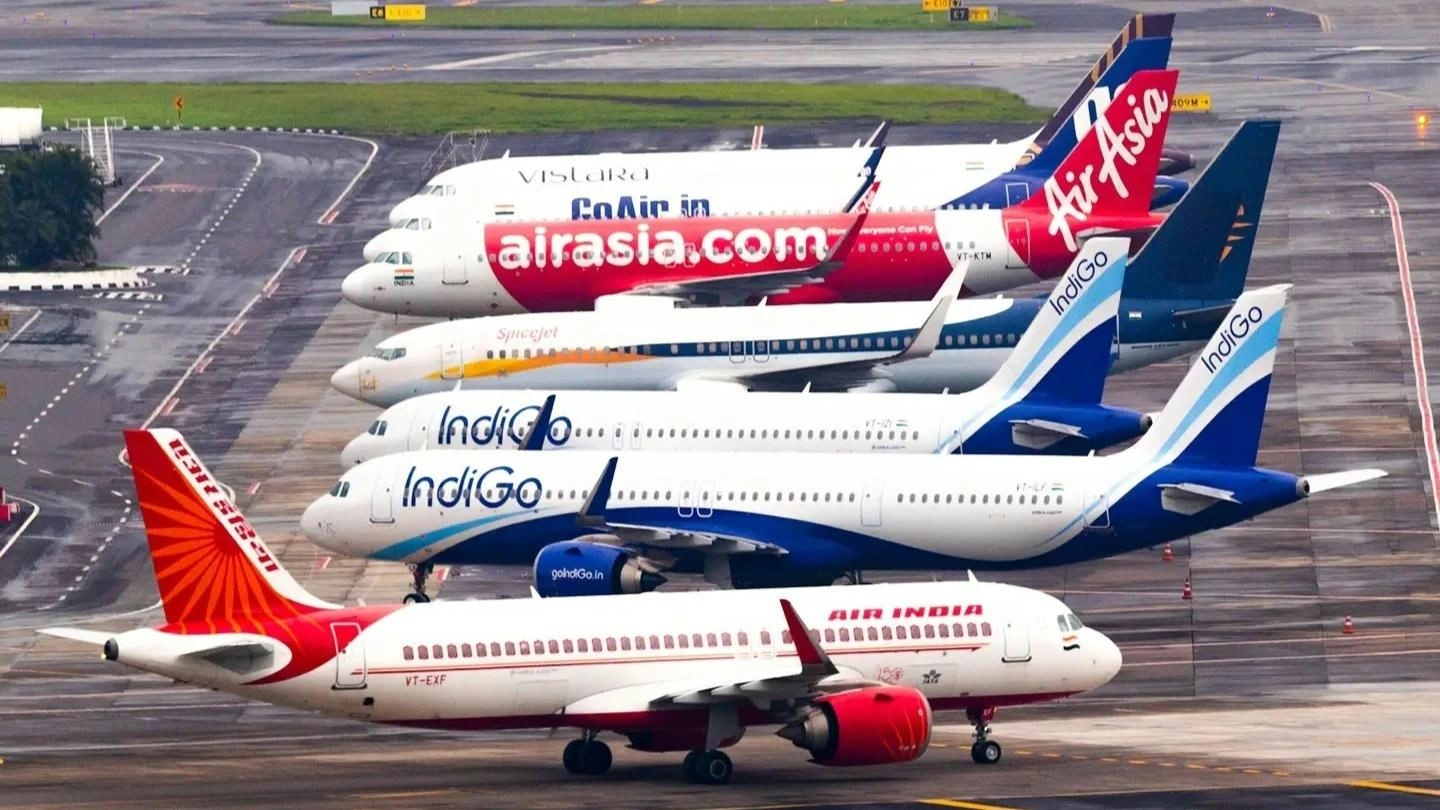
Air India Cancels Six Flights for Precautionary Checks as Normalcy Returns to Indian Skies
Flight Disruptions Following Ethiopian Volcanic Eruption
Air India cancelled six domestic flights on Tuesday as a precautionary measure in response to the volcanic eruption in Ethiopia, which had disrupted Indian airspace the previous night. The ash cloud from the Hayli Gubbi volcano had drifted eastward, causing widespread flight disruptions across the region. However, as the ash moved towards China, most airlines were able to resume normal operations.
In an official statement, Air India listed the cancelled flights on November 25, which included routes between Chennai and Mumbai, Hyderabad and Delhi, Mumbai and Hyderabad, Hyderabad and Mumbai, Mumbai and Kolkata, and Kolkata and Mumbai. The airline stressed that these cancellations were essential to conduct thorough safety inspections on aircraft that had flown over the affected areas, prioritizing passenger safety above all.
On Monday, Air India had also cancelled seven international flights connecting Indian cities with Newark, New York, Dubai, Doha, and Dammam. Other carriers reported largely normal operations on Tuesday, although Akasa Air maintained its suspension of flights to and from Jeddah, Kuwait, and Abu Dhabi, a restriction first imposed on Monday. Indigo Airlines had diverted its Kannur–Ahmedabad flight as a precautionary measure.
Industry Response and Ongoing Challenges
While Indian airspace is gradually returning to normal, Air India’s decision to cancel flights for safety checks underscores the persistent challenges airlines face in maintaining operational stability amid unforeseen disruptions. These cancellations may cause inconvenience to passengers and complicate logistical arrangements, as travelers adjust their itineraries. Industry experts observe that such incidents often lead to heightened scrutiny of airline safety protocols, with competing carriers likely to emphasize their own commitment to passenger safety and operational reliability.
The broader aviation sector remains vigilant, as similar disruptions have prompted flight reductions in other parts of the world. In the United States, for example, the Federal Aviation Administration (FAA) has mandated cuts affecting major airlines including American, United, and Delta. These developments indicate that operational difficulties may continue to affect airline schedules and travel plans in the near term.
Despite these challenges, Air India continues to focus on maintaining service continuity. The airline recently resumed direct flights between Tel Aviv and Delhi, demonstrating a proactive approach to managing safety and operational adjustments. This approach highlights the complexities involved in navigating air travel amid natural events and the evolving dynamics of global aviation.

Etihad Airways Suspends Airbus A380 Flights on Key Route

Aditya Birla Group Seeks Approval for Aircraft Leasing in GIFT City

Qatar Airways Highlights Innovation and Connectivity at Arabian Travel Market 2026

Hong Kong's Five-Year Plan Includes Andrew Fan's Aircraft Parts Processing Hub Proposal

ACIA Aero Leasing Delivers ATR72-600 to Air Nostrum

RTX Appoints Jill Albertelli as Head of Pratt & Whitney

TAT Technologies Joins Beyond Aero Hydrogen Aircraft Program

AURAK Study Highlights Barriers to Air Taxi Adoption in Emerging Economies

Xiamen Air Selects Altitude for 787 Maintenance at Heathrow

Etihad and Swissport Extend Global Partnership
