
Orchestrer les insights d’IA pour les transformer en actions

Tendances
Categories
Air Montenegro Launches Omnichannel Center and Plans AI Integration
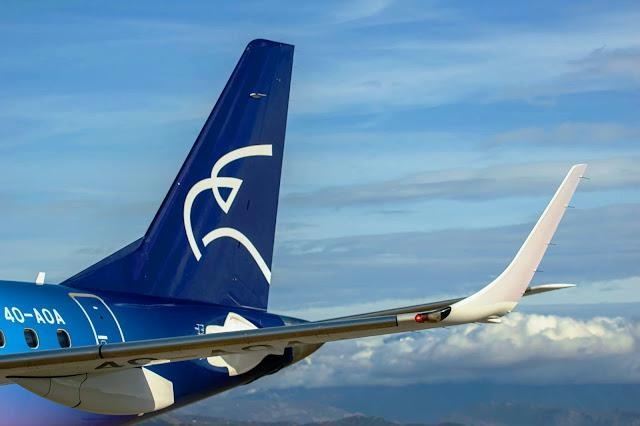
Air Montenegro Launches Omnichannel Contact Center with AI Integration
Air Montenegro has unveiled a new omnichannel contact center, significantly broadening its customer service capabilities by incorporating popular messaging platforms such as WhatsApp, Viber, Facebook, and Instagram alongside traditional phone and email support. In tandem with this expansion, the airline introduced an AI-powered chatbot designed to manage routine inquiries, with plans to deploy AI voice agents in the near future.
Enhancing Customer Service Through Artificial Intelligence
The airline emphasized that the integration of artificial intelligence aims to streamline customer interactions by handling common questions related to flight schedules, baggage policies, and other standard concerns. This approach is intended to free human agents to focus on more complex passenger issues that require empathy and nuanced support. Air Montenegro stated, “AI is here to handle hundreds of routine inquiries... allowing our human agents in the contact centre to focus on more complex passenger issues and provide the level of empathy and support that machines cannot. The goal is simple: 24/7 availability, seven days a week, with no waiting on the line.”
This initiative follows the recent launch of Air Montenegro’s revamped website and mobile application, as well as the introduction of online and mobile check-in options, reflecting a broader strategy of digital transformation within the airline.
Navigating a Competitive and Evolving Industry Landscape
Air Montenegro’s adoption of AI-driven customer service solutions comes amid a rapidly evolving competitive environment. Established technology providers such as Epic Agent Factory and RingCentral have already integrated advanced AI capabilities into their platforms, raising expectations for customer engagement and operational efficiency across the sector. Industry analysts note that reactions to such investments remain mixed, with ongoing debates about the measurable return on investment for AI initiatives—a topic that featured prominently during recent discussions at HIMSS26.
Competitors are likely to respond with similar AI enhancements to maintain market share, as exemplified by Microsoft’s extensive AI integration efforts. Meanwhile, the broader aviation and technology industries are contending with the implications of AI adoption, including workforce reductions, such as those recently announced by Crypto.com. These developments highlight the challenges airlines like Air Montenegro face in balancing technological innovation with operational costs and workforce management.
As Air Montenegro advances its digital transformation, the airline seeks to provide seamless, round-the-clock support to passengers while addressing the complexities and competitive pressures associated with AI integration in the aviation sector.

Etihad Airways Suspends Airbus A380 Flights on Key Route

Aditya Birla Group Seeks Approval for Aircraft Leasing in GIFT City

Qatar Airways Highlights Innovation and Connectivity at Arabian Travel Market 2026

Hong Kong's Five-Year Plan Includes Andrew Fan's Aircraft Parts Processing Hub Proposal

ACIA Aero Leasing Delivers ATR72-600 to Air Nostrum

RTX Appoints Jill Albertelli as Head of Pratt & Whitney

TAT Technologies Joins Beyond Aero Hydrogen Aircraft Program

AURAK Study Highlights Barriers to Air Taxi Adoption in Emerging Economies

Xiamen Air Selects Altitude for 787 Maintenance at Heathrow

Etihad and Swissport Extend Global Partnership
