
Orchestrer les insights d’IA pour les transformer en actions

Tendances
Categories
AirAsia Plans Regional Jet Order in Late Second Quarter 2025
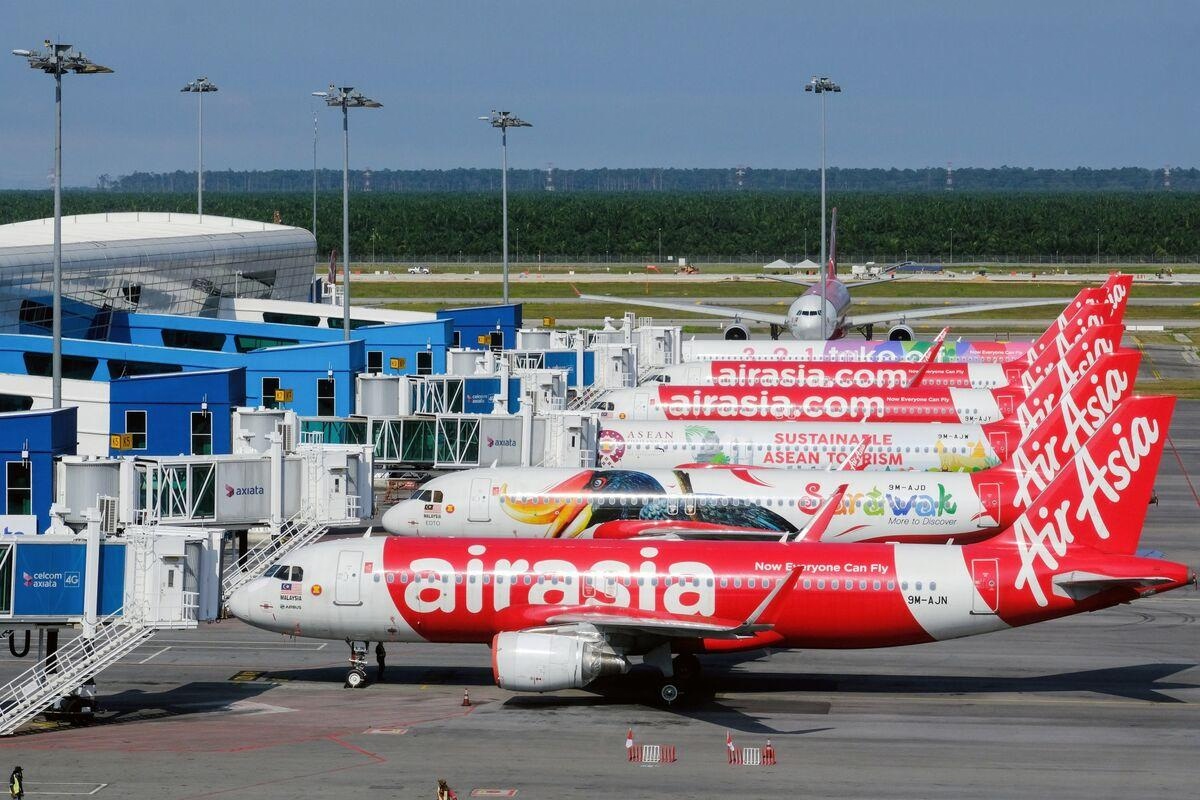
AirAsia Plans Significant Regional Jet Acquisition Amid Rising Regional Competition
AirAsia, the Kuala Lumpur-based low-cost carrier, is poised to expand its fleet with the introduction of regional jets, with a major order anticipated to be announced at the Paris Air Show in late second quarter 2025. Industry insiders reveal that the airline is engaged in advanced negotiations with both Embraer, concerning its E2 series, and Airbus, regarding the A220 family. Reports from Reuters suggest that Airbus may hold a competitive advantage, with discussions for a potential deal involving up to 100 aircraft progressing swiftly.
Strategic Shift Towards Regional Jets
AirAsia’s interest in regional jets was initially reported in late 2024, at a time when talks with manufacturers were preliminary and no definitive preference had emerged. Currently, AirAsia operates an exclusively Airbus fleet, comprising sixty-nine A320-200s, twenty-nine A320-200Ns, three A321-200(P2F)s, and eight A321-200NXs. The airline also maintains substantial outstanding orders, including 331 A321-200NXs and thirty-six A321-200NX(LR)s. Its affiliates throughout Southeast Asia similarly operate Airbus narrowbodies, underscoring the group’s enduring partnership with the European manufacturer.
The decision to incorporate regional jets into the fleet reflects AirAsia’s response to intensifying competition within the region. Rival carrier Scoot, based at Singapore Changi Airport, has recently achieved success by deploying Embraer E190-E2 aircraft to serve smaller cities within AirAsia’s core markets. Concurrently, Embraer is actively seeking new customers for aircraft originally intended for the now-defunct Malaysian operator SKS Airways, potentially offering AirAsia advantageous terms.
Regional Aviation Landscape and Financial Considerations
AirAsia’s fleet expansion plans occur amid a dynamic and competitive Asia-Pacific aviation sector. Major airlines such as Air India are reportedly negotiating substantial narrow-body jet orders, potentially involving around 200 additional single-aisle aircraft. Other regional carriers are also pursuing growth; VietJet aims to bolster its Thai subsidiary through an order transfer, while Air Niugini has recently augmented its fleet with two additional A220s. These developments highlight a fiercely competitive environment as airlines strive to increase capacity in response to surging demand and anticipated growth in aviation investment across the region.
Despite these ambitions, AirAsia’s parent company, Capital A, remains classified under Bursa Malaysia’s Practice Note 17 (PN17) status, indicating financial distress and necessitating comprehensive restructuring. The company’s ability to finalize any significant aircraft acquisition will hinge on securing favorable financing arrangements as it endeavors to exit PN17 status.
As AirAsia continues to evaluate its options between Embraer and Airbus, the outcome of these negotiations will not only determine the composition of its future fleet but also influence the competitive dynamics of Southeast Asia’s rapidly evolving aviation market.

Etihad Airways Suspends Airbus A380 Flights on Key Route

Aditya Birla Group Seeks Approval for Aircraft Leasing in GIFT City

Qatar Airways Highlights Innovation and Connectivity at Arabian Travel Market 2026

Hong Kong's Five-Year Plan Includes Andrew Fan's Aircraft Parts Processing Hub Proposal

ACIA Aero Leasing Delivers ATR72-600 to Air Nostrum

RTX Appoints Jill Albertelli as Head of Pratt & Whitney

TAT Technologies Joins Beyond Aero Hydrogen Aircraft Program

AURAK Study Highlights Barriers to Air Taxi Adoption in Emerging Economies

Xiamen Air Selects Altitude for 787 Maintenance at Heathrow

Etihad and Swissport Extend Global Partnership
