
Orchestrer les insights d’IA pour les transformer en actions

Tendances
Categories
Airbnb Expands Airport Services and AI Tools Amid Global Flight Disruptions
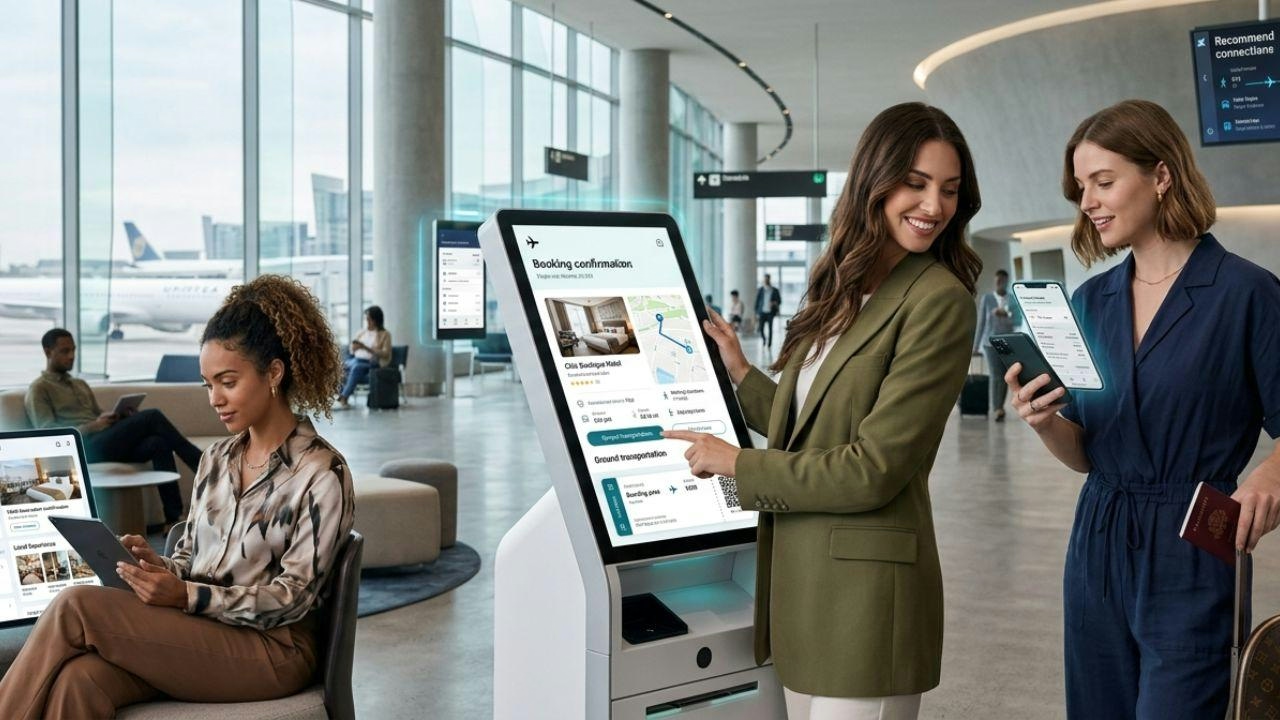
Airbnb Expands Airport Services and AI Tools Amid Global Flight Disruptions
As the global aviation sector continues to struggle with widespread flight cancellations and congested terminals, Airbnb is repositioning itself as a vital resource for affected travelers. The company has unveiled a significant expansion, transforming from a short-term rental platform into a comprehensive travel ecosystem. This strategic shift comes at a time when passengers on major airlines such as American Airlines, Delta, and British Airways are increasingly encountering disruptions in key cities including London, Paris, and New York.
Building a Unified Travel Experience
Airbnb’s newly launched “all-in-one travel app” seeks to resolve the longstanding fragmentation faced by travelers who often rely on multiple applications to manage flights, accommodations, transportation, and activities. By integrating these services into a single platform, Airbnb aims to alleviate the stress and logistical challenges that arise during travel disruptions. The app now seamlessly connects airport pickups, secure luggage storage, grocery delivery, and car rentals directly with users’ accommodation itineraries. This synchronization ensures that even in the event of severe airline delays, travelers have immediate access to coordinated ground services, providing a buffer against the operational chaos affecting the broader travel industry.
Key Areas of Expansion
Central to Airbnb’s expansion is the introduction of integrated airport services and ground logistics. Through partnerships spanning over 160 cities, users can now book private airport transfers directly within the app. These services are digitally aligned with flight check-in schedules, reducing the uncertainty and inconvenience of navigating local transportation after delayed arrivals. Additionally, expanded luggage storage options offer travelers greater flexibility by allowing secure storage of bags prior to check-in, accommodating unpredictable arrival times.
In a notable departure from its traditional peer-to-peer rental model, Airbnb is incorporating boutique and independent hotels into its platform. This move is designed to appeal to business travelers and short-stay guests who prioritize the reliability and amenities of hotel services, particularly during periods of travel disruption. By curating a selection of high-design properties in major destinations, Airbnb is positioning itself as a direct competitor to traditional hotel aggregators, offering users more immediate and dependable accommodation choices.
The company is also harnessing advanced artificial intelligence tools to enhance trip planning and customer support. These AI-driven technologies are intended to provide personalized recommendations and real-time problem-solving, further insulating travelers from the unpredictability of modern air travel.
Navigating Challenges and Market Response
Airbnb’s ambitious expansion into new travel segments presents several challenges. The company may face increased regulatory scrutiny, especially concerning its involvement in airport logistics and the deployment of AI-powered services. Competition is intensifying as established players in airport transportation and online travel agencies are likely to bolster their own offerings in response. Ensuring seamless integration of these new technologies with Airbnb’s existing platform will be essential to maintaining user trust and operational reliability.
Despite these obstacles, the market has responded positively. Airbnb’s stock price rose following a recent earnings report that exceeded revenue expectations and an improved full-year outlook, reflecting investor confidence in the company’s broader travel strategy.
As the travel industry continues to contend with ongoing disruptions, Airbnb’s integrated approach could establish a new benchmark for end-to-end travel experiences, offering travelers a more resilient and connected journey amid global uncertainty.

Etihad Airways Suspends Airbus A380 Flights on Key Route

Aditya Birla Group Seeks Approval for Aircraft Leasing in GIFT City

Qatar Airways Highlights Innovation and Connectivity at Arabian Travel Market 2026

Hong Kong's Five-Year Plan Includes Andrew Fan's Aircraft Parts Processing Hub Proposal

ACIA Aero Leasing Delivers ATR72-600 to Air Nostrum

RTX Appoints Jill Albertelli as Head of Pratt & Whitney

TAT Technologies Joins Beyond Aero Hydrogen Aircraft Program

AURAK Study Highlights Barriers to Air Taxi Adoption in Emerging Economies

Xiamen Air Selects Altitude for 787 Maintenance at Heathrow

Etihad and Swissport Extend Global Partnership
