
Orchestrer les insights d’IA pour les transformer en actions

Tendances
Categories
Airbus A350 Freighter Receives Certification
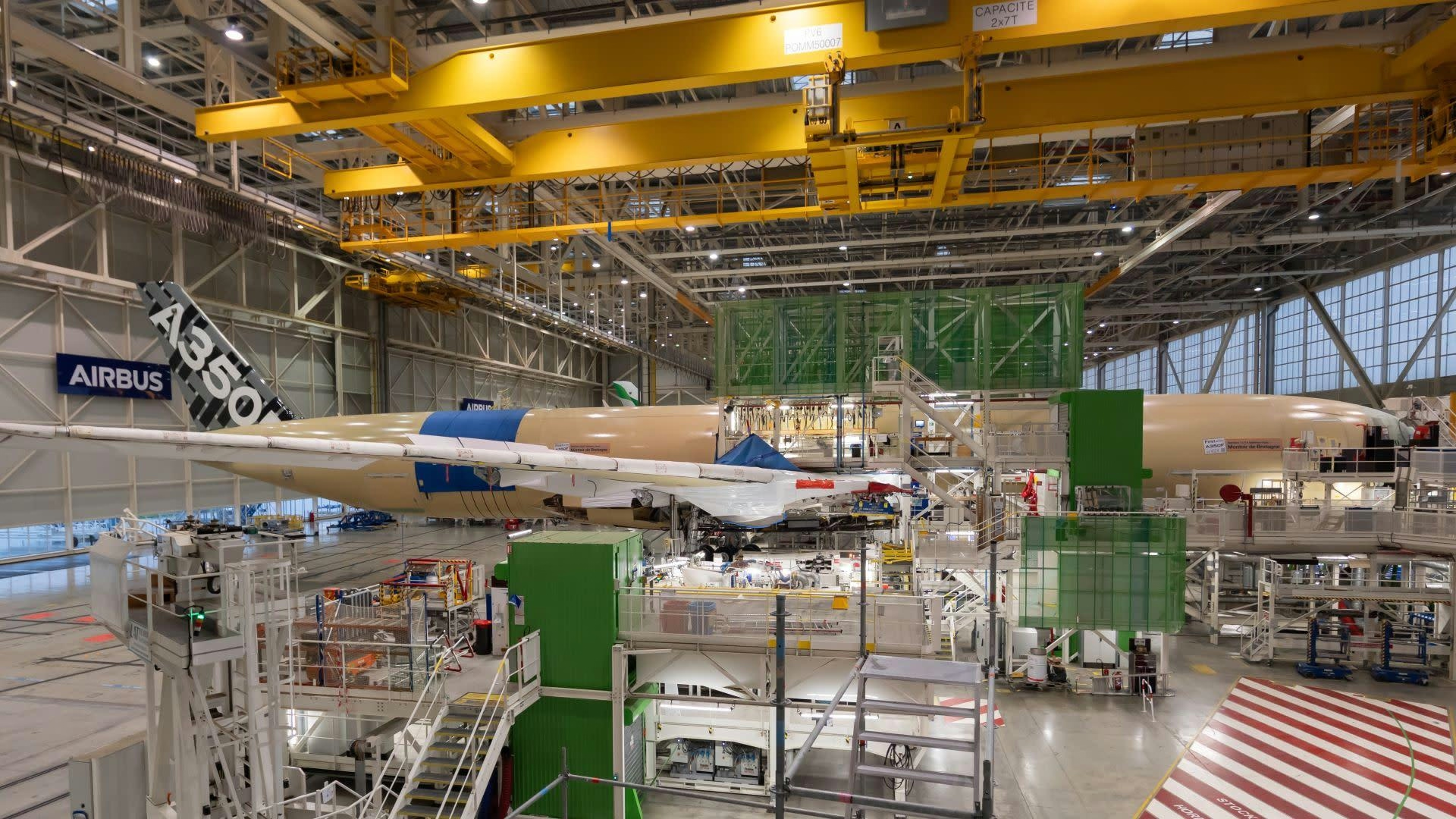
Airbus A350 Freighter Achieves Certification Milestone
The Airbus A350F is rapidly establishing itself as a prominent contender in the next generation of widebody freighters, presenting a contemporary alternative to the aging fleet of cargo aircraft currently in operation. Although not a clean-sheet design, the A350F is purpose-built, drawing on the proven Airbus A350 passenger platform rather than modifying an existing cargo model. This strategic approach mitigates development risks, enhances operational commonality for airlines, and aligns with increasingly stringent regulatory and efficiency standards.
Compliance with Environmental Standards and Certification Challenges
A defining feature of the A350F is its adherence to the latest International Civil Aviation Organization (ICAO) carbon dioxide emissions requirements, which will become mandatory for all new aircraft deliveries starting in 2028. As environmental regulations tighten and older, less efficient freighters incur rising operational costs, the A350F stands out as the only large freighter specifically designed to meet these forthcoming standards.
The certification process for the A350F has proven complex and closely monitored by the aviation industry. Airbus aims to conduct the aircraft’s first test flight in the third quarter of 2026, with certification and entry into service anticipated in the latter half of 2027. These timelines have experienced delays, primarily due to supply chain disruptions affecting the broader A350 family. The regulatory environment remains a significant factor influencing both Airbus’s progress and the competitive dynamics with Boeing.
Market Dynamics and Strategic Positioning
Industry reactions to the A350F’s development have been mixed. While demand for new freighters remains strong, the timing of certification is critical to market confidence. Boeing, Airbus’s principal competitor, has highlighted a positive cash-flow outlook for 2026, even as Airbus has adjusted its delivery targets in response to technical challenges. The interplay between regulatory approvals and delivery schedules is central to the financial forecasts and strategic positioning of both manufacturers.
The A350 family itself is Airbus’s flagship long-haul platform, renowned for its composite-rich construction and fuel efficiency. The main passenger variants—the A350-900 and A350-1000—serve diverse long-range missions, with the ultra-long-range A350-900ULR capable of nonstop flights up to 9,700 nautical miles (18,000 km). The airframe’s extensive use of advanced materials, accounting for approximately 70% of its structure, combined with operational versatility, has made it a preferred choice for airlines seeking to upgrade from smaller widebodies or replace older four-engine jets, while offering enhanced passenger comfort and reduced cabin noise.
By extending the A350 platform into the freighter segment, Airbus aims to leverage its existing customer base, shared pilot and maintenance training, and established supply chains. The A350F provides cargo operators with a modern, efficient alternative to both aging dedicated freighters and passenger-to-freighter conversions, which often face structural and efficiency constraints.
As the A350F advances toward certification, its ultimate success will depend not only on sustained market demand but also on navigating the intricate regulatory landscape that will shape the future of global air cargo.

Etihad Airways Suspends Airbus A380 Flights on Key Route

Aditya Birla Group Seeks Approval for Aircraft Leasing in GIFT City

Qatar Airways Highlights Innovation and Connectivity at Arabian Travel Market 2026

Hong Kong's Five-Year Plan Includes Andrew Fan's Aircraft Parts Processing Hub Proposal

ACIA Aero Leasing Delivers ATR72-600 to Air Nostrum

RTX Appoints Jill Albertelli as Head of Pratt & Whitney

TAT Technologies Joins Beyond Aero Hydrogen Aircraft Program

AURAK Study Highlights Barriers to Air Taxi Adoption in Emerging Economies

Xiamen Air Selects Altitude for 787 Maintenance at Heathrow

Etihad and Swissport Extend Global Partnership
