
Orchestrer les insights d’IA pour les transformer en actions

Tendances
Categories
Airbus Executive Discusses A320 Market Position, Supply Chain Challenges, and Future Plans
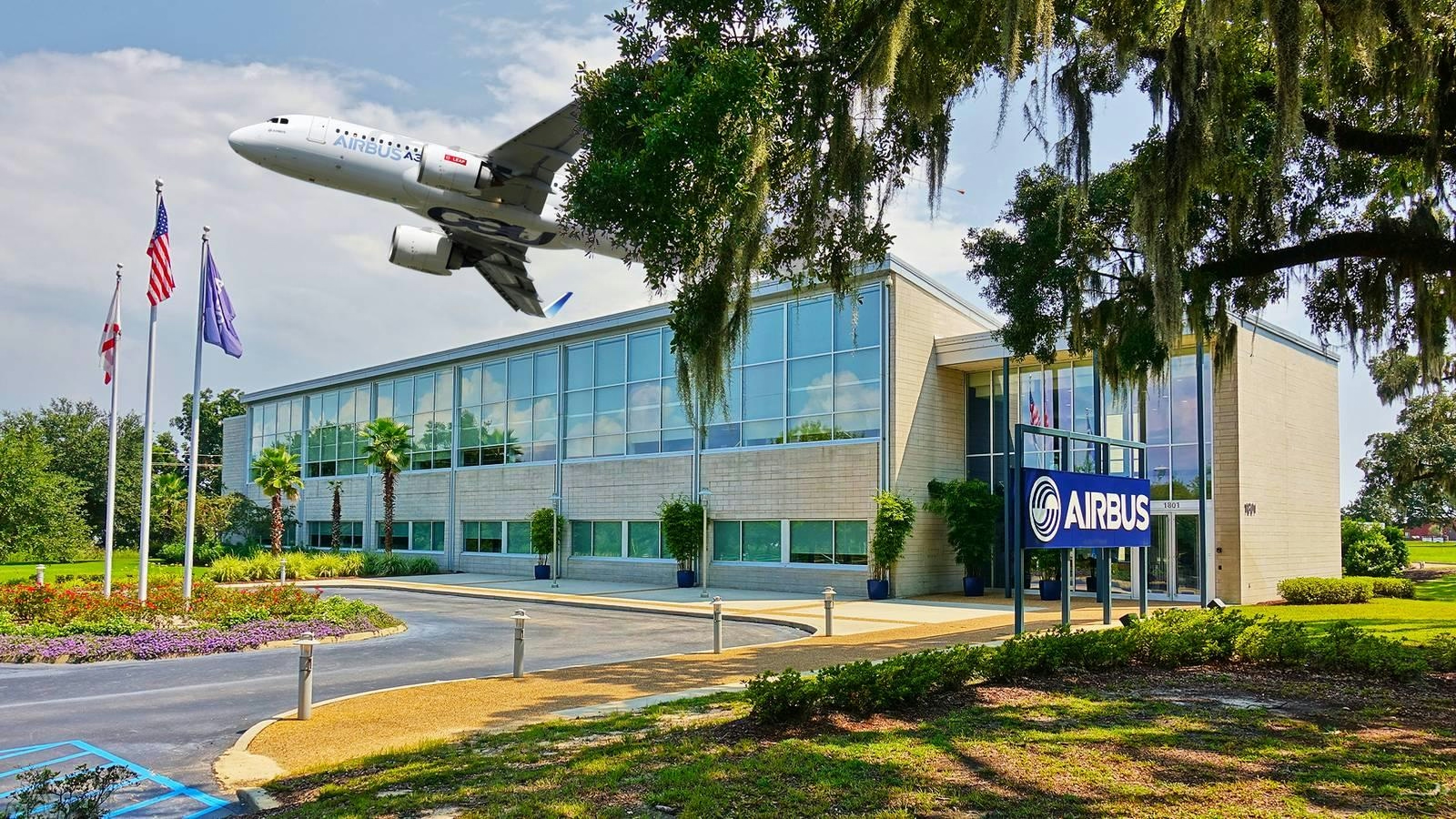
Airbus Executive Discusses A320 Market Position, Supply Chain Challenges, and Future Plans
A320 Surpasses Boeing 737 in Deliveries
At Airbus’s Saint-Martin facility in Toulouse, France, Executive Vice President International Wouter van Wersch marked a significant achievement for the company: the A320 family has become the most-delivered jetliner in history, overtaking Boeing’s 737. This milestone underscores Airbus’s leading role in commercial aviation and reflects changing market preferences, as airlines increasingly opt for the A320’s versatile design to address rising fuel costs and growing passenger demand.
Van Wersch highlighted the accomplishment as a testament to Airbus’s engineering excellence. “We surpassed the Boeing 737 in terms of deliveries not so long ago. That’s a major milestone for us and a tribute to all the great work by our engineers,” he stated. The A320’s rise has been further bolstered by Boeing’s recent production difficulties, which have allowed Airbus to expand its market share.
Managing Demand Amid Supply Chain Constraints
Airbus currently faces the challenge of fulfilling an unprecedented backlog of 8,600 aircraft across its portfolio, including 7,000 jets from the A320neo family. Van Wersch acknowledged the pressure to increase production rates, with a target of manufacturing 75 A320-family aircraft per month. Both Airbus and Boeing are actively encouraging suppliers to scale up capacity to meet this surging demand.
“The supply chain is a real bottleneck,” Van Wersch admitted. “We are doing fairly well as a company, but we will continue to improve the aircraft, bringing in the latest technologies and ideas. It’s a very young platform with great potential to grow further.” This focus on innovation is central to Airbus’s strategy as it seeks to maintain momentum despite global supply challenges.
Strategic Emphasis on Latin America and Sustainability
Van Wersch emphasized Latin America’s strategic importance to Airbus, noting the company’s dominant market presence in the region. Approximately 75 percent of aircraft operating in Latin America are Airbus models, with a substantial backlog for regional carriers. The Abra Group alone is awaiting delivery of 138 aircraft, while more than 400 Airbus jets are currently on order across the continent.
“Latin America is extremely high on the agenda,” Van Wersch said. “We have a good presence, but we think we can do more, especially in key countries like Brazil, Chile, Mexico, Colombia, and Argentina.” Airbus’s commitment extends beyond commercial aviation, as the company also aims to expand its defense and helicopter operations in the region.
In addition, Van Wersch identified Latin America as a potential leader in aviation’s green transition, particularly through the adoption of Sustainable Aviation Fuel (SAF). He estimated that SAF could contribute to approximately 50 percent of the sector’s decarbonization efforts, with countries such as Brazil playing a pivotal role.
Future Outlook
As Airbus celebrates the A320’s record-breaking success, the company remains focused on addressing supply chain challenges and investing in next-generation technologies. These include innovations such as open fan engines and hydrogen propulsion, which are expected to shape the future of aviation. The A320’s milestone not only reflects evolving airline preferences but also highlights the intense competition driving the global aerospace industry forward.

Etihad Airways Suspends Airbus A380 Flights on Key Route

Aditya Birla Group Seeks Approval for Aircraft Leasing in GIFT City

Qatar Airways Highlights Innovation and Connectivity at Arabian Travel Market 2026

Hong Kong's Five-Year Plan Includes Andrew Fan's Aircraft Parts Processing Hub Proposal

ACIA Aero Leasing Delivers ATR72-600 to Air Nostrum

RTX Appoints Jill Albertelli as Head of Pratt & Whitney

TAT Technologies Joins Beyond Aero Hydrogen Aircraft Program

AURAK Study Highlights Barriers to Air Taxi Adoption in Emerging Economies

Xiamen Air Selects Altitude for 787 Maintenance at Heathrow

Etihad and Swissport Extend Global Partnership
