Image

AeroGenie — Votre copilote intelligent.

Posez n'importe quelle question. Analysez tout. Agissez instantanément.

Tendances

Categories

Airbus Issues Repair Directive for 6,000 A320 Family Jets
November 29, 2025By ePlane AI
Airbus Issues Repair Directive for 6,000 A320 Family Jets
0
0
Airbus A320 Family
Flight Control Software
Safety Directive

Airbus Issues Repair Directive for 6,000 A320 Family Jets

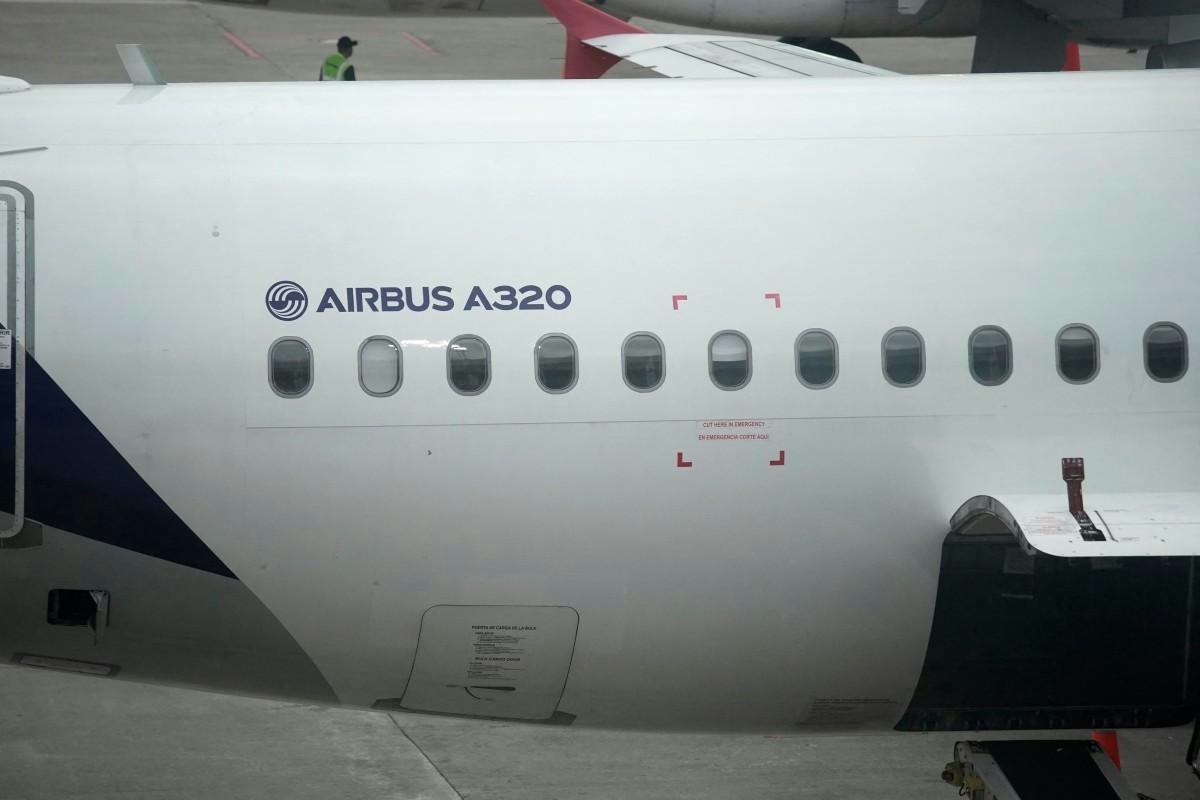
Aviation authorities and Airbus have issued an urgent directive mandating immediate repairs and inspections for approximately 6,000 A320 family aircraft worldwide. This action follows a recent flight-control incident involving a JetBlue aircraft, which experienced an uncontrolled "pitch down" event last month. The incident has raised significant safety concerns regarding one of the most widely operated commercial aircraft families globally.

Cause and Response

Investigations have identified a vulnerability in the flight-control computers of the affected jets, linked to software that may be susceptible to interference from solar radiation. In response, Airbus has ordered a comprehensive software update across its entire A320 family fleet, which includes the A318, A319, A320, and A321 models. The update is designed to address the identified flaw and enhance the resilience of the flight-control systems.

The modifications are classified as urgent and are expected to require approximately two hours per aircraft to complete. Airlines worldwide are now engaged in a concerted effort to implement the necessary changes, resulting in operational disruptions during a peak travel season. Several carriers have reported delays and cancellations as maintenance teams work continuously to minimize the impact on passengers and restore full service.

Industry and Market Implications

The directive has also prompted reactions within financial markets, with investors expressing concerns about the potential economic consequences for airlines compelled to ground aircraft for repairs. Operational efficiency is under heightened scrutiny, and some industry analysts suggest that competitors may attempt to leverage any perceived vulnerabilities in Airbus’s fleet management to their advantage.

Beyond the immediate logistical and financial challenges, the incident has sparked broader discussions about aviation safety and the industry's capacity to address emerging technological risks. It highlights the critical importance of robust software safeguards in modern aircraft and the necessity for swift, coordinated responses when potential hazards are detected.

Airbus has emphasized that the software update is a precautionary measure, reaffirming that passenger safety remains its highest priority. Regulators continue to monitor the situation closely as airlines work to complete the mandated repairs and return affected aircraft to service.

More news
ThinkYoung and Boeing Open STEM School in Luanda Focused on AI, Robotics, and Aviation

ThinkYoung and Boeing Open STEM School in Luanda Focused on AI, Robotics, and Aviation

ThinkYoung and Boeing Launch STEM School in Luanda Emphasizing AI, Robotics, and Aviation ThinkYoung, in collaboration with Boeing, has inaugurated the first edition of the ThinkYoung STEM School in Luanda, Angola. This initiative aims to equip young learners with practical skills in artificial intelligence (AI), robotics, and aviation through a free educational program. Developed alongside the American Schools of Angola and Global Shapers Luanda, the program welcomed 52 participants aged 12 to 18, including 31 girls, marking a significant advancement in STEM education within the region. Innovative Curriculum and Educational Goals The school’s curriculum extends beyond traditional coding instruction, incorporating modules on AI, robotics, and the metaverse. It places strong emphasis on teamwork, critical thinking, and problem-solving skills. Organizers anticipate that this hands-on approach will inspire students to pursue careers in science, technology, and aviation sectors. Henok Teferra Shawl, Managing Director of Boeing Africa, highlighted the importance of the initiative, stating, “The government of Angola has invested in STEM education to shape the country’s future. We are proud to support this journey. By giving students hands-on experience in robotics, AI and aviation technologies, we create opportunities and build a pipeline of tech-savvy, skilled talent.” Andrea Gerosa, founder of ThinkYoung, underscored the broader vision behind the program: “Bringing our ThinkYoung STEM School to Angola – and soon to Senegal – for the first time sends a clear signal: together with Boeing, we are committed to advance STEM education for young people everywhere. In a time of global uncertainty and rapid advances in AI, STEM skills are more important than ever.” Challenges and Broader Implications Despite the promise of integrating advanced technologies into K-12 education, the initiative faces notable challenges. Industry experts point out that AI development remains predominantly male-dominated, raising concerns about gender imbalance and the potential for limited perspectives in both curriculum design and classroom experience. This issue, highlighted by recent research, underscores the critical need to foster diversity and inclusivity as the school expands its AI and robotics offerings. Moreover, the increasing adoption of AI-driven education has sparked debate among educators and parents. While such programs aim to modernize learning and prepare students for future careers, some critics question the long-term social and emotional impacts of AI-based instruction. Skepticism persists regarding the effectiveness and inclusivity of these new educational models, particularly in regions where access to technology and teacher training may be uneven. The launch of the ThinkYoung STEM School in Luanda also reflects a broader shift in the local educational landscape. As more institutions consider AI-focused curricula, competition is expected to intensify, potentially driving innovation but also raising concerns about equitable access and educational outcomes. Expansion and Future Prospects ThinkYoung and Boeing plan to extend the program to Dakar, Senegal, later this year as part of a wider initiative spanning Africa, Europe, and West Asia. Over the past decade, the partnership has engaged nearly 1,900 young people globally, including 850 in Africa, with approximately 60 percent of participants being girls and young women. The program’s future success will depend on its ability to navigate the opportunities and challenges inherent in integrating advanced technologies into education, ensuring that the next generation of innovators is both skilled and diverse.
Water and Debris Contamination Causes Crash of Infrequently Flown Cessna 172

Water and Debris Contamination Causes Crash of Infrequently Flown Cessna 172

Water and Debris Contamination Causes Crash of Infrequently Flown Cessna 172 A Cessna 172 experienced a total engine failure and subsequent crash near Rocky Mount/Wilson Regional Airport (KRWI) in North Carolina on April 14, 2024. The failure was attributed to water and debris contamination within the aircraft’s fuel system, raising significant concerns about maintenance practices and safety protocols in general aviation, particularly for aircraft that are flown infrequently. Sequence of Events and Pilot Response The pilot, who was also a certified mechanic, had fueled both the Cessna 172 and an escort aircraft at Delaware Airpark (33N) in Dover, Delaware, prior to departure. He reported conducting a thorough preflight inspection, including a visual check of the fuel tanks, and performed an engine run-up without detecting any anomalies. The aircraft was carrying 46 gallons of fuel and completed nearly three hours of uneventful flight. Difficulties arose during the descent into KRWI when the pilot reduced engine power and applied carburetor heat. The engine abruptly lost all power. Despite confirming the fuel selector was set to BOTH tanks, activating the auxiliary fuel pump, enriching the mixture, and attempting restarts with and without carburetor heat, the engine failed to respond. With limited alternatives, the pilot executed a forced landing on a lit road. During the landing, the aircraft struck power lines before coming to rest near an intersection. Fortunately, the pilot was uninjured. Investigation Findings An FAA inspection of the wreckage revealed the aircraft resting at a 45-degree angle with substantial damage to both wings, the fuselage, and the empennage. The left fuel tank was breached, but fuel recovered from it was free of contaminants. However, rust was observed at both fuel filler ports. Fuel samples taken from the gascolator and carburetor bowls confirmed the presence of water and debris contamination. Examination of the engine showed continuity in the crankshaft and valvetrain, but the intake valve on cylinder No. 3 was found stuck open. Abnormal markings were noted on cylinders Nos. 1 and 3, and the piston rings appeared improperly seated. Both magnetos produced spark on all leads, indicating ignition was not the cause of failure. Maintenance records indicated the engine had undergone an overhaul in January 2022. The pilot, who also performed the annual inspection on the day of the accident, had logged only 1.0 hour of flight time since the major overhaul. Implications for General Aviation Safety This incident highlights the inherent risks associated with aircraft that are flown infrequently, particularly the vulnerability of fuel systems to contamination from environmental exposure. Industry experts suggest that such accidents may prompt increased regulatory scrutiny of maintenance and safety protocols, potentially resulting in higher insurance premiums for similar aircraft. Competitors in the general aviation sector may respond by emphasizing enhanced safety measures and preventive maintenance strategies. The crash underscores the critical importance of rigorous safety checks and ongoing vigilance to mitigate environmental factors that can compromise aircraft integrity. The liabilities and operational risks stemming from lapses in maintenance or inspection are likely to remain a focal point for regulators and operators in the aftermath of this event.
African Airlines Add Surcharges Amid Supply Chain Challenges

African Airlines Add Surcharges Amid Supply Chain Challenges

African Airlines Introduce Fuel Surcharges Amid Persistent Supply Chain and Fuel Challenges South Africa’s aviation industry is facing increasing financial strain as domestic airlines implement fuel surcharges to counter rising operational expenses. Aaron Munetsi, CEO of the Airline Association of Southern Africa, highlighted that this development is a direct consequence of an ongoing global aerospace supply chain crisis, now entering its sixth year. The shortage of new aircraft and spare parts has severely constrained the ability of African carriers to modernize their fleets. Supply Chain Constraints and Operational Impact Munetsi explained that manufacturers of aircraft and engines continue to struggle to restore production to pre-pandemic levels. This has compelled many African airlines to extend the service life of older, less fuel-efficient planes, thereby escalating operational costs. Despite Africa’s large population, the continent accounts for just over 2% of global aviation activity. Munetsi attributed this marginal presence to structural challenges, including fragmented markets and limited access to modern aircraft, which hinder growth prospects. Privately owned South African airlines have shown greater adaptability by swiftly confirming new aircraft orders, outperforming many state-owned carriers. Across Africa’s 52 national airlines, only a few remain fully operational, with Ethiopian Airlines standing out as the sole financially sustainable carrier. Munetsi pointed to government interference as a key factor undermining the performance of state-owned airlines, emphasizing that efficient aircraft utilization is critical to maintaining profitability. Fuel Supply Risks and Industry Responses The sector’s difficulties have been exacerbated by rising fuel prices and supply chain disruptions, intensified by geopolitical tensions in the Middle East. Munetsi warned that the security of Jet A-1 fuel supplies is increasingly precarious, with interruptions to vital supply routes diminishing fuel availability across the continent. This vulnerability has prompted airlines to pass additional costs onto passengers through surcharges, while also considering adjustments to flight schedules and routes to manage fuel shortages. In response to these challenges, industry organizations such as the International Air Transport Association (IATA) and the International Airlines Technical Pool (IATP) have launched a joint strategy to address supply chain disruptions. However, the effectiveness of these initiatives remains uncertain amid the volatile operating environment. Munetsi underscored that securing a reliable supply of conventional jet fuel is the immediate priority for African airlines. Although there is a broader industry movement toward sustainable aviation fuels, he cautioned that the current supply challenges make such a transition difficult. “We cannot move towards sustainable aviation fuel if we cannot sustain the supply of ordinary fuel now,” he stated. Compounding these operational challenges are broader economic factors, including sluggish growth and low disposable incomes in parts of Africa, which continue to suppress demand for air travel and complicate the sector’s recovery efforts.
Air Canada Unveils New Cabins for A321XLR and 787-10 Ahead of Delayed Deliveries

Air Canada Unveils New Cabins for A321XLR and 787-10 Ahead of Delayed Deliveries

Air Canada Introduces New Cabin Designs for A321XLR and 787-10 Amid Delivery Delays Air Canada has unveiled redesigned cabin interiors for its upcoming Airbus A321XLR and Boeing 787-10 aircraft at the Aircraft Interiors Expo in Hamburg, Germany. This announcement arrives as both aircraft face delivery delays, with the first A321XLR expected to enter service in May on domestic transcontinental routes before expanding to longer-haul flights. The larger Boeing 787-10 is scheduled to join the fleet by the end of the year. Innovative Cabin Features and Configurations The A321XLR will represent a milestone for Air Canada by introducing lie-flat business class seats on a single-aisle aircraft. The cabin will accommodate 14 Signature Class seats alongside 168 economy seats, targeting routes that bridge the operational gap between traditional narrowbody and widebody aircraft. Planned destinations include transatlantic services from eastern Canada to cities such as Berlin, Tenerife, and Palma de Mallorca, as well as premium domestic routes. The Boeing 787-10 will feature a three-class layout with a total capacity of 332 passengers: 42 business class seats, 28 premium economy, and 262 economy seats. The business class cabin will notably include four “Signature Plus Suites” at the front, offering additional space, a companion seat, and beds nearly two meters in length. Both aircraft will benefit from updated seating designs, larger in-flight entertainment screens, and enhanced connectivity options. Every seat will be equipped with 4K displays, Bluetooth audio, USB-C ports, and AC power outlets. Premium economy seats will provide increased privacy, while economy seating will feature improved ergonomics and personal device holders. Design Consistency and Brand Identity Air Canada has emphasized design consistency across both aircraft, employing similar materials and layouts to create a cohesive passenger experience. The cabins will showcase wood-pattern finishes, metallic accents, a muted color palette, and subtle branding elements such as red stitching. The A321XLR will feature a backlit maple leaf-inspired entryway, while the 787-10 will offer a redesigned entrance tailored for premium travelers. These cabin enhancements align with Air Canada’s strategic objective to expand its long-haul and premium network. The A321XLR is expected to open new routes unsuitable for larger widebody aircraft, while the 787-10 will increase capacity on established long-haul services. However, both programs have encountered setbacks, with the A321XLR delayed due to certification and engine issues, and the 787-10 arriving later than initially planned. Industry Context and Market Challenges Air Canada’s fleet modernization and passenger experience upgrades come amid broader industry challenges, including economic uncertainty, geopolitical tensions, and the impact of tariffs, all of which continue to affect airline profitability. The competitive environment is intensifying as rivals such as United Airlines and Delta invest heavily in premium cabin enhancements to attract high-yield travelers. This competitive pressure may compel Air Canada to balance competitive pricing with service quality while introducing its new cabins. Market reactions to the new cabin designs are expected to be mixed. While many passengers will appreciate the improved comfort and amenities, some may express frustration over the delayed aircraft deliveries. As Air Canada navigates these challenges, the performance of its new cabins will be closely observed by both customers and industry competitors.
Alaris Aerospace Consolidates Global Operations in Florida Hub

Alaris Aerospace Consolidates Global Operations in Florida Hub

Alaris Aerospace Consolidates Global Operations in Florida Hub Alaris Aerospace Systems has announced a strategic consolidation of its four U.S. warehouse facilities into a single, purpose-built Global Fulfilment Centre located in Jupiter, Florida. This initiative aims to streamline the company’s operations, enhance service delivery, and support long-term growth while strengthening the resilience of its global supply chain. Centralizing Operations to Enhance Efficiency The consolidation represents a significant operational shift for Alaris, a specialist in aftermarket aircraft parts and supply chain solutions. By centralizing its warehousing activities, the company intends to improve efficiency in inventory management, order processing, and distribution. This centralization is expected to provide customers with a more consistent and reliable experience. Bikram Jaswal, Chief Executive Officer of Alaris Aerospace, emphasized the importance of the move, stating that the new fulfillment center will enable faster order processing, improved inventory accuracy, and a more uniform customer experience. He also highlighted that the consolidation positions the company to scale effectively in response to growing demand across both commercial and defense markets. Phased Transition and Operational Planning The transition to the new Global Fulfilment Centre will be carefully phased to ensure uninterrupted service. Alaris has developed a comprehensive operational plan that addresses inventory transfers, system integrations, and close coordination with customers and logistics partners. This approach is designed to minimize disruption throughout the migration process. Ravinder Rathore, Chief Operating Officer, noted that the phased approach allows for a careful migration of inventory and workflows while maintaining the high service standards expected by customers. He further explained that the company is investing in personnel, systems, and processes to ensure the consolidation results in net improvements for all stakeholders. Industry Challenges and Market Context The consolidation occurs amid broader challenges facing the aviation sector. A recent Florida Chamber Foundation case study highlights workforce shortages that could impact the state’s aviation industry, potentially complicating Alaris’s efforts to recruit and retain skilled talent for its expanded operations. Additionally, large-scale consolidations often attract regulatory scrutiny and present integration challenges, including aligning disparate systems and maintaining service quality during transitions. Market conditions, however, may provide some advantages. The recent increase in U.S. megadeals suggests a favorable environment for consolidation, with investors and industry analysts viewing such moves as opportunities to drive growth and operational efficiency. Nonetheless, competitors may respond strategically to capture market share during this period of transition, as has been observed in other sectors following major consolidations. As Alaris Aerospace undertakes this significant restructuring, the company faces a complex landscape of opportunities and risks. The success of the new Florida hub will depend not only on effective operational execution but also on the company’s ability to manage workforce challenges, regulatory requirements, and competitive pressures within a rapidly evolving aviation market.
AdVantage Thompson Maintains Innovative Approach as Business-Class Specialist

AdVantage Thompson Maintains Innovative Approach as Business-Class Specialist

AdVantage Thompson Maintains Innovative Approach as Business-Class Specialist Sustaining Leadership in a Competitive Market Thompson Aircraft Seating, a Northern Ireland-based manufacturer with nearly three decades of experience, continues to assert its position as a leading innovator in the business-class seating market. Operating from its factories in Portadown and Banbridge, the company has established a strong reputation through its flagship Vantage business-class seat. This product line now includes multiple variants designed for both widebody and narrowbody aircraft, featuring forward-facing and herringbone configurations tailored to evolving airline requirements. Andy Morris, Thompson’s chief commercial officer, emphasizes the company’s commitment to continuous improvement. He describes their seats as “living products” that undergo incremental enhancements to ensure each iteration surpasses its predecessor. This philosophy underpins Thompson’s ongoing efforts to meet the growing demand for premium travel experiences amid intensifying competition among airlines. Innovations and Product Developments At the recent Aircraft Interiors Expo (AIX), Thompson unveiled its latest innovation: the XL+ front row. This design optimizes previously unused cabin space by replacing the traditional crew storage monument above the footwell, thereby creating an enhanced business-class offering. The XL+ is available across Thompson’s product range, reflecting the company’s focus on maximizing passenger comfort and cabin efficiency. The Vantage family has expanded to include several offshoots. The forward-facing Vantage XL, tailored for the Airbus A330, and the more spacious XL+ variant for the A350 and Boeing 787, complement the original design. Additionally, the single-aisle Vantage Solo and the new Vantage Nova—a widebody seat arranged in a herringbone layout—broaden the company’s portfolio. The Vantage Nova is currently undergoing certification and is slated for its first delivery to an undisclosed A350 operator later this year. Thompson’s integration within China’s AVIC Cabin Systems since 2016 has further strengthened its market position. The company is supplying business-class seats for Lufthansa’s forthcoming 777-9 aircraft as part of the airline’s new Alegris cabin. Although the seat design is proprietary to Lufthansa, Morris confirms that the 777-9 remains a key element of Thompson’s product roadmap, underscoring the company’s strategic focus on future opportunities. Market Dynamics and Strategic Challenges While single-aisle aircraft constitute only 15% of Thompson’s deliveries, the expanding long-haul narrowbody segment presents significant growth potential. Airlines are increasingly deploying extended-range A321s, with JetBlue’s transatlantic A321LRs featuring Thompson’s direct aisle access Vantage Solo as a notable example. The retrofit market also offers lucrative prospects, as airlines postpone new widebody acquisitions and instead invest in cabin refurbishments. Morris notes that the aftermarket currently accounts for approximately 40% of Thompson’s business, with expectations for continued growth in this segment. Despite these achievements, Thompson faces challenges in maintaining its innovative edge amid a competitive and rapidly evolving landscape. The emergence of new managing general agents (MGAs) in adjacent sectors, who must balance distribution advantages against underwriting expertise, mirrors the strategic decisions confronting Thompson. The anticipated rise of agentic commerce—projected to reach $1.5 trillion globally by 2030—could significantly alter market dynamics, prompting competitors to seek early leadership through agentic frameworks. Although AVIC Cabin Systems has yet to release its 2025 financial results, early indicators suggest that Thompson’s revenue, profitability, and order backlog—now exceeding £1.3 billion ($1.7 billion)—are on an upward trajectory. The recent announcement of China Southern as the launch customer for the Vantage XL+ marks a further milestone in Thompson’s ongoing evolution as a specialist in business-class seating.
Expliseat Introduces TiSeat S Premium Aircraft Seat

Expliseat Introduces TiSeat S Premium Aircraft Seat

Expliseat Launches TiSeat S: A Lightweight Premium Seat for Regional Jets At the Aircraft Interiors Expo 2026 in Hamburg, French manufacturer Expliseat unveiled the TiSeat S, a new premium aircraft seat designed specifically for regional jets. Building on its reputation for lightweight titanium and carbon fiber economy class seats, the company is now expanding into the premium segment to address persistent challenges related to weight, cost, and passenger comfort in smaller aircraft. Innovation in Regional Business Class Seating The TiSeat S offers a 40% reduction in seat weight compared to traditional models, a critical advantage for airlines operating regional jets where weight savings directly impact fuel efficiency and operating costs. While the seat’s structure is largely concealed by substantial trim, it shares a common framework and design language with Expliseat’s economy class TiSeat 2X. This approach enables cost efficiencies and ensures a consistent passenger experience across different cabin classes. Amaury Barberot, CEO of Expliseat, emphasized the company’s commitment to delivering a premium product that combines comfort, efficiency, and consistency. “Business class travelers expect a seamless and elevated experience across their entire journey. With TiSeat S, we apply our proven lightweight technology to deliver a premium product that combines comfort, efficiency, and consistency across aircraft platforms,” he stated. The regional business class market has seen limited innovation over the past two decades, with airlines frequently expressing frustration over the lack of suitable options. Expliseat aims to fill this void by leveraging shared infrastructure with its economy line, making the TiSeat S both cost-effective and scalable. The company identifies the U.S. market as a key opportunity, where regional jets equipped with premium seating are common and where Expliseat’s economy seats have already gained traction. Features, Competition, and Market Outlook The TiSeat S is equipped with amenities such as storage compartments and power outlets, and it can accommodate embedded entertainment screens if required. Durability is a central focus, given the high-frequency usage typical of regional aircraft. Expliseat envisions airlines outfitting entire fleets with its seats, streamlining maintenance processes and enhancing the overall passenger experience. Despite these advantages, Expliseat faces stiff competition from established suppliers like Recaro, which are also expanding their business-class offerings. Major airlines, including Delta, are planning to introduce new business-class suites, raising the standard for premium seating. While carriers such as Air France and Jettime have already committed to retrofitting their fleets with Expliseat products, others may remain cautious due to the company’s relatively recent entry into the premium segment. Market reactions are expected to be mixed, with incumbent players likely to respond through price adjustments or enhanced features to protect their market share. The industry’s increasing focus on sustainability and innovation, underscored at events like AIX 2026, may further influence airline decisions as they evaluate new seating solutions. As Expliseat launches the TiSeat S, the company is betting that its lightweight, modular design will appeal to airlines seeking operational efficiency alongside an upgraded passenger experience in the competitive regional jet market.
GE Aerospace to Establish Engine Support Hub in India for F404-IN20

GE Aerospace to Establish Engine Support Hub in India for F404-IN20

GE Aerospace to Establish Engine Support Hub in India for F404-IN20 GE Aerospace has entered into a contract with the Indian Air Force (IAF) to establish a domestic depot facility dedicated to the F404-IN20 engines that power the Tejas light combat aircraft. This development marks a significant advancement in India’s pursuit of defence self-reliance. The new facility, to be operated by the IAF with technical support from GE Aerospace, will offer comprehensive training, maintenance support, spare parts, and specialised equipment. Once operational, the depot is expected to eliminate reliance on foreign repair centres, thereby reducing maintenance turnaround times and enhancing fleet availability. Strengthening Indigenous Defence Capabilities This initiative builds upon a longstanding partnership between GE Aerospace and the IAF, which has spanned over four decades. It aligns closely with India’s broader strategic objective of developing indigenous defence infrastructure. The establishment of the support hub is intended to bolster local sustainment capabilities for the Tejas programme, which has encountered challenges such as engine delivery delays and concerns over supply chain reliability. By localising maintenance and support, the facility aims to mitigate these issues, although GE Aerospace may face heightened scrutiny regarding its delivery schedules and logistical efficiency. Market analysts suggest that this move could intensify competition within India’s expanding defence sector, potentially prompting rivals like GKN Aerospace to enhance their offerings. Additionally, GE Aerospace will need to navigate complex logistical and regulatory frameworks as it establishes operations in India. Rita Flaherty, Vice President of Sales and Business Development for Defense & Systems at GE Aerospace, highlighted that the agreement reaffirms the company’s commitment to supporting India’s armed forces. She noted that the depot will ensure improved availability of the F404-IN20 engines and provide the IAF with dependable access to advanced propulsion technology. Broader Contributions to India’s Aerospace Ecosystem Beyond the F404-IN20 engine programme, GE Aerospace continues to play a pivotal role in the development of India’s aerospace sector across design, manufacturing, and sustainment domains. The company has made significant investments in skills development, having trained over 5,000 individuals in core manufacturing capabilities at its Pune facility. Its Edison Engineering Development Programme has produced 150 locally trained engineering graduates. In addition, the GE Aerospace Foundation, in partnership with United Way, launched the “Next Engineers” initiative in Bengaluru in September 2025. This four-year programme is designed to support 4,000 aspiring engineers through college and career readiness pathways, further contributing to the country’s talent pipeline. GE Aerospace’s engines power multiple Indian military platforms beyond the Tejas, including the Navy’s P-8I maritime patrol aircraft and MH-60R helicopters, as well as the Air Force’s AH-64 Apache helicopters. Its LM2500 marine gas turbines also provide propulsion for key naval assets such as the INS Vikrant aircraft carrier and the P-17 Shivalik-class frigates. As GE Aerospace advances with the establishment of the engine support hub, its capacity to resolve supply chain challenges and comply with India’s regulatory environment will be closely monitored by industry stakeholders and competitors alike.
How Collins Aerospace Redesigned the Least Popular Plane Seat

How Collins Aerospace Redesigned the Least Popular Plane Seat

How Collins Aerospace Redesigned the Least Popular Plane Seat Sitting in the last row of economy class has long been regarded as one of the least desirable experiences on a long-haul flight. Passengers in these seats contend with constant disturbances from nearby toilets and galleys, increased light and noise, and heavy foot traffic. They are often the last to be served and the final group to disembark. At the 2026 Aircraft Interiors Expo in Hamburg, Collins Aerospace, a subsidiary of RTX, introduced an innovative concept designed to transform this traditionally unpopular seating area into a more attractive and functional space. The SkyNook: A Semi-Private Retreat The new design, named the **SkyNook**, capitalizes on the natural tapering of a widebody aircraft’s fuselage to create a semi-private enclave at the rear of the cabin. By incorporating a privacy door and reconfiguring the typically unused space between the window seat and the aircraft sidewall, Collins Aerospace has developed a versatile area that can securely accommodate luggage, baby car seats, service animals, or other bulky items. A custom convertible console ensures these belongings remain safely stowed throughout the flight, enhancing comfort and convenience for families, passengers with special needs, and those traveling with fragile possessions. The SkyNook is engineered to fit a range of twin-aisle aircraft, adapting to the unique fuselage dimensions of each model. For instance, while the concept is generally installed on the window side of the rear row, its placement varies on aircraft such as the Airbus A330, where the fuselage narrows mid-cabin. This adaptability is crucial as airlines strive to balance passenger comfort with cabin efficiency. Market Context and Industry Challenges Collins Aerospace’s initiative to reinvent the rear-row seating comes amid notable shifts in the aircraft seating market. Airlines like United are increasingly focusing on expanding premium cabins while reducing economy seating, responding to heightened demand for first-class accommodations. Meanwhile, EasyJet’s decision to switch seat suppliers to Mirus for its new Airbus fleet reflects intensifying competition and evolving airline preferences. The retrofit market is also experiencing significant growth. Start-ups such as Expliseat report that over 80% of their business involves retrofitting existing aircraft, highlighting the importance of adaptable seating solutions like SkyNook that can be integrated into both new and current fleets. Nevertheless, Collins Aerospace faces technical hurdles, particularly as the aviation industry explores hybrid-electric aircraft designs. Battery obsolescence remains a pressing concern, as emphasized by the company’s principal technical fellow for electrification, underscoring the need for future-proof innovations in seating and aircraft systems. Despite these challenges, the SkyNook concept exemplifies Collins Aerospace’s dedication to reimagining even the most overlooked areas of the cabin. By transforming neglected spaces into functional, semi-private retreats, the company aims to elevate the passenger experience and sustain its competitive position in a rapidly evolving market.
Textron secures extension for T-6 trainer support

Textron secures extension for T-6 trainer support

Textron Secures Five-Year Extension for T-6 Trainer Support Textron Aviation Defense LLC, a subsidiary of Textron Inc., has been awarded a five-year contract extension by the U.S. Government to continue providing Sustaining Engineering and Program Management (SEPM) services for the T-6 trainer fleets operated by the U.S. Air Force, Navy, and Army. Originally granted in 2021, this contract now extends through 2029, ensuring ongoing systems engineering, program oversight, and support for maintenance, repairs, modifications, and structural integrity programs for the T-6A, T-6B, and T-6D aircraft. All related work will be carried out at Textron’s Wichita, Kansas facility. Travis Tyler, President and CEO of Textron Aviation Defense, highlighted that the contract extension reflects the government’s sustained confidence in Textron’s capabilities. He underscored the company’s dedication to maintaining aircraft availability and ensuring the T-6 fleet remains mission-ready, thereby supporting the training of future military pilots. The T-6 Texan II: A Leading Military Trainer Amidst Growing Competition The Beechcraft T-6 Texan II is widely regarded as a premier military training platform, noted for its relatively low acquisition, operating, and sustainment costs. Backed by Textron’s extensive aviation manufacturing heritage—spanning nearly a century and more than 255,000 aircraft delivered worldwide—the T-6 has established a reputation for reliability and efficiency. With an installed base that significantly surpasses its nearest competitor, the T-6 family has served as the world’s leading integrated training system for over two decades. Its active production line, supported by a Manufacturing Readiness Level of 10 and a resilient supply chain, further ensures its long-term viability. Despite this strong position, Textron faces increasing competition from major defense contractors such as Boeing and Lockheed Martin. Both companies are actively pursuing opportunities to replace the aging T-45 Goshawk with advanced training systems, particularly as the U.S. Navy seeks to modernize its training fleet. This competitive landscape poses challenges for Textron, as Boeing and Lockheed Martin are expected to leverage their existing capabilities and strategic partnerships in bids for the Navy’s forthcoming Undergraduate Jet Training System contract. Market responses to Textron’s contract extension have been mixed. While some stakeholders view the continuation of support as a positive measure to guarantee uninterrupted pilot training and fleet readiness, others regard it as a temporary solution that may delay broader modernization efforts for the Navy’s training aircraft. As competition intensifies, Textron’s ability to maintain its leadership will depend on its ongoing performance and adaptability within a rapidly evolving defense environment.
line










