
Orchestrer les insights d’IA pour les transformer en actions

Tendances
Categories
Airbus Maintains Lead Over Boeing
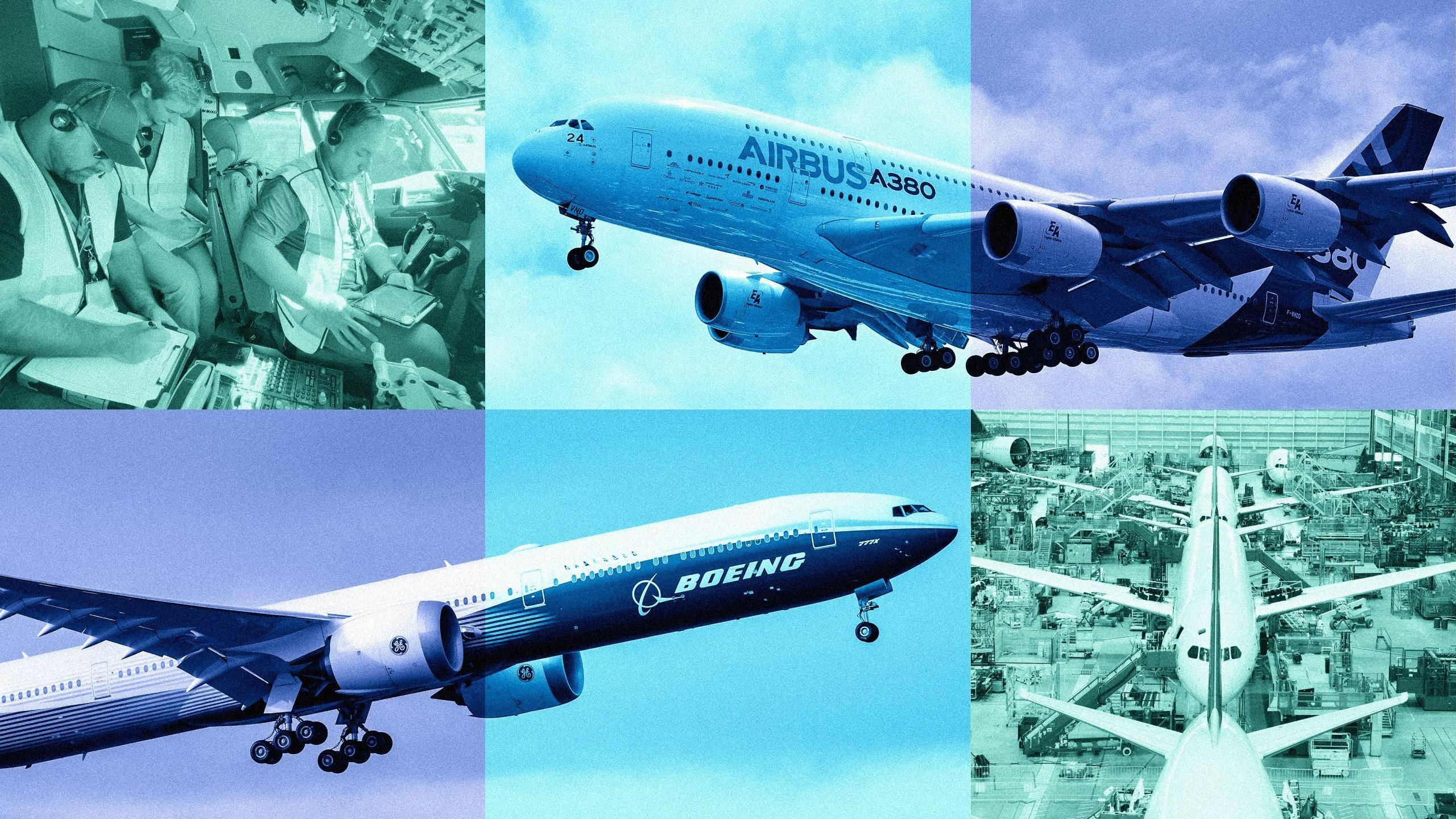
Airbus Maintains Lead Over Boeing
Delivery Performance and Market Position
In July 2026, Airbus delivered 67 aircraft to 39 customers, marking a decline from 89 deliveries in June and 81 in May. Despite this reduction, the figure aligns with the company’s recent delivery patterns and sustains its lead in the global aircraft delivery race—a critical benchmark for airlines, lessors, and investors. By the end of July, Airbus had delivered a total of 418 jets for the year, up from 373 at the same point in 2025. The first half of 2026 alone saw Airbus hand over 351 aircraft, representing a 15% year-on-year increase. CEO Guillaume Faury attributes this growth to improved engine supplies and a more stable supply chain. Narrowbody aircraft remain the primary driver of this expansion, with IndiGo receiving seven additional A320neo-family jets in July, China Southern taking four, and American Airlines acquiring three A321neos. Emirates also added three A350-900 widebodies to its fleet.
Boeing, meanwhile, is experiencing its strongest delivery performance since 2018, with an estimated 365 aircraft delivered through July. The U.S. manufacturer recorded 314 deliveries in the first half of the year, trailing Airbus but demonstrating clear momentum. Boeing’s July delivery figures are anticipated shortly and may narrow the gap further. The company’s recent production ramp-up, including the inauguration of a new Max assembly line and FAA-approved increases in output, signals potential gains in the coming months.
Expanding Order Books and Market Demand
Although Airbus’s deliveries declined in July, its order book continued to grow robustly. The company secured 204 gross orders during the month, highlighted by a significant commitment from SMBC Aviation Capital for 100 A320neo-family aircraft. Additional orders were placed by Hainan Airlines, China Eastern for 25 A330-900s, Riyadh Air for six A350-1000s, and an undisclosed buyer for six A321neos. This strong demand reinforces Airbus’s dominant market position even as Boeing’s recovery gains traction.
Industry Challenges and Competitive Dynamics
Both Airbus and Boeing continue to contend with ongoing supply-chain disruptions and engine shortages, yet delivery volumes remain resilient. Airbus maintains its full-year delivery target of approximately 870 aircraft, within a guidance range of 850 to 890, indicating a busy second half of the year. Boeing’s improving market perception, bolstered by positive reception at the recent Farnborough International Airshow, suggests intensifying competition ahead. However, operational setbacks persist for Boeing. A recent tyre burst incident involving a Kenya Airways Boeing 737-800 has raised concerns about reliability, potentially affecting market confidence as the company strives to regain its footing.
Outlook for the Delivery Race
The competition between Airbus and Boeing remains closely contested. Airbus’s steady delivery performance secures its current lead, but Boeing’s production acceleration and strengthening order pipeline could alter the landscape as the year progresses. For now, Airbus continues to set the pace, while the rivalry is expected to intensify as both manufacturers pursue ambitious year-end delivery targets.

Etihad Airways Suspends Airbus A380 Flights on Key Route

Aditya Birla Group Seeks Approval for Aircraft Leasing in GIFT City

Qatar Airways Highlights Innovation and Connectivity at Arabian Travel Market 2026

Hong Kong's Five-Year Plan Includes Andrew Fan's Aircraft Parts Processing Hub Proposal

ACIA Aero Leasing Delivers ATR72-600 to Air Nostrum

RTX Appoints Jill Albertelli as Head of Pratt & Whitney

TAT Technologies Joins Beyond Aero Hydrogen Aircraft Program

AURAK Study Highlights Barriers to Air Taxi Adoption in Emerging Economies

Xiamen Air Selects Altitude for 787 Maintenance at Heathrow

Etihad and Swissport Extend Global Partnership
