Image

Orchestrer les insights d’IA pour les transformer en actions

Inscrivez-vous dès aujourd’hui sur la liste d’attente d’AeroGenie !

Tendances

Categories

Airbus needs to deliver 300 more aircraft to hit annual goal
October 8, 2025By ePlane AI
Airbus needs to deliver 300 more aircraft to hit annual goal
0
0
Airbus
Aircraft Deliveries
Supply Chain Challenges

Airbus Faces Challenge to Deliver 300 More Aircraft by Year-End

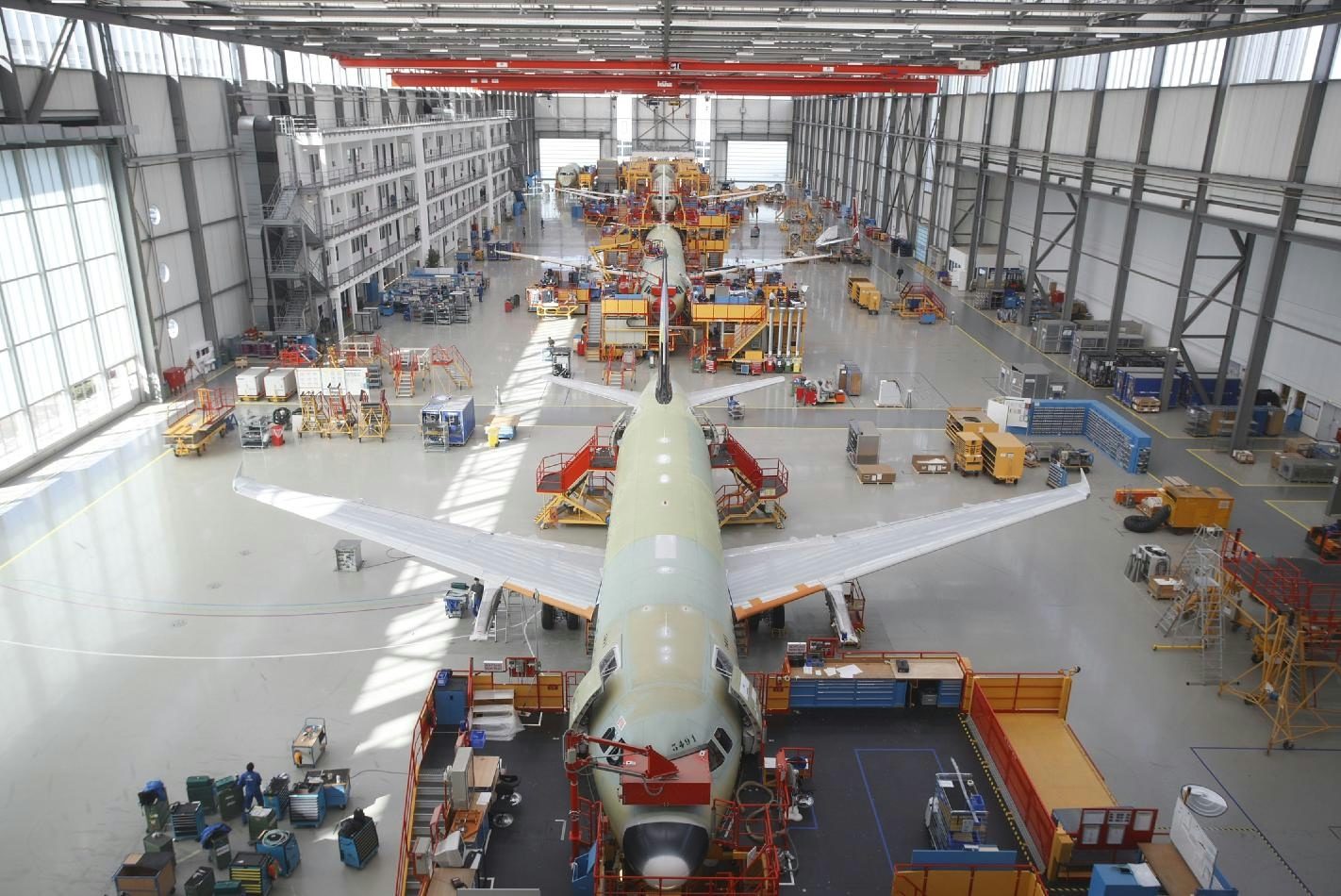
Airbus delivered 73 aircraft in September as it strives to meet its ambitious full-year target of 820 planes amid persistent supply chain difficulties. Having handed over 507 aircraft in the first nine months of the year, the European planemaker now faces the task of delivering an additional 300 planes before the end of December to achieve its goal.

Supply Chain Constraints and Production Bottlenecks

The company continues to grapple with engine shortages that have forced it to park completed aircraft—referred to as "gliders"—until engines become available. While the number of these undelivered gliders was approximately 60 at midyear, an Airbus spokesperson confirmed that this figure has since declined, though no specific details were provided. Chief Executive Guillaume Faury has expressed confidence that deliveries will accelerate in the final months of the year as engine suppliers Pratt & Whitney and CFM International increase production and improve delivery schedules.

Market Position and Production Outlook

Single-aisle jets remain central to Airbus’s commercial strategy, mirroring the focus of its main competitor, Boeing. The A320 family, in particular, has become the world’s most-delivered aircraft, surpassing Boeing’s 737 and reinforcing Airbus’s dominant market position. To address a backlog exceeding 7,200 orders, Airbus plans to ramp up production of its bestselling A320neo family to 75 jets per month by 2027. At this rate, fulfilling current commitments would require roughly eight years.

Airbus is also closely monitoring the emergence of China’s Comac, whose C919 jet is gaining traction in the commercial aviation sector. Despite this growing competition, Airbus continues to benefit from strong demand, including substantial orders from China, one of the fastest-growing travel markets globally.

Despite ongoing supply chain and engine challenges, Airbus remains committed to meeting its 2025 delivery targets and sustaining its leadership role in the global aviation industry.
More news
Airbus Projects Demand for 42,060 Aircraft by 2045

Airbus Projects Demand for 42,060 Aircraft by 2045

Airbus Projects Demand for 42,060 Aircraft by 2045 Airbus has outlined a transformative vision for global air travel over the next two decades, forecasting a demand for 42,060 new passenger aircraft by 2045. The company’s 2026 Global Market Forecast anticipates a shift away from traditional hub-to-hub airline networks towards more direct routes and connections between secondary cities. This evolution is driven by the need for efficient aircraft capable of serving thinner routes that were previously unviable, reflecting broader changes in urbanization and passenger preferences. Changing Urban Dynamics and Network Decentralization The forecast highlights a significant increase in the number of medium and small cities, expected to grow from 2,251 in 2025 to 2,857 by 2045, while the number of megacities will see only a modest rise from 33 to 37. This demographic shift is contributing to a more decentralized airline network. The number of city pairs served by airlines has already expanded substantially, from 17,000 in 2005 to 28,000 in 2025. Notably, 55% of these city pairs involve routes that did not exist two decades ago, with 78% of the new routes connecting smaller cities. This trend underscores the growing importance of regional connectivity in the global aviation landscape. Technological Advances and Market Opportunities Advancements in aircraft technology are facilitating this network evolution. Airbus points to models such as the A220 and A321XLR, which offer enhanced fuel efficiency, extended range, and adaptable cabin configurations. The A220 has already enabled the launch of over 400 new routes across North America, Europe, and Africa, with more than 2,200 additional unserved routes identified as potential opportunities. Similarly, the A321XLR is expected to open over 2,200 new routes, further supporting the expansion of direct and regional air travel. Despite ongoing geopolitical and economic challenges—including the conflict in Iran and global trade tensions—Airbus remains optimistic about the sector’s long-term growth prospects. The company projects passenger traffic to increase at an annual rate of 3.9% between 2025 and 2045, more than doubling from 9.9 trillion to 21.3 trillion revenue passenger kilometers. To meet this demand, the global passenger fleet is expected to nearly double in size, growing from 23,310 aircraft in 2025 to 45,550 by 2045. Fleet Renewal and Production Challenges Of the 42,060 new aircraft anticipated, 22,240 will be required to support growth, while 19,820 will replace older, less efficient jets. Airbus emphasizes that this fleet renewal is essential for improving both operational economics and environmental performance. Single-aisle aircraft are projected to dominate future deliveries, with demand for 33,920 units in this category. However, Airbus CEO Guillaume Faury has acknowledged the challenges involved in scaling up production to meet this ambitious forecast. Reflecting these complexities, Airbus has revised its industry-wide demand forecast downward by 1%, citing external pressures such as geopolitical instability and trade disputes. Market reactions have been mixed, and while competitor responses remain uncertain, the focus on both fleet replacement and the development of new routes indicates a robust demand environment for major aerospace manufacturers in the coming decades.
Boeing Enhances Range of 777-8 and 777-9 to Boost Long-Haul Travel

Boeing Enhances Range of 777-8 and 777-9 to Boost Long-Haul Travel

Boeing Enhances Range of 777-8 and 777-9 to Boost Long-Haul Travel Boeing has quietly revised the advertised range of its next-generation 777X family, significantly extending the capabilities of both the 777-8 and 777-9 passenger variants. These updated specifications, now reflected on Boeing’s official website, have attracted considerable attention from airlines and industry analysts, as range remains a crucial factor in long-haul route planning and fleet modernization. Substantial Range Increases The latest figures indicate that the 777-8’s range has increased from 8,745 to 9,500 nautical miles, representing a gain of 755 nautical miles. Similarly, the 777-9’s range has been extended from 7,285 to 8,000 nautical miles, an improvement of 715 nautical miles. These enhancements correspond to approximate increases of 8.5% and 10% respectively, positioning both models more firmly within the ultra-long-haul category. Market Response and Competitive Landscape The market has responded positively to Boeing’s announcement. China Southern Airlines has become the first Chinese carrier to commit to the 777-8F freighter variant, signaling growing confidence in the aircraft’s long-haul capabilities. The enhanced range strengthens the 777X family’s position as a formidable competitor to the Airbus A350 series, although the A350 continues to hold a slight edge in maximum range and payload capacity. Key customers are closely monitoring the 777X’s development timeline. All Nippon Airways (ANA) remains optimistic about Boeing’s ability to deliver the first 777-9 by 2027, while maintaining contingency plans should further delays arise. Emirates, another major customer, anticipates receiving its initial 777X aircraft by June next year, though it has expressed concerns regarding the durability of the Rolls-Royce engines that power the rival Airbus A350-1000. The Importance of Extended Range Extended range offers significant advantages to airlines by enabling nonstop flights between distant city pairs, thereby reducing travel times and enhancing passenger convenience. For carriers, this translates into greater scheduling flexibility, improved fleet utilization, fewer fuel stops, enhanced network planning, and expanded destination options. As international travel demand continues to recover, airlines are increasingly prioritizing aircraft capable of efficiently operating longer sectors with high passenger loads. Strengthening the 777X’s Market Position The 777X family, designed as the successor to the popular 777-300ER and incorporating advanced technologies from the 787 Dreamliner, features composite folding wingtips to improve aerodynamic efficiency, GE9X engines that reduce fuel consumption, advanced lightweight materials for enhanced performance, and modern passenger cabins that increase comfort. The updated range figures underscore Boeing’s commitment to refining the 777X’s performance and maintaining its competitiveness in the evolving long-haul market. As airlines evaluate future fleet investments, the enhanced capabilities of the 777-8 and 777-9 are poised to play a pivotal role in shaping the next era of global air travel.
Bahir Dar University and Boeing Open Aviation Innovation Center

Bahir Dar University and Boeing Open Aviation Innovation Center

Bahir Dar University and Boeing Launch Aviation Innovation Center in Ethiopia Bahir Dar University and Boeing have formalized a long-term partnership to establish an Aviation Innovation Center in Ethiopia, aimed at advancing aerospace innovation, enhancing engineering education, and cultivating a skilled workforce to support the country’s growing aviation industry. The collaboration, announced on Wednesday, marks a significant step toward positioning Ethiopia as a regional hub for aerospace research and development. A Hub for Aerospace Research and Education The Aviation Innovation Center is slated to open by 2026 at the Bahir Dar Institute of Technology. Designed as a focal point for research, experiential learning, and startup incubation, the facility will provide students and researchers with access to cutting-edge technology, including 3D printers, flight simulators, engineering design software, drone assembly kits, and avionics testing systems. Initial phases will prioritize infrastructure development, laboratory setup, and recruitment of specialized staff to support the center’s multifaceted activities. Boeing Africa Managing Director Henok Teferra Shawl emphasized the continent’s expanding aviation demands, projecting a need for over 1,200 new aircraft and 74,000 aviation professionals across Africa in the next twenty years. He underscored the importance of aligning academic curricula with industry requirements to create viable career pathways for emerging professionals, while simultaneously supporting the growth of airline operations, airport infrastructure, and aerospace manufacturing within Ethiopia. Expanding Collaboration and Industry Impact The center will extend its resources beyond Bahir Dar University, offering access to other universities, high schools, and aerospace startups throughout Ethiopia. This inclusive approach aims to foster collaboration and nurture talent across the nation. The partners anticipate that the facility will serve as a platform for developing and testing digital aviation solutions, sustainable technologies, aerospace-grade materials, and unmanned aerial vehicles (UAVs). Mengesha Ayene Ejigu, President of Bahir Dar University, described the initiative as a landmark achievement that will establish a world-class platform for aerospace education, research, innovation, and technology transfer. The partnership will also feature innovation competitions, workshops, and mentorship programs designed to enhance students’ practical skills and industry engagement. Challenges and Market Context Despite its promise, the initiative faces several challenges, including competition from other aviation innovation hubs, securing adequate funding, and adapting to rapidly evolving aviation technologies. The global aerospace market remains highly competitive; recent data indicates Airbus leading Boeing in commercial aircraft orders for May 2026, highlighting the dynamic environment in which the new center will operate. The announcement has generated increased interest among aviation students and professionals, while competitors may respond by intensifying their own innovation efforts and partnerships. Boeing’s Commitment to STEM and Workforce Development in Africa This new center builds upon Boeing’s extensive science, technology, engineering, and mathematics (STEM) and workforce development programs in Ethiopia, which have reached over 14,700 young people in the past five years. Boeing, a leading global aerospace manufacturer with a presence in Ethiopia and South Africa, has supported aviation development across Africa for more than seventy years. Over the last decade, the company has invested approximately $14.5 million in youth development initiatives across the continent. Bahir Dar University, recognized as one of Ethiopia’s premier public research institutions, enrolls more than 25,000 students and offers a comprehensive range of undergraduate, master’s, and doctoral programs, positioning it well to lead this ambitious aerospace endeavor.
A Retrospective on 50 Years of Commercial Aviation

A Retrospective on 50 Years of Commercial Aviation

A Retrospective on 50 Years of Commercial Aviation With the announcement of Scott Hamilton’s impending retirement next year, the aviation community marks the release of his third and final book, *50 Years in Commercial Aviation: Memories and Inside Stories*. Hamilton, founder and editor of Leeham News, offers a comprehensive chronicle of his lifelong engagement with the airline industry, tracing his evolution from a general assignment and political reporter to a dedicated aviation journalist. His career spans five decades, during which he has witnessed and documented the profound transformations within commercial aviation. A Career Rooted in Aviation Hamilton’s initial foray into the airline industry began with a brief tenure at the first airline certified by the Civil Aeronautics Board for scheduled service in four decades. Although his time working directly within the airline business was short-lived, he soon returned to journalism, focusing his efforts on covering airlines, major manufacturers such as Airbus and Boeing, and the broader aviation supply chain. Over the years, Hamilton’s investigative reporting has uncovered critical industry developments, including the financial instability of Braniff Airways and the collapse of Pan American World Airways. His work often involved challenging powerful entities, exemplified by his legal battle to obtain information from the Federal Aviation Administration and his confrontations with industry giants Airbus and Boeing. The book also explores missed opportunities by companies like Mitsubishi and Bombardier in their attempts to expand globally. Interspersed with these accounts are personal reflections that reveal the experiences shaping Hamilton’s perspective and journalistic approach. Industry Challenges and Evolution Beyond recounting historical events, Hamilton’s book implicitly addresses the evolving challenges confronting commercial aviation today. The industry currently faces rising operating costs, geopolitical uncertainties, and an urgent imperative to transition toward greener, more efficient aviation fuels. European aviation leaders are responding by consolidating and strengthening their positions, while competitors worldwide race to develop next-generation aircraft powered by zero-emission and hybrid technologies. Concurrently, efforts to modernize air traffic control systems and expand airport capacity are underway, with a growing emphasis on sustainability and operational efficiency. In a notable excerpt, Hamilton reflects on the turbulent early 1990s, a period marked by Pan Am’s decline and his contentious interactions with Delta Air Lines. He traces Delta’s origins from a modest crop-dusting operation in the Mississippi Delta to a paternalistic airline culture under founder C. E. Woolman. This culture persisted until the leadership of CEO Ron Allen, whose tenure introduced significant shifts in company dynamics and labor relations. Hamilton’s career, characterized by investigative rigor and a deep passion for aviation, parallels the industry’s own trajectory—one defined by innovation, upheaval, and adaptation. As commercial aviation looks toward the next half-century, it confronts formidable challenges and opportunities for transformation, much as it did when Hamilton first began chronicling its story.
UK Airlines Shift A380 Operations to Maldives

UK Airlines Shift A380 Operations to Maldives

UK Airlines Shift A380 Operations to Maldives Amid Market Consolidation Global Airlines, based at London City Airport, has revised its operational strategy by selecting the Maldives as its next destination upon resuming services. Chief Executive James Asquith confirmed that the airline intends to recommence flights “certainly this year,” or by Christmas 2026 at the latest, following the completion of a heavy maintenance check on its sole Airbus A380-800, registered 9H-GLOBL. The aircraft, operated by Hi Fly Malta on behalf of Global Airlines, was initially parked in Dresden after completing only four passenger flights in May 2025, before being relocated to Lourdes/Tarbes two months later. Asquith attributed the delay primarily to constraints in maintenance, repair, and overhaul (MRO) capacity. Strategic Shift in a Consolidating Market This decision reflects broader trends within the European aviation sector, which is currently experiencing significant consolidation. Major airline groups are fortifying their positions in response to rising operating costs and persistent geopolitical uncertainties. By deploying the A380 on routes to the Maldives—a destination less conventional for the superjumbo—Global Airlines aims to capitalize on high-demand leisure travel while addressing competitive pressures. Industry analysts caution, however, that operating the A380 outside established long-haul markets may invite scrutiny over the financial sustainability of such services. Competitors are expected to respond with strategic measures designed to safeguard their market shares, including network expansions and cost transformation initiatives. Recent industry moves, such as Air New Zealand’s strategic realignment, underscore the necessity for carriers to adapt to evolving market dynamics. This environment may accelerate further consolidation or prompt fleet realignments among European airlines, particularly as they assess the viability of operating large aircraft like the A380 in niche markets. Future Prospects and Challenges Global Airlines, which currently lacks an air operator’s certificate, also plans to acquire an additional A380-800 to support ambitions for transatlantic expansion. The success of these plans will depend heavily on the airline’s ability to overcome operational challenges and navigate the increasingly competitive landscape of the European aviation industry.
SAS Acquires Falcon 900EX for Aftermarket Teardown

SAS Acquires Falcon 900EX for Aftermarket Teardown

SAS Acquires Falcon 900EX for Aftermarket Teardown Amid Industry Shifts Seattle Aviation Solutions (SAS), a prominent distributor in the aviation aftermarket sector, has secured a Dassault Falcon 900EX for teardown, intending to distribute its components to buyers worldwide. The aircraft, bearing serial number 045 and registration N30HQ, has accumulated 14,981.4 total airframe hours and 11,122 landings as of October 2024. Previously owned by a single operator, the jet comes with comprehensive and meticulously maintained service records, underscoring its well-documented history. Key Components and Aircraft Specifications Among the valuable assets available from the teardown is a complete Honeywell Primus 2000 avionics suite. This includes triple Honeywell FMZ-2000 flight management systems, triple LASEREF III inertial reference systems, and dual GLSSU GPS units. The auxiliary power unit, a GTCP36-150(F) enrolled in the MSP Gold program, has logged 6,888 hours and is supported by a full maintenance logbook. SAS also highlighted the considerable remaining service life of the landing gear, with the nose gear overhaul not due until January 2031 and the main gear until December 2035. The brakes retain over 80% of their operational lifespan. The Falcon 900EX underwent a cabin refurbishment by West Star Aviation in 2024, featuring a 12-passenger executive interior. As a three-engine, long-range business jet capable of flying 4,500 nautical miles, its components are highly prized in the aftermarket. Navigating Regulatory and Market Challenges SAS’s acquisition occurs amid significant transformations within the aviation aftermarket industry. Increasing regulatory scrutiny, particularly concerning Scope 3 emissions reporting and circular economy initiatives, is reshaping the economics of maintenance and teardown operations. These evolving pressures compel companies like SAS to prioritize traceability and sustainability within their supply chains, adding layers of complexity to the teardown process. Competitors are anticipated to respond by leveraging technological innovations and strategic market positioning to adapt to these changes. Market reactions to SAS’s acquisition are expected to be mixed. While some industry stakeholders view the move as a strategic enhancement of service offerings and a means to provide reliable, traceable components, others may express concerns regarding its potential effects on competition and pricing within the aerospace aftermarket. Mustafa Altork, chief executive of SAS, underscored the acquisition’s significance, stating, “Business jet operators and MROs need reliable access to traceable components from known sources. This Falcon 900EX teardown delivers exactly that. Strong avionics package and significant landing gear life remaining make this one of the most complete business jet teardown opportunities we have brought to market.” The teardown is poised to offer operators and maintenance, repair, and overhaul (MRO) providers access to traceable Falcon 900-series airframe parts, Honeywell Primus 2000 avionics, and TFE731-60 engine components from a single, well-documented source. This positions SAS to meet both current market demands and emerging regulatory requirements.
Airbus Books 40 New Orders for A320neo Jets in First Half

Airbus Books 40 New Orders for A320neo Jets in First Half

Airbus Secures 40 New Orders for A320neo Jets in First Half of 2026 Airbus has reported a strong start to 2026, securing 40 new orders for its A320neo-family aircraft from an undisclosed customer. The order includes 24 A321neos and 16 A320neos, highlighting sustained demand for the manufacturer’s single-aisle jets. This development contributes to Airbus’s growing backlog and underscores the continued appeal of its popular narrow-body models. Widebody Activity and Defence Sector Expansion In addition to single-aisle orders, Airbus recorded significant activity in its widebody segment. Scandinavian carrier SAS placed an order for 18 A330-900 aircraft, while Air Algerie added a single A330-900 to its fleet. Airbus’s defence division is also set to receive an A330-800 tanker, reflecting the company’s strategic efforts to expand its military tanker offerings. Furthermore, Airbus itself is acquiring an A330-900, diversifying its operational fleet and reinforcing its commitment to widebody platforms. Delivery Performance and Market Competition Deliveries in the first half of 2026 reached 351 jets, marking an increase of nearly 15 percent compared to 306 aircraft delivered during the same period last year. Airbus has reaffirmed its full-year delivery target of 870 aircraft, a goal that will require maintaining elevated production rates despite ongoing supply chain and operational challenges. The competitive landscape remains intense, with Boeing closely monitoring Airbus’s progress. American Airlines is reportedly considering a widebody order from either Boeing or Airbus as it seeks to keep pace with rivals Delta and United. This competitive pressure is influencing fleet strategies across the global aviation industry. Strategic Shifts in Single-Aisle Portfolio Airbus is also navigating a strategic transition within its single-aisle lineup. The company is placing greater emphasis on the A220 model, while the role of the A319neo is diminishing. This shift presents potential challenges in market positioning and sales as Airbus balances evolving customer preferences with its product offerings. As the year advances, Airbus’s ability to sustain production momentum and adapt to changing market dynamics will be crucial in achieving its ambitious delivery targets and maintaining its competitive position in the aerospace sector.
June Parts Demand Highlights Emerging Supply Pressures

June Parts Demand Highlights Emerging Supply Pressures

June Parts Demand Highlights Emerging Supply Pressures Surge in Aftermarket Aviation Demand Amid Operational Constraints In June 2026, the aftermarket aviation sector experienced a significant surge in parts demand, driven by a highly constrained operating environment. Elevated aircraft utilization rates, bottlenecks in engine maintenance, repair, and overhaul (MRO) services, and persistent supply chain challenges collectively intensified the need for serviceable parts, exchanges, and expedited sourcing solutions. Data from the Locatory.com marketplace indicated robust demand for standard hardware items such as O-rings, self-locking nuts, and pins. Concurrently, pressure remained high on engine components, particularly those related to the CFM56 series, including fuel systems, starters, and control units. Electrical and avionics parts also saw increased demand as aging fleets required more frequent maintenance interventions. Supply constraints were especially pronounced for GE90 FADEC (Full Authority Digital Engine Control) components, helicopter parts, and certified hardware. These shortages highlighted the critical need for enhanced part-level visibility and proactive inventory planning to mitigate maintenance delays and avoid costly Aircraft on Ground (AOG) situations. The operating environment in June was notably challenging; the International Air Transport Association (IATA) reported a decline in global airline profitability to $23 billion, influenced by disruptions in the Middle East and elevated fuel prices. Engine MRO bottlenecks were further exacerbated by durability concerns, spare parts shortages, limited availability of spare engines, and restricted access to aftermarket resources. Broader Supply Chain Pressures Across Industries The supply chain pressures observed in aviation are reflective of wider macroeconomic challenges affecting multiple sectors. The automotive industry, for instance, is grappling with intensified competition from China, prompting North American manufacturers to expand their supply chains and production capacities. Strategic market responses include Nissan’s decision to halt development of the electric Qashqai amid mounting pressures in the electric vehicle (EV) market, while competitors such as Stellantis are increasing production of high-demand models, with projections indicating Ram trucks may soon surpass Jeep as the volume leader. Additionally, bottlenecks in AI-related supply chains are adding further complexity to the global sourcing landscape. For aviation procurement and AOG teams, these conditions translate into daily operational pressures. Increased aircraft utilization is driving higher consumption of sealing materials, hardware, pneumatic components, electrical units, and engine accessories. Simultaneously, constrained MRO capacity and extended repair cycles are compelling buyers to rely more heavily on serviceable surplus inventories, exchange programs, and rapid marketplace visibility to maintain operational continuity. Detailed Demand Trends and Supply Challenges June’s demand profile was distinguished by an unusual prominence of standard hardware components. Multiple M83485-series O-rings and self-locking nuts accounted for a substantial portion of search activity on the marketplace. Although these items represent relatively low inventory value, they are operationally indispensable; every engine shop visit and heavy maintenance event consumes hundreds of seals and fasteners that cannot be easily substituted. Engine-related materials continued to dominate the highest-value sourcing activity. Search data from June included Hydromechanical Units, High-Pressure Turbine (HPT) Rear Shafts, Clearance Valves, Fuel Pumps, FADEC Controls, Control Valves, and Starters. The composition of these searches shifted compared to previous months, reflecting evolving maintenance requirements and supply chain dynamics. Supply pressures on GE90 support remained structurally constrained, with multiple FADEC variants proving difficult to source. Helicopter components also emerged as a significant supply-chain bottleneck, further complicating maintenance and operational planning. As supply pressures intensify across sectors—from aviation to automotive and artificial intelligence—market participants are increasingly compelled to adopt agile sourcing strategies and proactive inventory management to navigate ongoing disruptions effectively.
Magnetic Engines Takes CFM56 Rotor Balancing In-House

Magnetic Engines Takes CFM56 Rotor Balancing In-House

Magnetic Engines Brings CFM56 Rotor Balancing In-House Amid Industry Supply Chain Pressures Magnetic Engines has significantly enhanced its CFM56 engine repair capabilities by introducing in-house rotor balancing. This strategic development aims to expand the company’s repair and module rebuild services while reducing dependence on external subcontractors. By investing in both vertical and horizontal balancing machines, Magnetic Engines can now manage blades, discs, and spools across the entire CFM56 engine family. Expanded Repair Capabilities and Commercial Opportunities The new in-house rotor balancing capability enables Magnetic Engines to offer low-pressure turbine (LPT) Major Module rebuilds for third-party customers as well as for its own engine assets, thereby creating a new commercial revenue stream. Rotor balancing is a vital process following performance restoration or the replacement of life-limited parts, ensuring that rotating engine modules operate smoothly without excessive vibration. This service now supports all four major CFM56 rotor assemblies: the low-pressure compressor, high-pressure compressor, high-pressure turbine, and low-pressure turbine. With these enhancements, Magnetic Engines is equipped to perform full overhauls and rebuilds of the LPT Major Module, overhaul and rebuild the Fan and Booster Shop Module (SM21), and replace life-limited parts on high-pressure compressor and high-pressure turbine rotors. These expanded capabilities complement the company’s existing Core Performance Restoration services, which already include life-limited parts replacement. Victoria Goodenough, business development manager at Magnetic Engines, emphasized the significance of this investment, stating, “This investment allows us to offer a broader range of repairs while keeping more of the process under our own control. For customers, that means fewer external interfaces, shorter turnaround times, and access to workscopes that were previously unavailable through Magnetic Engines. It is another important step in strengthening our position as a comprehensive CFM56 support provider.” Strategic Response to Industry Challenges Previously, Magnetic Engines relied on partner facilities for rotor balancing, a dependency that added time and complexity to repair programs and limited the company’s ability to undertake certain workscopes, such as the multi-step balancing process required for LPT Major Module assembly. Bringing rotor balancing in-house addresses these limitations and enhances operational efficiency. This move comes amid ongoing supply chain disruptions affecting the aviation industry. Industry leaders, including Willie Walsh, have underscored the urgent need to resolve these challenges to prevent long-term engine shortages. By internalizing more of its production process, Magnetic Engines positions itself to better manage production timelines and maintain quality control, although market observers will closely monitor the company’s performance given the broader industry difficulties with engine delays and reliability. Competitors are expected to respond by intensifying efforts to secure their own supply chains and accelerating in-house manufacturing initiatives to mitigate similar risks. Magnetic Engines’ decision may thus reflect a wider industry trend toward greater self-sufficiency in critical repair and manufacturing processes. Looking ahead, Magnetic Engines plans to extend its balancing capabilities to LEAP engines as its support program for this newer engine type expands.
Hidden Monopoly Behind Rising Airfares Revealed

Hidden Monopoly Behind Rising Airfares Revealed

Hidden Monopoly Behind Rising Airfares Revealed Passengers around the world are experiencing steadily increasing airfares, yet the airlines selling these tickets are not always the primary beneficiaries of the resulting profits. Behind the scenes, a largely unnoticed monopoly within the maintenance, repair, and overhaul (MRO) sector is exerting significant influence on the aviation industry. As global fleets age and maintenance expenses escalate, this sector is quietly driving up costs and reshaping the dynamics of air travel. Aging Fleets and Escalating Maintenance Costs The average commercial aircraft in operation today is approximately 15 years old, with some long-haul jets surpassing that age considerably. Although older aircraft can remain safe with proper upkeep, the financial burden of maintaining them is rising sharply. For instance, a 10-year-old jet may incur annual maintenance costs of around $2 million, but this figure can more than double to over $5 million for a 20-year-old plane. Major overhauls, which are mandated every six to ten years, can cost between $3 million and $6 million in labor and parts alone. When factoring in the revenue lost during extended downtime, these expenses can effectively double. Compounding these challenges is a global shortage of engines and critical components, which has placed additional strain on the maintenance ecosystem. In some cases, aircraft have become more valuable as sources of spare parts than as operational assets. A notable example is EirTrade Aviation’s recent acquisition of two relatively new Airbus A320s from the bankrupt Spirit Airlines, purchased specifically for disassembly and parts recovery. This trend underscores the growing importance and value of parts inventories in the current market. Profits in the MRO Sector Amid Airline Financial Pressures While airlines struggle with rising maintenance and operational costs, companies within the MRO sector are capitalizing on the situation. TransDigm Group, a leading supplier of proprietary aircraft parts, benefits from a steady aftermarket demand driven by aging fleets. Unlike new aircraft sales, this demand is linked to flight hours, component failures, inspections, and regulatory compliance, creating a resilient and high-margin revenue stream. Although TransDigm’s performance has been relatively flat year-to-date, analysts project approximately 16% upside potential for its shares. Heico, another significant player in the sector, provides alternative components through its Parts Manufacturer Approval business, enabling airlines to extend the lifespan of their fleets and better manage costs. As supply chain backlogs persist and original equipment manufacturer (OEM) parts become increasingly scarce, Heico’s offerings have gained appeal. The company’s stock has risen by over 10% this year, with analysts forecasting an additional 12% growth. AAR Corp., a pure-play MRO provider, has experienced a remarkable stock surge exceeding 65% year-to-date. Despite being the smallest among its peers with a market capitalization of $5.43 billion, AAR is well-positioned to benefit from the growing demand for maintenance services as airlines seek to maintain aging fleets amid supply constraints. Fuel Costs and Industry Consolidation Intensify Pressure The financial pressures on airlines are further exacerbated by soaring fuel prices. Global carriers are projected to spend an additional $100 billion on jet fuel by 2026, a development that could reduce industry profits from $45 billion to $23 billion. Major U.S. airlines, including United, Delta, and American, have already reported rising fuel expenses, which have contributed to a 27% increase in airfares over the past year. In Australia, both Qantas Group and Virgin Australia have raised fares in response to higher fuel costs, with regulators cautioning that the full impact on ticket prices will become more apparent in the coming months. Simultaneously, European aviation giants are consolidating their market positions by acquiring stakes in smaller airlines. This consolidation is tightening competition within the region and may further limit consumer choice, adding another layer of complexity to the industry’s evolving landscape. The Bottom Line As passengers contend with rising ticket prices, a significant portion of the profits is shifting toward companies that control the maintenance and parts supply chain. Faced with aging fleets, escalating fuel costs, and persistent supply shortages, airlines are increasingly reliant on the MRO sector. This growing influence is reflected not only in the sector’s expanding profits but also in its profound impact on the future of air travel.
line