
Orchestrer les insights d’IA pour les transformer en actions

Tendances
Categories
Airlines Urge Aircraft and Engine Manufacturers to Address Supply Delays
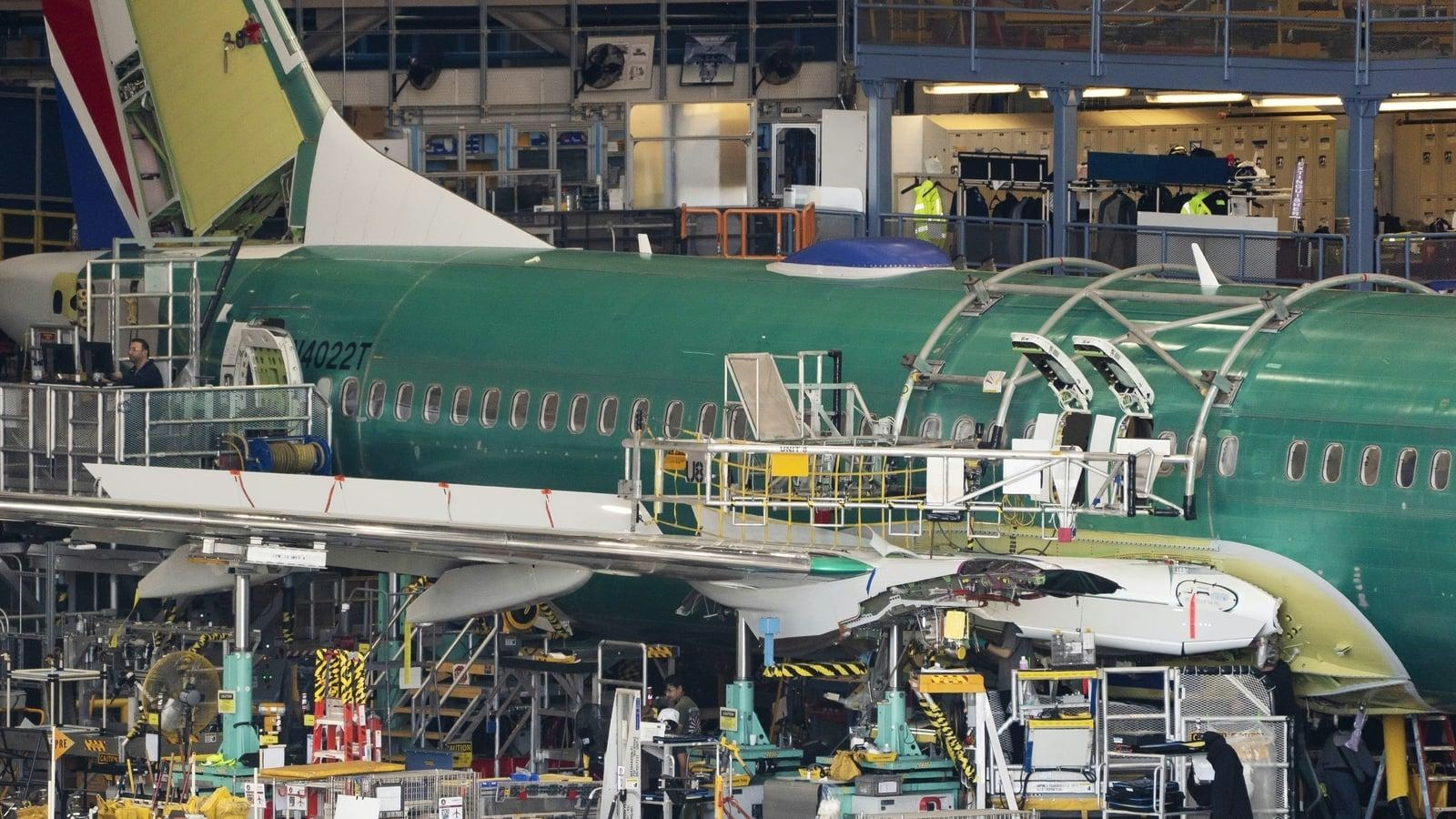
Airlines Demand Action on Supply Chain Delays from Aircraft and Engine Manufacturers
Airlines around the globe are intensifying pressure on aircraft and engine manufacturers to address ongoing supply chain disruptions that are severely impeding fleet renewal and operational expansion. These delivery delays have become a critical obstacle for carriers aiming to modernize their fleets and reduce operating costs, particularly as jet fuel prices soar amid persistent geopolitical tensions in the Middle East. Industry analysts caution that even if these conflicts subside, elevated fuel costs are expected to persist in the near term.
The Scale and Impact of Supply Chain Disruptions
The International Air Transport Association (IATA) estimates that supply chain issues will cost airlines at least $11 billion in 2025 alone. The problem is especially pronounced in the wide-body aircraft segment, where carriers face extensive waiting lists for new planes from major manufacturers such as Boeing and Airbus. Engine shortages are most acute for next-generation aircraft, whose advanced powerplants demand more frequent maintenance compared to older models, further complicating delivery schedules.
At IATA’s annual meeting in Rio de Janeiro, airline executives expressed growing frustration over these challenges. United Airlines CEO Scott Kirby identified engine shortages as the most significant constraint facing the industry, warning that resolving the issue could take a minimum of five years, even if immediate action is taken. Kirby emphasized the need for competition among engine suppliers, urging Boeing and Airbus to avoid dependence on a single engine manufacturer for future aircraft models. He highlighted the current imbalance of power, noting that engine manufacturers are leveraging supply constraints to increase prices, thereby exerting considerable pricing power over airlines.
While acknowledging efforts by GE Aerospace and Pratt & Whitney to mitigate the crisis, Kirby singled out Rolls-Royce as falling behind. When pressed on Rolls-Royce’s response, he retorted, “What are they doing? That’s the better question,” underscoring the urgency for more proactive engagement.
Industry-Wide Consequences and Calls for Reform
The repercussions of these delays are widespread. Roberto Alvo, CEO of Latam Airlines Group, voiced particular frustration with Boeing’s 787 program, stating, “We’ve never received a 787 on schedule.” Although some improvements in delivery timelines have been noted, Alvo pointed to ongoing certification and regulatory complexities as persistent hurdles.
The supply chain crisis is also forcing airlines to revise expansion plans. Qantas, for instance, has postponed its eagerly awaited nonstop flights from Australia to London and New York due to delays in Airbus deliveries, illustrating the broader operational impact.
Outgoing IATA Director General Willie Walsh delivered a sharp rebuke to engine manufacturers, accusing them of “gouging” airlines while enjoying double-digit profit margins. He highlighted how fragile supply chains have compounded the effects of high fuel prices, with the industry’s order backlog surpassing 18,000 aircraft and the average fleet age reaching a record 15.2 years. Walsh stressed the importance of timely deliveries, noting that newer aircraft models can reduce fuel consumption by up to 30%, a critical factor for both financial performance and environmental sustainability.
“My message to engine manufacturers is simple: stop exploiting us and get back to building great engines that work and last,” Walsh declared. “Allowing these failures to drag on for another decade is completely unacceptable.”

Etihad Airways Suspends Airbus A380 Flights on Key Route

Aditya Birla Group Seeks Approval for Aircraft Leasing in GIFT City

Qatar Airways Highlights Innovation and Connectivity at Arabian Travel Market 2026

Hong Kong's Five-Year Plan Includes Andrew Fan's Aircraft Parts Processing Hub Proposal

ACIA Aero Leasing Delivers ATR72-600 to Air Nostrum

RTX Appoints Jill Albertelli as Head of Pratt & Whitney

TAT Technologies Joins Beyond Aero Hydrogen Aircraft Program

AURAK Study Highlights Barriers to Air Taxi Adoption in Emerging Economies

Xiamen Air Selects Altitude for 787 Maintenance at Heathrow

Etihad and Swissport Extend Global Partnership
