
Orchestrer les insights d’IA pour les transformer en actions

Tendances
Categories
American Airlines Cancels Flight Minutes After Pushback Over Suspected Engine Backfire
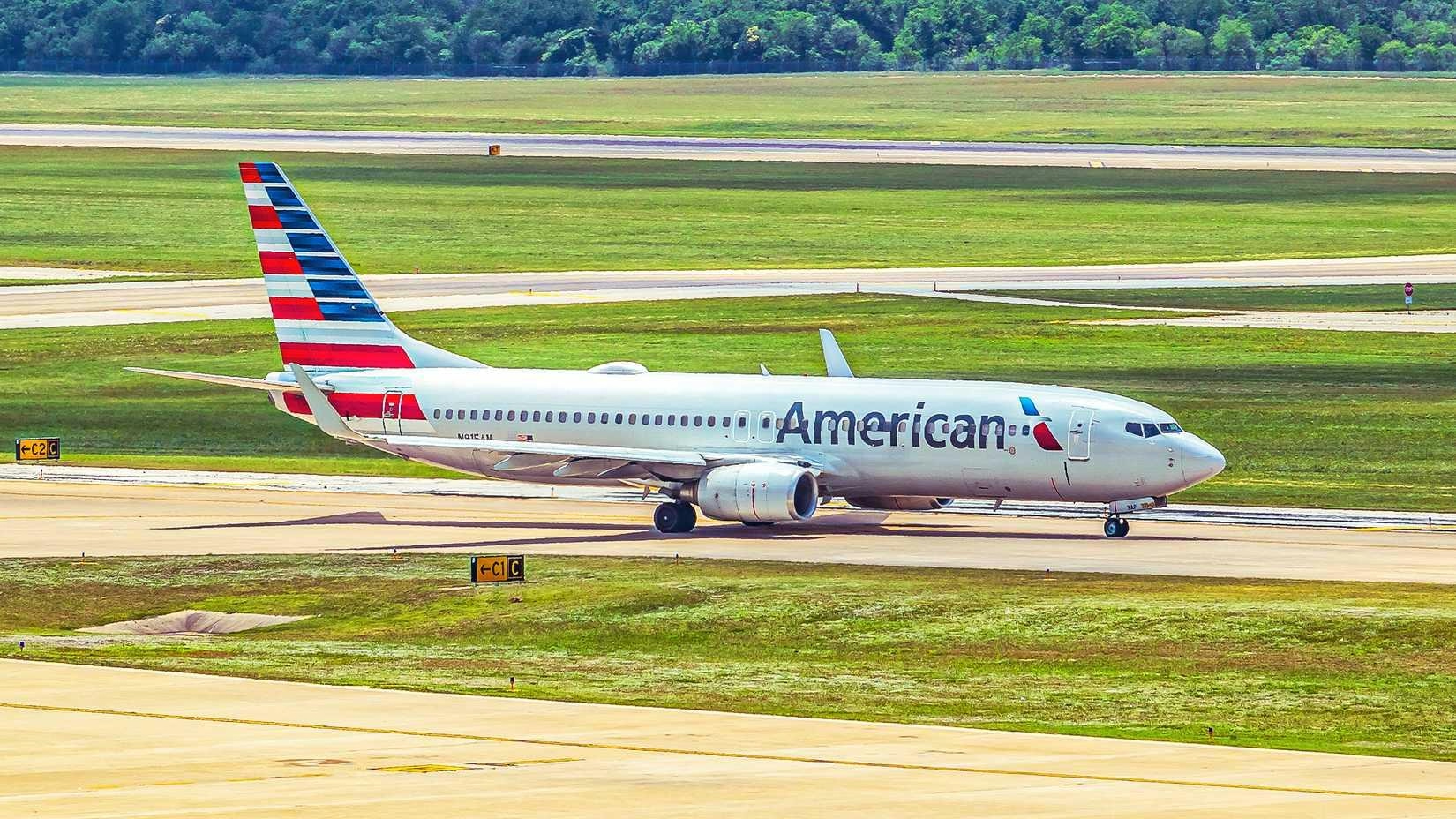
American Airlines Cancels Fresno-Dallas Flight Following Suspected Engine Backfire
An American Airlines flight scheduled from Fresno Yosemite International Airport (FAT) to Dallas/Fort Worth International Airport (DFW) was canceled abruptly early Friday morning after a suspected engine backfire triggered a fire warning shortly after pushback. The Boeing 737-800, operating as flight AA2653, remains grounded on the apron as investigations proceed. All passengers were safely rebooked onto alternative flights.
Incident Details and Immediate Response
The incident occurred just minutes after the aircraft departed the gate at 5:41 a.m. and began taxiing. Pilots received an alert indicating a possible engine fire, prompting an immediate response from the Fresno Fire Department. Emergency crews quickly surrounded the aircraft as it returned to the gate for inspection. No visible fire or smoke was detected, and authorities now believe the warning was caused by an engine backfire during taxi preparations. There were no injuries reported among passengers or crew.
Flight AA2653 was scheduled to operate a nonstop, three-and-a-half-hour service to American Airlines’ largest hub in Dallas, covering a distance of 1,313 miles. The aircraft involved, registered N920NN, is a 13-year-old Boeing 737-800 delivered to American Airlines in 2013. Prior to this incident, the plane had been operating regularly without major disruptions and is configured to carry 172 passengers across two classes.
Context and Industry Challenges
Fresno Yosemite International Airport serves as the primary commercial gateway for California’s San Joaquin Valley and provides access to Yosemite, Kings Canyon, and Sequoia National Parks. American Airlines maintains daily nonstop flights from both Dallas/Fort Worth and Phoenix Sky Harbor International Airport. According to the Bureau of Transportation Statistics, American is the largest mainline carrier at Fresno, accounting for 25 percent of operations, while SkyWest Airlines, operating on behalf of several major carriers, handles 38 percent of all flights.
This incident comes amid a period of heightened scrutiny and operational challenges within the airline industry. Just days earlier, on June 27, American Airlines Flight 308 aborted its takeoff in Miami after a business jet mistakenly entered the same runway, narrowly avoiding a collision. The near-miss led to a tense exchange between the business jet pilot and air traffic control, highlighting ongoing concerns about runway safety.
These events coincide with broader industry developments, including the Federal Aviation Administration’s decision to extend flight caps at Chicago O’Hare International Airport for another year due to capacity constraints. Meanwhile, airlines have experienced a surge in demand, partly driven by the upcoming 2026 World Cup, prompting American Airlines to add extra flights to accommodate increased fan travel.
As investigations into the Fresno engine backfire continue, American Airlines has reaffirmed its commitment to passenger safety and operational reliability during what is expected to be a busy and challenging summer travel season.

Etihad and Swissport Extend Global Partnership

Sepehran Airlines B737 Returns to Mashhad After Tyre and Engine Issues

Etihad Deploys Widebody Fleet to Meet Strong Demand

Korean Air Finalizes $36.2 Billion Deal with Boeing

Australia’s RFDS Queensland Section Orders Six King Air 260Cs

Korean Air Finalizes Order for 103 Boeing Jets and Engines
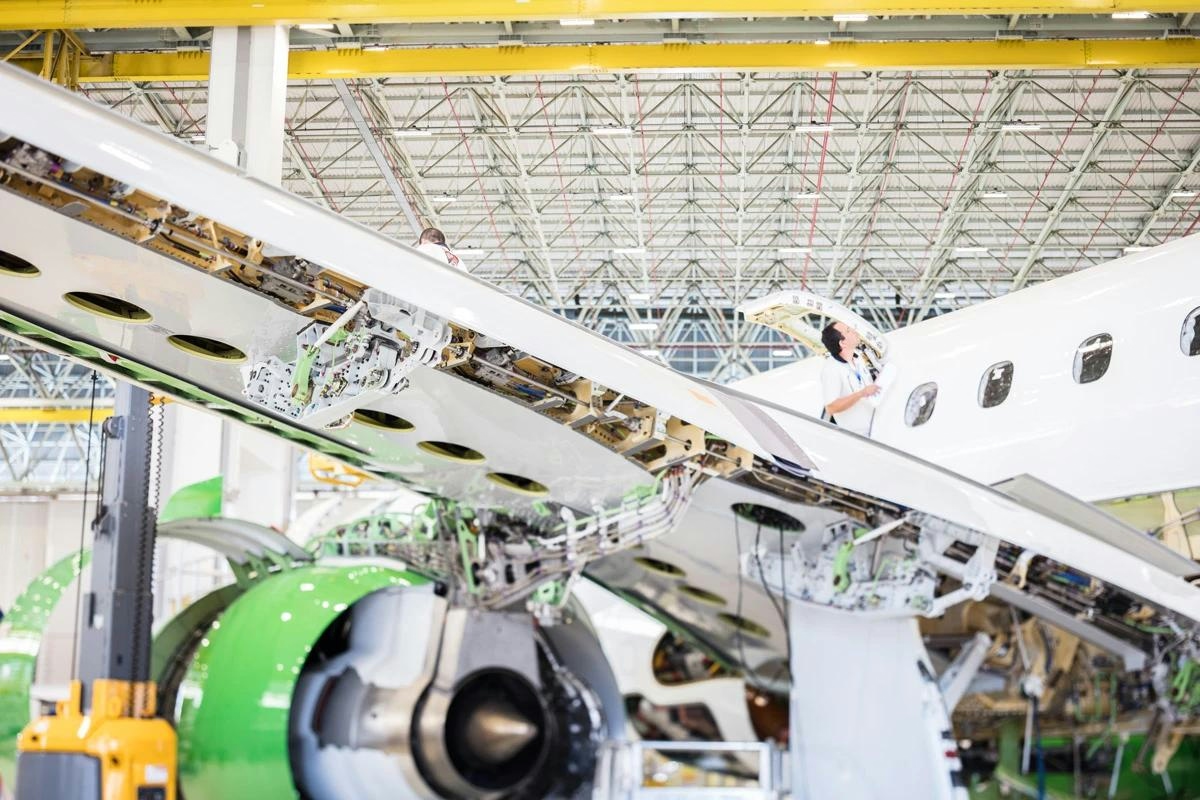
Embraer E195-E2 Features Distinctive Engine Placement Among Regional Jets
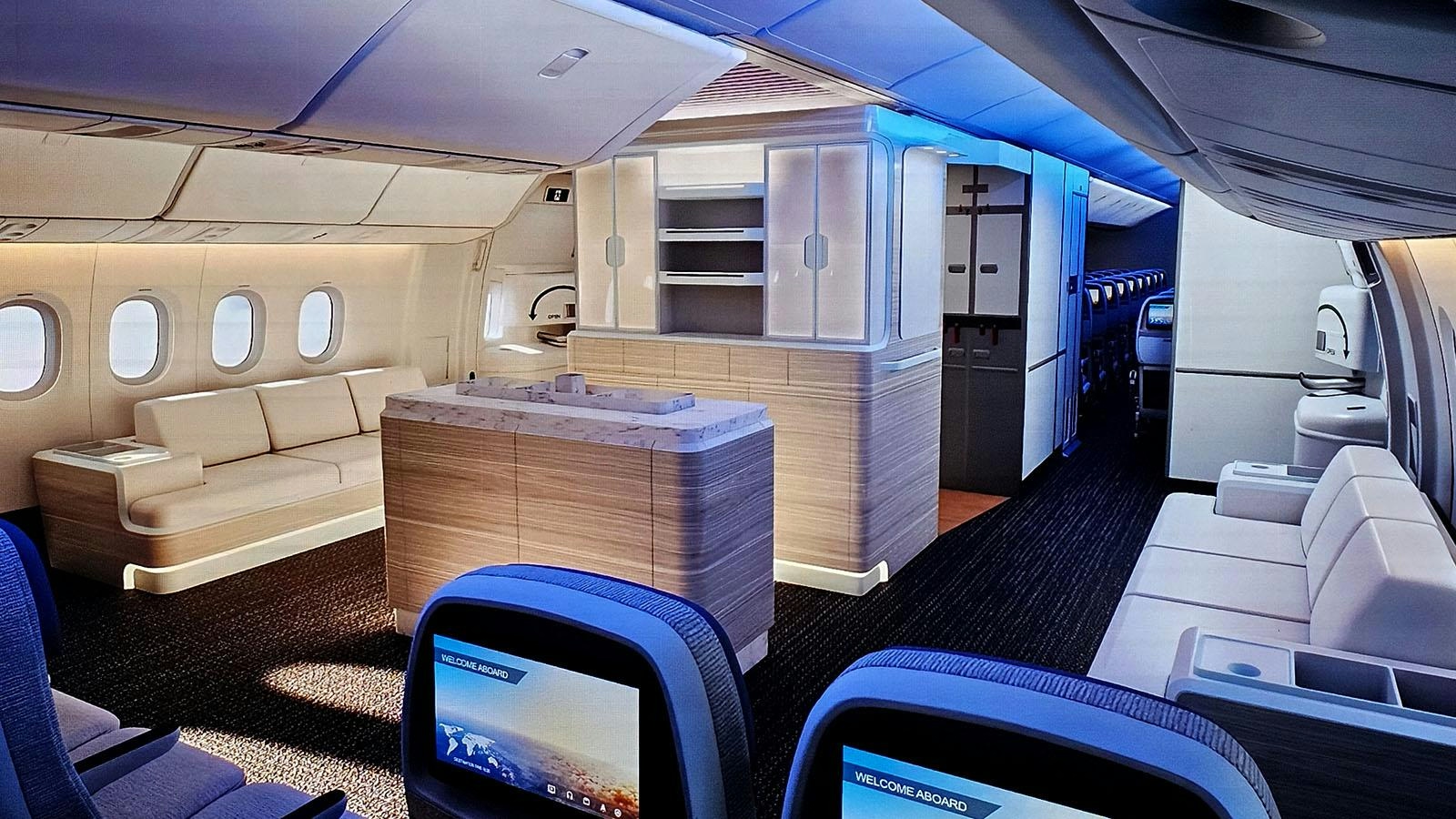
What Passengers Can Expect on Boeing’s New 777X Jet
How Ethiopian Airlines Became Africa’s Leading Carrier Amid Gulf Competition

Joby Aviation Extends Autonomous Flight Capabilities with Cross-Country Tour
