image

AeroGenie — Votre copilote intelligent.

Posez toutes vos questions. Analysez tout. Agissez instantanément.

Tendances

Categories

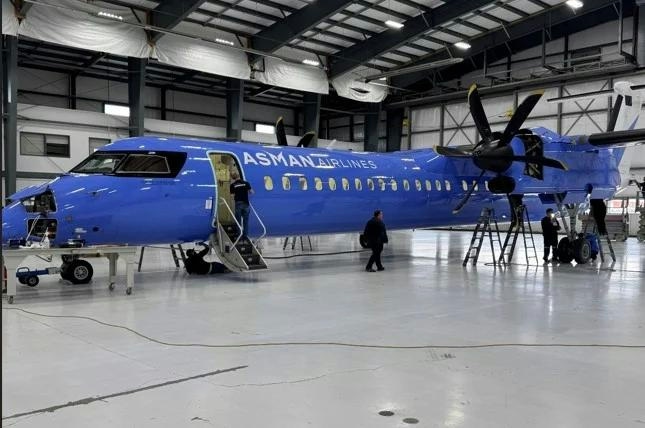
Asman Airlines Receives New Dash-8 Aircraft
July 24, 2025By ePlane AI
Asman Airlines Receives New Dash-8 Aircraft
0
0
Asman Airlines
Dash-8
Fleet Expansion

Asman Airlines Expands Fleet with New Dash-8 Aircraft

Asman Airlines, the recently established state-owned carrier of Kyrgyzstan, has augmented its fleet with the addition of a Dash-8 turboprop aircraft. Operating as a subsidiary of Manas International Airport, the airline intends to deploy the regional aircraft on new domestic routes, enhancing connectivity between remote communities and the capital city, Bishkek.

Acquisition and Fleet Integration

The Dash-8 was procured through the aircraft trading firm Jetcraft. According to data from IBA Insight, this new addition will complement two other Q400 aircraft leased from Longview Aviation Services, which have been part of Asman Airlines’ fleet since its inception in 2024. Zholdosh Aidaraliev, Director General of Asman Airlines, acknowledged Jetcraft Commercial’s pivotal role in the acquisition process, emphasizing their expertise and support. He stated, “Jetcraft Commercial has been instrumental in helping us take off. Their expertise and support enabled us to identify the right aircraft that will give us access to key regions from Manas International Airport, supporting economic growth and mobility throughout Kyrgyzstan.”

Operational Challenges and Market Dynamics

Despite this positive development, Asman Airlines faces potential challenges stemming from ongoing global supply chain disruptions, which aerospace industry leaders warn could affect both the delivery and maintenance of new aircraft such as the Dash-8. These issues may present operational difficulties as the airline seeks to expand its network and maintain reliable service.

Market responses to Asman Airlines’ expansion have been varied. Established regional competitors, including Turkish Airlines, continue to prioritize fleet growth and premium service offerings, intensifying the competitive environment. Industry analysts suggest that carriers in the region may need to adopt strategic approaches similar to those employed by Alaska Airlines, which has successfully navigated competitive pressures, in contrast to the struggles experienced by JetBlue.

As Asman Airlines endeavors to strengthen domestic air connectivity and contribute to Kyrgyzstan’s economic development, its capacity to manage supply chain risks and adapt to competitive challenges will be critical in determining its future trajectory.

More news
Boeing 777 Engine Failure Reported at Dulles Airport

Boeing 777 Engine Failure Reported at Dulles Airport

Boeing 777 Engine Failure at Dulles Airport Triggers FAA Investigation On December 15, a United Airlines Boeing 777-200ER experienced a significant engine failure during takeoff at Washington Dulles International Airport. The malfunction caused debris to ignite a brush fire near the runway, though no injuries were reported among passengers or crew. The incident has prompted an immediate investigation by the Federal Aviation Administration (FAA) and renewed attention on the safety of Boeing 777 engines. Details of the Incident and FAA Response The engine failure occurred as the United Airlines flight crew was preparing for departure. Thanks to the swift and decisive actions of the pilots, the aircraft was brought to a safe stop without further incident. Airport fire services responded promptly, containing the brush fire caused by engine debris. United Airlines confirmed that all safety protocols were effectively executed, ensuring the safety of everyone on board. In response, the FAA has initiated a thorough investigation focusing on the aircraft’s maintenance history and potential manufacturing defects. Given the Boeing 777’s prior record of engine-related issues, regulators are approaching the situation with heightened vigilance. There is a possibility that the FAA may impose temporary restrictions or grounding of Boeing 777-200ER aircraft pending the investigation’s outcome. The scrutiny is expected to extend to Boeing’s manufacturing and maintenance procedures as part of the inquiry. Implications for United Airlines, Boeing, and the Industry The incident presents immediate operational and financial challenges for United Airlines. The airline may be required to conduct additional inspections across its fleet, potentially disrupting flight schedules. Following the news, United’s stock price declined by 1.43% to $106.84, although it remains up 7.5% over the past year. Market analysts have maintained a ‘Neutral’ rating on United, with a consensus price target of $116.50. While short-term expenses may increase due to inspections and possible compensation claims, United’s financial position remains robust, supported by strong free cash flow and notable earnings growth. For Boeing, the event has intensified regulatory scrutiny and raised concerns among investors. The company’s stock experienced a temporary decline as safety worries resurfaced. Should the FAA investigation reveal systemic issues, Boeing could face broader reputational damage and potential impacts on its market share. Insurance claims related to the incident may also pose financial risks. Within the broader airline industry, the incident underscores ongoing challenges related to operational costs and regulatory compliance. United Airlines has demonstrated resilience, achieving nearly 20% earnings per share growth over the past year and maintaining a price-to-earnings ratio of 10.70, which suggests value for investors. Despite the current volatility, United’s long-term outlook remains positive, bolstered by efforts to improve operational efficiency and expand its route network. Competitors such as Airbus may stand to benefit if Boeing’s reputation is adversely affected, potentially gaining market share as airlines reconsider future aircraft acquisitions. The market continues to monitor the FAA’s investigation closely, awaiting regulatory decisions that could influence the competitive landscape. The Boeing 777 engine failure at Dulles represents a critical juncture for both United Airlines and Boeing. The FAA’s findings will be instrumental in determining accountability and shaping future safety standards, with significant implications for both companies’ operational and financial trajectories.
Austrian Airlines Transfers Embraer Fleet to Air Dolomiti

Austrian Airlines Transfers Embraer Fleet to Air Dolomiti

Austrian Airlines Transfers Embraer Fleet to Air Dolomiti Amid Strategic Renewal Austrian Airlines has initiated the transfer of its Embraer 195 aircraft to its Italian subsidiary, Air Dolomiti, marking a pivotal phase in the airline’s comprehensive fleet renewal program. The first aircraft to complete this transition, formerly registered as OE-LWM and now operating under the registration I-ENJA, joined Air Dolomiti’s fleet on December 12. This transfer signals the beginning of Austrian’s plan to phase out all seventeen Embraer 195 jets by the end of 2028. Fleet Transition and Operational Strategy According to the current schedule, thirteen of the Embraer 195s will be absorbed into Air Dolomiti’s operations, while the remaining four are earmarked for sale starting in early 2026. The process is set to continue with a second Embraer 195 leaving Austrian’s fleet in February. This reshuffling forms part of Austrian Airlines’ broader strategy to streamline its fleet composition, reducing the number of aircraft types from five to two primary models: the Airbus A320 family and the Boeing 787-9. As part of this modernization effort, Austrian plans to introduce six new Airbus A320neo family aircraft beginning in the summer of 2026, augmenting its existing narrowbody fleet of approximately forty Airbus planes. Concurrently, the airline will take delivery of ten Boeing 787-9 Dreamliners by the end of 2028, enabling the retirement of its older widebody aircraft, including three Boeing 767-300ERs and seven Boeing 777-200ERs. Historical Role and Challenges of the Embraer 195 Fleet The Embraer 195 jets have been integral to Austrian’s regional operations since their introduction in January 2016, when they replaced the airline’s former Fokker fleet. Notably, the fourth Embraer 195 delivered, known as “Whisky Mike,” entered service in April 2016 and accumulated over 21,400 flight hours before its recent retirement. The transfer of the Embraer fleet to Air Dolomiti presents a series of operational and financial challenges. Coordinating the logistics of moving regional jets between carriers requires meticulous planning and may result in additional costs. Market responses to the transition have been mixed; while some investors regard the move as a strategic optimization of fleet utilization within the Lufthansa Group, others express concern over the financial implications of phasing out the Embraer aircraft. Market Implications and Competitive Landscape The fleet realignment is also attracting attention from competitors. LATAM Airlines Group, for instance, is preparing to introduce new premium fleet types and may view Austrian’s transfer as an opportunity to further distinguish its own market offerings. This shift could alter competitive dynamics within the regional jet segment, influencing positioning and market share. Despite the complexities involved, Austrian Airlines asserts that its fleet renewal and simplification strategy will ultimately enhance operational efficiency and strengthen the carrier’s prospects for future growth.
Airbus and Ingenium Open Aerospace Innovation Lab in Ottawa

Airbus and Ingenium Open Aerospace Innovation Lab in Ottawa

Airbus and Ingenium Establish Aerospace Innovation Lab in Ottawa Airbus and Ingenium—Canada’s Museums of Science and Innovation—have announced a strategic partnership aimed at inspiring and equipping the next generation of Canadian aerospace innovators. Central to this collaboration is the launch of the Simulation Training and Research (S.T.a.R.) Lab at Ingenium’s Canada Aviation and Space Museum in Ottawa. The lab is designed to offer youth immersive, hands-on learning experiences that will influence the future of aerospace education and technological advancement. A Hub for Innovation and Experiential Learning The S.T.a.R. Lab will function as a dynamic and adaptable environment fostering creativity and practical skill development. A key feature of the initiative is a mentorship program where college students will lead the design and testing of a gamified simulation experience, collaborating closely with secondary school students. Industry professionals will provide guidance throughout the process, ensuring the creation of authentic digital learning tools accessible to school groups and the general public. Chris Kitzan, director general at the Canada Aviation and Space Museum, highlighted the natural alignment between the two organizations’ missions. He stated, “Ingenium is proud to partner with Airbus in a shared commitment to inspire and empower the next generation of aerospace innovators. Our collaboration amplifies our dedication to innovative learning spaces where students can experiment, design, and solve real-world challenges, connecting youth with the science and technology shaping their world.” Guillaume Chevasson, CEO of Airbus in Canada, underscored the company’s dedication to nurturing Canadian aerospace talent. He noted, “Airbus is a major employer of over 5,000 people in Canada, anchored by the A220—the only commercial aircraft program manufactured here. Our strategic partnership with Ingenium is an investment in youth, providing the essential skills and mentorship needed to innovate. We are excited by the potential of the S.T.a.R. Lab to shape tomorrow’s industry leaders.” Context Amid Industry Challenges The inauguration of the S.T.a.R. Lab coincides with a challenging period for Airbus. The company is currently addressing a fuselage quality issue affecting certain A320 jets, which has contributed to weaker-than-anticipated deliveries in November and ongoing evaluations for December. Furthermore, a significant software recall involving approximately 6,000 A320 family aircraft has raised concerns about the resilience of aviation software systems. These operational difficulties have resulted in a decline in Airbus’s stock price and increased scrutiny from investors, with industry analysts closely monitoring how the company will navigate these setbacks and fulfill its year-end delivery commitments. Despite these hurdles, Airbus’s collaboration with Ingenium reflects its sustained commitment to the future of Canadian aerospace. By investing in education and innovation, the partnership aims to cultivate the next generation of aerospace leaders and maintain Canada’s position in the global aerospace industry.
Merlin Labs: AI Aviation Company with SPAC Downside Protection

Merlin Labs: AI Aviation Company with SPAC Downside Protection

Merlin Labs: AI Aviation Company with SPAC Downside Protection Investment Opportunity Through Inflection Point Acquisition Corp. IV Inflection Point Acquisition Corp. IV (BACQ) offers investors a distinctive opportunity to gain exposure to Merlin Labs, an artificial intelligence-driven aviation company, while mitigating risk until the proposed merger is finalized. This arrangement, characteristic of special purpose acquisition companies (SPACs), enables investors to benefit from potential upside in Merlin Labs’ growth prospects while retaining the option to redeem shares if the transaction does not proceed. Merlin Labs operates at the forefront of AI-enabled aviation solutions, focusing on automating aircraft operations and accelerating procurement and production processes. This strategic positioning aligns with the broader adoption of artificial intelligence across various industries, particularly in sectors undergoing rapid technological transformation. However, the company faces significant challenges that could affect its growth trajectory and investor confidence. Risks and Market Dynamics The aviation and technology sectors remain vulnerable to fluctuating economic, political, and business conditions, all of which could influence Merlin Labs’ performance. There is also the risk that the business combination agreement may be terminated, which would impact investor returns. Furthermore, Merlin Labs must successfully execute its ambitious growth strategy amid a competitive landscape populated by both established players and emerging entrants. Competitor responses will likely depend on Merlin Labs’ market positioning and strategic initiatives. As AI-driven solutions become increasingly prevalent in aviation, incumbent companies and new market participants are expected to adjust their approaches in response to Merlin Labs’ advancements. The broader market environment, including sector-specific factors such as the pace of AI-enabled procurement and production, will play a critical role in shaping investor sentiment and competitive dynamics. Implications for Investors For investors, BACQ presents a unique trade setup by offering downside protection inherent in the SPAC structure until the merger is completed. This allows participation in Merlin Labs’ potential growth without fully committing capital until greater certainty is established. Such an approach may appeal to those seeking exposure to cyclical industries and innovative technologies while maintaining a balanced risk profile. As with any investment, thorough due diligence is essential. The ultimate success of the BACQ-Merlin Labs merger and the company’s future performance will depend on its ability to navigate market challenges, implement its strategic vision, and respond effectively to competitive pressures in a rapidly evolving sector.
Heli-One Extends AW101 Search and Rescue Support in Norway

Heli-One Extends AW101 Search and Rescue Support in Norway

Heli-One Extends AW101 Search and Rescue Support in Norway Heli-One, a prominent global provider of helicopter maintenance, repair, and overhaul (MRO) services, has announced the extension and expansion of its support contract with Leonardo for Norway’s All-Weather Search and Rescue Helicopter (NAWSARH) programme. The renewed agreement ensures that Heli-One will continue delivering comprehensive MRO services for the Royal Norwegian Air Force’s fleet of AW101 SAR Queen helicopters through 2030, maintaining a close partnership with Leonardo. Sustaining Norway’s Critical Search and Rescue Capability The contract encompasses the entire operational fleet of 16 AW101 SAR Queen helicopters, all of which have been fully delivered and are actively deployed across Norway. These aircraft are integral to the country’s national emergency response system, undertaking complex search and rescue missions in some of the world’s most challenging climatic conditions. The reliability and availability of these helicopters are vital to saving lives and preserving national readiness. A defining feature of the NAWSARH programme has been its collaborative framework, which unites government agencies, the original equipment manufacturer, and specialist MRO providers. The extension of this agreement further strengthens this partnership model, widely recognized as a benchmark for effective cooperation within the aerospace sector. Operational Challenges and Industry Impact Under the terms of the contract, Heli-One’s experienced Norwegian maintenance engineers will remain embedded at Royal Norwegian Air Force bases, working alongside Leonardo personnel. These joint teams are tasked with both scheduled and unscheduled maintenance, ensuring continuous fleet availability and rapid response capabilities. The extension also introduces new operational challenges. Maintaining the AW101 fleet’s readiness demands ongoing vigilance, particularly in ensuring the reliability of specialized equipment such as Unison tube benders, which are critical for Merlin helicopter maintenance. Additionally, Heli-One must navigate the evolving economic landscape of the insurance sector, which influences operational costs and risk management strategies. The market has responded to the contract extension with heightened interest in specialized maintenance equipment and services, reflecting the increasing demand for robust support solutions in the search and rescue domain. Competitors are anticipated to enhance their capabilities to remain competitive, potentially driving further innovation and investment across the industry. Heli-One supports both government and commercial helicopter operators worldwide, providing maintenance services for a variety of critical missions including search and rescue, offshore transport, and emergency services. Backed by its parent company, CHC Helicopter, Heli-One leverages decades of operational and technical expertise to deliver dependable, industry-leading MRO solutions even in the most demanding environments. With this extended agreement, Heli-One and its partners are well-positioned to sustain Norway’s search and rescue readiness while adapting to the technical and economic challenges ahead.
Falko Completes First Aircraft Sale in Japan

Falko Completes First Aircraft Sale in Japan

Falko Completes First Aircraft Sale in Japan Falko has successfully entered the Japanese market by completing its inaugural Japanese Operating Lease (JOL) transaction, selling a CRJ900 aircraft to a Japanese investor. This deal not only marks Falko’s debut in Japan but also stands out as one of the few CRJ900 placements structured under a JOL arrangement to date. Strategic Partnership and Market Entry The transaction was executed in collaboration with iStrings Aviation Capital Co., Ltd. (iStrings), forging a new partnership for Falko in the region. Brian Foley, Falko’s Head of Portfolio Strategy, highlighted the significance of this milestone, noting the traditionally narrow and widebody-focused investment landscape in Japan. Foley observed a rising interest among Japanese investors in smaller commercial aircraft, driven by the current economic environment and the comparatively lower capital requirements of such assets. He emphasized that the investment scale for used E-Jet, CRJ, and A220 aircraft aligns well with Japanese investor preferences, and Falko anticipates sustained momentum within the 50-150 seat aircraft segment, which remains its core focus. Hirotoshi Takezoe, Director at iStrings, underscored the CRJ900’s appropriateness for the expanding JOL market. He remarked that although regional jets have historically had limited presence in the JOL space, growing investor interest is emerging as the market broadens and diversifies. Takezoe stressed that partnering with a leading regional-jet asset manager like Falko enables iStrings to provide high-quality asset management services to JOL investors, a critical factor for long-term success. Market Challenges and Outlook Falko’s entry into Japan coincides with a highly competitive business jet market, where established players such as Bombardier and Boeing maintain strong footholds. As Falko seeks to expand its presence, it faces the challenge of differentiating its offerings in a market increasingly driven by advanced features and innovation. Industry analysts suggest that competitors may respond by enhancing their product lines or intensifying marketing efforts to safeguard their market share. Compounding these challenges, the recent 7.6-magnitude earthquake in Japan has introduced logistical and supply chain complexities for companies operating in the region. For Falko, this necessitates meticulous management to ensure timely aircraft delivery and robust after-sales support, as any disruptions could affect customer satisfaction and future business prospects. Despite these hurdles, both Falko and iStrings remain optimistic about their future collaboration and growth potential in the Japanese market. Foley expressed gratitude to the iStrings team for their professionalism throughout the transaction, emphasizing the importance of strong partnerships as Falko navigates the evolving landscape of Japanese aviation.
Joby Surpasses 50,000 Air Taxi Miles, Completes Fourth Global Demonstration

Joby Surpasses 50,000 Air Taxi Miles, Completes Fourth Global Demonstration

Joby Surpasses 50,000 Air Taxi Miles, Completes Fourth Global Demonstration Expanding Operational Milestones Joby Aviation, Inc. (NYSE: JOBY), a prominent developer of electric air taxis, has announced the successful completion of its fourth international flight demonstration of 2025 at Japan’s Fuji Speedway. Conducted over a week in partnership with Toyota Motor Company, the campaign featured 14 piloted flights and marked a significant milestone for the company. Over the past year, Joby’s fleet has logged more than 50,000 miles, effectively doubling its operational tempo compared to the previous year. This achievement coincides with Joby’s intensified efforts to secure Federal Aviation Administration (FAA) Type Certification, a crucial regulatory step ahead of its planned commercial passenger service launch in 2026. Throughout 2025, Joby completed over 850 flights worldwide, collecting extensive real-world performance data across key markets including the United States, Japan, and the United Arab Emirates. James “Buddy” Denham, Joby’s Chief Test Pilot, highlighted the scope of the company’s testing activities, stating, “2025 saw the most extensive and rigorous flight testing in our history. Flying in active, controlled airspace in three countries—from the California coastline to the iconic Fuji Speedway and the deserts of Dubai—has been a powerful showcase of Joby’s operational maturity.” Advancing Toward Certification and Commercial Operations In 2025 alone, Joby’s aircraft covered more than 9,000 miles and supported over 4,900 test points. The data gathered is instrumental in advancing the final stages of FAA certification, including the preparation of compliance documentation required for Type Inspection Authorization (TIA) flight testing scheduled for 2026. Joby reports that its aircraft already meets FAA airworthiness standards, and the company is in the process of finalizing operating and maintenance manuals in anticipation of commercial operations. Joby’s progress is further reinforced by its vertically integrated business model. The acquisition of Blade Air Mobility and the establishment of pilot training academies are strategic moves designed to strengthen its market position and streamline the transition to commercial service. Notably, during the Ryder Cup event in New York, Blade facilitated the transport of over 2,500 passengers, providing valuable insights into managing high-tempo passenger logistics—a critical component of Joby’s future service framework. Challenges and Competitive Landscape Despite these advancements, Joby faces considerable challenges. Market reactions remain mixed, with some investors optimistic about the potential of urban air mobility, while others remain cautious due to regulatory complexities and technological uncertainties. The competitive environment is intensifying, exemplified by rival Archer Aviation’s public denial of Joby’s allegations of corporate espionage and its continued promotion of its own progress in the sector. Joby’s pursuit of FAA certification is further complicated by ongoing litigation and the inherent difficulties of introducing a new category of aircraft to the market. Nonetheless, the company’s sustained operational momentum and global demonstration campaigns underscore its commitment to overcoming these obstacles as it aims to launch commercial air taxi services in cities worldwide. About Joby Aviation Joby Aviation, Inc. is a California-based transportation company focused on developing all-electric, vertical take-off and landing (eVTOL) air taxis. The company aims to provide fast, quiet, and convenient urban air mobility services on a global scale.
SWISS Renews Boeing 777 Component Support Agreement with LHT

SWISS Renews Boeing 777 Component Support Agreement with LHT

SWISS Renews Boeing 777 Component Support Agreement with Lufthansa Technik Swiss International Air Lines (SWISS) has extended its exclusive component support agreement with Lufthansa Technik (LHT) for its Boeing 777 fleet, continuing a decade-long technical partnership. The renewed contract, effective from January, spans ten years and encompasses all twelve Boeing 777-300ER aircraft operated by SWISS. This extension guarantees the uninterrupted provision of Lufthansa Technik’s Total Component Support (TCS) services, which include comprehensive maintenance, repair, and overhaul (MRO), access to a global spare parts inventory, and integrated logistics solutions. Strengthening Operational Resilience through Partnership A key element of the agreement remains the dedicated homebase stock of components maintained at SWISS’s Zurich hub, ensuring rapid availability of parts and bolstering operational reliability. Lufthansa Technik already supports a significant portion of the SWISS fleet, including Airbus A320ceo, A320neo, A330, A340, and the expanding A350 fleet. The renewal of the Boeing 777 component support contract further consolidates this extensive collaboration. Claus Bauer, Head of Technical Fleet Management at SWISS, highlighted the strategic importance of the partnership, stating, “Based on our very positive experience with Lufthansa Technik’s reliable component support across a large part of our fleet, we are confident that we have once again selected the best possible partner to meet our high standards. We are pleased to extend this trusted cooperation, particularly in the context of ongoing global supply chain challenges, where Lufthansa Technik’s support is essential to ensuring component availability and safeguarding our long-term operational performance.” Industry Context and Technological Innovation The renewal occurs amid significant shifts in the aviation supply chain. Boeing’s recent $4.7 billion acquisition of Spirit AeroSystems represents a major move toward vertical integration, aimed at resolving quality control issues and production delays. While this development has been positively received by the market, as reflected in Boeing’s rising stock price, it introduces new complexities for airlines like SWISS that depend on external partners such as Lufthansa Technik for component support. The acquisition is anticipated to influence Boeing’s production schedules and quality assurance processes, particularly for the MAX 7 and 777X programs, with potential implications for component availability and support services across the industry. Concurrently, Airbus is adjusting its delivery targets in response to technical challenges, intensifying competition in the widebody aircraft market. Boeing’s goal of achieving positive cash flow by 2026 may further enhance its market position, yet ongoing supply chain uncertainties underscore the critical importance of robust support agreements for airlines. Beyond component maintenance, Lufthansa Technik contributes to SWISS’s operational efficiency through innovations such as AeroSHARK, a sharkskin-inspired surface technology developed in partnership with BASF Coatings. All twelve SWISS Boeing 777s are equipped with AeroSHARK, which reduces aerodynamic drag and improves fuel efficiency by approximately one percent. SWISS was among the first airlines worldwide to implement this technology. As the aviation sector adapts to evolving supply chain dynamics and heightened competition, SWISS’s renewed collaboration with Lufthansa Technik positions the airline to uphold high operational standards and resilience across its long-haul fleet.
Flydubai Partners with Amazon Web Services to Enhance Digital Operations

Flydubai Partners with Amazon Web Services to Enhance Digital Operations

Flydubai Partners with Amazon Web Services to Enhance Digital Operations Flydubai, the Dubai-based airline, has entered into a strategic partnership with Amazon Web Services (AWS) to advance its digital transformation and improve the customer experience through cloud computing and artificial intelligence (AI). The collaboration was formalized at a signing ceremony attended by Mohammed Hareb AlMheiri, Chief Procurement & Technology Officer at flydubai, and Werner Vogels, Chief Technology Officer at Amazon. This alliance represents a significant milestone in the airline’s ongoing efforts to modernize its digital infrastructure. Advancing Innovation Through Cloud and AI Under the terms of the agreement, AWS will support flydubai by driving innovation initiatives focused on generative AI for airline operations, data analytics, machine learning, and enhancing customer experience. The partnership aims to accelerate the development and deployment of digital solutions that improve operational efficiency and deliver greater value to passengers. AlMheiri emphasized the importance of the collaboration, stating that working with AWS, the world’s most comprehensive and widely adopted cloud platform, will enable flydubai to introduce new digital capabilities that enhance both operations and customer service, aligning with the airline’s agile business model. Leveraging AWS’s advanced technologies, flydubai plans to develop and scale impactful digital and AI use cases across its operations and customer journey. This initiative is expected to support the airline’s long-term growth and reinforce its commitment to innovation in a highly competitive industry. Industry Implications and Challenges Werner Vogels highlighted the transformative potential of cloud technology, AI, and data analytics within the aviation sector. He noted that the partnership with flydubai will help accelerate innovation by creating more personalized customer journeys, aiming not only to address current challenges but also to reimagine the future of aviation. Despite the promising outlook, integrating new technologies with existing systems presents challenges, particularly in ensuring data security and managing a seamless transition. Successfully navigating these complexities will be critical for flydubai as it seeks to modernize its digital operations. Market analysts suggest that flydubai’s digital transformation, underscored by this partnership, could attract increased investor interest and may prompt competitors to expedite their own digital initiatives or pursue similar collaborations with technology providers. These developments occur amid a period of strategic change for flydubai, including recent adjustments to aircraft orders, highlighting the dynamic and competitive nature of the airline industry where technological advancement and strategic alliances are increasingly essential. As flydubai and AWS collaborate to implement advanced digital solutions, this partnership is poised to play a pivotal role in shaping the airline’s future operational strategies and customer engagement.
Do Chickens Get Thrown Into Aircraft Engines?

Do Chickens Get Thrown Into Aircraft Engines?

Do Chickens Get Thrown Into Aircraft Engines? For millions of air travelers in India, the primary concerns often revolve around flight schedules and ticket prices at major airports such as Delhi, Mumbai, and Bengaluru. However, behind every safe takeoff and landing lies a critical and longstanding safety procedure involving an unexpected element: the deliberate firing of dead chickens into jet engines. This practice, known as bird strike simulation, is not a myth but a globally mandated certification process designed to ensure that aircraft can withstand real-life bird collisions. Origins and Purpose of Bird Strike Testing The origins of this unusual test trace back to the 1950s, when British aerospace engineers at de Havilland sought a reliable method to simulate bird strikes on the ground. Their solution was the invention of the "chicken gun," a compressed-air cannon that fires whole, dead chickens at aircraft engines and windshields at speeds replicating those experienced during takeoff and landing. The mass and density of chickens closely resemble many bird species commonly encountered by aircraft, making them ideal for these high-impact tests. Today, this method remains a cornerstone of aviation safety worldwide. Before any new engine model receives certification for commercial use, it must demonstrate the ability to safely "ingest" a large bird. The engine is required to contain all debris within its casing and either continue operating or shut down safely without catastrophic failure. Similarly, cockpit windshields must endure such impacts without cracking or shattering in a manner that could endanger pilots or depressurize the cabin. Rising Bird Strike Incidents and Industry Response in India This rigorous testing is particularly relevant in India, where bird strike incidents have been increasing. According to the Ministry of Civil Aviation, nearly 2,800 bird strike events were recorded at ten major airports between 2020 and mid-2025. The numbers have surged following the pandemic-related lull, with Delhi’s Indira Gandhi International Airport reporting the highest number at 695 incidents, followed by Mumbai and Bengaluru. Experts attribute this rise to the rapid recovery of flight operations combined with expanding urban development near airports, which disrupts bird habitats and draws wildlife into flight paths. In response, Indian airports have implemented comprehensive Wildlife Hazard Management Plans aimed at mitigating these risks. However, the challenge extends beyond wildlife management. The aviation industry also faces broader pressures, including economic difficulties for independent insurance agencies, quality concerns with popular aircraft models such as the Airbus A320, and the need for advanced forging technologies to enhance component reliability. Recent incidents and market reactions—such as declines in Airbus’s share price—underscore the critical importance of stringent safety protocols and regular maintenance checks. These measures are essential not only to prevent bird strikes but also to ensure that no foreign objects, including birds or debris, compromise engine integrity. As aerospace competitors respond with improved technology and stricter quality control, the industry’s commitment to rigorous testing—chickens and all—remains vital. This blend of tradition, innovation, and vigilance continues to uphold modern air travel as one of the safest modes of transportation.
Ask AeroGenie










