
Orchestrer les insights d’IA pour les transformer en actions

Tendances
Categories
At Farnborough, Technology and Geopolitics Shape Aviation Innovation
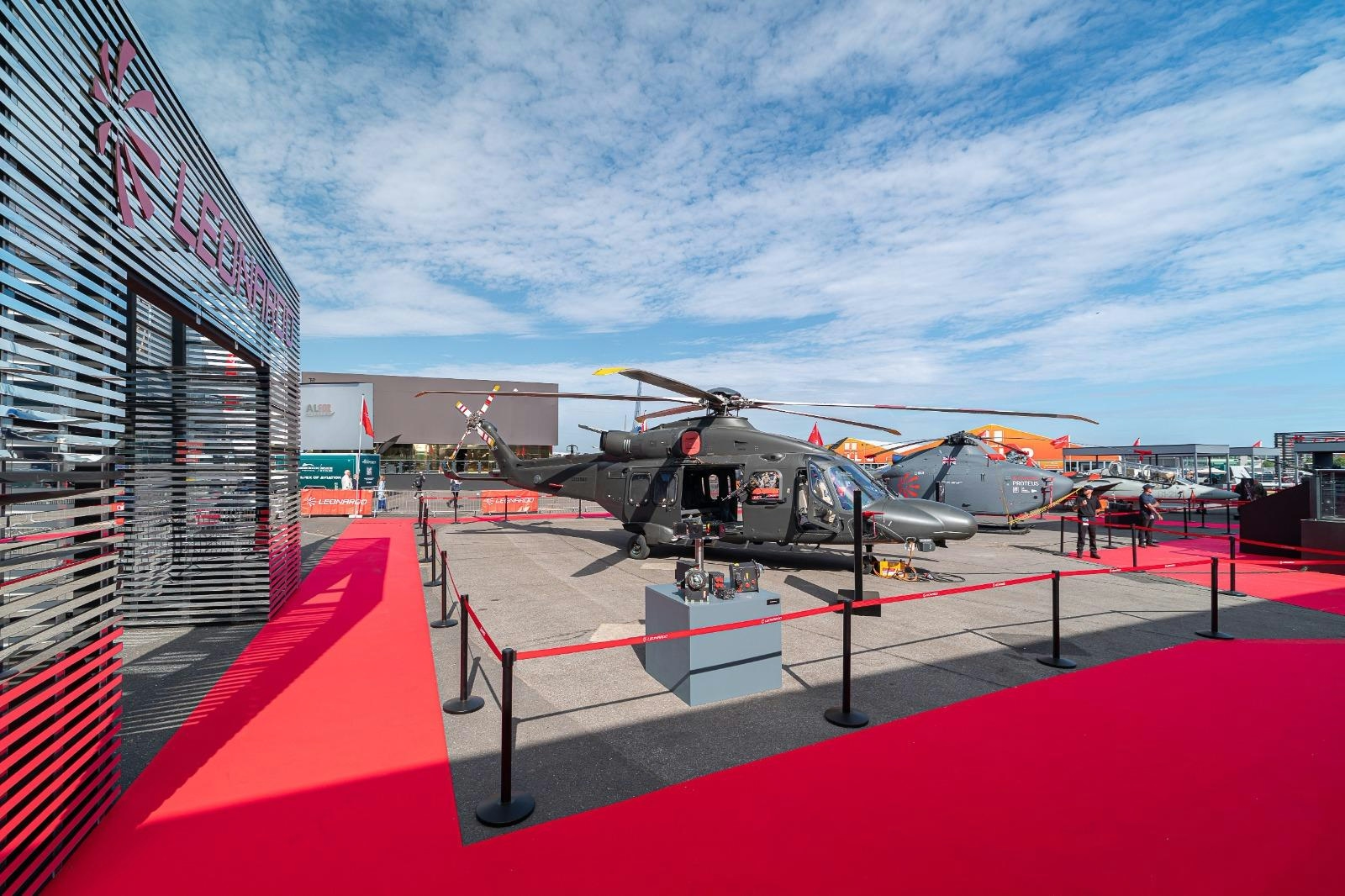
At Farnborough, Technology and Geopolitics Shape Aviation Innovation
A Showcase of Cutting-Edge Aviation Technology
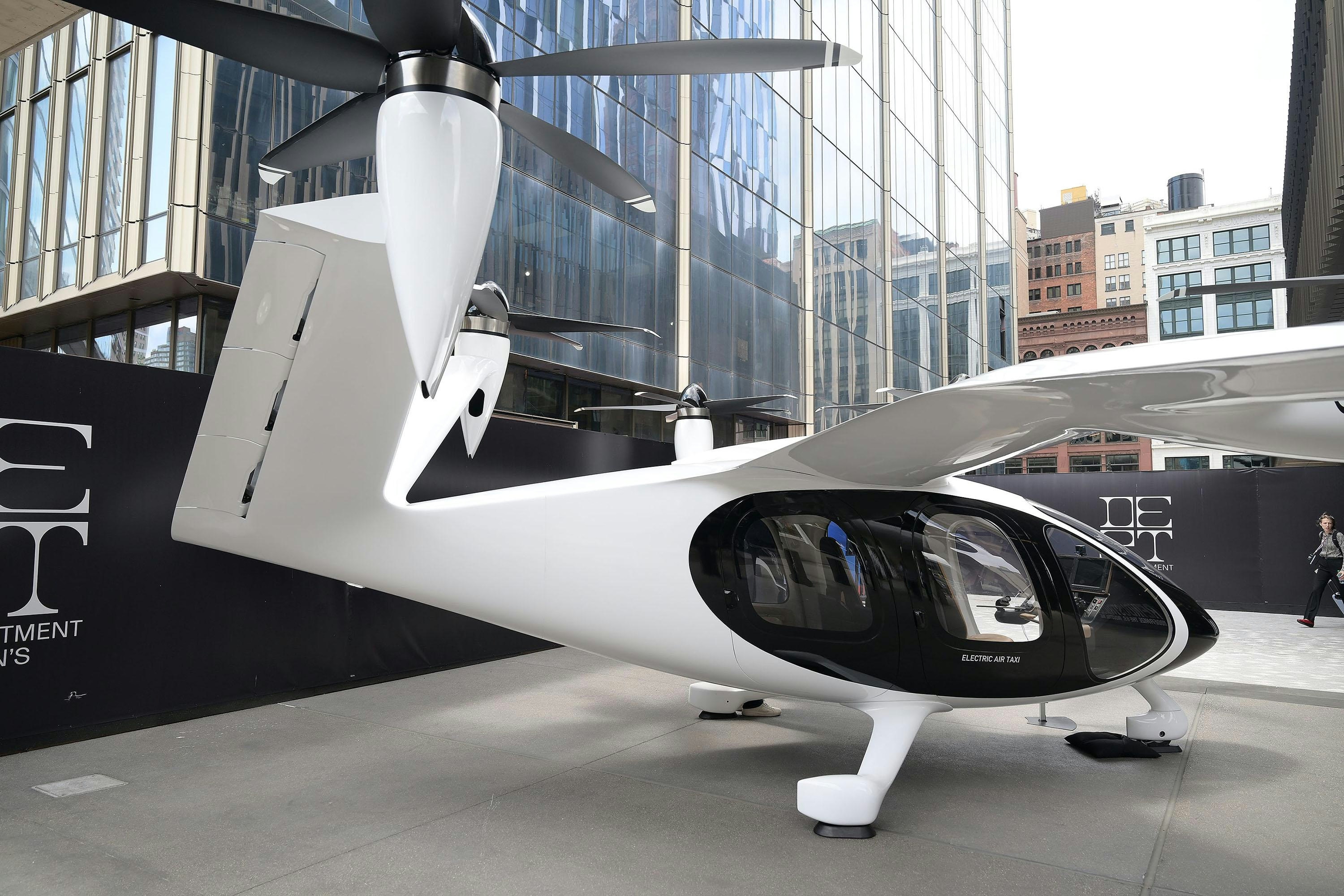
The opening day of last week’s Farnborough Airshow witnessed the debut flight of Vertical Aerospace’s electric vertical take-off and landing (eVTOL) “air taxi,” a striking aircraft distinguished by its upward-pointing propellers along the wings. As a biennial event that serves as a pivotal platform for both military and civilian aviation, Farnborough has long been synonymous with innovation and future trends. This year, however, the atmosphere was imbued with a heightened sense of urgency, as rapid advancements in materials science, battery technology, artificial intelligence, and semiconductor chips converged with escalating geopolitical tensions.
Vertical Aerospace’s public demonstration highlighted the sector’s technological progress. The company’s eVTOL, which claims a range exceeding 100 miles (160 km), exemplifies recent breakthroughs in battery efficiency and lightweight airframe design. Despite these advances, the aviation industry continues to grapple with significant challenges. The aftermath of the Covid-19 pandemic left many firms struggling to secure investment, while workforce shortages and facility closures have impeded recovery efforts. Vertical Aerospace itself has managed to attract millions in government funding and growing military interest, particularly for special forces applications.
Rising Demand Amid Persistent Challenges
Since the pandemic-induced downturn in 2020, demand for new aircraft has rebounded sharply. Aviation and manufacturing companies are now engaged in a race to fulfill surging orders, especially as militaries seek enhanced capabilities in response to rising tensions across Europe, the Pacific, and ongoing conflicts in Ukraine and the Gulf. Matthew Pritchard, vice president for sales and customer engagement at Ontic—a major supplier of aviation equipment and services—observed that defence-related business has surged from about 30% a few years ago to over 50% today. He noted, however, that the sector as a whole is still struggling to keep pace with demand, citing workforce attrition and facility shutdowns during the pandemic as ongoing obstacles.
This surge in demand has revealed several paradoxes within the industry. Leading manufacturers such as Boeing and Airbus are now contending with multi-year backlogs for commercial airliners, while older fighter jets like the Eurofighter and F-16 are experiencing renewed sales driven by geopolitical instability. Concurrently, new technologies are advancing rapidly. Dutch company Robin Radar Systems, which transitioned from bird-detection radars to anti-drone systems, exemplifies firms reporting significant growth in this evolving landscape.
Supply Constraints and Geopolitical Pressures
Scaling production to meet burgeoning demand remains a formidable challenge. Persistent supply chain disruptions and capacity limitations continue to delay aircraft deliveries at scale. The industry’s focus has shifted from stimulating demand to fulfilling record backlogs, with market attention increasingly directed toward improving productivity, ensuring quality, and securing critical supply chains. Competitors are expanding supplier capacity and streamlining operations in an effort to convert orders into finished products more efficiently.
Geopolitical developments further complicate the aviation sector’s outlook. The ongoing crisis in the Middle East is disrupting aviation, logistics, and energy corridors, contributing to volatile fuel prices and escalating costs for raw materials and components. These pressures compel manufacturers to adapt swiftly, even as they announce nearly $85 billion in deals at Farnborough spanning both military and civilian sectors. Missile manufacturers such as Lockheed Martin, Raytheon, and MBDA are unveiling initiatives aimed at reducing the cost of air defence and strike systems, as the United States and its allies race to replenish depleted missile inventories.
At Farnborough, the convergence of technological innovation and global instability is reshaping the aviation industry, presenting both unprecedented opportunities and significant challenges.

Etihad and Swissport Extend Global Partnership

Sepehran Airlines B737 Returns to Mashhad After Tyre and Engine Issues

Etihad Deploys Widebody Fleet to Meet Strong Demand

Korean Air Finalizes $36.2 Billion Deal with Boeing
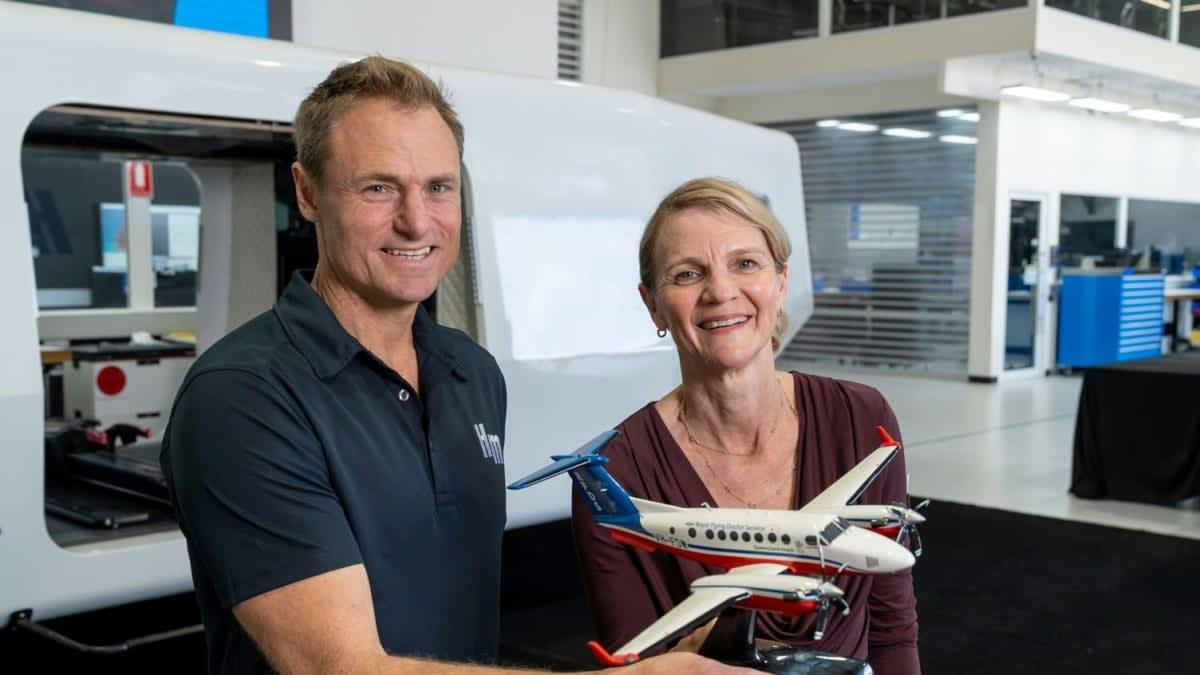
Australia’s RFDS Queensland Section Orders Six King Air 260Cs
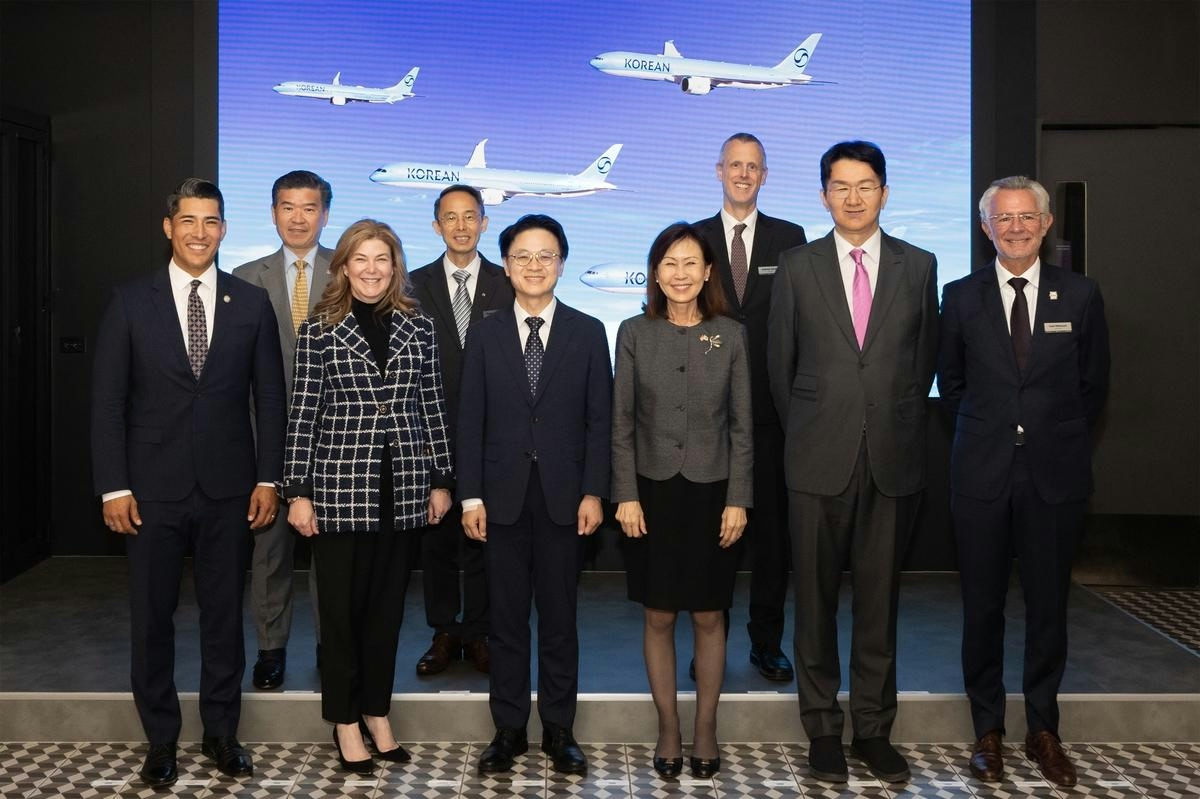
Korean Air Finalizes Order for 103 Boeing Jets and Engines
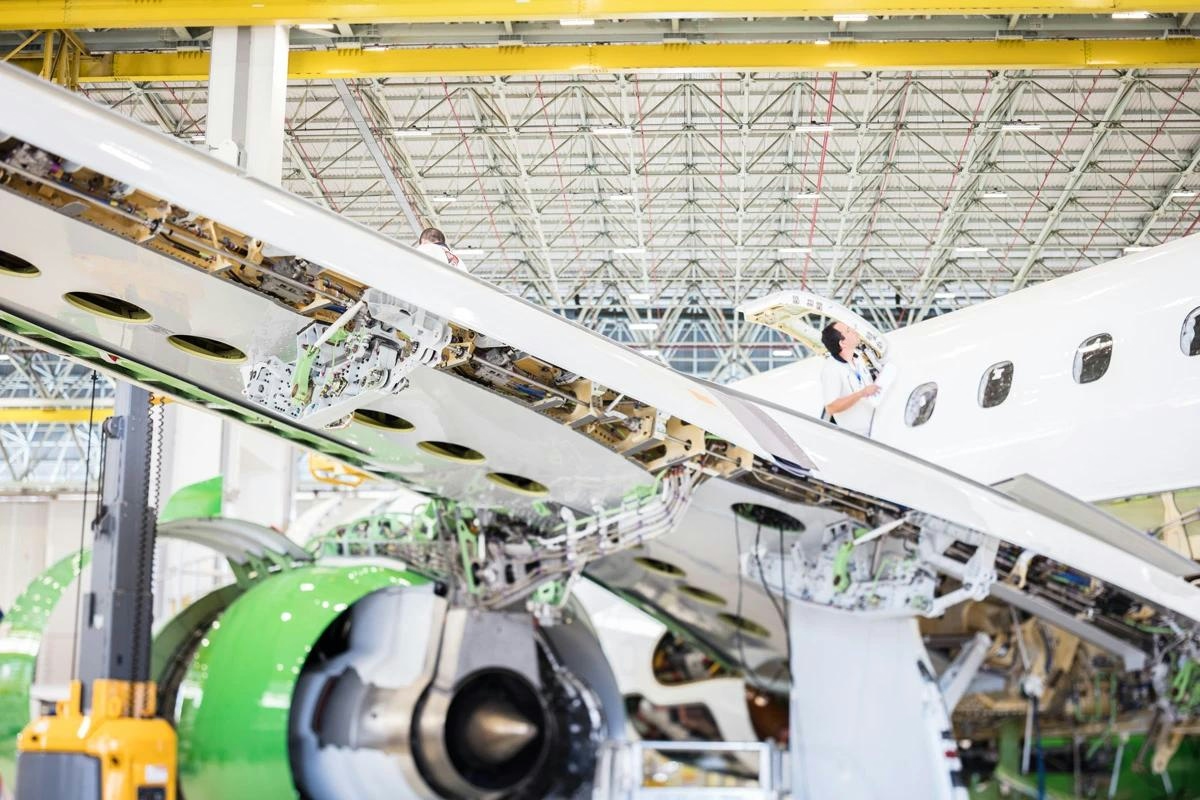
Embraer E195-E2 Features Distinctive Engine Placement Among Regional Jets

What Passengers Can Expect on Boeing’s New 777X Jet

How Ethiopian Airlines Became Africa’s Leading Carrier Amid Gulf Competition
Joby Aviation Extends Autonomous Flight Capabilities with Cross-Country Tour
