
Orchestrer les insights d’IA pour les transformer en actions

Tendances
Categories
ATL Airport Focuses on AI and Human-Centered Passenger Experience
ATL Airport Focuses on AI and Human-Centered Passenger Experience
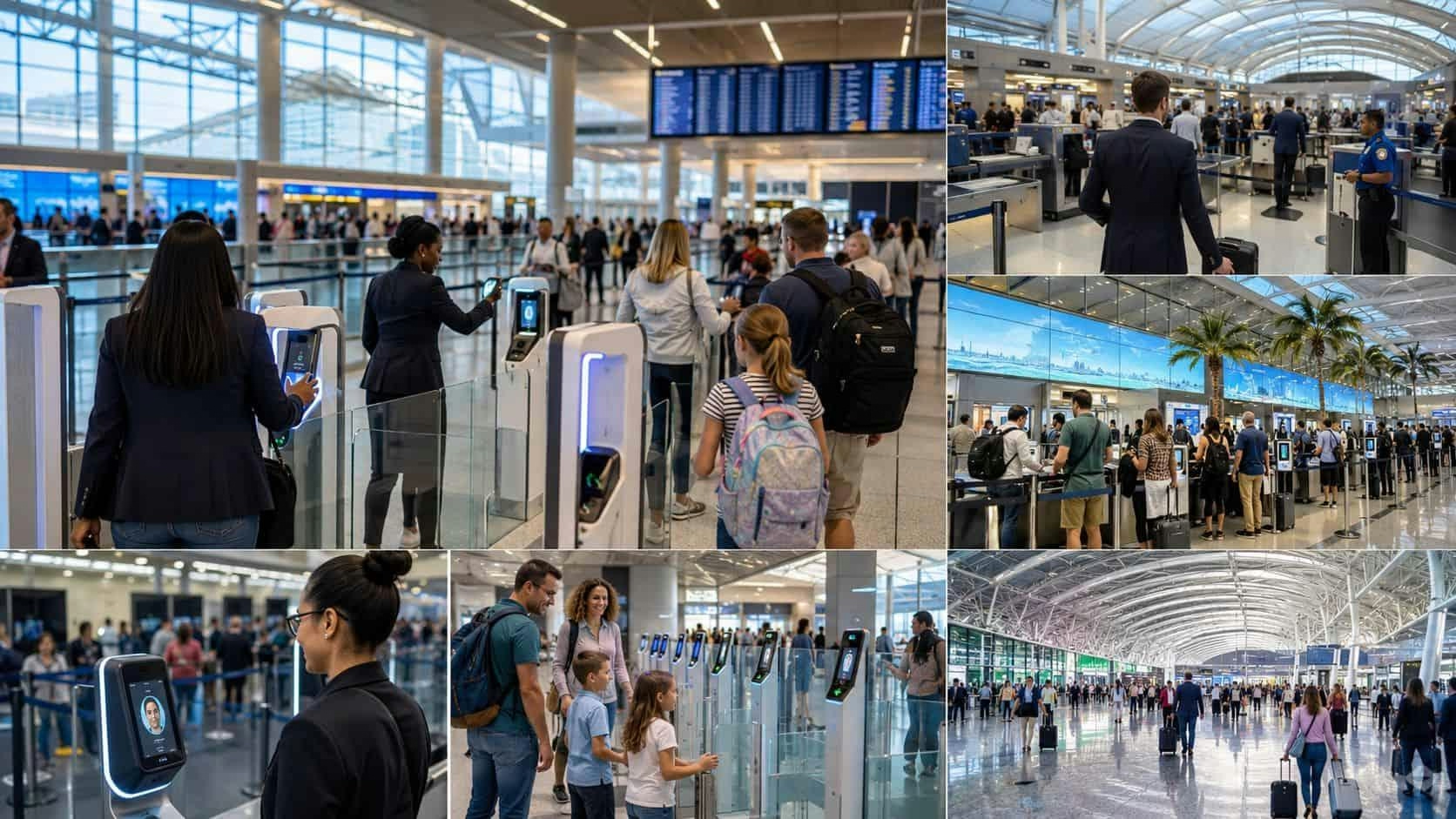
As passenger expectations continue to evolve, airports face increasing pressure to provide journeys that are seamless, personalized, and inclusive. This requires a careful balance between embracing digital innovation and preserving the essential value of human interaction. At Hartsfield-Jackson Atlanta International Airport (ATL), this balance forms the cornerstone of a new vision for the passenger experience, as outlined by David Sconzo, Senior Customer Experience Manager and Assistant FIFA Lead at ATL.
Integrating Technology with Passenger-Centric Service
Ahead of his participation in the Customer Experience Leaders Symposium at FTE Global’s 20th anniversary event in Dallas, Sconzo detailed how ATL is harnessing artificial intelligence (AI), biometrics, and customer feedback to transform the airport into a destination in its own right. He emphasized that a truly inclusive airport experience is one where passengers want to be present not merely out of necessity but because they genuinely enjoy the environment. Central to this vision is the airport’s commitment to listening attentively to the “Voice of the Customer” through surveys and feedback channels, which are vital to delivering an exceptional and tailored experience.
The adoption of AI and digital solutions across the aviation sector presents significant challenges. For ATL, establishing a robust and integrated data infrastructure is critical to unlocking AI’s full potential. Fragmented systems and incomplete data sets can impede predictive capabilities, making investments in secure and comprehensive data management essential. Additionally, as airports and airlines expand their digital presence, they must carefully navigate complex global privacy regulations, ensure accurate data classification, and implement secure storage solutions to address governance and compliance risks.
Navigating Market Uncertainty and Diverse Passenger Needs
Market responses to AI-driven initiatives remain cautious. Recent analysis from Fitch Ratings points to the possibility of an AI market correction, which could affect investor confidence and influence the pace at which airports adopt these technologies. While competitors may pursue similar AI strategies to maintain relevance, uncertainty regarding the long-term revenue potential of AI in aviation suggests that approaches will vary widely across the industry.
Despite these challenges, ATL continues to prioritize both technological innovation and the human element of service. Sconzo noted that passenger expectations are increasingly diverse, with some travelers favoring fully digital journeys while others still seek personal assistance. To accommodate this spectrum of preferences, ATL has expanded its social media and technology offerings and strengthened partnerships with airlines to ensure a seamless experience across all touchpoints.
The forthcoming symposium will further explore how airports can leverage emerging technologies, data analytics, and collaborative efforts to create more accessible and resilient travel experiences. Key discussions will focus on improving accessibility, enhancing customer service during disruptions, and shifting more travel processes beyond the airport to provide passengers with greater flexibility and choice.
As ATL and the wider aviation industry navigate the complexities of digital transformation, their focus remains steadfast: to create airports that serve not only as gateways but as destinations where technology and human-centered service converge to redefine the passenger journey.

Etihad and Swissport Extend Global Partnership

Sepehran Airlines B737 Returns to Mashhad After Tyre and Engine Issues

Etihad Deploys Widebody Fleet to Meet Strong Demand

Korean Air Finalizes $36.2 Billion Deal with Boeing

Australia’s RFDS Queensland Section Orders Six King Air 260Cs

Korean Air Finalizes Order for 103 Boeing Jets and Engines

Embraer E195-E2 Features Distinctive Engine Placement Among Regional Jets

What Passengers Can Expect on Boeing’s New 777X Jet

How Ethiopian Airlines Became Africa’s Leading Carrier Amid Gulf Competition

Joby Aviation Extends Autonomous Flight Capabilities with Cross-Country Tour
