
Orchestrer les insights d’IA pour les transformer en actions

Tendances
Categories
Automated Jet Fuel Testing Systems Expected to Grow Through 2035 Amid Air Traffic Increase and Digital Quality Standards
Automated Jet Fuel Testing Systems Poised for Significant Growth Through 2035
The global market for automated jet fuel testing systems is set to experience substantial growth through 2035, driven by increasing air traffic, tightening fuel quality regulations, and a widespread transition from manual to digital testing platforms. According to the latest IndexBox report, the sector is expected to expand at a compound annual growth rate of 6 to 8 percent from 2026 onward, reflecting robust demand fundamentals and a more geographically diversified supply base.
Market Dynamics and Technological Advancements
Integrated testing systems, which can simultaneously measure critical parameters such as density, flash point, freeze point, conductivity, and particulate contamination within a single automated workflow, now represent approximately 48 to 55 percent of the global market value. These comprehensive solutions are increasingly preferred by major jet fuel suppliers, airport fueling operators, and defense logistics networks seeking enhanced efficiency and reliability.
In addition to initial equipment sales, recurring demand for consumables and replacement parts—including test cells, sensor modules, calibration fluids, and filter elements—constitutes a steadily growing revenue stream. Aftermarket sales currently account for roughly 25 to 30 percent of total market expenditure, bolstering supplier margins and extending customer lifetime value.
The industry is witnessing a rapid shift from manual benchtop apparatus to fully integrated electronic systems, particularly in high-throughput hubs such as Singapore, Rotterdam, and Houston. Automated platforms reduce per-test labor time by 60 to 80 percent and eliminate variability associated with operator-dependent procedures. Digital connectivity and data management capabilities have become standard features, with new systems incorporating built-in Internet of Things (IoT) modules that enable remote monitoring, real-time quality dashboards, and automated compliance documentation. These developments align with broader Industry 4.0 trends permeating the fuel supply chain.
Despite these advances, integrating sophisticated automated systems with existing quality control infrastructures presents challenges. Industry players must navigate evolving digital quality standards and manage the substantial costs associated with technology upgrades. In response, companies are increasing investments in advanced testing technologies and adopting more rigorous quality assurance protocols.
Market Outlook and Competitive Environment
The baseline forecast assumes sustained global air traffic growth of 3 to 4 percent annually, supported by expanding middle-class populations in the Asia-Pacific and Middle East regions, alongside fleet modernization efforts in North America and Europe. Regulatory bodies, including the International Civil Aviation Organization (ICAO), are anticipated to mandate more frequent and comprehensive fuel testing, particularly as sustainable aviation fuels (SAF) gain prominence. The introduction of SAF blends introduces new variability in fuel composition, necessitating additional test parameters and more frequent verification, thereby expanding the addressable market for automated testing systems.
The installed base of automated jet fuel testers is projected to increase from approximately 18,000 units in 2025 to over 35,000 units by 2035. Replacement cycles average between 7 and 10 years for integrated systems and 2 to 4 years for consumables and sensor modules. As component costs decline and Asian manufacturers capture greater market share—especially in the mid-range segment—pricing pressures are expected to moderate.
The competitive landscape is likely to experience consolidation among leading suppliers, while niche players concentrate on specialized applications such as military field testing or SAF-specific analyzers. Market participants are responding with accelerated product development, strategic partnerships, and efforts to differentiate through enhanced precision and operational efficiency.
The market index, benchmarked at 100 in 2025, is forecast to reach between 185 and 210 by 2035, reflecting both volume growth and the expansion of value-added services. Key uncertainties remain, including the pace of regulatory changes and the industry's capacity to adapt to evolving digital quality standards.

Etihad and Swissport Extend Global Partnership
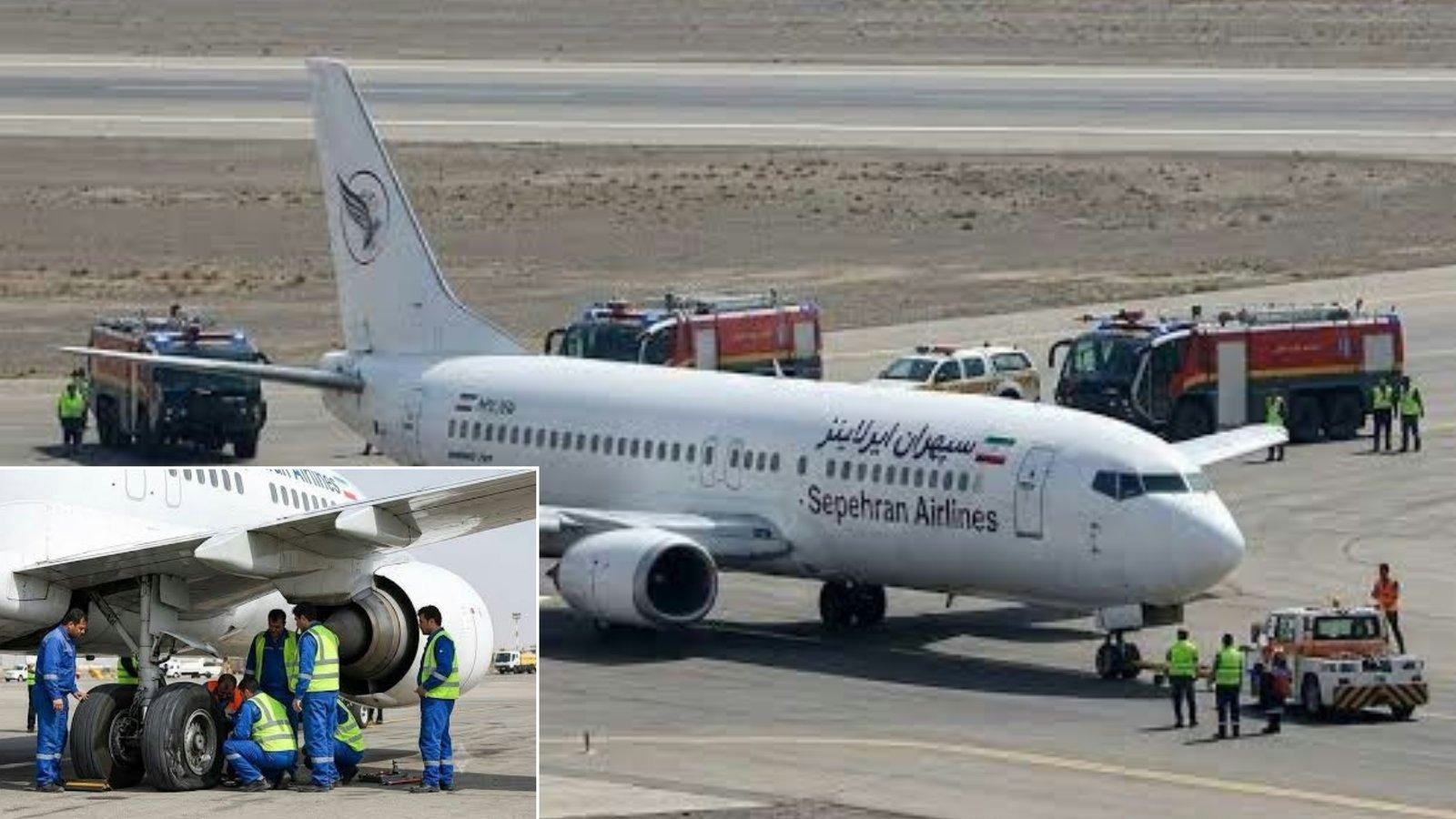
Sepehran Airlines B737 Returns to Mashhad After Tyre and Engine Issues

Etihad Deploys Widebody Fleet to Meet Strong Demand
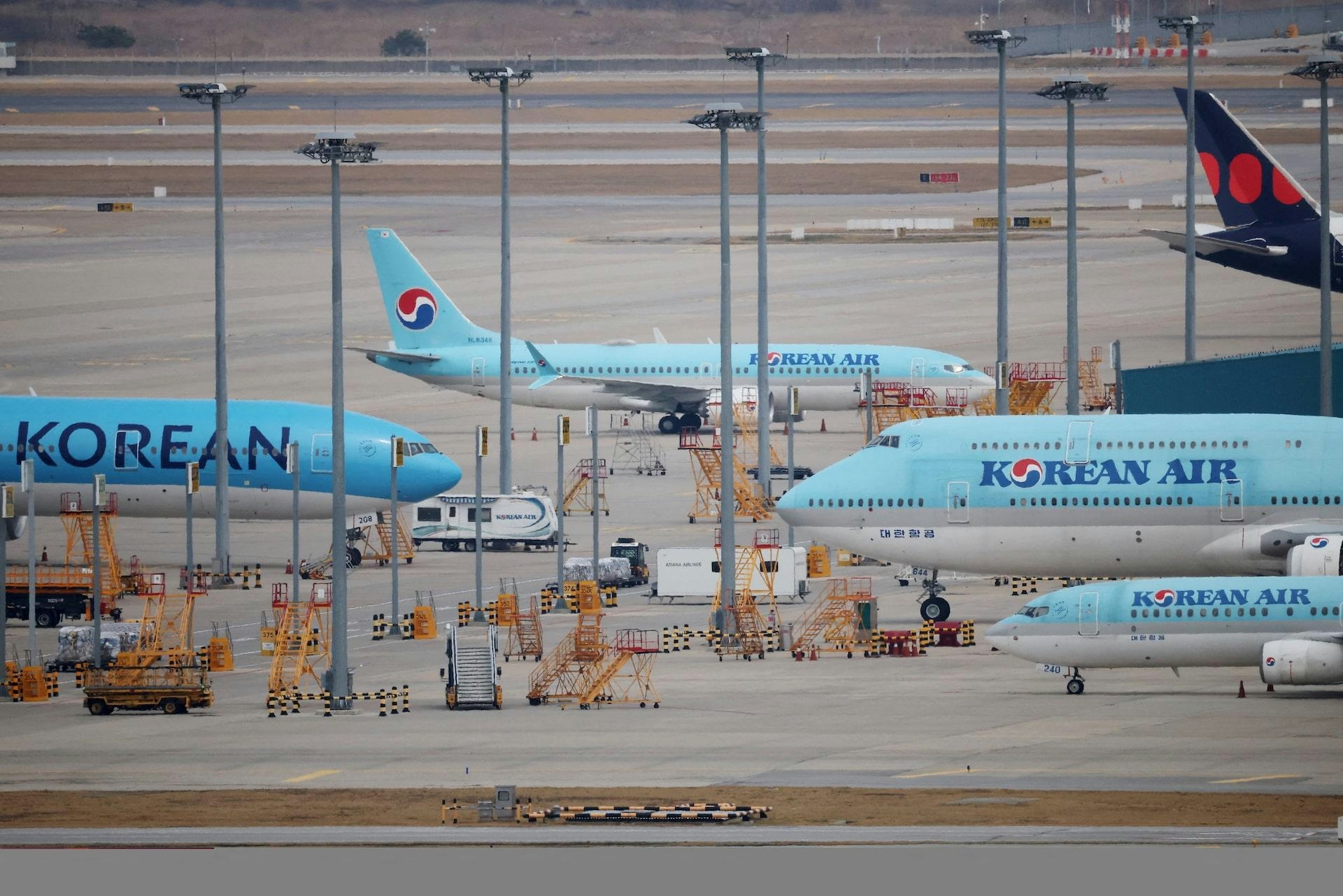
Korean Air Finalizes $36.2 Billion Deal with Boeing

Australia’s RFDS Queensland Section Orders Six King Air 260Cs

Korean Air Finalizes Order for 103 Boeing Jets and Engines

Embraer E195-E2 Features Distinctive Engine Placement Among Regional Jets

What Passengers Can Expect on Boeing’s New 777X Jet

How Ethiopian Airlines Became Africa’s Leading Carrier Amid Gulf Competition

Joby Aviation Extends Autonomous Flight Capabilities with Cross-Country Tour
