
Orchestrer les insights d’IA pour les transformer en actions

Tendances
Categories
Aviation Groups Urge DHS to Maintain Customs Staffing at US Airports
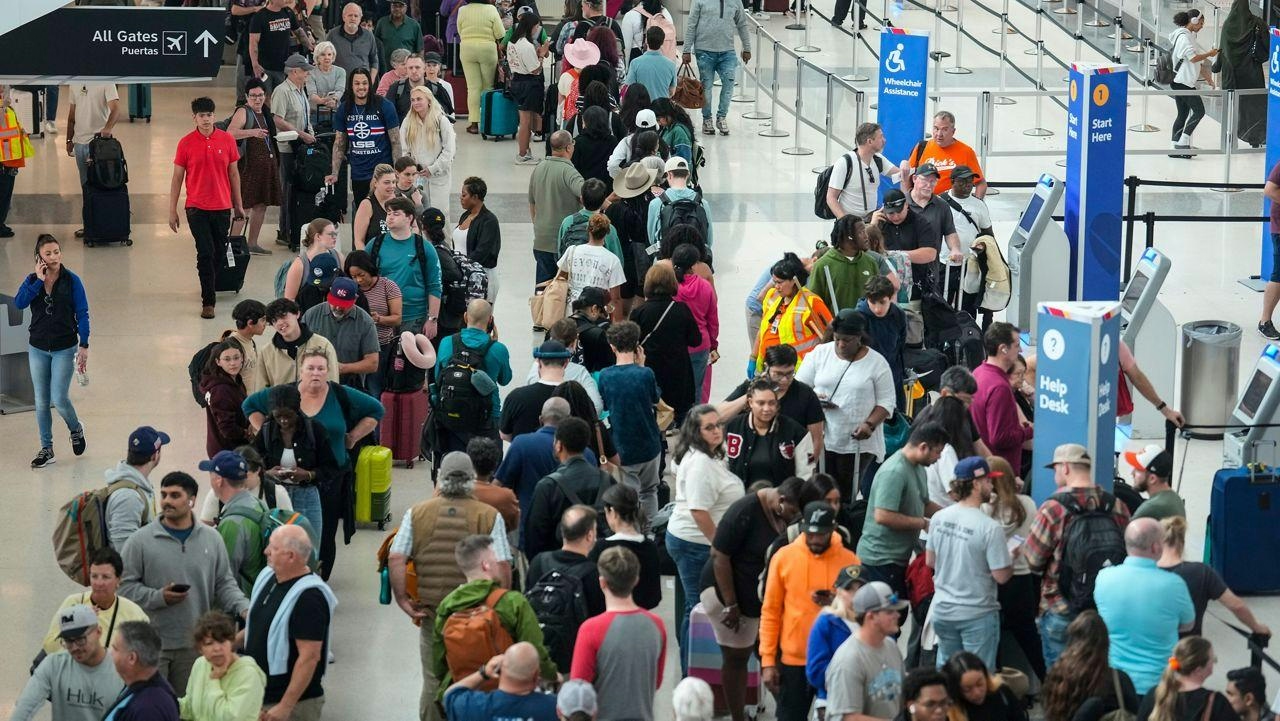
Aviation Industry Appeals to DHS to Preserve Customs Staffing at U.S. Airports
Aircraft industry trade associations have formally urged the Department of Homeland Security (DHS) to reconsider proposed reductions in customs staffing at U.S. airports, warning that such cuts could cause significant disruptions to both passenger travel and cargo operations. The International Air Transport Association (IATA) and the Airforwarders Association (AfA) have addressed letters to DHS Secretary Markwayne Mullin, highlighting the economic and operational risks associated with scaling back Customs and Border Protection (CBP) personnel, particularly at airports located in jurisdictions designated as “sanctuary cities.”
Concerns Over Proposed Staffing Reductions
The potential cuts in customs staffing arise amid ongoing tensions between federal and local authorities regarding immigration enforcement policies. DHS is reportedly contemplating reducing or suspending CBP processing at airports within jurisdictions that limit cooperation with federal immigration officials. This approach has drawn sharp criticism from aviation and travel industry representatives, who caution that such measures could have extensive and detrimental effects on airport operations and supply chains.
Brandon Fried, executive director of the Airforwarders Association, emphasized the critical role of CBP agents in facilitating the flow of high-value, time-sensitive, and security-sensitive cargo into the United States. He noted that U.S. manufacturers in sectors such as aerospace, automotive, electronics, and consumer goods depend heavily on imported components transported by air, as their production schedules cannot accommodate the delays typical of ocean freight. Fried warned that insufficient customs staffing could result in cargo backlogs, halted assembly lines, and escalating costs throughout the supply chain, ultimately undermining the reputation of U.S. ports as dependable gateways for international trade.
Impact on Passenger Travel and Major Events
The travel industry has also expressed serious concerns, especially with major international events like the upcoming FIFA World Cup approaching. Airlines for America and other industry groups have cautioned that operational disruptions at key airports could have severe consequences for airlines, travelers, and the broader economy.
In a letter authored by Douglas Lavin, vice president of member and external relations for North America at IATA, the focus was placed on Newark Liberty International Airport (EWR). Lavin highlighted that over half of EWR’s freight throughput is international, and eliminating CBP processing there would compel airlines to reroute flights, imposing significant logistical challenges and financial costs. He further explained that shifting flights to nearby New York airports such as John F. Kennedy International and LaGuardia is not a viable solution, as these airports are already operating at full capacity. This limitation would severely restrict international access to the entire New York metropolitan region.
Broader Implications for U.S. Airports and National Security
Beyond Newark, other major airports including those in Los Angeles, Chicago, Philadelphia, Seattle, and San Francisco could also face operational challenges if customs staffing is reduced. Fried underscored that CBP cargo operations extend beyond administrative functions; they are integral to national security and economic resilience. He cautioned that decisions diminishing CBP capacity would have repercussions far beyond the airports directly affected.
Within the administration, Secretary Mullin’s plan to target airports in jurisdictions deemed non-cooperative has encountered internal resistance, reflecting concerns about potential market reactions and the logistical complexities involved. The Airforwarders Association has offered to provide DHS and CBP with data and operational analyses to support informed decision-making, demonstrating the industry’s commitment to collaboration in maintaining efficient and secure airport operations.
Aviation groups continue to assert that it is possible to uphold border security and fiscal responsibility without compromising the staffing levels essential to sustaining the smooth flow of U.S. air cargo and passenger traffic.

Etihad Airways Suspends Airbus A380 Flights on Key Route

Aditya Birla Group Seeks Approval for Aircraft Leasing in GIFT City

Qatar Airways Highlights Innovation and Connectivity at Arabian Travel Market 2026

Hong Kong's Five-Year Plan Includes Andrew Fan's Aircraft Parts Processing Hub Proposal

ACIA Aero Leasing Delivers ATR72-600 to Air Nostrum

RTX Appoints Jill Albertelli as Head of Pratt & Whitney

TAT Technologies Joins Beyond Aero Hydrogen Aircraft Program

AURAK Study Highlights Barriers to Air Taxi Adoption in Emerging Economies

Xiamen Air Selects Altitude for 787 Maintenance at Heathrow

Etihad and Swissport Extend Global Partnership
