
Orchestrer les insights d’IA pour les transformer en actions

Tendances
Categories
AZUR Air Approved to Repair Boeing 767 CF6-80C2 and PW4000-94 Engines
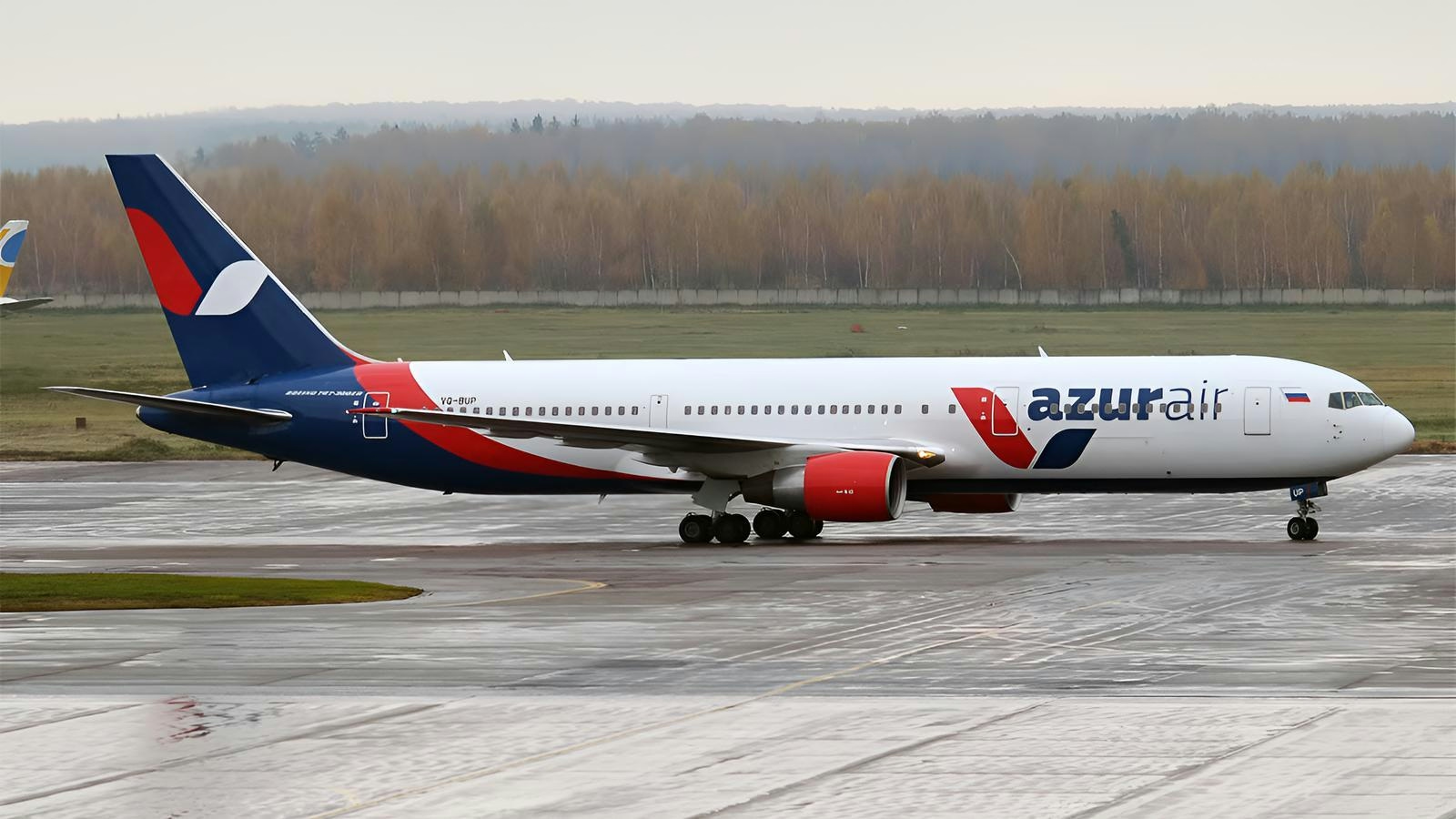
AZUR Air Authorized to Independently Service Boeing 767 Engines
AZUR Air has secured regulatory approval from the Russian Federal Air Transport Agency (Rosaviatsiya) to independently service CF6-80C2 and PW4000-94 engines, which power Boeing 767 aircraft. This authorization, granted under a B1 category rating, significantly broadens the airline’s maintenance capabilities by allowing it to perform a comprehensive range of engine maintenance tasks in-house.
Previously reliant on third-party maintenance organizations for complex engine work, AZUR Air can now conduct periodic maintenance, implement service bulletins and modifications, and manage the dismantling and installation of engine components and piping within its own facilities. The airline is also authorized to preserve, store, and test engines across all operating modes. This development enables AZUR Air to remove engines from its aircraft, complete necessary repairs internally, and reinstall them, thereby streamlining operations and potentially reducing turnaround times.
Expanding Market Reach Amid Industry Challenges
The new certification extends beyond AZUR Air’s own fleet, permitting the airline to service CF6-80C2 and PW4000-94 engines on Boeing 767s operated by other carriers. This expansion positions AZUR Air as a competitive player in the regional maintenance, repair, and overhaul (MRO) market, potentially increasing the workload for its engineering center.
This advancement comes at a time when the aviation industry faces significant supply chain constraints, including shortages of critical components such as aircraft windows. These shortages are impacting both new aircraft production and ongoing maintenance activities, intensifying competition among repair shops. Airlines are contending with rising engine maintenance costs and are increasingly seeking dependable partners for essential repairs.
As airlines allocate more resources to engine labor and repairs, MRO providers like AZUR Air may experience heightened demand for their services. This dynamic is likely to prompt competitors to enhance their own maintenance capabilities to capture greater market share. Meanwhile, engine manufacturers such as GE Aerospace and Safran face mounting pressure to deliver parts and maintain production schedules to support both airlines and independent repair centers.
The escalating costs and logistical challenges associated with engine maintenance are influencing broader industry trends. Airlines may adjust fleet management strategies and overhaul priorities to optimize operational efficiency and control expenses in response to the evolving landscape.
AZUR Air’s expanded maintenance certification equips the airline to better navigate these complexities, offering increased flexibility and resilience in a constrained market. As the industry adapts to ongoing supply chain pressures and shifting demand, AZUR Air’s initiative to internalize more engine work may serve as a model for other operators aiming to strengthen their technical capabilities.
Comments

Etihad Airways Suspends Airbus A380 Flights on Key Route

Aditya Birla Group Seeks Approval for Aircraft Leasing in GIFT City

Qatar Airways Highlights Innovation and Connectivity at Arabian Travel Market 2026

Hong Kong's Five-Year Plan Includes Andrew Fan's Aircraft Parts Processing Hub Proposal

ACIA Aero Leasing Delivers ATR72-600 to Air Nostrum

RTX Appoints Jill Albertelli as Head of Pratt & Whitney

TAT Technologies Joins Beyond Aero Hydrogen Aircraft Program

AURAK Study Highlights Barriers to Air Taxi Adoption in Emerging Economies

Xiamen Air Selects Altitude for 787 Maintenance at Heathrow

Etihad and Swissport Extend Global Partnership
