image

AeroGenie — Votre copilote intelligent.

Posez toutes vos questions. Analysez tout. Agissez instantanément.

Tendances

Categories

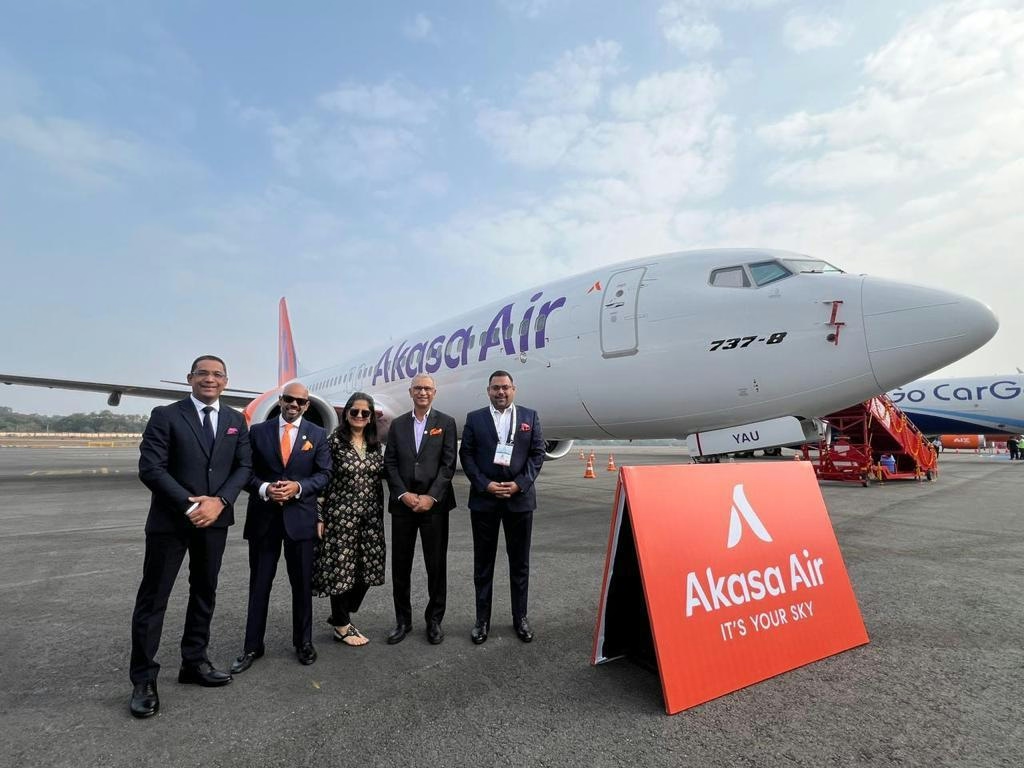
BOC Aviation Leases Three Boeing 737-8 Aircraft to Akasa Air
November 4, 2025By ePlane AI
BOC Aviation Leases Three Boeing 737-8 Aircraft to Akasa Air
0
0
BOC Aviation
Boeing 737-8
Akasa Air

BOC Aviation Leases Three Boeing 737-8 Aircraft to Akasa Air

Strategic Fleet Expansion for Akasa Air

BOC Aviation has entered into a lease agreement with Akasa Air for three Boeing 737-8 aircraft, with deliveries scheduled to begin in January 2026. The transaction, finalized on November 4, involves BOC Aviation acquiring the aircraft and subsequently leasing them to Akasa Air, supporting the Indian carrier’s ongoing efforts to expand its fleet. These new jets will be equipped with CFM LEAP-1B engines, reflecting the latest in fuel-efficient technology.

Since its launch in 2021, Akasa Air has steadily grown its operations and currently operates a fleet of 30 Boeing 737 MAX 8 aircraft. The addition of these new planes aligns with the airline’s strategic objective to strengthen its foothold in India’s rapidly expanding aviation market.

Paul Kent, Chief Commercial Officer at BOC Aviation, expressed enthusiasm about the partnership, highlighting Akasa Air as a new customer at a pivotal stage of its development. Priya Mehra, Chief of Governance & Strategic Acquisitions at Akasa Air, emphasized the value of collaborating with BOC Aviation, citing the lessor’s global reputation and expertise in aircraft financing and asset management.

Market Context and Competitive Pressures

This leasing agreement emerges amid intensifying competition within the global aircraft leasing and manufacturing sectors. BOC Aviation faces the challenge of maintaining competitive pricing as the Airbus A320 family continues to gain market share, recently overtaking the Boeing 737 as the world’s most-delivered aircraft. This shift has prompted both Boeing and Airbus to consider strategic responses, including increasing production rates and developing new aircraft models to defend and expand their positions.

Industry analysts are also monitoring the financial implications of leasing to a relatively new market entrant like Akasa Air, as well as the broader effects on the leasing landscape. The partnership between Hindustan Aeronautics Ltd and Russia to manufacture the Sukhoi Superjet-100 in India adds another layer of competition, potentially influencing the regional dynamics for both Boeing and Airbus.

As Akasa Air advances its expansion plans, its collaboration with BOC Aviation highlights the evolving nature of the Indian aviation sector, where fleet modernization and strategic partnerships are playing an increasingly critical role in shaping the competitive environment.

More news
The Airbus A350-1000’s Fuel Efficiency Advantage Explained

The Airbus A350-1000’s Fuel Efficiency Advantage Explained

The Airbus A350-1000’s Fuel Efficiency Advantage Explained The Airbus A350-1000 is widely recognized as one of the most fuel-efficient large twin-aisle airliners currently in operation. Airlines utilizing this aircraft consistently report operating costs that are lower than anticipated, alongside significant fuel savings even on the longest routes. This level of efficiency is the result of a meticulously integrated design strategy encompassing aerodynamics, structural engineering, propulsion, and advanced onboard systems. Given that fuel represents the largest and most unpredictable expense for long-haul flights, these savings directly enhance route economics, increase payload capacity, and reduce CO₂ emissions per passenger-kilometer. Six Pillars of Efficiency The A350-1000’s superior fuel economy is founded on six key areas, each contributing to its exceptional performance. The aircraft’s aerodynamic architecture benefits from a clean-sheet design approach, employing advanced computational fluid dynamics and wing optimization techniques. Although the -1000 shares its 212-foot (64.75 m) wing with the smaller -900 variant, the wing was engineered with growth in mind, enabling the -1000 to accommodate more passengers without increasing aerodynamic drag. Innovations such as morphing wings and optimized winglets further reduce drag during climb and cruise phases, enhancing lift-to-drag ratios and lowering hourly fuel consumption. Central to the aircraft’s efficiency is the Rolls-Royce Trent XWB-97 engine, one of the most fuel-efficient large turbofans in commercial aviation. Specifically designed for the -1000, this engine delivers high thrust with excellent specific fuel consumption. Its high bypass ratio and advanced core aerodynamics generate greater thrust for less fuel, while the use of cutting-edge materials and improvements in thermal efficiency contribute to further reductions in fuel burn. Feedback from operators and independent analyses consistently affirm the engine’s superior real-world performance. The A350-1000’s airframe incorporates over 50% advanced composite materials, significantly reducing weight while maintaining strength and durability. This lightweight structure plays a crucial role in enhancing fuel efficiency. Complementing this is a suite of modern flight systems and avionics that optimize aircraft performance throughout all phases of flight, from takeoff to landing, ensuring operations at peak efficiency. The spacious cabin design allows airlines to maximize seat count and payload, which further decreases fuel consumption per passenger. Underpinning all these features is an integrated design philosophy that ensures aerodynamic, structural, and propulsion efficiencies are harmonized and fully realized in everyday operations. Market Impact and Competitive Landscape The fuel efficiency of the A350-1000 has garnered considerable attention in the aviation market. Airlines such as China Airlines have expanded their orders, reflecting strong confidence in the aircraft’s operational performance and economic benefits, despite Airbus facing unrelated quality challenges with its A320 family. Qantas’s Project Sunrise, which plans to deploy the A350-1000 for ultra-long-haul flights, further highlights the aircraft’s appeal and its potential to dominate the market segment. Nevertheless, competition remains intense. Boeing’s forthcoming 777-9 targets the same high-capacity, long-range market and promises its own advancements in fuel efficiency. Despite this, the A350-1000’s established track record and expanding customer base position it as a leading contender in the next generation of efficient long-haul air travel.
McNally Capital Expands Aviation Operations to Support Global Tourism

McNally Capital Expands Aviation Operations to Support Global Tourism

McNally Capital Expands Aviation Operations to Support Global Tourism McNally Capital has made a strategic entry into the global aviation services market through its acquisition of Airforce Turbine Service (ATS), a prominent independent provider specializing in the maintenance, repair, and overhaul (MRO) of PT6A turboprop engines. This acquisition represents the inaugural investment from McNally Capital’s third fund and highlights the firm’s dedication to expanding its footprint within the aviation sector, a vital component of global transportation and tourism. Strengthening Aviation Maintenance Capabilities Established in 1989 and based in Mathis, Texas, ATS has earned a strong reputation for its expertise in servicing the widely utilized PT6A engine, which powers both commercial and private aircraft. With operational facilities spanning Malaysia, South Africa, and Guatemala, ATS caters to a broad international customer base by providing comprehensive MRO services, field support, and aftermarket solutions. The acquisition by McNally Capital is anticipated to enhance ATS’s infrastructure and operational capacity, enabling the company to better address the increasing global demand for aviation maintenance and support. The reliability and efficiency of aviation services remain critical to the tourism industry, one of the world’s largest economic sectors. Airlines, airports, and tourism operators rely heavily on MRO providers like ATS to maintain fleet readiness, reduce aircraft downtime, and ensure passenger safety. The growth of the aviation sector, particularly across Asia, Africa, and Latin America, is closely linked to the recovery and expansion of global tourism, underscoring the essential role companies like ATS play in facilitating the smooth movement of travelers worldwide. Navigating Industry Challenges and Market Dynamics Despite the promising outlook, McNally Capital’s expansion into aviation faces notable challenges. The complexity of regulatory environments presents a significant hurdle, especially as globally recognized type certifications become increasingly crucial to circumvent insurance and financing complications. Additionally, the industry is preparing for a rise in aviation insurance premiums expected to commence in 2026, which may elevate operational costs for service providers and their clients alike. Market reactions to the acquisition are expected to be mixed; while some stakeholders anticipate a positive impact on tourism infrastructure, others remain cautious about potential cost pressures and regulatory obstacles. Competitor responses to McNally Capital’s move are likely to vary. Some players may intensify efforts to protect or expand their market share, while others might pursue collaborative approaches to address shared regulatory and operational challenges. Beyond its core maintenance offerings, ATS’s extensive aftermarket services assist airlines in managing their fleets more efficiently, thereby supporting operational reliability and enhancing customer satisfaction. In the context of global tourism, maintaining aircraft in optimal condition is essential for adhering to flight schedules and ensuring seamless travel experiences, particularly in high-demand regions. McNally Capital’s investment in ATS aligns with its broader strategy of focusing on mission-critical sectors that support global infrastructure. By reinforcing aviation services, the firm aims to contribute to the sustained growth and resilience of international tourism while navigating the evolving complexities of a dynamic industry.
Two Young Climbers Begin Winter Ascent of McKinley

Two Young Climbers Begin Winter Ascent of McKinley

Two Young Climbers Begin Winter Ascent of McKinley Lane Christenson, 22, and Dalton Borton, 20, both students at the University of Alaska Anchorage, have embarked on a demanding winter ascent of Denali, also known as Mt. McKinley, which rises to 6,190 meters. The pair arrived at the Kahiltna Glacier two days ago, preparing to spend Christmas isolated on the mountain’s icy slopes. Their expedition takes place during the harshest season, when Denali’s severe cold and limited daylight render it one of the most formidable climbs worldwide. Experience and Preparation for Extreme Conditions Despite their youth, Christenson and Borton possess considerable experience navigating Alaska’s challenging mountain terrain. Borton first summited Denali in 2022 at the age of 17 and returned in March 2023 to tackle the technical Cassin Ridge under wintry conditions. Christenson reached Denali’s summit earlier this year during the conventional late spring season and also summited Bashful Peak, Anchorage’s highest point, in 2023. Nevertheless, a winter ascent of Denali presents a significantly greater challenge, with temperatures often colder than those encountered in the high Himalayas and the added difficulty of near-constant darkness due to the mountain’s northern latitude. The climbers will face the vast Alaska Range entirely alone, confronting not only the physical rigors of the climb but also the psychological strain of isolation. Their meticulous preparation includes specialized gear such as down suits and boots designed for 8,000-meter Himalayan peaks, as well as sleds, skis, and sufficient food and fuel to sustain their journey. Each will begin the ascent hauling approximately 200 pounds (91 kilograms) of equipment. The Rarity and Risks of Winter Ascents Winter ascents of Denali are exceptionally rare. According to Denali National Park records, only 17 people have reached the summit during winter, with six fatalities recorded in these attempts. The first successful winter ascent occurred in 1967, completed by Art Davidson, Ray Genet, and Dave Johnston over a 42-day expedition. In the past decade, only two climbers—both solo—have summited Denali in winter: Lonnie Dupre in 2015 and Jost Kobusch in 2023. Such high-profile expeditions often have broader implications beyond the climbing community. Companies specializing in winter mountaineering equipment may experience increased interest and sales as attention focuses on the specialized gear required for such extreme conditions. Meanwhile, the insurance industry, already contending with economic challenges, may be indirectly affected as businesses supporting adventure tourism and extreme sports reassess risk and coverage in light of these demanding undertakings. As Christenson and Borton commence their ascent, they join a select group of climbers who have dared to confront Denali’s winter extremes, pushing the limits of endurance and adventure.
Elroy Air’s Autonomous Chaparral Delivers Lunch on A-to-B Flight

Elroy Air’s Autonomous Chaparral Delivers Lunch on A-to-B Flight

Elroy Air’s Autonomous Chaparral Completes First Point-to-Point Cargo Flight Elroy Air has achieved a significant milestone with its Chaparral, an autonomous vertical takeoff and landing (VTOL) cargo aircraft, completing its first point-to-point flight. The full-scale C-1 prototype successfully took off and landed vertically at the company’s Byron, California facility on December 10. During this demonstration, the aircraft transported a 213-pound payload—including lunch for the team—over a 2.6-mile route at speeds reaching up to 60 miles per hour. Design and Capabilities The Chaparral is engineered to carry payloads of up to 300 pounds across distances of up to 300 miles, targeting both commercial and military logistics markets. Its hybrid-electric powertrain powers eight vertical and four forward propellers, while a turbogenerator recharges the batteries during flight. The aircraft operates fully autonomously, managing all phases of flight and ground operations without human intervention. It is equipped to autonomously pick up and deposit cargo using Elroy’s modular Hatch Load pods, which are designed to accommodate a variety of missions. These range from express delivery and heavy cargo transport to humanitarian aid, medical supply distribution, and military intelligence, surveillance, and reconnaissance (ISR) tasks. Market Interest and Industry Context Elroy Air’s CEO Andrew Clare has disclosed a backlog of approximately 1,500 preorders, with notable customers including FedEx, Bristow Group, and Lease Corporation International (LCI). The Chaparral has also garnered interest from the U.S. military, which is actively evaluating its potential for defense applications. Dave Merrill, Elroy’s founder and executive chairman, emphasized the company’s collaboration with the U.S. Air Force, Marine Corps, and logistics leaders such as FedEx to develop the Chaparral as a versatile platform capable of supporting a wide range of missions. This achievement arrives amid growing pilot shortages in the aviation industry, which have intensified interest in autonomous aircraft solutions. Nonetheless, regulatory approval and safety concerns remain significant challenges for Elroy Air and other companies in the advanced air mobility sector. Investor sentiment is divided; while some are optimistic about the transformative potential of autonomous cargo delivery, others remain cautious regarding the long-term viability and profitability of such technologies. Competitive Landscape and Future Plans The autonomous air mobility sector is becoming increasingly competitive, with companies like Joby Aviation, Archer Aviation, and Wisk Aero advancing their own electric and autonomous aircraft programs. Broader developments in autonomous transport, such as Rivian’s recent progress with AI chips for self-driving trucks, underscore the industry-wide race to deploy next-generation autonomous vehicles. Elroy Air is collaborating with Kratos, a manufacturer known for jet-powered composite uncrewed aircraft, to produce its first production-intent Chaparral by 2026. The company aims to scale production to hundreds of units annually. Since its initial flight in 2023, the C-1 prototype has participated in demonstrations with the U.S. Marine Corps at Arizona’s Yuma Proving Ground. Elroy Air currently holds active contracts with the U.S. Army, Air Force, and partners in Japan as it continues to expand the operational capabilities of its autonomous cargo platform.
Texarkana College Holds First Graduation for Aviation Maintenance Technician Program

Texarkana College Holds First Graduation for Aviation Maintenance Technician Program

Texarkana College Celebrates First Graduates of Aviation Maintenance Technician Program Texarkana College has reached a pivotal milestone with the graduation of its inaugural class from the Aviation Maintenance Technician program, a timely development amid a nationwide shortage of skilled aircraft mechanics. Each member of this first cohort earned the Federal Aviation Administration (FAA) Airframe and Powerplant (A&P) certification, widely regarded as the industry’s benchmark for technical proficiency. In addition, students obtained the SAE AS7489 Aerospace Coating Application Specialist (ACAS) certification, reflecting advanced expertise in corrosion prevention and aircraft painting in compliance with FAA standards. Hands-On Training and Immediate Industry Impact The intensive one-year program offered students practical experience within Texarkana College’s modern hangar facility at Texarkana Regional Airport, designed to replicate a professional Maintenance, Repair, and Overhaul (MRO) environment. This immersive training has already resulted in immediate employment opportunities, with graduates receiving job offers from prominent employers including Aerotek, Boeing, SkyWest Airlines, and various regional aviation firms. Brandon Sanders, Director of Aviation at Texarkana College, emphasized the program’s employment focus, stating, “Our goal is to get each graduate hired before they leave our program. We are committed to showing the industry that Texarkana can supply a high volume of quality mechanics to support their operations.” Texarkana College President Dr. Jason Smith highlighted the significance of regional collaboration and industry partnerships in the program’s success. “This program exemplifies how strong collaborations drive workforce success. Our partnership with Texarkana Regional Airport has allowed us to respond directly to industry demand and prepare highly skilled mechanics ready to enter the workforce,” he said. Addressing a Critical Industry Shortage The launch of Texarkana College’s FAA Part 147-approved program coincides with a global shortage of aviation maintenance technicians, a challenge prompting innovative responses across the sector. Industry players are adopting new strategies, such as AI tools introduced by companies like Zymbly to enhance workforce productivity, and expanded career development initiatives by major airlines including JetBlue Airways in collaboration with aviation schools. This growing demand for specialized training is also evident in programs at other institutions, such as Hagerstown Community College’s Automotive Service Technician program and evolving team-building approaches for diesel technicians highlighted in industry reports. Graduates of Texarkana College’s program enter a high-demand field, with starting salaries frequently exceeding $80,000 annually. The college plans to expand the program by enrolling new cohorts each fall, spring, and summer semester, aiming to graduate approximately 300 certified A&P mechanics annually to address both regional and national workforce needs. Texarkana College’s initiative reflects the broader evolution of technical education, as academic institutions and industry partners collaborate to confront critical labor shortages and secure a steady pipeline of skilled aviation professionals.
United’s 737 MAX 10s Have Flown Over 300 Hours Without Passengers

United’s 737 MAX 10s Have Flown Over 300 Hours Without Passengers

United’s 737 MAX 10s Accumulate Over 300 Hours of Passenger-Free Flight Boeing’s newest commercial aircraft models continue to encounter significant certification delays, with the 737 MAX 7 and 10 narrowbodies, alongside the 777X widebody family, entering service years later than initially planned. Despite these setbacks, many of the aircraft have already been manufactured and are undergoing regular test flights to maintain airworthiness while awaiting regulatory approval. United Airlines’ Experience with the 737 MAX 10 For United Airlines, the delays have had a pronounced impact. Data from Aviation Flights reveals that United’s undelivered Boeing 737 MAX 10s have collectively logged more than 300 flight hours without carrying passengers. According to fleet information from ch-aviation, United currently holds orders for 167 MAX 10 aircraft, with those already produced averaging 2.6 years in age. The oldest of these, registered as N27751, first took to the skies in June 2021 and most recently completed a test flight from Boeing Field on December 16. Other aircraft in the series, including N27752 and N27753, have also conducted recent test flights, underscoring ongoing efforts to keep the jets operationally ready. These flights form part of the broader certification process, which remains a critical barrier before the aircraft can enter commercial service. United initially emphasized the MAX 10’s potential to enhance its domestic network by introducing larger and more efficient aircraft. However, the airline continues to await delivery as the certification timeline extends. Industry-Wide Challenges and Developments In addition to Boeing-related delays, United has faced minor operational disruptions unrelated to the manufacturer, such as a recall affecting six Airbus A320 aircraft in its fleet. This situation highlights the broader challenges airlines face in managing supply chain complexities and certification issues across multiple manufacturers. Other carriers are closely monitoring the progress of the MAX 10. WestJet Airlines, for instance, is advancing its own certification process and expects to receive its first MAX 10 by the end of 2026. The wider industry remains cautious, aware that further delays could influence competitive dynamics and fleet planning strategies. Boeing is actively addressing ongoing quality concerns through an internal initiative described as a “war on defects,” aimed at resolving production issues and meeting growing demand. Despite these efforts, the company continues to face scrutiny as it refines its manufacturing processes. Innovation Amidst Delays: The ecoDemonstrator Program Among United’s future MAX 10s, aircraft N27602 stands out as part of Boeing’s ecoDemonstrator research program in partnership with NASA. This jet, distinguished by a striped livery, has been used for test flights powered by Sustainable Aviation Fuel (SAF). Accompanied by a NASA Douglas DC-8 to measure emissions, these flights contribute to research comparing the environmental impact of SAF against conventional jet fuel, including differences in contrail formation. As Boeing and its airline customers navigate certification delays, quality challenges, and evolving regulatory requirements, the 737 MAX 10 remains a focal point for the aviation industry—symbolizing both innovation and the complexities inherent in modern aircraft manufacturing.
Airlines Adapt to Trade Disruptions and Supply Chain Challenges

Airlines Adapt to Trade Disruptions and Supply Chain Challenges

Airlines Adapt to Trade Disruptions and Supply Chain Challenges The International Air Transport Association’s (IATA) updated Global Outlook for Air Transport underscores the complex environment confronting airlines amid persistent global trade tensions and shifting supply chain dynamics. Despite these challenges, the industry has shown remarkable resilience, navigating altered trade flows influenced by tariffs and the rapid integration of artificial intelligence technologies. At the same time, airlines continue to grapple with significant hurdles on the path toward decarbonization. Financial Impacts and Market Resilience Airlines have experienced direct financial repercussions from external disruptions, including an estimated $200 million loss linked to the recent U.S. government shutdown and a technical failure at Detroit’s airport. Nevertheless, the sector benefits from sustained strong travel demand and a notable increase in premium revenue streams, which have helped offset some of these setbacks. Market responses reflect this underlying robustness; for instance, Delta Air Lines has maintained a solid market position and operational stability, with its stock retaining upside potential despite ongoing industry volatility. Strategic Shifts in Supply Chains and Logistics Beyond the airlines themselves, related industries are also adapting to the evolving trade landscape. Companies such as IKEA have responded by relocating more manufacturing operations to the United States, a strategic move designed to circumvent tariffs and enhance responsiveness to shifting consumer demands. This shift highlights a broader trend toward greater supply chain agility. The logistics sector, closely intertwined with airline operations, continues to prioritize flexibility and resilience as it confronts ongoing disruptions. The ability of airlines and their partners to adjust to new trade realities and technological advancements remains a crucial factor in sustaining growth and meeting changing customer expectations. While the journey toward decarbonization remains fraught with challenges, the combination of strong demand, strategic adaptation, and operational resilience positions the airline industry to navigate the uncertainties of a rapidly evolving global environment.
AI’s Growing Energy Use Challenges Airlines’ Net-Zero Targets

AI’s Growing Energy Use Challenges Airlines’ Net-Zero Targets

AI’s Growing Energy Use Challenges Airlines’ Net-Zero Targets Rising Energy Demands from AI Data Centers The rapid expansion of artificial intelligence (AI) poses a significant challenge to the aviation industry’s ambition to achieve net-zero emissions by 2050. Airlines are increasingly concerned that the soaring energy consumption of AI data centers could strain the supply of renewable electricity, which is crucial for producing cleaner jet fuels. The International Air Transport Association (IATA) recently issued a report highlighting the dual impact of AI’s growth on energy markets. According to IATA, AI-driven data centers are generating a “strong and rising demand for electricity, both renewable and other,” exacerbating existing constraints in electricity and renewable energy supply. This surge not only drives up energy prices but also leads to increased carbon dioxide emissions, as the expansion of these facilities outpaces the growth of renewable energy infrastructure. Implications for Sustainable Aviation Fuel Production The aviation sector’s strategy to reduce carbon emissions heavily relies on sustainable aviation fuel (SAF), which is derived from renewable sources such as used cooking oil and certain crops. However, the production of SAF is energy-intensive and depends on affordable access to renewable electricity. Airlines now face the prospect that the rapid growth of AI could divert essential renewable energy resources away from SAF production. This competition threatens to increase the cost and complexity of decarbonizing flight operations, potentially delaying the industry’s transition to greener fuels. Calls for Coordinated Policy and Energy Prioritization Industry leaders are urging policymakers to implement coordinated measures that prioritize the allocation of renewable energy to critical sectors like aviation. They warn that without such intervention, the competition for limited clean energy resources could hinder the aviation sector’s green transition and jeopardize broader global climate objectives. While some recent studies suggest that AI’s overall emissions and energy consumption may be less severe than initially feared, the challenge of balancing AI’s growth with the urgent need to decarbonize aviation remains pressing. The industry must navigate this complex landscape to ensure technological advancement does not come at the expense of environmental commitments.
MAG Capital Partners Acquires Aviation Maintenance Facility with Private Runway in Sale-Leaseback Deal

MAG Capital Partners Acquires Aviation Maintenance Facility with Private Runway in Sale-Leaseback Deal

MAG Capital Partners Acquires Aviation Maintenance Facility with Private Runway in Sale-Leaseback Deal MAG Capital Partners has completed the acquisition of the global headquarters of Airforce Turbine Service (ATS) in Mathis, Texas, through a sale-leaseback transaction. This strategic move marks a significant development in the aviation maintenance sector. The 34,150-square-foot facility, situated at 11557 State Highway 359, occupies 37.7 acres and includes a private 2,700-foot runway. Its location near Interstate 37 provides direct access to the industrial corridor connecting San Antonio and Corpus Christi, a vital hub along the Gulf Coast. Facility and Operational Capabilities The site hosts an FAA and EASA-certified turbine maintenance, repair, and overhaul (MRO) operation, complete with a test cell and parts department. Established in 1989, ATS is a prominent independent provider specializing in MRO services, parts, sales, and leasing for Pratt & Whitney’s PT6A turboprop engines. The company serves a broad and diverse clientele, including commercial operators, agricultural enterprises, and high-utilization aviation fleets across the United States, Asia-Pacific, Africa, and Latin America. ATS also maintains numerous country-specific Civil Aviation Authority (CAA) and Dirección General de Aeronáutica Civil (DGC) certifications and operates multiple field support centers worldwide. Strategic Context and Industry Implications The acquisition aligns with a global resurgence in private aviation demand, prompting MAG Capital Partners to expand its footprint in the aviation services industry. Dax T.S. Mitchell, Principal at MAG Capital Partners, emphasized the firm’s commitment to monitoring the sector closely and growing investments nationwide. Despite the promising outlook, the sale-leaseback structure introduces challenges, including the need to navigate complex regulatory compliance within the aviation maintenance sector and to ensure the facility consistently meets rigorous industry standards. Additionally, the financial management of the leaseback arrangement requires careful oversight. Industry analysts suggest that such strategic acquisitions may attract scrutiny from competitors and stakeholders, particularly as MAG signals a shift toward growth in a dynamic and competitive market. Recent developments in the aviation sector, such as United Airlines’ sale-leaseback transactions and Philippine Airlines’ acquisition of the Airbus A350-1000, highlight the evolving landscape of aviation services. These trends may influence MAG’s operational strategies and competitive positioning, while competitors might respond by expanding their own facilities or negotiating more advantageous terms in similar deals, thereby intensifying competition. Transaction Advisory and Recognition The transaction was advised by JLL’s Steven Okon, Blake Shaffer, and Anthony Walters, with DWG Capital Group arranging the debt financing for MAG Capital Partners. In addition to its operational achievements, ATS was recognized in 2024 by the Texas Workforce Commission as the Veteran-Friendly Employer of the Year, acknowledging its dedication to recruiting and hiring veterans.
China Southern Airlines Highlights AI Innovations at Guangzhou Conference

China Southern Airlines Highlights AI Innovations at Guangzhou Conference

China Southern Airlines Highlights AI Innovations at Guangzhou Conference China Southern Airlines (CSA) unveiled a series of advanced artificial intelligence (AI) technologies at an innovation conference held in Guangzhou on December 18. The airline emphasized its dedication to aligning with national and civil aviation development strategies by introducing AI-driven solutions designed to improve operational efficiency, enhance decision-making processes, and elevate the passenger experience across its extensive network. Pioneering AI Applications in Passenger Services and Operations A centerpiece of CSA’s presentation was the Smart Travel Assistant, China’s first AI tool supporting the entire passenger journey. Integrated within the CSA mobile application, this assistant enables travelers to book flights, check in, reschedule, select seats, and access post-trip services through natural-language commands. It also provides airport navigation and interactive features to facilitate seamless travel. Deng Zhuonan, the project leader, highlighted the assistant’s capacity to execute multiple services with a single command, offering comprehensive support from ticketing and service recommendations to after-sales assistance. In addition to passenger-facing innovations, CSA introduced several AI models aimed at optimizing airline operations. The Tianji Predictive Model forecasts flight operations and passenger demand, while the Tiance Aviation Solver focuses on enhancing scheduling and operational decision-making. Complementing these is the Tiandun Safety Model, which aids in risk identification and aviation safety management. Collectively, these systems are designed to streamline workflows and strengthen safety protocols within the airline. The airline also showcased its AI digital staff transparent screen system, which facilitates multilingual communication between passengers and staff. According to project lead Meng Yutong, the system allows passengers to ask questions in their native language, with real-time translation enabling staff to respond in Chinese. The staff’s answers are then translated back instantly, all while maintaining eye contact through the transparent screen to improve interaction quality. This technology is currently deployed at Beijing Daxing and Urumqi Airports, supporting CSA’s expanding international routes. Industry Recognition and Broader Implications The conference featured the 4th China Southern Airlines Innovation Awards, which recognized 77 innovative solutions across seven categories, including operations, marketing, management, safety, equipment, services, and intelligent applications. The event attracted experts from government bodies, civil aviation authorities, airlines, universities, and technology firms, fostering discussions on the integration of AI throughout the aviation sector to accelerate industry-wide innovation and technology adoption. CSA’s emphasis on AI innovation comes amid intensifying competition within the global airline industry, where rapid adoption of artificial intelligence is emerging as a critical differentiator. Other carriers, such as Brazil’s Azul Airlines, have reported substantial financial benefits—up to $6 million weekly—from AI-driven strategies in revenue management and network planning. As airlines worldwide accelerate their AI initiatives, CSA’s advancements are expected to be well received, potentially prompting competitors to enhance their own technological capabilities. By showcasing its latest AI applications, China Southern Airlines aims to establish itself as a leader in the technological transformation of aviation, navigating the evolving challenges and opportunities of a dynamic industry landscape.
Ask AeroGenie










