
Orchestrer les insights d’IA pour les transformer en actions

Tendances
Categories
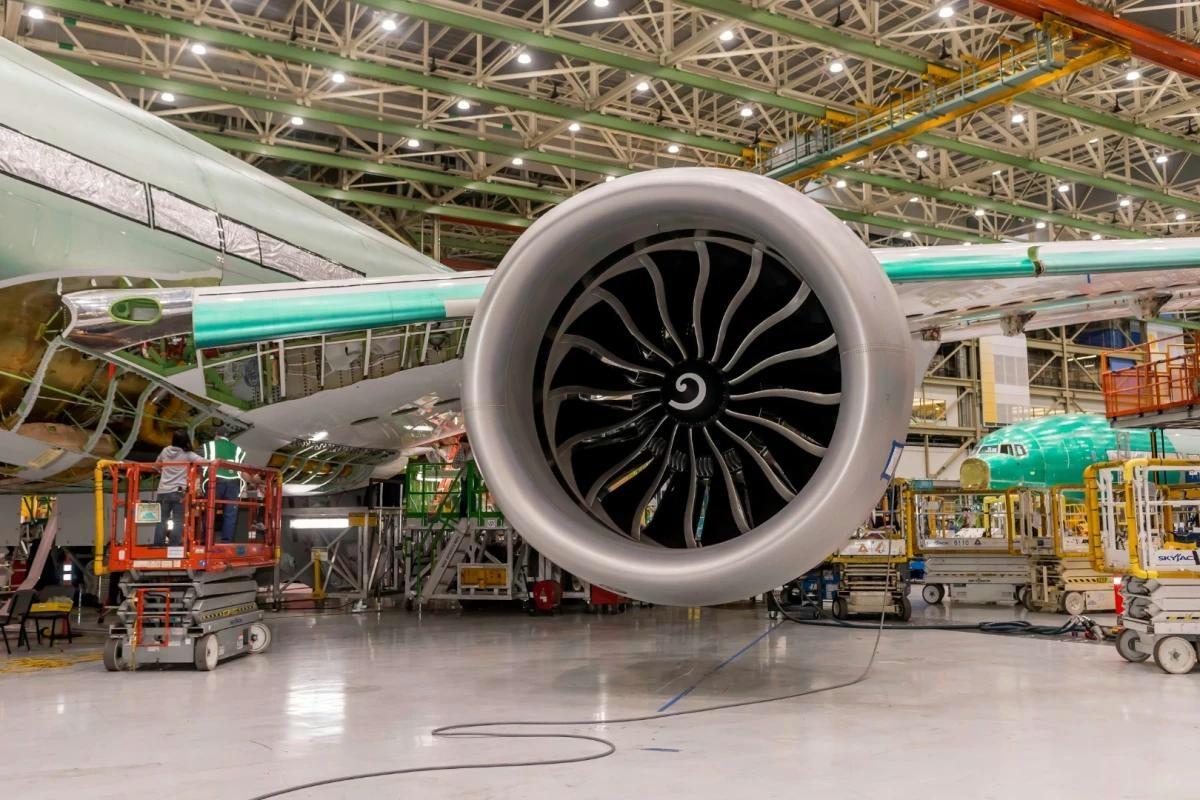
Boeing Identifies Durability Issue in 777-9’s GE9X Engines
Boeing Identifies Durability Issue in 777-9’s GE9X Engines
Durability Concern and Ongoing Investigation
Boeing has disclosed a durability issue with the GE Aerospace GE9X engines that power its 777-9 aircraft. Despite this development, company executives have affirmed that the problem will not affect the planned delivery of the first jets in 2027. Boeing is working closely with GE to investigate the issue, identify its root cause, and implement necessary corrective measures.
The announcement came during Boeing’s January 27 earnings call, where the company reported a $2.2 billion profit for 2025, driven by increased aircraft production and the acquisition of former supplier Spirit AeroSystems. Boeing’s CEO, Kelly Ortberg, emphasized that the issue was identified during a recent engine inspection and that certification flight testing continues unabated. “We don’t expect this to impact our delivery in 2027,” Ortberg stated, underscoring the company’s commitment to maintaining its schedule.
GE Aerospace has initiated an on-wing inspection program to support Boeing’s investigation, highlighting that safety and quality protocols remain central to the process.
Program Challenges and Certification Progress
The 777-9 program has encountered multiple technical challenges and increased scrutiny from the Federal Aviation Administration (FAA), resulting in significant delays. Previous engine-related setbacks include a five-month grounding of the test fleet in 2024 following the discovery of failed thrust links, which necessitated design modifications to address vibration issues. In 2022, flight testing was temporarily halted to resolve a temperature-related problem with the GE9X engine, while in 2019, durability concerns involving stator vanes in the high-pressure compressor contributed to further postponements.
Despite these obstacles, Boeing reports steady advancement in the 777-9’s certification flight-test program. In the fourth quarter of 2025, the FAA approved the commencement of the third phase of flight testing under the aircraft’s Type Inspection Authorization (TIA). This phase focuses on avionics, environmental control systems, and the auxiliary power unit. Ortberg noted that “overall, the aircraft and engine continue to perform well,” reflecting ongoing progress.
Market Response and Financial Performance
Market reaction to the latest engine durability issue has been relatively subdued, with Boeing’s assurance of maintaining its delivery timeline helping to stabilize investor confidence. Competitors such as Airbus have not commented on any comparable engine concerns affecting their aircraft.
Boeing’s financial results remain robust, with 2025 revenue reaching $89.5 billion, marking a 34 percent increase year-on-year. The company posted an $8.2 billion profit in the fourth quarter alone, supported by a 57 percent surge in revenue to $23.9 billion during that period.
While the newly identified GE9X durability issue adds to the challenges facing the 777-9 program, Boeing continues to assert that its delivery schedule remains on track. The company’s ongoing collaboration with GE aims to resolve the issue promptly, avoiding further delays.
American Airlines Plans to Receive New Aircraft Deliveries in 2026
Delta Flight Returns to Atlanta Airport Due to Engine Trouble

Samoa Airways Recovers Damaged DHC-6-300 Aircraft

Man Ingested by Frontier Airlines Engine Marks Denver’s Sixth Airfield Security Breach in Three Years

The Advantages and Disadvantages of Owning Versus Leasing a Private Jet
Former Spirit Employees Express Concerns Over AI Partnership With Google
China Certifies Pilotless Air Taxi for Export; Sri Lanka First Buyer

US Pilot Hourly Pay Ranges from $90 for Regional to $465 for Widebody Flights

NASA Chooses University Teams to Support Aviation Research

Airbus Conducts Freighter First Flight as Delivery Figures Influence Stock
