Image

Orchestrer les insights d’IA pour les transformer en actions

Inscrivez-vous dès aujourd’hui sur la liste d’attente d’AeroGenie !

Tendances

Categories

Boeing Opens New MRO Hangar in Shanghai
June 19, 2026By ePlane AI
Boeing Opens New MRO Hangar in Shanghai
0
0
Boeing Shanghai Aviation Services
MRO Hangar
Shanghai Pudong International Airport

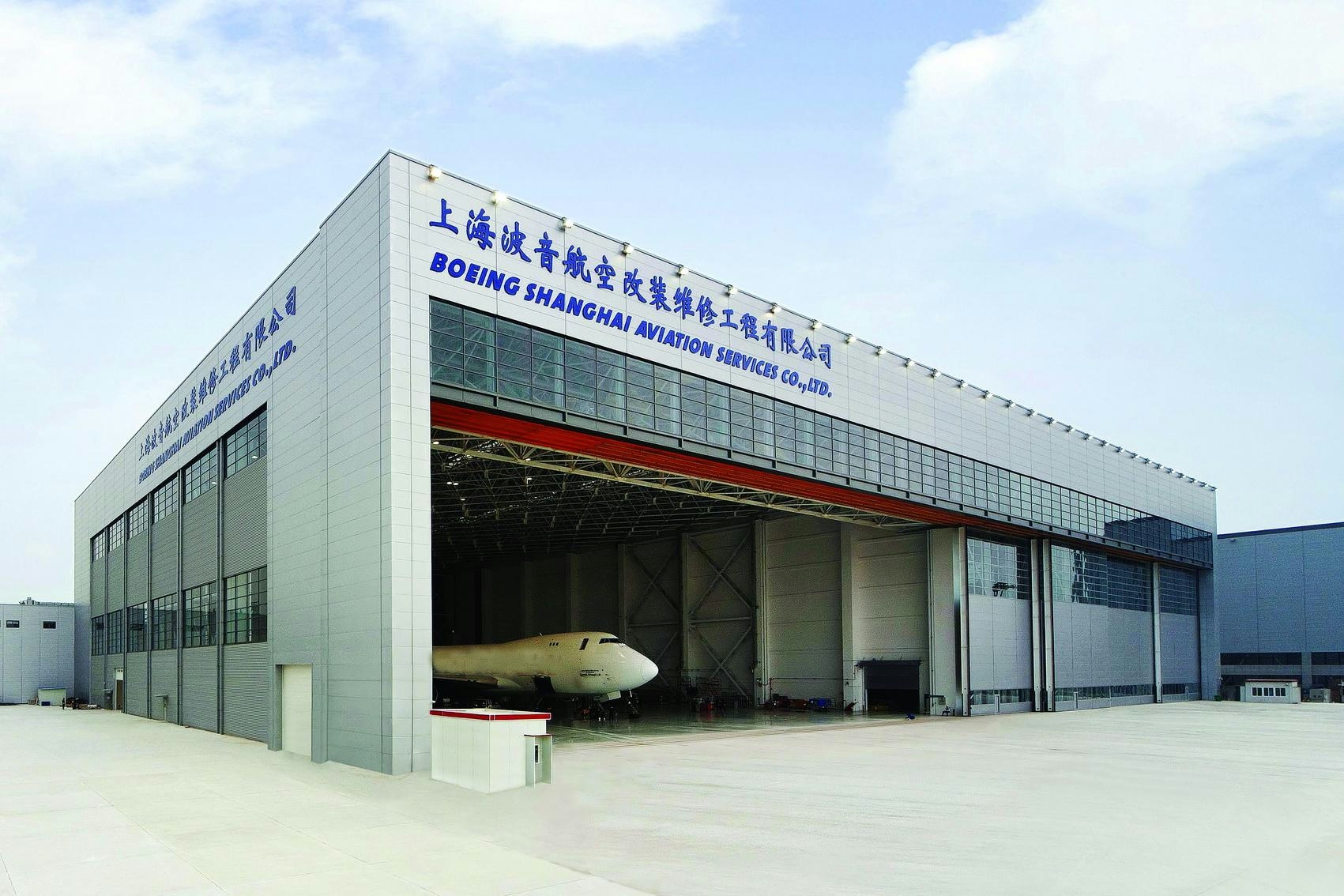
Boeing Opens China’s Largest Single-Span MRO Hangar in Shanghai

Boeing Shanghai Aviation Services, a joint venture between Boeing, Shanghai Airport Authority, and China Eastern Airlines, has officially opened a new maintenance, repair, and overhaul (MRO) hangar at Shanghai Pudong International Airport. Located within the Lin-gang Special Area of the China (Shanghai) Pilot Free Trade Zone, the facility is recognized as China’s largest single-span aviation maintenance hangar. This state-of-the-art complex significantly enhances Boeing Shanghai’s capacity, capable of accommodating up to four widebody and two narrowbody aircraft simultaneously.

Expanded Capabilities and New Contracts

Since its establishment in 2006, Boeing Shanghai Aviation Services has specialized in base maintenance for Boeing’s 787, 777, 767, and 737 aircraft families, alongside component repairs and aircraft modifications, including passenger-to-freighter conversions for the 737-800BCF. The new hangar’s expanded capacity arrives as the company secures fresh contracts, notably base maintenance agreements with Air Premia and Virgin Atlantic for 2024 and 2025. These agreements will see the carriers’ widebody fleets serviced at the Shanghai facility, underscoring Boeing’s growing footprint in the region.

Industry Challenges and Competitive Landscape

The inauguration of the new hangar occurs amid significant challenges facing the global MRO sector. A recent Oliver Wyman survey highlights widespread labor shortages, material supply constraints, and rising operational costs, all of which may affect the ramp-up and ongoing operations at Boeing’s Shanghai site. Furthermore, Boeing’s expansion is anticipated to intensify competition among MRO providers in the Asia-Pacific region. Industry analysts suggest that competitors may respond by expanding their own facilities or enhancing service offerings to maintain market share.

Despite these obstacles, Boeing Shanghai Aviation Services is positioned to leverage its enhanced infrastructure to meet the increasing demand for aircraft maintenance across China and the broader Asia-Pacific market, reinforcing its role as a key player in the evolving MRO industry.

More news
MIA, IAGi, Barich Inc, MWAA, and RNO Collaborate on Trusted Data Sharing and AI in Aviation

MIA, IAGi, Barich Inc, MWAA, and RNO Collaborate on Trusted Data Sharing and AI in Aviation

MIA, IAGi, Barich Inc, MWAA, and RNO Collaborate on Trusted Data Sharing and AI in Aviation Advancing Data Sharing in Aviation Data sharing is increasingly recognized as a critical component in the evolution of airport and airline operations. As the aviation sector embraces digital transformation and artificial intelligence (AI), the secure and real-time exchange of high-quality data across organizational boundaries is unlocking significant opportunities to enhance passenger experience, operational efficiency, and overall business performance. However, achieving these benefits requires more than just technological innovation; it necessitates the establishment of common standards, robust governance, and close collaboration among industry stakeholders. Members of the Future Travel Experience (FTE) Data Sharing Think Tank—including Miami International Airport (MIA), International Airlines Group (IAGi), Barich Inc., Metropolitan Washington Airports Authority (MWAA), and Reno-Tahoe Airport Authority (RNO)—recently convened to discuss the challenges and opportunities associated with trusted data sharing in aviation. The Importance of Trusted Data Maurice Jenkins, Chief Innovation Officer at Miami International Airport, underscores the foundational role of trusted data in enabling AI-driven aviation advancements. He explains that the primary objective is to create a seamless passenger journey from curb to gate and beyond. This goal depends on all stakeholders having access to a common operational picture. When trusted data is shared effectively among partners, it becomes possible to anticipate disruptions, optimize gate and stand allocation, improve passenger flow, reduce turnaround times, and provide travelers with more accurate and personalized information throughout their journey. Jenkins emphasizes that effective data sharing is not merely about transferring large volumes of information between organizations but about generating actionable intelligence. Success hinges on the availability of trusted, high-quality data that is standardized, governed, and shared with a clear purpose. While organizations produce vast amounts of data, its value is realized only when it is accurate, timely, interoperable, and consistently understood. Challenges and Collaborative Solutions The collaboration between MIA, IAGi, Barich Inc., MWAA, and RNO seeks to establish these trusted data foundations to support the future of aviation. Nonetheless, the path forward presents several challenges. High product costs, particularly in markets such as Japan, may impede the widespread adoption of new data-sharing technologies. Market skepticism regarding the reliability and security of shared data also poses a potential obstacle, while competitors may respond by launching similar initiatives or enhancing their own data security protocols. Moreover, the partnership must carefully navigate the complexities of data privacy and regulatory compliance. Ensuring that all shared information adheres to stringent legal and ethical standards requires not only technological solutions but also strong governance frameworks, agreed-upon standards, and a commitment to collaboration across organizational and national boundaries. The Think Tank members concur that when these elements align, data becomes a strategic asset that supports faster decision-making, improves situational awareness, and delivers superior outcomes for both passengers and operators. This topic will be further explored during the FTE Data Sharing Think Tank session at the 20th anniversary FTE Global event, scheduled to take place in Dallas, Texas, from September 8 to 10, 2026.
Pilots' Union Warns of Engine Shutdown Risk in Airbus Aircraft

Pilots' Union Warns of Engine Shutdown Risk in Airbus Aircraft

Pilots’ Union Raises Alarm Over Engine Shutdown Risk in Airbus Aircraft The British Airline Pilots’ Association (BALPA), representing flight crews from major carriers including British Airways, Virgin Atlantic, and EasyJet, has issued a serious warning regarding a latent mechanical defect affecting several Airbus aircraft models. The union’s concerns focus on a fault within the engine fire shutoff buttons, which could inadvertently trigger sudden engine shutdowns during flight, posing significant safety risks. Incident Background and Regulatory Response The issue first emerged following a December 2024 incident involving an Air New Zealand Airbus A320neo. Approximately 15 minutes after takeoff, the aircraft’s right-hand engine unexpectedly shut down while carrying 142 passengers and six crew members. The pilots declared a Mayday after discovering that one of the engine fire shutoff buttons—designed to isolate power to the engine in emergencies—had activated without any manual input. Subsequent investigations revealed that a retaining pin inside the button mechanism had been bent during installation, likely due to mishandling. Routine vibrations during flight caused the pin to dislodge, inadvertently triggering the button. In response, the European Union Aviation Safety Agency (EASA) issued Airworthiness Directive 2026-0134, mandating inspections of the engine fire shutoff buttons on affected Airbus models, including the A319, A320, and A321. Airlines are required to replace the module if a bent pin is detected, with a compliance deadline set for November 2027. BALPA, however, has expressed unease over this timeline, describing it as “understandably uncomfortable” given the severity of the defect. Broader Implications and Ongoing Concerns Despite regulatory measures, the problem appears to extend beyond the aircraft models currently covered by EASA’s directive. In February, a similar event occurred on a British Airways Airbus A350-1000 en route from Las Vegas to London Heathrow. While cruising over Halifax, Canada, the right-hand engine lost power unexpectedly. The cockpit’s Electronic Centralised Aircraft Monitor (ECAM) provided only brief alerts, failing to immediately indicate an engine failure. The crew was able to restart the engine only after resetting the fire switch, following guidance from maintenance control, allowing the flight to continue safely. BALPA has highlighted that the same type of engine fire panel is installed on both narrowbody and widebody Airbus aircraft, including the A350, which is not currently subject to EASA’s inspection directive. The union emphasized the latent nature of the defect, noting that “there is no ECAM cue until the moment it happens,” and that safe outcomes have so far depended heavily on effective crew response. This warning arrives amid broader industry concerns regarding engine reliability. The revelations may prompt increased scrutiny of Airbus aircraft and could potentially affect customer confidence. Competitors such as Boeing, which is contending with its own delivery delays and engine reliability challenges, may seek to leverage Airbus’s difficulties by underscoring their own safety records. Regulatory actions like EASA’s directive are expected to influence airline operations and market dynamics in the near future. Safety Considerations and Industry Impact The engine fire shutoff button on Airbus aircraft is intended solely for use in confirmed engine fire emergencies and does not automatically deploy fire suppressant systems. The recent incidents underscore the critical importance of rigorous inspection and maintenance protocols to safeguard passenger safety. As investigations continue, the aviation industry faces mounting pressure to address these mechanical vulnerabilities promptly to prevent future occurrences.
The Fate of Widebody Aircraft After Their Final Commercial Flight

The Fate of Widebody Aircraft After Their Final Commercial Flight

The Fate of Widebody Aircraft After Their Final Commercial Flight When a widebody aircraft completes its final commercial journey, its operational life does not simply conclude. Although it ceases to generate revenue through passenger or cargo transport, the aircraft remains a valuable asset. Comprising certified components, recyclable materials, and sophisticated engineering, these aircraft can continue to yield economic returns long after retirement. Thus, the end of commercial service marks the beginning of a new phase, driven predominantly by financial considerations. Economic Drivers of Retirement and Storage The ultimate disposition of retired widebody aircraft—such as the Boeing 747 or Airbus A340—is influenced by a range of factors including the aircraft’s age, maintenance record, demand for spare parts, opportunities for cargo conversion, and the residual value of its materials. Owners and leasing companies carefully evaluate these elements, often prioritizing financial outcomes over sentimental value. For many aircraft, the final passenger flight is merely the initial step in a carefully orchestrated retirement strategy. Following retirement, most widebodies are relocated to specialized storage facilities, commonly referred to as aircraft boneyards. These sites, frequently situated in arid regions like the US Southwest—including the Mojave Air and Spaceport in California, Southern California Logistics Airport in Victorville, and various locations across Arizona and New Mexico—offer optimal conditions for aircraft preservation. The low humidity and stable climate significantly reduce corrosion, enabling planes to be stored outdoors for extended periods. Internationally, Alice Springs in Australia has emerged as a notable storage hub, accommodating aircraft from carriers such as Singapore Airlines. During the COVID-19 pandemic, these boneyards assumed a critical role by housing hundreds of grounded aircraft worldwide. Typically, the final commercial flight is succeeded by a ferry flight operated solely by pilots, after which the aircraft undergoes thorough inspection, documentation, and parking. Despite their seemingly dormant state, storage operations are highly systematic, with technicians actively working to maintain and preserve the aircraft’s value. Preserving Value and Exploring Future Options Widebody aircraft may remain in storage for months or even years, incurring considerable costs during this period. Some are parked immediately after retirement due to strong demand for spare parts, while others await favorable market conditions. Throughout this phase, every decision is guided by the objective of maximizing financial return, as these aircraft can retain multimillion-dollar value even after commercial service ends. Not all stored aircraft are destined for dismantling. Some may be converted for cargo operations or potentially returned to service if market dynamics improve. However, such transitions involve significant challenges, including regulatory compliance, substantial upfront investment, and rigorous testing to ensure safety and operational efficiency. Industry Trends and Future Outlook Despite these complexities, market sentiment remains optimistic, particularly for modern, fuel-efficient widebodies like the Boeing 787. In response, manufacturers are investing heavily in the development of high-speed and ultra-efficient aircraft, intensifying competition within the industry. As global air travel continues to expand—especially in emerging markets—the demand for new, efficient aircraft is expected to grow. This ongoing evolution ensures that widebody aircraft, even after their final commercial flight, continue to hold a significant place in the dynamic global aviation landscape.
F-47 Set to Fly Three Years Before Engine Completion, Raising Concerns

F-47 Set to Fly Three Years Before Engine Completion, Raising Concerns

F-47 Set to Fly Three Years Before Engine Completion, Raising Concerns Unprecedented Development Timeline The engine of a fighter jet is fundamental to its overall performance and operational capabilities. Historically, aircraft manufacturers have integrated engines into their demonstrators prior to flight testing, a practice exemplified during the development of the F-22 Raptor. In that program, both Northrop Grumman’s YF-23 and Lockheed Martin’s YF-22 prototypes were each powered by two different next-generation engines—the Pratt & Whitney YF119 and the General Electric YF120—ensuring thorough evaluation before advancing. This dual-engine strategy is mirrored in the current US Air Force Next Generation Air Dominance (NGAD) program, albeit with a notable deviation. In March 2025, the US Air Force selected Boeing’s F-47 as the manned platform for its sixth-generation NGAD initiative. However, as of mid-2026, a final engine choice for the aircraft remains pending. Despite this, the F-47 is slated for its maiden flight in 2028, a full three years ahead of the anticipated completion of its intended next-generation Adaptive Cycle Engine. This accelerated timeline has elicited concern among defense analysts and industry experts regarding the aircraft’s reliability and operational readiness. Program Commitments and Industry Challenges The Air Force maintains its commitment to the 2028 flight target, emphasizing the advanced progress of the program and the close collaboration with industry partners. Officials contend that the F-47’s development benefits from lessons learned in previous fighter programs and ongoing technological advancements. Nevertheless, this approach marks a departure from the more cautious schedules traditionally observed in earlier X-plane and next-generation engine programs, which frequently encountered delays and protracted development periods. The F-22 Raptor, once regarded as the preeminent air superiority fighter upon its 2005 introduction, has seen its technological advantage erode in the face of evolving threats. The emergence of sophisticated integrated air defense systems and advanced adversary aircraft, such as China’s J-20, has heightened risks to US air assets. Although planned upgrades aim to sustain the Raptor’s relevance into the 2040s, its 1990s-era design imposes inherent limitations on further modernization, particularly in areas such as operational range, thermal management, and stealth maintenance. The NGAD Vision and Engine Innovation To overcome these challenges, the NGAD program seeks to deliver a comprehensive family of integrated next-generation systems, including the manned F-47 and unmanned Collaborative Combat Aircraft. Central to the F-47’s capabilities will be its Adaptive Cycle Engine, engineered to enhance fuel efficiency by approximately 25 percent, extend operational range, and provide advanced thermal management to support increasingly power-intensive sensors and avionics. GE Aerospace has been pioneering variable- and adaptive-cycle engine technologies since the 1980s, leveraging decades of research and development. Although GE’s early variable-cycle engine for the F-22 program demonstrated superior performance compared to its competitor, it was ultimately deemed too risky for deployment at the time. With technological maturity now achieved, the Air Force regards the Adaptive Cycle Engine as critical to achieving a generational leap in fighter performance. Risks and Oversight Concerns Despite these ambitious goals, the F-47’s aggressive development schedule has attracted scrutiny. Boeing, which also oversees the B-52 upgrade program, has encountered significant delays and cost overruns in that effort, raising questions about its capacity to meet the stringent deadlines associated with the F-47. These challenges underscore the inherent risks of the program’s accelerated timeline and highlight the necessity for rigorous oversight as development advances.
Airbus and Thales Awarded Contract to Replace SpainSat

Airbus and Thales Awarded Contract to Replace SpainSat

Airbus and Thales Awarded Contract to Replace SpainSat Military Satellite Airbus Defence and Space, in partnership with Thales Alenia Space, has secured a contract to develop a new military communications satellite for Spain. This collaboration, which also involves Leonardo, marks a significant step forward in their efforts to establish a major European space joint venture. SpainSat NG 3: A New Era in Military Communications On July 31, Airbus announced its selection by Spanish operator Hisdesat as the prime contractor for SpainSat NG 3, a geostationary satellite intended to provide secure communications for the Spanish military and allied forces. Airbus will be responsible for constructing the satellite and delivering its X-band communications payload, while Thales Alenia Space will supply the UHF and military Ka-band payloads. Scheduled for launch in the third quarter of 2030, SpainSat NG 3 is expected to enter service in early 2031. The satellite will offer extensive coverage across the Americas, Europe, Africa, and the Middle East, complementing the existing SpainSat NG 1, which extends its services as far east as Singapore. Although Airbus and Thales have not explicitly stated that SpainSat NG 3 will replace SpainSat NG 2, the new contract follows the failure of the latter. SpainSat NG 2, launched in October 2025, suffered a critical malfunction in January after being struck by a “space particle” during its supersynchronous transfer orbit. This damage rendered the satellite inoperable. Hisdesat’s majority owner, Indra Group, has confirmed plans to procure a replacement, with insurance expected to cover the associated costs. Airbus has indicated that SpainSat NG 3 will incorporate “technological enhancements” over previous models, promising greater operational agility, expanded bandwidth, and improved protection against jamming and electronic threats. However, the company has not disclosed whether specific design changes will address the vulnerabilities that led to the loss of SpainSat NG 2. Strategic Implications and Industry Context The SpainSat NG 3 project presents considerable technical challenges, particularly in integrating advanced payloads and ensuring robust defenses against electronic warfare. Despite these complexities, the market response has been largely positive. Industry experts view the project as a significant opportunity for Airbus and Thales, especially amid rising European government investment in defense and space capabilities. Concurrently, Airbus, Thales, and Leonardo are advancing their joint venture, known as Project Bromo, which aims to consolidate their space operations. During a July 31 earnings call, Leonardo CEO Lorenzo Mariani reported ongoing work on antitrust filings with European Union regulators, a process expected to continue through 2027. Mariani emphasized the companies’ commitment to creating a “space domain giant” employing over 20,000 people, while downplaying concerns about regulatory challenges by highlighting the sector’s complexity and the collaborative efforts of all parties involved. Project Bromo has elicited mixed reactions within the industry. Some European competitors have expressed concerns that the venture could diminish competition in the regional space sector, while others remain optimistic, citing robust growth in institutional markets and increased government spending. As Airbus and Thales proceed with SpainSat NG 3, the project is poised to play a pivotal role in enhancing Spain’s military communications infrastructure and influencing the broader trajectory of Europe’s space industry.
Somon Air Receives Its First 737 MAX Aircraft

Somon Air Receives Its First 737 MAX Aircraft

Somon Air Receives Its First 737 MAX Aircraft Somon Air has marked a significant milestone by taking delivery of its first Boeing 737-8, becoming the first airline in Tajikistan to operate the 737 MAX series. The aircraft, leased from Dubai Aerospace Enterprise (DAE), is the initial unit of two 737-8s planned to join the airline’s fleet as part of its broader strategy to modernize and expand its network. Fleet Expansion and Operational Strategy The newly acquired 737-8 will be deployed on short- and medium-haul routes spanning Central Asia, Europe, the Middle East, and Asia. With a seating capacity of up to 210 passengers and a maximum range of approximately 3,500 nautical miles (6,480 kilometers), the aircraft is expected to significantly enhance Somon Air’s operational efficiency. The airline anticipates that the addition of the 737-8 will support its planned route expansions, including future services to major international destinations such as London, Beijing, and Guangzhou. Boeing highlights that the 737 MAX series delivers a 20% reduction in fuel consumption and carbon emissions compared to earlier models, aligning with Somon Air’s objectives for sustainability and fleet renewal. Regulatory Challenges and Market Context The introduction of the 737 MAX comes amid ongoing industry scrutiny and regulatory challenges. The 737 MAX family, including the 737 MAX 10 variant that Somon Air also intends to acquire, has faced significant hurdles following previous safety concerns and global groundings. Notably, the MAX 10 has yet to receive certification from the U.S. Federal Aviation Administration (FAA), with Boeing projecting approval by the end of 2026. This delay poses potential risks to Somon Air’s operational timelines and future fleet planning. Market responses to the 737 MAX have been varied. While some carriers have shifted their focus toward alternative manufacturers such as Airbus or invested in the development of proprietary high-speed or ultra-efficient aircraft, others continue to demonstrate strong interest in modern, fuel-efficient models like the 737 MAX. Despite these challenges, demand for advanced, environmentally friendly aircraft remains robust, reflecting broader industry trends prioritizing sustainability and operational efficiency. As Somon Air integrates the 737-8 into its operations, the airline faces the dual challenge of capitalizing on the opportunities presented by the latest generation of Boeing aircraft while navigating evolving regulatory and market dynamics. This development underscores Somon Air’s commitment to modernization amid a complex and shifting aviation landscape.
IndiGo Launches New 11-Hour Nonstop Airbus A321XLR Flights

IndiGo Launches New 11-Hour Nonstop Airbus A321XLR Flights

IndiGo Launches 11-Hour Nonstop Airbus A321XLR Flights Amid Fleet Transition and Geopolitical Constraints IndiGo, India’s largest airline, is set to inaugurate one of the world’s longest nonstop flights operated by a narrowbody aircraft, deploying the Airbus A321XLR on its Mumbai to Amsterdam Schiphol route. This strategic move coincides with the airline’s phase-out of its short-term lease of Boeing 787-9 Dreamliners from Norse Atlantic, with the final 787 flights scheduled to conclude in October. The transition marks a pivotal moment in IndiGo’s evolving long-haul strategy as it anticipates the delivery of its own Airbus A350-900 widebodies beginning next year. Strategic Use of the Airbus A321XLR and Slot Retention IndiGo’s decision to operate the A321XLR on this route is primarily driven by the need to retain valuable landing slots at Amsterdam, which the airline secured as a new entrant. European slot regulations mandate that airlines utilize their slots at least 80% of the time to avoid forfeiture. To comply, IndiGo will operate daily flights using the 195-seat A321XLR, configured with 12 Stretch seats offering a 44-inch pitch (though not lie-flat) and 183 standard economy seats with a 31-inch pitch. While the aircraft does not feature seat-back entertainment systems, passengers will have access to streaming content on personal devices, a service expected to be in demand on this ultra-long route. The scheduled flight times are as follows: the outbound journey from Mumbai departs at 6:30 AM local time, arriving in Amsterdam at 1:00 PM after approximately 11 hours in the air. The return flight leaves Amsterdam at 2:00 PM, landing in Mumbai at 4:10 AM the following day, with a flight duration of around 9 hours and 40 minutes. Operational Challenges and Geopolitical Impact on Flight Routing The outbound flight’s duration, reaching up to 11 hours, will establish a new record for the longest nonstop operation by an A321XLR globally, surpassing previous durations achieved with the Boeing 787-9. This extended block time is largely attributable to ongoing geopolitical tensions and resultant airspace restrictions. IndiGo is unable to fly the most direct routes over Pakistan, Iran, Russia, or Ukraine, necessitating a detour over Saudi Arabia and Egypt before entering European airspace. This rerouting increases both flight time and operational costs, affecting fuel consumption and emissions, and potentially influencing IndiGo’s competitiveness on the route. The deployment of the A321XLR on this sector underscores IndiGo’s commitment to expanding its international presence despite these operational challenges. The airline’s plan to phase out Boeing 787 Dreamliners by 2025 reflects a broader shift in its long-haul fleet strategy, emphasizing cost efficiency and network flexibility. Industry analysts suggest that leveraging the A321XLR’s extended range and efficiency could provide IndiGo with a competitive advantage, particularly in maintaining critical European slots. Competitors, including Air India and emerging players such as the Adani Group, are expected to closely observe IndiGo’s approach. As the airline navigates complex airspace restrictions and prepares for the introduction of its A350 fleet, its adaptability will be essential to sustaining its leadership position in India’s rapidly evolving aviation market.
Awesome Cargo Completes First In-House Heavy Maintenance C-Check

Awesome Cargo Completes First In-House Heavy Maintenance C-Check

Awesome Cargo Completes First In-House Heavy Maintenance C-Check Awesome Cargo has reached a pivotal milestone by successfully completing its first heavy maintenance C-check entirely through its own Engineering & Maintenance team. This achievement marks a significant advancement in the airline’s technical capabilities and reflects its commitment to developing robust in-house maintenance operations. The maintenance was conducted under the supervision of Mexicana MRO and received official approval from Mexico’s civil aviation authority, underscoring the rigorous standards upheld throughout the process. Building In-House Expertise and Overcoming Challenges The completion of this comprehensive maintenance check demonstrates Awesome Cargo’s growing expertise and dedication to safety and quality. The airline highlighted the collective efforts of its engineers, technicians, inspectors, and planners, whose meticulous work ensured compliance with stringent safety protocols. “The capabilities to maintain your own fleet to the highest standards of safety, precision and discipline must be built. They cannot be leased. They must be earned,” the company stated, emphasizing the importance of cultivating internal technical proficiency. Executing such an extensive maintenance procedure in-house required overcoming significant challenges, including the acquisition and effective use of advanced equipment such as bogie sinks, wheelset changing devices, and cranes. This investment in both technology and workforce training positions Awesome Cargo to manage increasingly complex maintenance tasks independently, reducing reliance on external providers. Strategic Implications and Industry Impact Market analysts suggest that this development may enhance investor confidence in Awesome Cargo’s operational efficiency and safety management. Furthermore, the airline’s move could encourage competitors to strengthen their own maintenance capabilities, potentially driving innovation and improvements across the sector. Although specific details regarding the aircraft involved, the duration of the maintenance, and the full scope of the inspection were not disclosed, Awesome Cargo emphasized that this accomplishment is part of a broader, long-term strategy. The airline aims not only to support its expanding fleet but also to eventually offer maintenance services to other operators, signaling ambitions to become a regional maintenance provider. The company paid particular tribute to its technical workforce, stating, “This achievement belongs to the engineers who questioned every detail, the technicians who treated every task as if lives depended on it, the inspectors who refused to compromise, the planners who anticipated every challenge.” By completing its first in-house C-check, Awesome Cargo has taken a decisive step toward greater operational independence and technical excellence, laying a strong foundation for future growth in both fleet operations and maintenance capabilities.
Vallair Appoints Pilschikova as Head of Asset Trading

Vallair Appoints Pilschikova as Head of Asset Trading

Vallair Appoints Valentina Pilshchikova as Head of Asset Trading Vallair has announced the appointment of Valentina Pilshchikova as Director of Asset Trading, entrusting her with the leadership of the company’s aircraft and engine asset trading operations. Based in Luxembourg, Pilshchikova will spearhead initiatives to develop new business opportunities, strengthen relationships with customers and partners, and identify acquisition and sales prospects for aircraft and engines. She will also work closely with internal teams to deliver customized asset solutions tailored to client needs. Extensive Experience and Expertise Pilshchikova joined Vallair in 2018 as a Purchasing Administrative Officer and has since progressed through several key roles, including Material Sales & Market Analyst and Engine & Parts Trading Sales Manager. Bringing over 15 years of international commercial experience—more than seven of which are within the aviation sector—she combines a strong engineering background with commercial acumen. This blend of technical and business expertise positions her well to lead Vallair’s asset trading division. The division collaborates extensively with airlines, lessors, traders, maintenance, repair and overhaul providers (MROs), and other aviation stakeholders to optimize the value of aircraft and engine assets throughout their lifecycle. Pascal Parant, Chief Commercial & Marketing Officer at Vallair Group, emphasized Pilshchikova’s unique qualifications, stating, “Valentina has a special combination of technical and commercial awareness and she is ideally placed to help airlines maximize the value of their assets and provide flexible solutions that support their operations. For lessors and asset owners, she and her team combine technical expertise with market knowledge to help maximize the value of their investments.” Parant further highlighted Vallair’s commitment to being a reliable and responsive partner focused on building long-term relationships and delivering mutually beneficial solutions. Navigating a Competitive and Evolving Market Pilshchikova’s appointment comes amid intensifying competition and shifting dynamics within the asset trading sector. Competitors such as AFX have recently reported significant trading volumes and liquidity, potentially prompting enhancements in their trading capabilities and strategies in response to Vallair’s leadership changes. Industry trends also indicate a growing adoption of advanced technologies, exemplified by rival Arch’s investment in digital trading algorithms. This development suggests a broader movement toward technology-driven asset trading methods, which Vallair may need to embrace to sustain its competitive position. The regulatory environment is also evolving, with frameworks such as the Clarity Act, endorsed by American fintech firm Block, underscoring the increasing influence of regulation on asset trading operations. Additionally, political instability in regions like Israel, highlighted by the forthcoming election, contributes to market uncertainty that could affect Vallair’s strategic planning and risk management. As Pilshchikova assumes her new role, Vallair faces both significant opportunities and challenges in a rapidly changing sector. Her leadership will be pivotal in addressing competitive pressures, regulatory shifts, and market uncertainties while continuing to deliver value to clients and partners worldwide.
Spirit SE-1 After One Year: Production, Deliveries, and Future Plans

Spirit SE-1 After One Year: Production, Deliveries, and Future Plans

Spirit SE-1 After One Year: Production, Deliveries, and Future Plans One year following the launch of the Spirit SE-1, Spirit Engineering has demonstrated significant progress in both production and market reception. At the recent Oshkosh event, Ed Hicks of FLYER interviewed Steve Wood, President of Spirit Engineering, who provided an update on the aircraft’s development and the company’s strategic outlook. The Spirit SE-1 has garnered considerable attention, securing over 150 orders within its first year, underscoring robust demand in the light aircraft sector. Production and Customer Feedback Wood detailed the company’s efforts to streamline manufacturing processes in response to growing demand. He emphasized that Spirit Engineering has made substantial advances in scaling production capacity while maintaining stringent quality standards. “Our team is working hard to ensure timely deliveries while maintaining the quality standards our customers expect,” Wood stated. Deliveries to customers have commenced, with early pilot feedback highlighting the aircraft’s handling and performance as key strengths. A notable enhancement introduced during this period is a new bubble canopy, designed to improve pilot visibility and comfort. Wood noted that this feature was developed in direct response to customer input, adding, “The feedback on the bubble canopy has been overwhelmingly favorable.” Industry Challenges and Strategic Adaptation Despite these positive developments, Spirit Engineering faces challenges linked to broader industry dynamics. The intensified competition and rising costs within the global automotive sector—illustrated by recent strategic shifts at Volkswagen Group—have had a cascading impact on manufacturing industries, including aviation. In response, Spirit Engineering has refined its production processes and optimized capacity to maintain competitiveness in a rapidly changing environment. Wood acknowledged these pressures, stating, “We’re very aware of the pressures from both within and outside our industry. It’s crucial that we stay agile and efficient.” International Expansion and Future Priorities Looking ahead, Spirit Engineering is actively exploring opportunities for international expansion to diversify and grow its customer base. The company remains attentive to competitor activity and broader market trends, which continue to be influenced by global economic conditions and industry developments. Wood outlined the company’s priorities for the coming year, focusing on fulfilling existing orders, enhancing production efficiency, and expanding the Spirit SE-1’s international footprint. “Our focus is on delivering for our customers and ensuring the Spirit SE-1 remains at the forefront of innovation and value,” he concluded. As the Spirit SE-1 enters its second year, its strong order book and adaptive approach to industry challenges position it as a significant player in the light aircraft market.
line









