Image

AeroGenie — Votre copilote intelligent.

Posez n'importe quelle question. Analysez tout. Agissez instantanément.

Tendances

Categories

Boeing Outpaces Airbus in Orders for First Time Since 2018
January 17, 2026By ePlane AI
Boeing Outpaces Airbus in Orders for First Time Since 2018
0
0
Boeing
Airbus
Aircraft Orders

Boeing Outpaces Airbus in Orders for First Time Since 2018

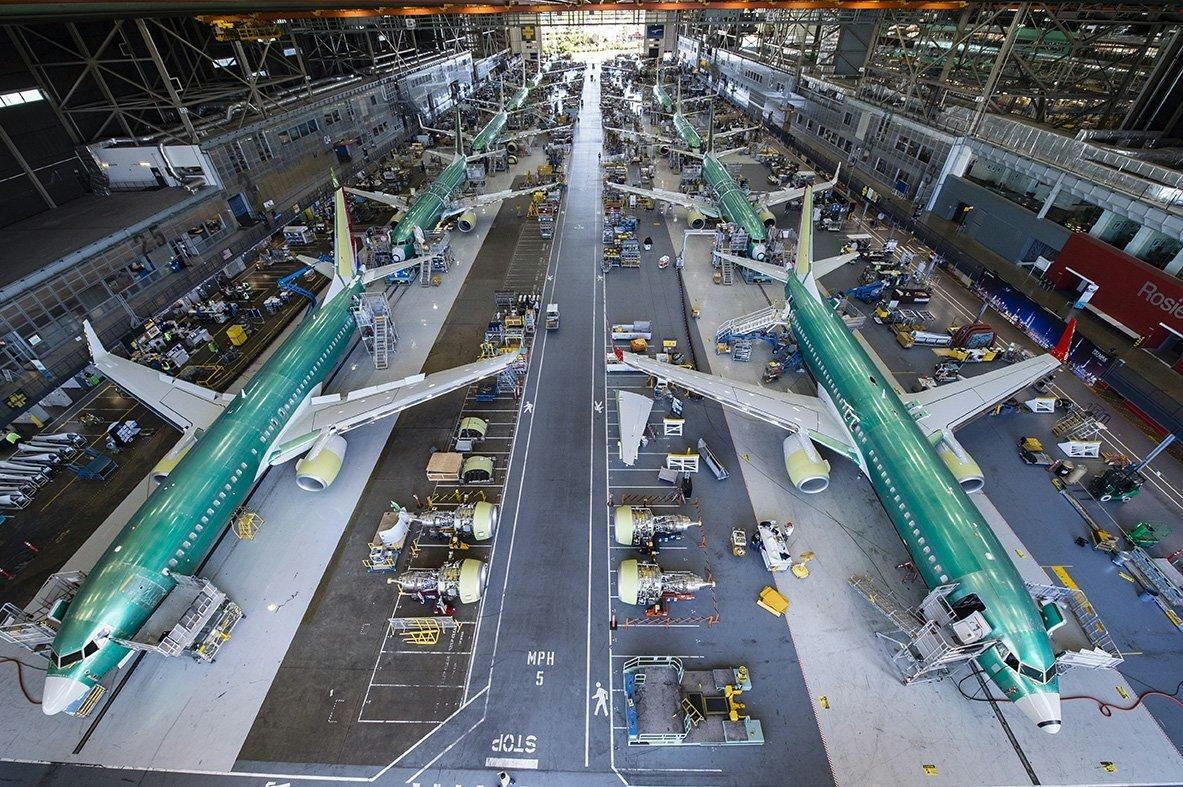
Boeing has overtaken Airbus in net aircraft orders for the first time since 2018, marking a significant development in the ongoing competition between the world’s two largest aerospace manufacturers. The American company secured net orders for 1,173 airplanes last year, surpassing its European rival and signaling renewed market confidence in Boeing’s efforts to recover from previous challenges.

Delivery Figures and Production Progress

Despite Boeing’s strong performance in securing orders, Airbus maintained its lead in aircraft deliveries. In 2023, Airbus delivered 793 aircraft, compared to Boeing’s 600. Nevertheless, Boeing’s delivery total represented its highest annual figure in seven years, highlighting the company’s progress in ramping up production after a period of setbacks. This improvement reflects Boeing’s commitment to enhancing production quality and meeting delivery schedules, which has been a critical factor in restoring customer trust.

Market Implications and Industry Outlook

Industry analysts have responded positively to Boeing’s recovery, emphasizing the company’s ability to deliver new single-aisle jets more rapidly than Airbus. This advantage could enable Boeing to sustain its momentum in new orders through 2026. While the response from Airbus remains uncertain, Boeing’s recent gains pose a notable challenge to the European manufacturer, which has dominated the market in recent years. The evolving dynamics between these two aerospace giants will continue to attract close attention as they compete for leadership in the global aviation sector.

More news
FTAI Aviation Ltd. Faces Decline Amid Market Challenges

FTAI Aviation Ltd. Faces Decline Amid Market Challenges

FTAI Aviation Ltd. Faces Decline Amid Market Challenges FTAI Aviation Ltd. has gradually attracted attention within the aviation sector, particularly among finance professionals and long-term investors, despite remaining largely unnoticed by the broader retail trading community. While it does not generate significant buzz on social media platforms such as TikTok, its presence in industry forums and earnings discussions highlights its position as a niche stock with potential upside, albeit accompanied by notable risks. Business Model and Market Position FTAI Aviation operates in the specialized domain of aircraft engines, parts, and leasing—a sector that, while essential, lacks the glamour of consumer technology or viral stocks. The company’s business model centers on acquiring aircraft engines, leasing them to airlines, and managing maintenance and parts sales. This approach positions FTAI as a vital supplier to airlines, providing indispensable services regardless of fluctuations in the broader travel industry. Whether airlines are expanding their fleets or implementing cost-cutting measures, they depend on FTAI’s products and services to maintain operational continuity. Recent trading activity indicates that FTAI Aviation has outperformed some traditional aviation companies, frequently appearing among notable stock gainers. Investors are attracted to its exposure to global air travel and the consistent demand for engine leasing and maintenance services, which are less susceptible to the fortunes of any single airline. While the company may not promise rapid speculative growth, its solid industrial fundamentals and recurring revenue streams have made it appealing to dividend-focused and value-oriented investors. Challenges and Market Uncertainties Despite its recent positive momentum, FTAI Aviation faces considerable challenges in the near future. Industry forecasts anticipate intensified competition and economic pressures by 2026, with major airlines such as Korean Air signaling increased market volatility and geopolitical risks. Additionally, internal divisions within the Federal Reserve and concerns over U.S. market valuations contribute to an uncertain environment that could adversely affect aviation stocks. Further complicating the outlook are regional instabilities in Latin America and the Caribbean, which introduce additional unpredictability for airlines and their suppliers. These factors may prompt airlines to postpone fleet upgrades or reduce leasing activities, potentially hindering FTAI’s growth prospects. FTAI Aviation Ltd. occupies a crucial, if understated, role within the aviation industry, offering investors exposure to a fundamental segment of the market. However, the company’s future performance will likely be tested by rising competition, global economic volatility, and evolving market dynamics. For investors, FTAI represents a measured opportunity grounded in steady fundamentals but shadowed by the possibility of disruption as the aviation landscape continues to change.
Mosquito Aircraft Engine Run Demonstrated in Kelowna

Mosquito Aircraft Engine Run Demonstrated in Kelowna

Mosquito Aircraft Engine Run Demonstrated in Kelowna A Historic Moment at the KF Centre for Excellence On January 16, Kelowna’s KF Centre for Excellence hosted a remarkable event as a restored de Havilland Mosquito bomber’s engines were run live for the public. This rare demonstration attracted aviation enthusiasts eager to witness the distinctive sound and power of one of the Second World War’s most celebrated aircraft. The Mosquito, one of over 7,000 originally produced for wartime service, is now among only an estimated five airworthy examples worldwide. The event highlighted not only the aircraft’s enduring legacy but also the painstaking restoration efforts undertaken by the KF Centre. Kelowna Member of Parliament and retired Royal Canadian Air Force officer Stephen Fuhr personally started the Mosquito’s twin engines shortly after 1 p.m., providing attendees with a unique opportunity to experience this engineering marvel firsthand. The demonstration underscored the Centre’s ongoing dedication to preserving Canada’s rich aviation heritage. Aerospace Industry Context and Future Outlook While the Mosquito’s engine run captivated the audience, it occurred against a backdrop of significant shifts within the aerospace sector. The industry faces increasing market volatility in 2026, influenced by internal divisions within the Federal Reserve and economic indicators that some analysts interpret as a “silent warning.” These economic challenges are impacting not only historic aircraft preservation but also contemporary engine manufacturers such as CFM International and IAE V2500, who are contending with similar pressures. Moreover, the aerospace landscape is being reshaped by rapid technological advancements. This year is expected to witness the rise of electric air taxis, autonomous combat aircraft, and the integration of safety-critical artificial intelligence systems. These innovations promise to redefine industry standards and may have profound implications for both aircraft engine manufacturing and restoration projects in the years ahead. As the Mosquito’s engines echoed through the KF Centre, the event served as a poignant reminder of the achievements of the past alongside the evolving challenges and opportunities that lie ahead for aviation. Further information about the Mosquito and the KF Centre for Excellence’s ongoing work is available at KFcentre.ca.
TransDigm to Acquire Victor Sierra Aviation in $2.2 Billion Jet Parts Deal

TransDigm to Acquire Victor Sierra Aviation in $2.2 Billion Jet Parts Deal

TransDigm to Acquire Victor Sierra Aviation in $2.2 Billion Jet Parts Deal TransDigm Group has entered into a definitive agreement to acquire Jet Parts Engineering and Victor Sierra Aviation Holdings from private equity firm Vance Street Capital for $2.2 billion. This transaction is poised to significantly reshape the aerospace aftermarket sector by combining two independent platforms that specialize in proprietary parts, repairs, and engineering-driven solutions across commercial, regional, cargo, and general/business aviation markets. Strategic Expansion of Aftermarket Capabilities Jet Parts Engineering, headquartered in Seattle, is renowned for designing and manufacturing aftermarket aerospace solutions, including proprietary OEM-alternative parts and repairs widely used by airlines and maintenance, repair, and overhaul (MRO) providers. The company is a leading supplier of Parts Manufacturer Approval (PMA) components across major commercial aerospace platforms, underscoring its critical role in the industry. Victor Sierra Aviation, based in Baldwin City, Kansas, serves the general and business aviation sectors with a portfolio of proprietary PMA and aftermarket parts. Its operations encompass well-known brands such as McFarlane Aviation, Tempest Aero Group, and Aviation Products Systems, supported by multiple service and repair stations that enhance its market reach and technical capabilities. Since initiating partnerships with Jet Parts in 2018 and Victor Sierra in 2021, Vance Street Capital has collaborated closely with each company’s founders. The firm has focused on investing in talent, processes, and systems to fuel growth, while expanding intellectual property, specialized parts, and repair-service offerings through enhanced engineering resources and facility upgrades. TransDigm, a global supplier of highly engineered aerospace components, views this acquisition as a strategic move to broaden its aftermarket presence. The company’s existing portfolio includes a diverse range of aircraft parts and subsystems such as actuation systems, ignition components, pumps, valves, motors, generators, safety restraints, and specialized electronics. Integrating Jet Parts and Victor Sierra will augment TransDigm’s capabilities and product breadth in the commercial aerospace aftermarket. Market and Regulatory Considerations The transaction is expected to undergo regulatory scrutiny due to the scale and complexity involved in merging two established aftermarket platforms. Despite these challenges, the market has responded positively, with investors recognizing the acquisition as a significant step in reinforcing TransDigm’s competitive position. Industry analysts suggest that this move may prompt competitors to pursue similar acquisitions or enhance their product offerings to maintain market share. Financial and legal advisory roles in the deal have been filled by Harris Williams as financial advisor and Paul Hastings as primary legal counsel to Jet Parts, Victor Sierra, and Vance Street Capital. Baker Hostetler is serving as legal advisor to TransDigm. Perspectives from Leadership Nic Janneck, Partner at Vance Street Capital, reflected on the partnership, stating, “It has been a privilege to partner with Jet Parts and Victor Sierra. Both organizations exist because of founders who built exceptional businesses, and that founder mindset has driven everything we’ve been successful in accomplishing together over the last 8 years.” Will Robinson and Nick Lindholm, Vice Presidents at Vance Street Capital, emphasized the companies’ engineering focus: “Jet Parts and Victor Sierra were built on a foundational commitment to solving engineering problems for their customers. Maintaining that focus has driven their exceptional growth, success and reputation in the aftermarket.” Scott Still, CEO of Victor Sierra, expressed optimism about the future under TransDigm’s ownership: “We look forward to joining TransDigm and believe this transaction further positions our companies well for long-term success. TransDigm’s deep aerospace expertise, operating philosophy and focus on highly specialized, engineered products make it an ideal home for our businesses.” Anu Goel, CEO and Founder of Jet Parts, highlighted the role of Vance Street Capital in the companies’ development: “Vance Street was fully aligned with our team on strategy and enabled us to significantly expand our footprint, breadth of products, brands and engineering capacity to keep our customers flying. Their strategic vision, support and resources have been integral to our development, all while maintaining the entrepreneurial culture that our employees have built over several decades.” The acquisition remains subject to customary closing conditions and regulatory approvals.
How AI Is Helping American Airlines Hold Flights For Passengers

How AI Is Helping American Airlines Hold Flights For Passengers

How AI Is Helping American Airlines Hold Flights for Passengers Leveraging Artificial Intelligence to Improve Connections Artificial intelligence (AI) is increasingly being integrated into the airline industry, with American Airlines adopting the technology to enhance the travel experience for passengers facing tight connections. Unlike some carriers, such as Riyadh Air, which utilize AI primarily for operational functions like air traffic management and predictive maintenance, American Airlines has developed an in-house AI system focused on a direct passenger benefit: the ability to delay departing flights to accommodate travelers arriving late on connecting flights. Introduced in May 2025, this AI-powered system continuously analyzes real-time data to identify departing flights with connecting passengers at risk of missing their onward journey. When the system determines that a brief delay will not significantly disrupt the airline’s overall schedule, it recommends holding the flight to allow these passengers to board. This innovation aims to alleviate the stress and inconvenience associated with missed connections, which often lead to complicated rebooking processes and disruptions to lodging or ground transportation arrangements. Previously, decisions to hold flights for connecting passengers were made manually by in-flight staff in coordination with ground crews, a process constrained by limited speed and scope. The AI system automates and accelerates these decisions, enabling American Airlines to manage a greater number of connections more efficiently. Additionally, it provides real-time updates to customers through the airline’s mobile application, enhancing communication and transparency. Implementation and Operational Challenges American Airlines initially deployed the system at its Dallas-Fort Worth hub, with plans to extend its use to Charlotte Douglas International Airport (CLT) and other major hubs. The airline has emphasized that the primary objective is to reduce missed connections without causing widespread delays across its network. However, integrating AI into flight operations introduces new complexities. The airline must carefully balance the benefits of accommodating late-arriving passengers against the risk of cascading delays that could disrupt the broader schedule. Furthermore, the financial implications of implementing and maintaining such advanced technology remain a consideration, with potential impacts on ticket pricing and operational budgets. Market responses have been varied. Many passengers welcome the improved service and reduced anxiety associated with tight connections, while some industry analysts express concerns about possible schedule disruptions and increased operational complexity. Competitors are closely monitoring these developments; major carriers like United Airlines are reportedly exploring similar AI-driven solutions to enhance their competitive positioning in an industry where customer experience is increasingly influenced by technological innovation. Broader Implications for the Aviation Industry The rapid adoption of AI in aviation also raises important environmental considerations. As airlines deploy more data-driven systems to optimize operations and improve service, overall energy consumption and greenhouse gas emissions have been on the rise. This trend presents a significant challenge for U.S. carriers striving to meet ambitious climate targets, underscoring the need to balance technological advancement with environmental responsibility. American Airlines’ initiative to hold flights for late-arriving passengers exemplifies how AI is reshaping air travel. This approach may herald a broader transformation in how airlines manage customer service and operational efficiency amid an increasingly complex and technology-driven landscape.
U.S. EXIM Bank Provides $15 Million Loan to Embraer’s Air Taxi Unit

U.S. EXIM Bank Provides $15 Million Loan to Embraer’s Air Taxi Unit

U.S. EXIM Bank Provides $15 Million Loan to Embraer’s Air Taxi Unit Financing to Support U.S. Supply Chain and Development The U.S. Export-Import Bank (EXIM), in partnership with the Private Export Funding Corporation (PEFCO), has extended a $15 million loan to Eve Air Mobility, the electric vertical takeoff and landing (eVTOL) air taxi subsidiary of Brazilian aerospace giant Embraer. This financing is intended to strengthen Eve’s U.S.-based supply chain by reimbursing the company for electric batteries and engineering services already procured from BAE Systems Inc., a critical American supplier responsible for the energy storage system in Eve’s forthcoming air taxi. Eve, which operates from both Brazil and Melbourne, Florida, clarified that the loan is a one-time reimbursement exclusively tied to U.S. activities and not linked to any future funding installments. Steve Brecken, a spokesperson for Eve, emphasized that the EXIM Bank and PEFCO financing is directly connected to the procurement of batteries and engineering solutions from BAE Systems, underscoring the strategic importance of this partnership. Strategic Partnerships and Industry Context EXIM Bank, as the official export credit agency of the United States, typically intervenes to support exporters when private sector financing options are limited. This loan comes amid a challenging financial environment for advanced air mobility companies, where competition is intensifying and investor confidence is cautious. While the infusion of capital may enhance Eve’s appeal to investors, broader industry challenges—such as anticipated increases in aviation insurance costs in 2026—could moderate enthusiasm. Eve’s supplier network is extensive and includes notable companies such as Beta Technologies for electric pusher motors, Nidec Corporation for propulsion systems, Thales for sensors and computing, Honeywell for guidance and navigation, Garmin for its G3000 Integrated Flight Deck, Crouzet for pilot controls, Aciturri for wing structures, and Duc Hélice Propellers for rotors. The collaboration with BAE Systems dates back to 2021, when BAE invested $10 million in Eve and began exploring a defense variant of the eVTOL in conjunction with Embraer Defense and Security. In 2022, BAE signed a nonbinding agreement to potentially order up to 150 Eve aircraft. Eve highlighted that incorporating BAE Systems’ batteries into the overall eVTOL sales and export package simplifies procurement for international customers by offering a comprehensive and integrated solution. Progress in Aircraft Development and Future Plans The $15 million loan is expected to mitigate risks associated with Eve’s aircraft development and testing programs. In December, Eve marked a significant milestone with the maiden flight of a full-scale, nonconforming prototype at its São Paulo facility. This remotely piloted hover flight, lasting approximately one minute, yielded valuable data on airframe design, control systems, and propulsion. The prototype also validated the integration of Embraer’s fifth-generation fly-by-wire system, a technology shared with Embraer’s E2 commercial jets and KC-390 military transport aircraft. Looking ahead, Eve plans to construct six conforming prototypes to support a comprehensive flight test campaign. Additional hover flights are scheduled before the aircraft transitions to wingborne forward flight, a critical capability that distinguishes eVTOL aircraft. Pilot training will be conducted through a joint venture between Embraer and CAE, ensuring operational readiness. As Embraer advances its air taxi ambitions, the company is simultaneously focusing on enhancing the A-29 Super Tucano’s counter-unmanned aircraft system capabilities and has issued a robust executive jet delivery forecast. This positions Embraer favorably in a business jet market that experienced significant downturns in 2025. Meanwhile, competitors in the air taxi sector may seek similar financial support or accelerate research and development efforts to keep pace with Eve’s progress.
Autonomous Helicopter Completes Maiden Flight

Autonomous Helicopter Completes Maiden Flight

Autonomous Helicopter Proteus Completes Maiden Flight, Advancing UK Defense Capabilities The United Kingdom has achieved a significant milestone in defense technology with the successful maiden flight of Proteus, the country’s first autonomous full-size helicopter. Developed by Leonardo in Yeovil under a £60 million program commissioned by the Royal Navy, Proteus is designed to unlock the potential of uncrewed aerial systems, marking a pivotal advancement in British military innovation. A Historic Flight and Its Strategic Significance Proteus completed its inaugural flight at Predannack Airfield in Cornwall after extensive ground trials at Leonardo’s Yeovil facility. During this initial mission, the helicopter operated its flying controls independently, without human intervention, executing a short test routine that validated the performance of its systems, sensors, and engines. This autonomous operation underscores the aircraft’s capability to function reliably in complex environments. Luke Pollard, Minister for Defence Readiness and Industry, hailed the event as a proud moment for British innovation, emphasizing the critical role autonomous systems will play in national security. Pollard highlighted that such technologies are essential for protecting maritime domains while minimizing risks to personnel. Commodore Steve Bolton further elaborated on the broader implications, stating that Proteus represents the Royal Navy’s commitment to technological leadership, enhancing operational effectiveness amid increasingly complex maritime threats. Nigel Colman, managing director at Leonardo, expressed satisfaction with the collaboration, noting the company’s unique position as the UK’s sole end-to-end rotary wing manufacturer and the significance of seeing Proteus take flight for the first time. Challenges and Industry Implications While the successful flight marks a technological breakthrough, it also introduces new challenges for the defense sector. Regulatory complexities remain a significant hurdle, with internal divisions within regulatory bodies and fluctuating market valuations posing potential risks to sector stability. The emergence of Proteus is likely to intensify competition, prompting other defense programs such as the U.S. Army’s Future Long-Range Assault Aircraft and the U.S. Air Force’s Collaborative Combat Aircraft initiatives to accelerate their autonomous platform developments. Market responses to these advancements are expected to be mixed, with heightened sensitivity to policy shifts. Changes in tariffs, interest rates, or economic indicators could amplify market volatility, reflecting the broader financial impact of innovation within the defense industry. Proteus’s maiden flight not only demonstrates the UK’s commitment to maintaining technological leadership in defense but also signals evolving strategic priorities and market dynamics within the global defense landscape.
GE Aerospace Restructures Commercial Engine Leadership as Stokes Announces Retirement

GE Aerospace Restructures Commercial Engine Leadership as Stokes Announces Retirement

GE Aerospace Restructures Commercial Engine Leadership Amid Executive Transition GE Aerospace has announced a significant reorganization of its commercial engine leadership, appointing Mohamed Ali as President and CEO of an expanded Commercial Engines and Services (CES) division. This restructuring, unveiled on January 15, consolidates the entire lifecycle of the company’s commercial engine business—including engineering, supply chain, manufacturing, and aftermarket services—under Ali’s unified leadership. The move merges the previously separate CES and Technology & Operations (T&O) teams, aiming to streamline operations and enhance alignment between new engine production, service maintenance, product safety, and quality control. Leadership Transition and Strategic Realignment The leadership overhaul coincides with the planned retirement of Russell Stokes, a 29-year veteran of GE, who will remain with the company through July 2026 to facilitate a smooth transition. Stokes has been instrumental in driving operational transformations and played a key role in establishing GE Aerospace as an independent entity. CEO Lawrence Culp acknowledged Stokes’s contributions in laying the company’s operational foundation and described Ali’s extensive experience in both technology and customer-facing roles as an ideal fit for the expanded leadership position. In a related development, GE Aerospace appointed Jason Tonich as Chief Commercial Sales & Customer Officer. Tonich will oversee a consolidated sales team and report directly to CEO Larry Culp. This change is intended to bring customer relations closer to the executive level and better integrate sales efforts with the company’s broader operational strategy. Market Context and Outlook The restructuring occurs amid heightened market interest in GE Aerospace, driven by strong demand for commercial jet engines and aftermarket services. The company’s stock has reached record levels, trading around $317 as of December 23, 2025, supported by increased engine production and a steady influx of new orders. Analysts highlight that any incremental increases in production from Airbus and Boeing could translate into higher engine shipments and additional services revenue, contingent on maintaining supply chain stability. Notably, recent agreements such as GE Aerospace’s contract with Emirates to supply 130 GE9X engines for 65 Boeing 777-9 aircraft have reinforced the company’s market position. Nonetheless, analysts caution that ongoing supply chain challenges and other operational risks remain critical factors to monitor. These leadership changes precede GE Aerospace’s upcoming fiscal report, with fourth-quarter and full-year 2025 earnings scheduled for release on January 22.
Shifts in Maintenance, Repair, and Overhaul in the Asia-Pacific Region

Shifts in Maintenance, Repair, and Overhaul in the Asia-Pacific Region

Shifts in Maintenance, Repair, and Overhaul in the Asia-Pacific Region As airline fleets across the Asia-Pacific (APAC) region continue to expand, the Maintenance, Repair, and Overhaul (MRO) sector is confronting mounting pressures and evolving challenges. Martynas Grigas, chief executive of FL Technics Indonesia and Avia Management Group Asia (AMGA), outlines emerging capability gaps, shifting investment priorities, and operational changes as the industry adapts to these new realities. Engine Maintenance: Addressing Critical Capability Gaps Engine maintenance remains a dominant concern within the APAC MRO landscape, particularly regarding LEAP and PW1100G engine models, which continue to account for a significant share of shop visits. Grigas identifies rapid top-case engine maintenance and light-fix engine work on narrowbody fleets as the most overlooked capabilities that regional MRO providers must develop by 2026 and beyond. He emphasizes the critical importance of performing these repairs locally to avoid the logistics delays and extended downtime associated with reliance on overseas facilities. In response, FL Technics Indonesia is preparing to launch a dedicated top-case engine maintenance facility in 2027. This initiative aims to provide localized, short-cycle recovery options that reduce unnecessary shop inductions and enable faster engine turnarounds. With narrowbody fleets projected to grow through 2030, establishing this capability within the APAC region is expected to enhance fleet availability and operational resilience, thereby offering regional MROs a distinct competitive advantage. Operational Efficiency: The Value of Infrastructure and Process While recent approvals for component repairs on aircraft such as the B737 MAX and A320neo have garnered attention, Grigas highlights the company’s new Bali hangar as the asset delivering the most significant operational value to customers. He notes that predictable slot access, efficient induction processes, and the facility’s strategic location have proven more critical to operators than any single new repair approval. The Bali facility incorporates advanced docking systems, optimized tool layouts, and streamlined workflows, enabling consistent turnaround times even during peak periods. Airlines, particularly ACMI and leisure carriers, utilize Bali as a stable and uncongested hub for scheduled maintenance checks, which reduces ferry times and minimizes operational disruptions. Furthermore, the ability to synchronize crew rotations with maintenance events at this location has emerged as a practical advantage, further enhancing operational efficiency. Enhancing Efficiency Through People, Processes, and Supply Chain Management As Southeast Asian operators demand faster turnaround times, Grigas underscores that personnel remain the sector’s most valuable asset in achieving efficiency gains. He stresses the importance of strong training programs, disciplined processes, and robust support frameworks in empowering staff to deliver exceptional results. However, he also points out that supply chain management requires greater attention to uphold agreed turnaround times, noting that digital planning tools alone cannot compensate for delays caused by parts shortages. Market Pressures and Strategic Industry Responses The APAC MRO sector is also grappling with constrained powerplant markets and limited availability of used serviceable materials and parts. These challenges are driving up engine maintenance costs for airlines and prompting pushback against rising part prices from original equipment manufacturers (OEMs). In response, some carriers are investing in developing in-house MRO capabilities to bolster operational resilience and exert greater control over maintenance expenses. Looking forward, industry trends suggest a growing emphasis on supply chain resilience, expanded in-house MRO development, and increased demand for connectivity within the aviation aftermarket. As the region’s fleets continue to grow and operational demands intensify, the ability to adapt swiftly and invest strategically in both human capital and infrastructure will be essential for maintaining a competitive edge in the APAC MRO sector.
Boeing Warned of MD-11 Engine Bearing Risk Years Before UPS Crash

Boeing Warned of MD-11 Engine Bearing Risk Years Before UPS Crash

Boeing Warned of MD-11 Engine Bearing Risk Years Before Deadly UPS Crash The US National Transportation Safety Board (NTSB) has identified a progressive fatigue failure in a critical engine pylon bearing as the cause of the fatal crash of a UPS-operated McDonnell Douglas MD-11 in November 2025. The catastrophic engine separation occurred during takeoff at Louisville’s Muhammad Ali International Airport, resulting in at least 12 fatalities. This revelation has raised significant concerns regarding the adequacy of inspection protocols, manufacturer guidance, and regulatory oversight in preventing such a disaster. Early Warnings from Boeing Boeing had flagged potential issues with the MD-11’s spherical bearing race—the component securing the engine to the wing—as early as 2011. In a service bulletin issued that year, the manufacturer documented four prior bearing failures across three different aircraft. Although none of these incidents had led to safety events, Boeing recommended enhanced inspections and maintenance focused on lubrication and visual checks. Notably, the bulletin did not call for replacement of the bearing assemblies nor did it classify the component as safety-critical. This guidance, now central to the NTSB’s investigation, stopped short of advocating for more intrusive inspections or a redesign of the bearing. Investigators are scrutinizing whether Boeing’s risk assessment and the resulting inspection regime sufficiently accounted for the bearing’s critical role in the aircraft’s structural integrity. Design Legacy and Unanticipated Failure Mode The MD-11’s engine mount design has been in service for decades and was not previously regarded as a safety-of-flight critical item. While wear and corrosion in pylon bearings are recognized maintenance concerns for aging widebody aircraft, the specific progressive fatigue failure identified by the NTSB had not been considered a direct threat to engine retention. Examination of the wreckage revealed clear evidence of long-term deterioration, including beach marks and crack propagation features, indicating that the bearing had been weakening internally over an extended period before the final failure. This finding has shifted the investigation’s focus from a singular mechanical anomaly to the adequacy of long-term inspection and monitoring practices. Scrutiny of Inspection Regimes The MD-11’s maintenance program primarily relied on visual inspections of the pylon bearing assembly at prescribed intervals, consistent with manufacturer recommendations and regulatory requirements at the time. However, the fatigue cracking originated internally, in areas not visible without disassembly or specialized non-destructive testing techniques. The NTSB is now evaluating whether the inspection methods prescribed by Boeing and accepted by regulators were capable of detecting such internal degradation before it reached a critical stage. The investigation continues to focus on the failed aft mount assembly in the left engine pylon and whether earlier, more rigorous intervention could have averted the tragedy. As the inquiry progresses, its findings are expected to prompt a broader review of inspection standards and risk assessments for aging aircraft components throughout the aviation industry.
The Crucial Role of Aircraft Structures Alongside Engines

The Crucial Role of Aircraft Structures Alongside Engines

The Crucial Role of Aircraft Structures Alongside Engines When considering the factors that determine an aircraft’s reliability, engines and avionics often dominate the conversation. However, a comprehensive examination of aerospace history and manufacturing practices reveals that aircraft safety is deeply rooted in structural engineering and certified production processes. Beyond the visible thrust and navigation systems lies a complex framework of components and assemblies that, while largely unseen by passengers, are essential to the aircraft’s overall integrity and performance. The Importance of Structural Engineering in Aviation Aircraft structures are not merely passive frameworks; they are critical safety systems designed to withstand a variety of stresses and protect occupants under both normal and extreme conditions. Regulatory authorities and engineering experts consistently emphasize that every element—from fuselage sections to floor beams and attachment points—must maintain predictable performance throughout decades of service. This unwavering focus on structural integrity forms the foundation upon which all other aircraft systems depend, a principle that has guided aerospace manufacturing since the inception of commercial flight. Advances and Challenges in Aerospace Manufacturing The evolution of aircraft structures has closely paralleled developments in materials science. Early aircraft utilized wood and fabric, but the mid-20th century saw a transition to aluminum alloys, enabling pressurized cabins and higher operational altitudes. Modern aircraft incorporate a sophisticated blend of aluminum, titanium, and advanced composite materials to achieve optimal strength, weight, and durability. These material innovations are driven primarily by certification standards, fatigue management, and safety considerations rather than passenger comfort. Despite these advancements, the aerospace industry faces significant challenges. Ongoing supply chain disruptions affect the availability of high-grade alloys and composite materials essential for structural components. Trade restrictions, including tariffs and embargoes, further complicate access to critical resources for both airframes and engines. Additionally, a shortage of skilled machinists and inspectors, combined with lengthy qualification processes for even minor manufacturing changes, has led airlines to extend the operational life of older aircraft. This trend increases maintenance demands and places additional strain on structural reliability. Certification as the Cornerstone of Structural Production Certification processes are integral to aerospace manufacturing, shaping design and production from the earliest stages. Manufacturers must rigorously demonstrate that aircraft structures can endure operational loads, resist fatigue, withstand fire and heat, and maintain long-term durability. Companies such as STELIA Aerospace are frequently recognized in technical and procurement documentation for their certified production of aircraft structures and interiors, highlighting the industry’s emphasis on traceability and regulatory compliance over mere visibility. The Critical Role of Fasteners in Structural Integrity The reliability of aircraft structures also depends heavily on the quality and certification of fasteners. Aerospace fasteners—including bolts, rivets, and fittings—are carefully selected to meet specific load requirements and environmental conditions. An individual aircraft may contain millions of these components, each subject to stringent documentation and certification standards. The failure of even a single fastener category can jeopardize the entire structure, underscoring the importance of rigorous material specifications and traceability protocols. Documentation: The Foundation of Aviation Safety Throughout the history of aerospace, meticulous documentation has been as vital as the physical materials themselves. The value of every component is inseparable from its certification records, manufacturing data, and inspection histories, which accompany the aircraft throughout its operational lifespan. In an era marked by supply chain volatility and extended aircraft service lives, the discipline of structural engineering and comprehensive documentation remains the cornerstone of aviation safety.
line










