
Orchestrer les insights d’IA pour les transformer en actions

Tendances
Categories
Boeing Produced Only 16 Widebodies Last Quarter as Airbus Gains Ground with Delta
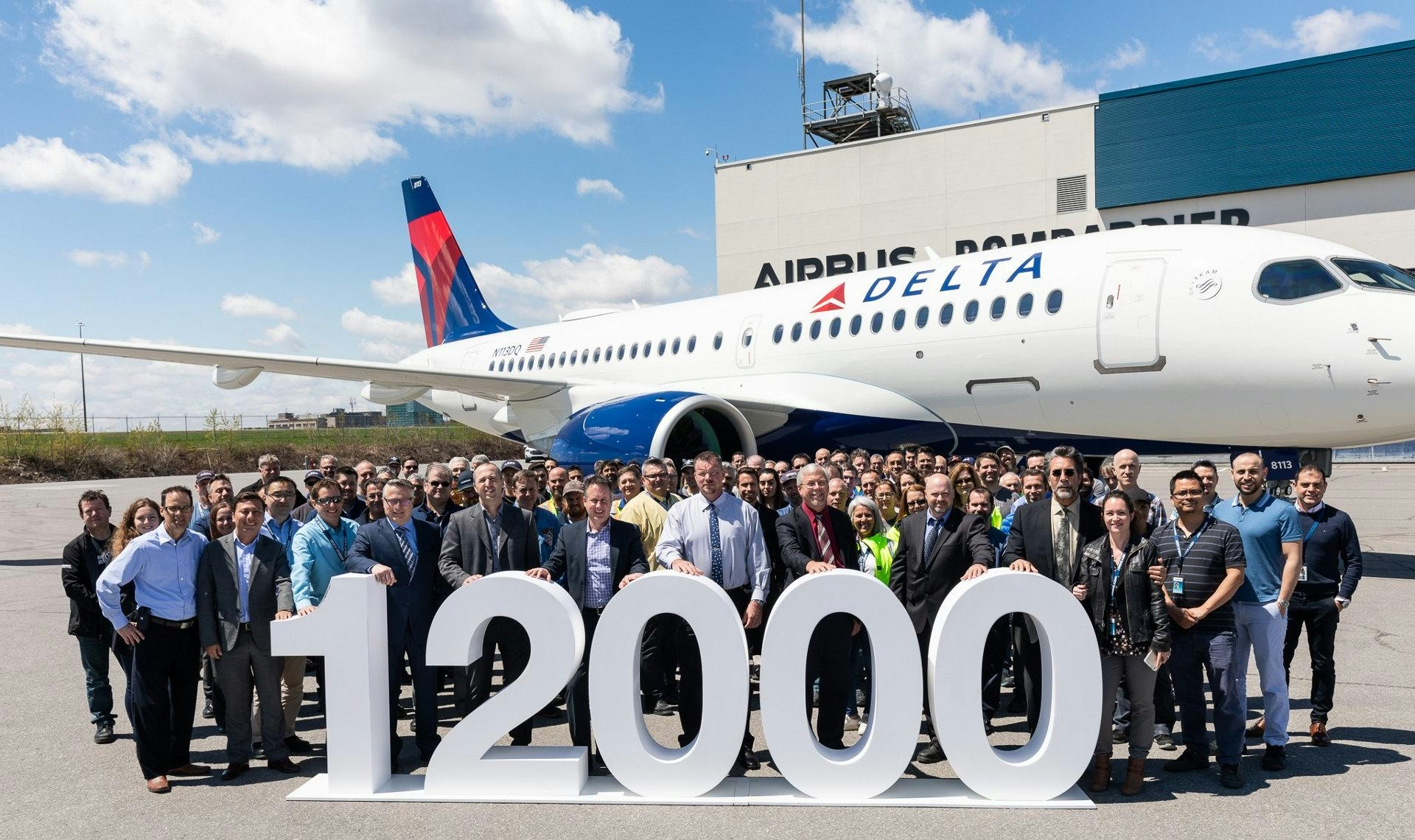
Boeing’s Widebody Production Declines Amid Airbus Expansion with Delta
Boeing’s production challenges have intensified, as reflected in its latest quarterly output figures. In the first quarter of 2024, the U.S. aerospace manufacturer produced only 83 aircraft, marking its lowest quarterly total since 2021. Of these, a mere 16 were widebody jets, consisting of three Boeing 767s and thirteen Boeing 787 Dreamliners. This significant reduction in widebody production contrasts sharply with Airbus’s growing market presence, particularly through substantial orders from major carriers such as Delta Air Lines.
Production Setbacks and Safety Concerns
Boeing’s recent production slump follows a turbulent period marked by safety and regulatory issues. In January 2024, the company faced a high-profile incident involving an Alaska Airlines 737 MAX 9, registered as N704AL, which experienced a door plug blowout. This event triggered a series of rigorous Federal Aviation Administration (FAA) safety audits. The resulting scrutiny has had a profound impact: Boeing’s aircraft deliveries fell by 47% compared to the previous quarter, and its stock price declined by 32% over the course of the year.
The decline in widebody output is particularly troubling given the sustained demand for these aircraft. The Boeing 767 remains in demand for freighter conversions and the KC-46 Pegasus tanker program. Meanwhile, deliveries of the 787 Dreamliner have been delayed due to fuselage certification challenges and supplier bottlenecks. These issues have compelled airlines such as United, All Nippon Airways, and Air India to extend the operational life of older Boeing 777-200ER and 767-300ER models beyond initial plans.
The Alaska Airlines incident further undermined confidence in Boeing’s operations. The National Transportation Safety Board’s final report, released in July 2025, attributed the root cause to inadequate training, guidance, and oversight of maintenance procedures within Boeing. The FAA was also criticized for failing to address systemic problems at Boeing’s Renton facility. Legal repercussions continue to unfold, with Alaska Airlines pilot Captain Brandon Fisher filing a $10 million lawsuit against Boeing, alleging wrongful blame for the incident.
Airbus Gains Momentum as Boeing Struggles to Recover
While Boeing contends with these internal challenges, Airbus is capitalizing on the opportunity to expand its market share. Delta Air Lines has placed significant orders for the Airbus A330neo and A350 models, strengthening Airbus’s position in the competitive U.S. market. In response, American Airlines is actively evaluating new widebody orders from both Boeing and Airbus to maintain competitiveness with Delta and United Airlines. On the international front, Qantas is negotiating potential orders for approximately 20 widebody jets, and EgyptAir aims to grow its fleet to 125 aircraft by 2030.
In an effort to counter Airbus’s aggressive production strategy, Boeing is exploring ways to increase its 737 jet output to around 70 units per month. However, ongoing quality control problems and production delays continue to hamper these efforts, raising concerns about Boeing’s ability to meet rising demand.
As Airbus consolidates its gains and airlines worldwide reassess their fleet strategies, Boeing faces mounting pressure to resolve its operational difficulties and restore confidence among customers and investors.

Etihad Airways Suspends Airbus A380 Flights on Key Route

Aditya Birla Group Seeks Approval for Aircraft Leasing in GIFT City

Qatar Airways Highlights Innovation and Connectivity at Arabian Travel Market 2026

Hong Kong's Five-Year Plan Includes Andrew Fan's Aircraft Parts Processing Hub Proposal

ACIA Aero Leasing Delivers ATR72-600 to Air Nostrum

RTX Appoints Jill Albertelli as Head of Pratt & Whitney

TAT Technologies Joins Beyond Aero Hydrogen Aircraft Program

AURAK Study Highlights Barriers to Air Taxi Adoption in Emerging Economies

Xiamen Air Selects Altitude for 787 Maintenance at Heathrow

Etihad and Swissport Extend Global Partnership
