
Orchestrer les insights d’IA pour les transformer en actions

Tendances
Categories
Boeing to Scrap Early 777X Jet from Everett Production Line
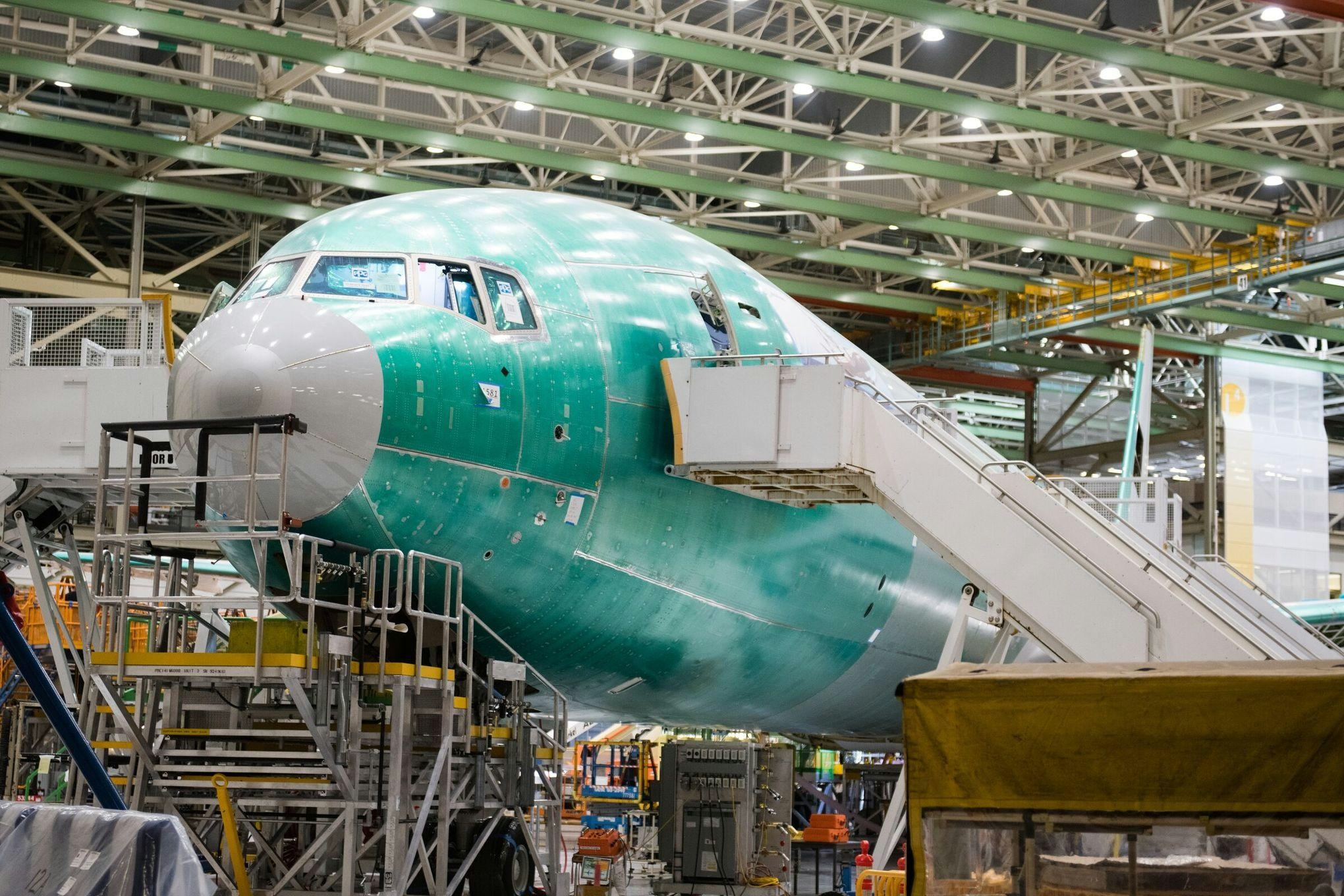
Boeing Scraps Early 777X Jet Amid Persistent Program Challenges
Boeing has officially dismantled WH007, the seventh 777-9 aircraft produced under its protracted 777X program, choosing not to complete the partially assembled jet. This decision, confirmed by Boeing Commercial Airplanes CEO Stephanie Pope ahead of the 2026 Farnborough Airshow, underscores the ongoing difficulties the company faces with design modifications and certification delays. Pope revealed that the choice to scrap WH007 was made some time ago and has already been incorporated into Boeing’s financial reporting.
The scrapping of WH007 symbolizes the broader challenges confronting Boeing’s 777X initiative. The company has included the abandoned aircraft in the $15 billion of accounting charges associated with the program, highlighting the extensive rework and redesign efforts necessary to bring the new widebody aircraft to market. Boeing stated that WH007 was dismantled following industry best practices for recycling, and no other early 777X airframes have been scrapped to date.
Rationale Behind Abandoning WH007
Boeing anticipated that its earliest 777X jets would require substantial modifications as the aircraft’s design and certification requirements evolved. This process, known as “change incorporation,” involves applying updates tailored to each aircraft depending on its stage of assembly. CEO Stephanie Pope explained that Boeing continuously evaluates the cost of implementing these changes against the value and capabilities of the finished product, as well as customer expectations. While some early jets remain viable candidates for rework, WH007 was ultimately judged not worth completing.
The rework process is currently underway at Boeing’s Everett, Washington facility, managed by a dedicated team separate from the standard 777X production line. CEO Kelly Ortberg has indicated that approximately 30 aircraft will undergo this extensive rework, a process expected to span several years.
Delays, Financial Impact, and Market Response
The 777X program has been plagued by delays and escalating costs. Boeing recorded a $4.9 billion pretax charge related to the program in October 2025, with the anticipated first delivery date slipping from an initial target of 2020 to 2027—a delay of seven years. As of July 2026, the 777-9 test fleet had accumulated over 4,800 flight hours and 1,700 flights, with roughly half of the planned certification testing completed. Although most Type Inspection Authorizations have been granted, several critical approvals remain outstanding.
Market reactions to these setbacks have been mixed. Emirates, a key customer, remains committed to the 777X despite rejecting the initial batch of jets due to the high costs and complexity of retrofitting. Competitors have largely responded with speculation, but the situation highlights the significant rework and design challenges Boeing must overcome before the aircraft can enter service.
Environmental Promises and Contradictions
Boeing has positioned the 777X as a major advancement in efficiency, promoting a 20% reduction in fuel consumption and emissions compared to previous models, alongside a 40% smaller noise footprint. These environmental benefits are largely attributed to innovations such as a high-span composite wing, folding wingtips, and new engine technology. However, WH007 will never realize these advantages. While recycling the airframe may recover some material value, it cannot compensate for the labor, components, and resources already expended, nor can it deliver the decades of improved efficiency originally anticipated.
The dismantling of WH007 provides a concrete example of the technical, financial, and environmental challenges Boeing continues to face as it strives to bring the 777X to market.

Etihad Airways Suspends Airbus A380 Flights on Key Route

Aditya Birla Group Seeks Approval for Aircraft Leasing in GIFT City

Qatar Airways Highlights Innovation and Connectivity at Arabian Travel Market 2026

Hong Kong's Five-Year Plan Includes Andrew Fan's Aircraft Parts Processing Hub Proposal

ACIA Aero Leasing Delivers ATR72-600 to Air Nostrum

RTX Appoints Jill Albertelli as Head of Pratt & Whitney

TAT Technologies Joins Beyond Aero Hydrogen Aircraft Program

AURAK Study Highlights Barriers to Air Taxi Adoption in Emerging Economies

Xiamen Air Selects Altitude for 787 Maintenance at Heathrow

Etihad and Swissport Extend Global Partnership
