
Orchestrer les insights d’IA pour les transformer en actions

Tendances
Categories
Boom CEO Says AI Data Centers Could Accelerate Supersonic Flight Development
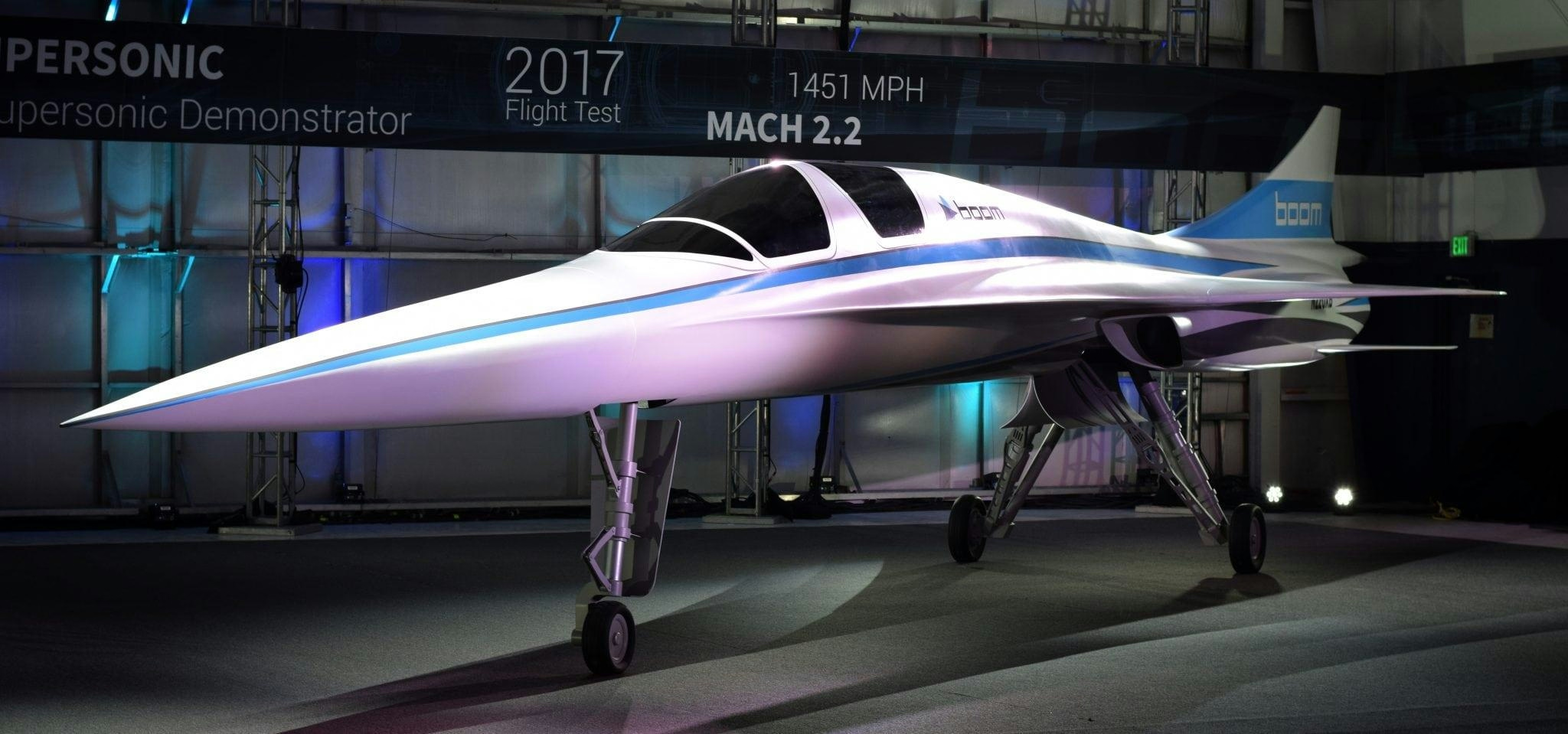
Boom CEO Highlights Potential of AI Data Centers to Boost Supersonic Flight Development
Boom Supersonic, the aerospace startup dedicated to reviving commercial supersonic travel, has embarked on an unexpected venture into the artificial intelligence sector. The company has begun marketing a variant of its turbine engine designed to power AI data centers, with its inaugural client being AI infrastructure firm Crusoe. This strategic expansion was supported by a recent $300 million funding round led by Darsana Capital Partners.
Strategic Diversification and Funding
Founder and CEO Blake Scholl underscored that this new direction will not detract from Boom’s primary objective of launching supersonic jets by the end of the decade. Speaking to Skift, Scholl described the initiative as a potential accelerant for the company’s aerospace ambitions. He suggested that revenue generated from turbine engine sales could provide crucial financial support for the development of Boom’s flagship Overture supersonic aircraft.
Challenges and Industry Skepticism
Despite the promising outlook, Boom’s pivot into powering AI data centers presents significant challenges. The company now contends with established power generation firms and must address regulatory complexities associated with adapting aviation-derived technology for data center applications. Industry experts have expressed reservations about the practicality of using aircraft engines in data centers, which demand exceptionally reliable and efficient power solutions.
Market responses to Boom’s strategy have been mixed. Some analysts question whether the company’s approach can withstand financial pressures, particularly as AI infrastructure providers face their own scaling and operational difficulties. Additionally, Boom’s entry into this space may provoke competitive reactions from traditional power companies and emerging startups targeting the expanding AI data center market.
Outlook
Despite these uncertainties, Boom remains optimistic that its engagement with AI infrastructure will ultimately expedite its core mission in aerospace. The company’s capacity to channel turbine engine sales into funding supersonic flight development will be closely monitored as both the aviation and AI industries continue to evolve.

Etihad Airways Suspends Airbus A380 Flights on Key Route

Aditya Birla Group Seeks Approval for Aircraft Leasing in GIFT City

Qatar Airways Highlights Innovation and Connectivity at Arabian Travel Market 2026

Hong Kong's Five-Year Plan Includes Andrew Fan's Aircraft Parts Processing Hub Proposal

ACIA Aero Leasing Delivers ATR72-600 to Air Nostrum

RTX Appoints Jill Albertelli as Head of Pratt & Whitney

TAT Technologies Joins Beyond Aero Hydrogen Aircraft Program

AURAK Study Highlights Barriers to Air Taxi Adoption in Emerging Economies

Xiamen Air Selects Altitude for 787 Maintenance at Heathrow

Etihad and Swissport Extend Global Partnership
