
Orchestrer les insights d’IA pour les transformer en actions

Tendances
Categories
Breeze Airways Adds Three Airbus A220-300 Aircraft to Fleet
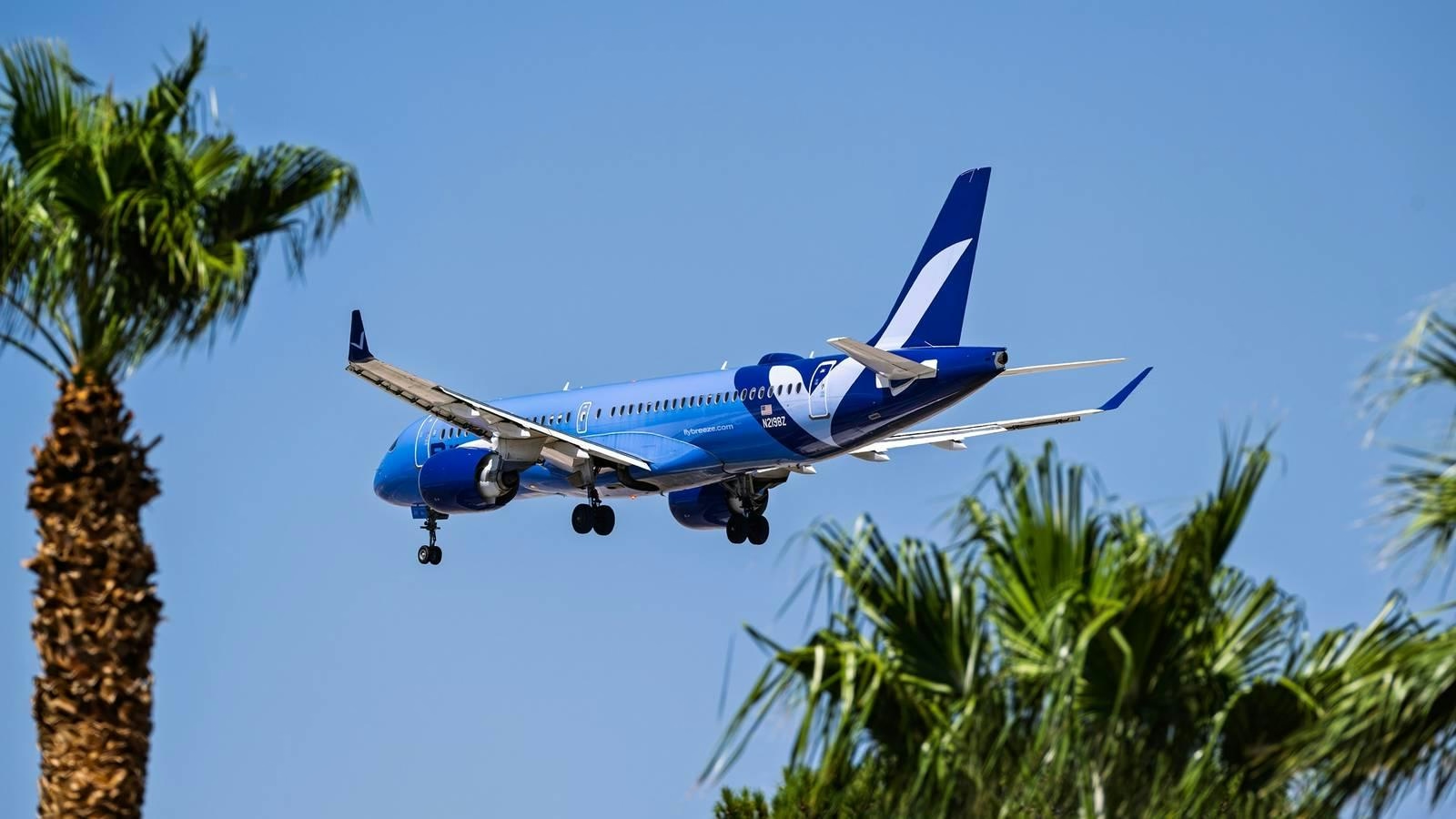
Breeze Airways Expands Fleet with Three Airbus A220-300 Aircraft
Utah-based low-cost carrier Breeze Airways has augmented its fleet with the addition of three Airbus A220-300 aircraft, delivered in February under a long-term sale and leaseback agreement with Dutch regional aircraft lessor TrueNoord. This acquisition marks TrueNoord’s inaugural entry into the A220 market, representing the largest and first Airbus model in its portfolio, which until now has been dominated by ATR, Embraer, and De Havilland Canada aircraft. Headquartered in Amsterdam with offices in Dublin, London, and Singapore, TrueNoord currently leases over 100 aircraft to more than 30 airlines worldwide.
Strategic Role of the A220-300 in Breeze’s Operations
The Airbus A220-300 plays a pivotal role in Breeze’s operational strategy, enabling the airline to efficiently serve Tier 2 and Tier 3 cities with an optimal balance of seat capacity and lower operating costs compared to larger jets. This flexibility allows Breeze to profitably operate routes that have historically been unsustainable for other carriers employing bigger aircraft. With the integration of these three new aircraft, Breeze’s active fleet has expanded to 49 planes, supporting nearly 300 year-round routes across the United States, Mexico, and the Caribbean.
Since its inaugural flight in May 2021, Breeze has experienced rapid growth, now serving 86 cities and offering low-cost flights to more than 34 states. The airline’s customer-centric policies include no change or cancellation fees, customizable booking options, fast onboard WiFi, free family seating, and a variety of purchasable meal and drink options. Breeze maintains operating bases in several cities, including Akron/Canton, Charleston (SC), Fort Myers, Hartford, New Orleans, Norfolk, Orlando, Providence, Provo, Raleigh/Durham, Tampa, and Vero Beach.
Challenges and Competitive Landscape
Despite the advantages offered by the A220-300, integrating new-generation aircraft presents operational challenges. Industry leaders, such as AerCap CEO Aengus Kelly, have highlighted that airlines operating newer fleets may encounter increased downtime due to reliability issues, potentially necessitating a larger number of aircraft to maintain schedules. This dynamic could affect Breeze’s operational efficiency and costs as it continues its expansion.
The competitive environment is also intensifying, with other low-cost carriers like QantasLink and Croatia Airlines investing in the A220-300 to modernize their fleets and enhance route networks. This trend is likely to increase competition and exert downward pressure on fares as airlines compete for market share on overlapping routes.
Founded in 2018 as Moxy Airways by industry veteran David Neeleman—known for launching WestJet, JetBlue, and Azul—Breeze’s current fleet includes 50 Airbus A220-300s alongside a mix of Embraer 190 and 195 aircraft. As Breeze and its competitors continue to invest in next-generation aircraft, the airline industry is poised for heightened competition and ongoing operational challenges amid the transition to new technologies.

Etihad Airways Suspends Airbus A380 Flights on Key Route

Aditya Birla Group Seeks Approval for Aircraft Leasing in GIFT City

Qatar Airways Highlights Innovation and Connectivity at Arabian Travel Market 2026

Hong Kong's Five-Year Plan Includes Andrew Fan's Aircraft Parts Processing Hub Proposal

ACIA Aero Leasing Delivers ATR72-600 to Air Nostrum

RTX Appoints Jill Albertelli as Head of Pratt & Whitney

TAT Technologies Joins Beyond Aero Hydrogen Aircraft Program

AURAK Study Highlights Barriers to Air Taxi Adoption in Emerging Economies

Xiamen Air Selects Altitude for 787 Maintenance at Heathrow

Etihad and Swissport Extend Global Partnership
