
Orchestrer les insights d’IA pour les transformer en actions

Tendances
Categories
Call to Release Full Transcript of AI Flight 171 Audio Recording
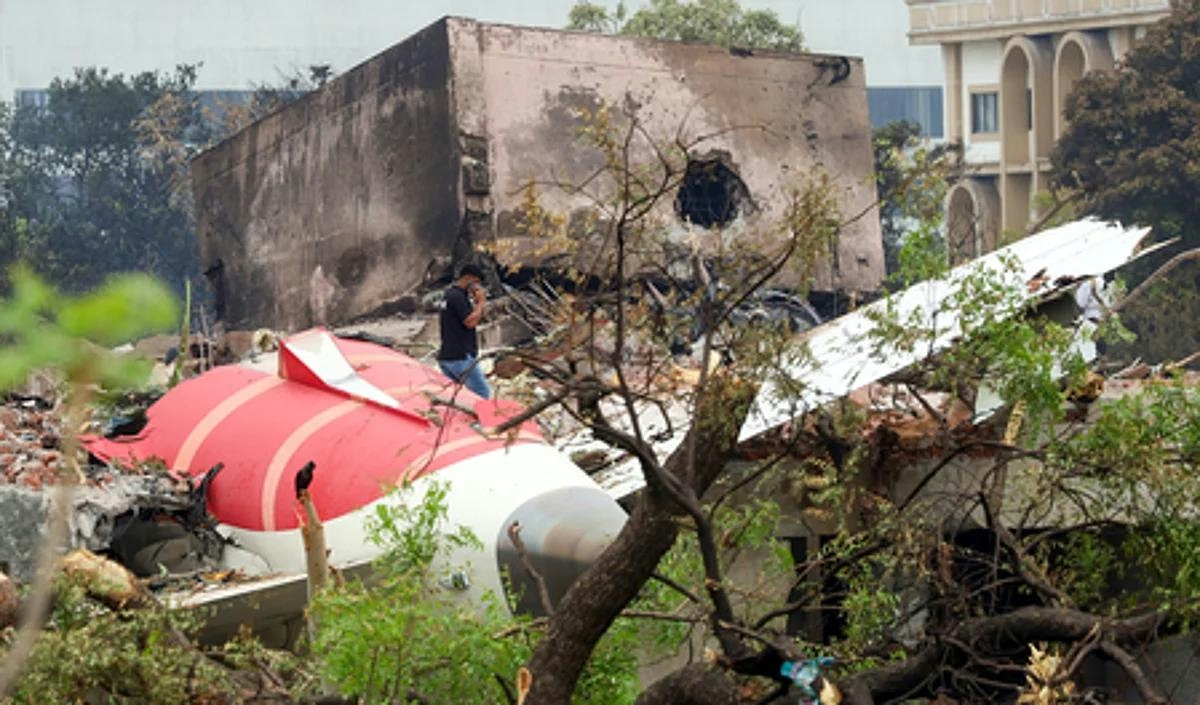
Call for Full Disclosure of AI Flight 171 Cockpit Audio Transcript
The recent incident involving AI Flight 171 has ignited a contentious debate, particularly following strong objections from the Indian pilots’ association. The association criticized the preliminary report for what it described as unfair insinuations against the flight crew. Concurrently, certain Western media outlets have speculated about possible confusion in the cockpit, implying pilot error as a contributing factor. The Aircraft Accident Investigation Bureau (AAIB), in its initial findings, appeared to suggest this possibility but refrained from making explicit accusations. Notably, the AAIB’s report included only two paraphrased sentences from the pilots’ cockpit exchange, omitting the full audio transcript and raising significant concerns about transparency.
Unresolved Operational Details and Safety Concerns
Critical details surrounding the incident remain unclear. First officer Clive Kunder, aged 32, was at the controls during the event, with the pilot-in-command, Sumeet Sabharwal, 56, overseeing operations. It has not been established which pilot questioned the other regarding the shutdown of the fuel switches. The first fuel switch was turned off at 1:38:42 pm, but the crew took approximately ten seconds to reactivate it—a delay that has attracted scrutiny. Furthermore, the fuel supply to the second engine was restored four seconds after the first, rather than simultaneously. While the first engine responded promptly, the second continued to experience difficulties. These operational uncertainties are compounded by prior concerns raised by the US Federal Aviation Administration (FAA), which had flagged potential issues with Boeing’s fuel switch locking mechanism as early as 2018. The maintenance history of the fuel switches on this specific aircraft remains undisclosed.
Calls for Transparency Amid Ongoing Investigation
There is a growing demand for the AAIB to release the full transcript of the cockpit audio. Advocates argue that only complete transparency can dispel suspicions that the preliminary report was crafted to assign blame to the pilots, who tragically cannot defend themselves. Full disclosure is also seen as essential to provide some measure of closure to the victims’ families, even as the final investigation report may take up to a year to be completed.
However, the release of the full transcript presents challenges. The investigation remains active, and legal considerations may restrict the immediate publication of sensitive audio recordings. Beyond legalities, the aviation industry is closely monitoring Air India’s response, with heightened scrutiny on its operational protocols and safety standards. Rival airlines are reportedly reviewing their own safety procedures and may increase pressure on Air India to demonstrate full transparency.
At present, no definitive conclusions have been drawn regarding the cause of the crash. The insistence on releasing the full cockpit transcript highlights the broader imperative for openness and accountability, both to ensure a fair investigation and to restore public confidence in aviation safety.

Etihad Airways Suspends Airbus A380 Flights on Key Route

Aditya Birla Group Seeks Approval for Aircraft Leasing in GIFT City

Qatar Airways Highlights Innovation and Connectivity at Arabian Travel Market 2026

Hong Kong's Five-Year Plan Includes Andrew Fan's Aircraft Parts Processing Hub Proposal

ACIA Aero Leasing Delivers ATR72-600 to Air Nostrum

RTX Appoints Jill Albertelli as Head of Pratt & Whitney

TAT Technologies Joins Beyond Aero Hydrogen Aircraft Program

AURAK Study Highlights Barriers to Air Taxi Adoption in Emerging Economies

Xiamen Air Selects Altitude for 787 Maintenance at Heathrow

Etihad and Swissport Extend Global Partnership
