image

AeroGenie — Votre copilote intelligent.

Posez toutes vos questions. Analysez tout. Agissez instantanément.

Tendances

Categories

Cerberus Acquires Aircraft Leasing Company Abelo
May 27, 2025By ePlane AI
Cerberus Acquires Aircraft Leasing Company Abelo
0
0
Aircraft Leasing
Cerberus Capital
Abelo

Cerberus Capital Management Acquires Turboprop Aircraft Lessor Abelo

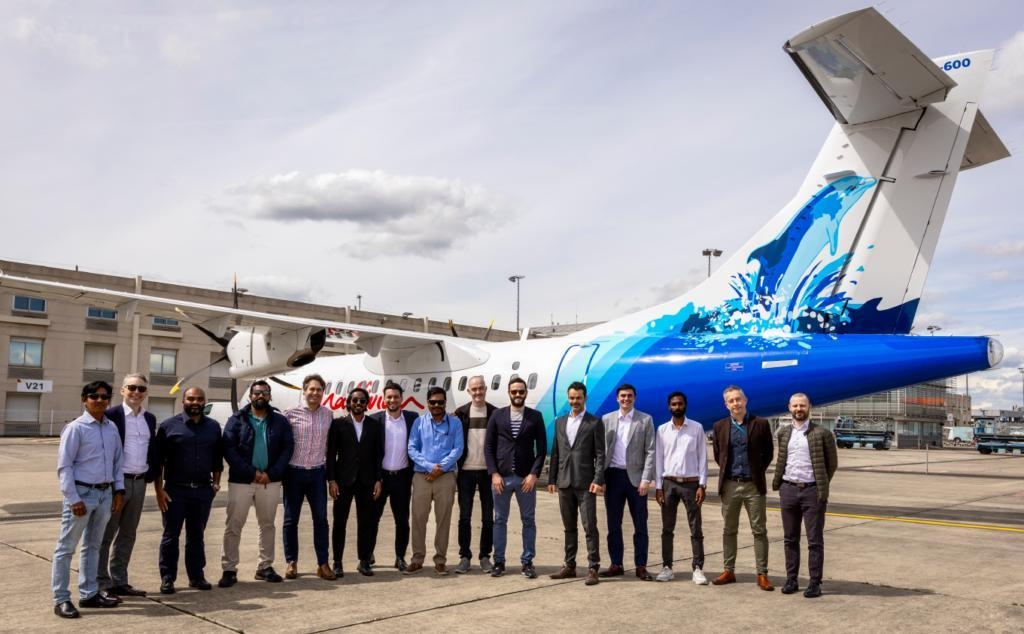
Cerberus Capital Management, L.P. has completed the acquisition of Abelo, a Dublin-based company specializing in turboprop aircraft leasing. Established in 2022 and previously owned by funds managed by Oaktree Capital Management, L.P., Abelo has quickly emerged as a notable participant in the turboprop leasing sector. The company provides a modern fleet alongside tailored leasing solutions designed specifically for regional airline operators.

Strategic Positioning and Market Implications

Abelo’s business model focuses on delivering sustainable, cost-effective, and efficient aircraft leasing services that enhance regional connectivity while aiming to reduce the environmental impact of aviation. The company benefits from a strategic partnership with ATR, a leading manufacturer of regional aircraft, and is supported by an experienced leadership team and strong investor backing.

Cerberus’ acquisition represents its entry into the regional aviation market, a development likely to attract regulatory scrutiny and attention from industry competitors. Given the potential effects on competition within the aircraft leasing sector, the transaction may undergo regulatory review. Industry analysts are closely monitoring Cerberus’ strategy to expand its turboprop portfolio, anticipating possible shifts in market dynamics. Competitors may respond with strategic initiatives to protect their market positions as Cerberus seeks to strengthen Abelo’s presence.

Future Outlook Under Cerberus Ownership

With Cerberus’ support, Abelo plans to accelerate growth, broaden its market reach, and reinforce partnerships across the regional aviation landscape. The company remains committed to operational excellence, innovation, and sustainability, positioning itself as a forward-looking provider in the sector.

Stephen Gorman, CEO of Abelo, described the acquisition as a significant milestone. He expressed pride in the company’s rapid development and gratitude for Oaktree’s role in establishing a purpose-driven platform with a clear vision for the future of regional aviation. Gorman emphasized that with Cerberus as a new partner, Abelo is well positioned to accelerate growth, deepen customer relationships, and continue delivering solutions that promote more efficient and sustainable air connectivity worldwide.

As Abelo enters this new phase under Cerberus’ ownership, it remains focused on advancing its strategic objectives and adapting to a competitive and evolving market environment. The acquisition highlights growing investor interest in regional aviation and signals potential further developments within the aircraft leasing industry.

More news
AI and AI Express Plan to Increase Capacity Amid IndiGo Flight Disruptions

AI and AI Express Plan to Increase Capacity Amid IndiGo Flight Disruptions

Air India Group Expands Capacity Amid IndiGo Flight Disruptions In response to widespread flight cancellations and delays affecting IndiGo, India’s largest airline, the Air India Group has announced plans to increase capacity on both Air India and Air India Express flights. This strategic move aims to assist passengers impacted by the disruptions, ensuring timely travel and baggage delivery despite ongoing operational challenges within the aviation sector. The government has concurrently implemented temporary airfare caps to prevent excessive price hikes during this period of instability, safeguarding consumer interests. These measures reflect a coordinated effort to mitigate the impact of IndiGo’s operational difficulties, which have caused significant disturbances across the country’s air travel network. Operational Challenges and Industry Implications For Air India Express, the surge in demand presents a complex challenge. The airline must swiftly adjust flight schedules and scale up operations, a process that could strain resources and test its capacity to maintain service standards. Industry analysts are closely monitoring AI Express’s ability to manage this increased operational load, with particular attention to its efficiency and capacity management strategies. Meanwhile, competing carriers are expected to intensify their efforts to attract passengers displaced by IndiGo’s disruptions. Airlines known for reliability may leverage this opportunity to expand their market share, launching targeted marketing campaigns to capitalize on the current turbulence. The difficulties faced by IndiGo have also highlighted systemic vulnerabilities within India’s aviation infrastructure. Constraints such as limited airport and airspace capacity, challenges in air traffic control reliability, and the sector’s adaptability to regulatory changes have all contributed to the ongoing disruptions. This situation underscores the urgent need for comprehensive improvements to enhance the resilience and stability of India’s aviation industry. As Air India Group and other airlines mobilize to accommodate affected travelers, the industry’s response in the coming days will be pivotal in restoring passenger confidence and minimizing inconvenience nationwide.
Kazakhstan and France Agree on Airbus Aircraft Deliveries

Kazakhstan and France Agree on Airbus Aircraft Deliveries

Kazakhstan and France Finalize Airbus Aircraft Delivery Agreement Amid Industry Challenges Kazakhstan and France have formalized a significant agreement for the delivery of Airbus A320neo aircraft, marking a notable advancement in their aviation partnership. The deal was confirmed during the Kazakhstan-France Business Council meeting and the 16th session of the Intergovernmental Commission on Trade and Economic Cooperation, both convened in Paris. The Kazakh Ministry of Transport announced the agreement, underscoring the strategic importance of this collaboration for Kazakhstan’s aviation sector. Details of the Airbus Delivery Agreement Kazakh Deputy Minister of Transport Talgat Lastayev took part in the discussions, which culminated in a memorandum for the delivery of an initial 25 Airbus A320neo aircraft, with an option to acquire an additional 25 units. The delivery schedule is currently planned through 2031, although both parties explored possibilities to accelerate this timeline. Talks also included the potential establishment of a joint aviation training center with Airbus, as well as discussions on aircraft leasing arrangements, reflecting a comprehensive approach to expanding Kazakhstan’s aviation capabilities. Industry Challenges and Competitive Landscape The agreement arrives amid significant challenges for Airbus. The European manufacturer recently lowered its 2025 delivery target by 4% to 790 aircraft, attributing the reduction to fuselage quality issues that have disrupted production lines. Furthermore, a substantial portion of Airbus’ A320-series fleet was grounded to implement a critical software update, complicating delivery schedules. Supply chain delays and ongoing quality concerns continue to test Airbus’ ability to fulfill its commitments, despite a surge in orders for its A350 widebody aircraft in November. In contrast, Boeing, Airbus’ primary competitor, has reported strong delivery figures, with 493 aircraft delivered so far in 2025. This marks a post-downturn high for Boeing and intensifies competition within the commercial aviation sector. Broader Cooperation and Future Prospects Beyond aircraft procurement, the Intergovernmental Commission meetings addressed wider cooperation initiatives. Discussions with TAV Airports focused on modernizing Kazakhstan’s airport infrastructure, while talks with Alstom aimed at expanding industrial collaboration. Efforts to enhance transport connectivity between Kazakhstan and France included proposals to resume the Paris-Astana air route and explore new flights between Shymkent and Nice. Despite the challenges confronting Airbus, Kazakhstan’s commitment to this agreement signals a determined effort to modernize its aviation industry and deepen economic ties with France. Both parties are expected to closely monitor industry developments as they work toward implementing the ambitious delivery schedule.
Europe’s Emerging Talent Drives Aviation Innovation

Europe’s Emerging Talent Drives Aviation Innovation

Europe’s Emerging Talent Drives Aviation Innovation A recent half-day hackathon held in Belgium showcased the ingenuity of students determined to influence the future of aviation. This event, part of the Future of Aviation Bootcamp, challenged participants to develop innovative solutions addressing the sector’s most urgent issues: digital transformation, decarbonisation, and the critical demand for highly skilled STEM professionals essential to maintaining Europe’s competitive edge on the global stage. Bridging Education and Industry The aviation sector is navigating a complex landscape marked by rapid technological advancements, stringent regulatory frameworks, and the pressing need to reduce carbon emissions. These factors, combined with regulatory challenges that can impede investment in emerging technologies such as artificial intelligence, pose significant obstacles. Meanwhile, the Asia-Pacific aviation market is accelerating rapidly, intensifying the pressure on European stakeholders to avoid falling behind due to regulatory constraints or insufficient capital allocation for innovation. The Future of Aviation Bootcamp serves as a vital conduit between education and industry by immersing students in real-world challenges. This approach cultivates a new generation of talent equipped to address the sector’s evolving demands. Liam Benham, President of EU, NATO and Government Affairs Europe at Boeing International, underscored the importance of fostering STEM skills: “By giving student innovators real-world challenges, while supporting them with mentors and practical opportunities, we help build the skills and creativity needed by our industry. We have a deep commitment to helping talented innovators from across Europe as they shape the future of flight.” Strategic Partnerships for Sustainable Growth The initiative builds upon a longstanding collaboration between JA Europe and Boeing Global Engagement, aimed at bridging the gap between academic learning and industry requirements. This partnership provides young people with practical experiences that not only address current industry needs but also enhance their employability and readiness for the workforce. Salvatore Nigro, CEO of JA Europe, emphasized the importance of empowering youth: “To secure the future of European aviation, we must empower young people to become the innovators and problem-solvers our economies need. Talent is everywhere, and initiatives like this help ensure it has the space and support to take flight.” Competitive Pressures and Market Dynamics Europe’s aviation industry faces intensified competition from the rapidly expanding Asia-Pacific market and strategic maneuvers by major airline groups such as Air France-KLM, IAG, and Lufthansa Group, particularly in their pursuit of assets like TAP Air Portugal. To sustain its leadership position, Europe must leverage its world-class scientific expertise and substantial financial resources. However, overcoming barriers to innovation and ensuring robust investment in artificial intelligence infrastructure remain critical challenges. Looking Ahead As a global aerospace leader, Boeing continues to prioritize innovation, sustainability, and workforce development through collaborations with partners like JA Europe. The latter, Europe’s largest youth-focused organisation, has empowered millions of students with hands-on learning experiences in entrepreneurship and work readiness. In an industry undergoing rapid transformation, initiatives that connect emerging talent with industry needs are indispensable. Maintaining Europe’s position at the forefront of aviation innovation will require not only fresh ideas and skills but also a regulatory and investment environment conducive to empowering the next generation of leaders.
Airbus Receives New Order for A350-1000

Airbus Receives New Order for A350-1000

Airbus Secures New Order for A350-1000 Amid Industry Dynamics Airbus has announced a new order for eight A350-1000 aircraft, its largest twin-aisle model, as part of its November 2025 orders and deliveries update. The purchase, placed on November 14 by an undisclosed customer, raises the total A350-1000 commitments for the year to 77. In addition to this widebody order, the same client also acquired two A320neo jets, bringing the year-to-date total for that model to 102 aircraft as of November 30. The practice of undisclosed orders is common within the aviation sector, often fueling speculation regarding the buyer’s identity. Such anonymity typically reflects ongoing fleet planning, strategic repositioning, or the involvement of aircraft lessors whose end customers have yet to be publicly identified. A recent example includes Etihad Airways, whose commitment to multiple Airbus models—including the A350-1000—was initially recorded under an undisclosed customer before being officially confirmed. Renewed Momentum for the A350 Program and Market Context With these latest transactions, Airbus’s net orders for 2025 have reached 700 aircraft after accounting for 97 cancellations from a gross total of 797. This strong order activity coincides with a growing airline interest in widebody jets, driven by the demand for more efficient and higher-capacity aircraft. The A350-1000 program has gained renewed momentum, with Airbus actively exploring the feasibility of a stretched variant, informally dubbed the A350-2000 or A350 Stretch. Unveiled at the 2025 Dubai Airshow, this potential model aims to fill the market gap between the current A350-1000 and Boeing’s 777X family. Airbus CEO Christian Scherer has acknowledged increasing interest from global carriers—notably beyond Emirates—in a new high-capacity aircraft, particularly as the industry moves away from four-engine designs and lacks a true superjumbo replacement. Nonetheless, developing a stretched A350 presents considerable challenges. Airbus must address the technical complexities involved in lengthening the airframe, ensure compliance with stringent certification and safety standards, and adapt to evolving customer requirements. The competitive environment is intensifying, with Boeing actively promoting its 777X variants and some airlines, including Emirates, expressing caution about committing to new Airbus models. Market responses have been varied. While carriers such as Etihad Airways and Philippine Airlines have demonstrated enthusiasm for the A350-1000, others remain cautious, carefully evaluating their options amid ongoing industry shifts. Concurrently, Airbus is managing operational challenges, including an urgent software recall affecting the A320 family due to solar radiation interference, highlighting the broader difficulties aircraft manufacturers face as they innovate and expand their product offerings. As Airbus advances its widebody strategy and contemplates new developments, the coming months will be pivotal in determining the future trajectory of its flagship A350 program and its competitive standing in the long-haul market.
The Leading Widebody Aircraft in Service Today

The Leading Widebody Aircraft in Service Today

The Leading Widebody Aircraft in Service Today The development of widebody jetliners has fundamentally transformed global air travel, with a select group of aircraft continuing to set benchmarks in efficiency, capacity, and versatility. As airlines navigate evolving market demands and technological progress, these widebody jets remain essential components of fleets worldwide. The forthcoming Boeing 777X, delayed by seven years and now expected to enter service in 2027, promises to further revolutionize long-haul aviation. Meanwhile, the current landscape of leading widebody aircraft remains dynamic and influential. Airbus A340: A Pioneer of Ultra-Long-Haul Travel The Airbus A340 is among the last quadjet airliners still operating commercially. Conceived alongside the twin-engine A330 during a period when regulations mandated four engines for extended overwater flights, the A340 pioneered ultra-long-haul routes. Its exceptional range enabled record-setting commercial flights, while passengers appreciated its quiet, spacious cabin and smooth ride. The aircraft also introduced advanced fly-by-wire controls and a glass cockpit, innovations that have since become standard across Airbus models such as the A320 and A350. Although the A340’s prominence has waned in the post-pandemic environment, some carriers, including Lufthansa, have recently reactivated A340-600s to enhance premium transoceanic services. Boeing 767: Versatility and Reliability in One Frame The Boeing 767 has established itself as one of the most dependable and adaptable widebody aircraft ever produced. It serves not only in passenger roles but also as a widely used freighter and forms the backbone of the U.S. Air Force’s modern tanker fleet. In 1985, the 767 became the first commercial twinjet certified for extended-range operations (ETOPS) over water, marking a significant milestone in long-haul aviation. Developed alongside the 757, the 767 introduced a two-person glass cockpit, eliminating the need for a flight engineer and simplifying crew training. Its supercritical wing design and high-bypass engines emphasize fuel efficiency, while the 2-3-2 economy seating configuration remains favored for its passenger comfort. Airbus A330: The World’s Most Popular Widebody The Airbus A330 family has emerged as the most widely used widebody series globally, celebrated for its operational flexibility and passenger comfort. Airlines appreciate its efficiency across both medium- and long-haul routes, a fact reflected in strong order volumes. In November alone, Airbus secured 75 new aircraft orders, largely driven by commitments to the A350 widebody. Total deliveries for 2025 have reached 657 aircraft. Emirates, the world’s largest widebody operator, continues to expand its fleet, recently increasing its A350-900 order to 73 units and committing $41.4 billion to new widebody acquisitions at the Dubai Airshow 2025. This includes 65 Boeing 777-9s and eight additional A350-900s. Emirates’ current fleet comprises 166 Airbus A380s and 103 Boeing 777s, underscoring sustained demand for high-capacity, long-range jets. Despite facing investor scrutiny over a software recall affecting 6,000 A320 family aircraft and quality concerns related to metal panels on some models, Airbus’s widebody lineup remains a foundational element of global aviation. As the industry anticipates the introduction of the Boeing 777X, these established widebody aircraft continue to connect continents, setting enduring standards for performance, reliability, and passenger experience.
The Fastest Boeing Jet Currently in Service

The Fastest Boeing Jet Currently in Service

The Fastest Boeing Jet Currently in Service The Boeing 747-8 Intercontinental: A Legacy of Speed and Efficiency The Boeing 747-8 Intercontinental (747-8I) holds the distinction of being the fastest Boeing passenger jet currently in operational service, routinely cruising at speeds between Mach 0.85 and 0.86, equivalent to approximately 570 mph (915 km/h) at cruising altitude. Known as the “Queen of the Skies,” the 747-8I continues the legacy of the iconic 747 family by combining substantial size, extended range, and enhanced fuel efficiency. These attributes make it a preferred choice for airlines aiming to optimize the economics of long-haul routes. Introduced in 2011 and entering service with Lufthansa in 2012, the 747-8I was developed as a significant upgrade to the 747-400. Boeing extended the fuselage, redesigned the wing structure, and modernized the upper deck layout to improve passenger comfort and operational performance. A key innovation was the integration of the GEnx engine, derived from the 787 Dreamliner’s powerplant but specifically optimized for the 747-8. This engine not only enhanced fuel economy but also substantially reduced noise levels. The aircraft features dual chevrons and sound-absorbing liners that lower takeoff noise, while simplified flaps contribute to quieter landings. Boeing reports that the 747-8 is 15 decibels quieter than the International Civil Aviation Organization’s (ICAO) Stage 4/Chapter 4 noise limits. Aerodynamic refinements further distinguish the 747-8I from its predecessors. Unlike the 747-400’s winglets, the 747-8I employs a deeper, thicker wing with raked wingtips, which improves fuel efficiency and reduces drag at high speeds. The scalloped trailing edges on the engine nacelles, a design first introduced on the 787, smooth airflow and contribute to noise reduction. Each GEnx engine produces approximately 66,500 pounds of thrust, enabling the aircraft to carry heavier payloads while maintaining its high cruise speed. Emerging Competition and Industry Challenges While the 747-8I has long been recognized as Boeing’s fastest passenger jet, the Boeing 787 Dreamliner now matches its top speed, cruising at around Mach 0.85. The Dreamliner’s advanced composite airframe, superior fuel efficiency, and state-of-the-art avionics have made it a popular choice among airlines operating long-haul routes. This has reinforced Boeing’s reputation for producing high-speed, efficient widebody aircraft that meet evolving market demands. Despite these technological achievements, Boeing faces significant challenges. Reports from December 2025 indicate concerns regarding the company’s delivery targets and cash flow, which have contributed to market uncertainty. Boeing’s stock has experienced volatility amid delivery delays, safety concerns, and difficulties integrating new technologies. Meanwhile, competitors are capitalizing on these setbacks by advancing their own technological capabilities and strengthening their market positions, intensifying competition in the high-speed, long-haul aviation sector. Both the Boeing 747-8I and the 787 Dreamliner exemplify the company’s commitment to speed and innovation, each capable of cruising at Mach 0.85. As Boeing navigates operational and financial pressures, these aircraft remain central to its strategic efforts and the broader contest among global aerospace leaders.
Quintana Roo Secures $24.3 Million Deal for MRO and Cargo Services

Quintana Roo Secures $24.3 Million Deal for MRO and Cargo Services

Quintana Roo Secures $24.3 Million Deal for MRO and Cargo Services Quintana Roo has become the first Mexican state to attract foreign investment under the federal government’s Development Hubs for Well-Being initiative, following the signing of a memorandum of understanding with Zenith Aeronáutica. Valued at US$24.3 million, the agreement will finance the establishment of two aviation service units in Chetumal: the Zenith MRO maintenance facility and the Zenith Cargo terminal. Strategic Investment and Regional Development This deal represents the inaugural direct foreign investment within the “Plan México” framework, championed by President Claudia Sheinbaum. Governor Mara Lezama underscored the importance of the agreement, stating that it confirms the southern region’s significant potential and positions Chetumal as a strategic hub for the aeronautical industry. She emphasized the government’s commitment to fostering projects that generate employment, strengthen new productive sectors, and ensure inclusive development. The memorandum details collaboration on deep maintenance and aircraft repair services, alongside the creation of a cargo service center designed to support routes throughout the Caribbean and Central America. Canada-based Alberta Aviation Capital Corporation (AAC), an aircraft and engine leasing company, has pledged to deploy its fleet to the new Chetumal MRO facility and utilize the cargo terminal for its regional operations. AAC Vice President Luis Sergio De Urioste Limario and Zenith Aeronáutica CEO Eduardo Mauricio Pérez joined Governor Lezama at the signing ceremony. Governor Lezama highlighted AAC’s participation as a critical factor in reinforcing the platform’s operational viability and attracting further North American clients. She cited Chetumal’s strategic location, logistics connectivity, Free Zone status, and existing Strategic Fiscal Precinct as key advantages. The city’s international airport, its connection to Tulum airport, and the upcoming Maya Train station—expected to offer cargo services—further enhance the region’s capacity for multimodal operations. Challenges and Future Prospects Despite the promising outlook, the project faces potential challenges as it enters a competitive market. Industry analysts suggest that Quintana Roo’s initiative may provoke increased scrutiny from competitors and could alter market dynamics. Rival firms might intensify efforts to secure comparable contracts or lobby for regulatory changes that could impact the state’s operations. Moreover, the successful integration of operations and adherence to stringent regulatory standards will be essential for the long-term sustainability of the new facilities. Governor Lezama described the investment as the product of close coordination with the private sector, calling it a decisive step toward enhanced competitiveness and shared prosperity for Quintana Roo. She noted that the commitment by Zenith Aeronáutica and AAC reflects confidence in the governments of the Fourth Transformation, which promote balanced development. Zenith Aeronáutica’s planned operations are expected to create hundreds of direct and indirect jobs in southern Quintana Roo. The company also intends to incorporate renewable energy solutions into both the MRO workshop and the cargo terminal, aligning with federal and state goals for sustainable industrial growth.
This Week on America Builds: Advanced Air Mobility

This Week on America Builds: Advanced Air Mobility

This Week on America Builds: Advanced Air Mobility On December 3, the U.S. House Transportation & Infrastructure Subcommittee on Aviation convened to assess the current state and future prospects of the Advanced Air Mobility (AAM) industry. AAM refers to emerging air transport technologies, including electric vertical take-off and landing (eVTOL) aircraft and autonomous systems, which are anticipated to revolutionize the aviation sector. Bipartisan Support and Industry Potential The hearing brought together prominent industry figures such as Kyle Clark of BETA Technologies, Tyler Painter from Wisk Aero, Robert Rose representing Reliable Robotics, and Gregory Pecoraro of the National Association of State Aviation Officials. Lawmakers from both parties expressed strong support for AAM, emphasizing its potential to drive innovation, enhance environmental sustainability, and improve aviation safety. Subcommittee Chair Rep. Troy Nehls (R-TX) characterized AAM and eVTOL technologies as critical advancements in transportation. Meanwhile, Committee Ranking Member Rep. Rick Larsen (D-WA) highlighted the role of electric propulsion in reducing greenhouse gas emissions and addressing climate change challenges. Gregory Pecoraro described AAM as an opportunity to fundamentally “rethink transportation,” underscoring the transformative nature of the sector. Industry witnesses outlined several key advantages of AAM. Electric-powered aircraft promise significant environmental benefits by producing fewer emissions and operating with reduced noise levels, which is particularly important for communities near major airports. Rep. Laura Gillen (D-NY) noted the importance of quieter operations for neighborhoods surrounding airports such as JFK. Additionally, automation technologies, including zero-visibility landing capabilities, were emphasized for their potential to enhance safety by minimizing human error during critical flight phases like take-off and landing. Challenges and Regulatory Concerns Despite widespread enthusiasm, the hearing also revealed notable challenges confronting the AAM industry. Some Republican members expressed reservations about increasing federal funding for the sector, reflecting broader debates over government investment in emerging technologies. Industry representatives voiced frustration with the Federal Aviation Administration’s (FAA) slow certification process for electric aircraft, warning that regulatory delays could undermine the United States’ competitive position in the global market. A particular concern raised was the phenomenon of “certification tourism,” where companies seek aircraft approvals in jurisdictions with less rigorous standards, potentially compromising safety and regulatory consistency. Critics cautioned against premature commercial operations prior to full regulatory approval, arguing that such actions could damage public trust and impede long-term progress. Global Competition and Future Outlook The global competitive landscape for AAM is rapidly intensifying. Archer Aviation recently announced plans to establish an air taxi network in Miami, while Tokyo aims to introduce commercial urban air taxis by 2030. These developments highlight the urgency for U.S. regulators and industry stakeholders to accelerate efforts in certification, infrastructure, and operational standards to maintain leadership in this emerging field. The hearing underscored a rare moment of bipartisan agreement on the promise of advanced air mobility, while also drawing attention to the significant hurdles that remain. As policymakers and industry leaders continue to navigate issues of funding, certification, and safety, the trajectory of AAM will depend on striking a careful balance between fostering innovation and ensuring public confidence.
Textron Aviation Appoints Justin Salmans Senior Vice President of Supply Chain

Textron Aviation Appoints Justin Salmans Senior Vice President of Supply Chain

Textron Aviation Appoints Justin Salmans as Senior Vice President of Supply Chain Textron Aviation has announced the appointment of Justin Salmans as its new Senior Vice President of Supply Chain, a strategic decision aimed at strengthening the company’s position amid a rapidly changing aerospace environment. In his new role, Salmans will be responsible for overseeing production, aftermarket, and defense procurement across Textron Aviation, Textron Aviation Defense, and related entities. Extensive Experience in Aerospace and Supply Chain Management Bringing over three decades of experience in aerospace and supply chain leadership, Salmans has held significant roles at GE Aircraft Engines and Spirit AeroSystems, where he honed his expertise in manufacturing, business development, and supply chain operations. Since joining Cessna in 2011, he has played a pivotal role in its integration into Textron Aviation and contributed to initiatives that have enhanced the company’s operational capabilities. Salmans’ appointment arrives at a critical juncture for Textron Aviation and the wider aerospace industry, which continues to grapple with persistent supply chain disruptions, geopolitical uncertainties, and labor shortages. His leadership is expected to bolster the company’s supply chain resilience and drive strategic growth initiatives to meet evolving customer demands. Through targeted investments and operational adjustments, Salmans aims to help Textron Aviation sustain its competitive advantage in a challenging market. Prior to rejoining Textron Aviation, Salmans served as Chief Procurement Officer at Bass Pro Shops, where he successfully managed the complex integration of Cabela’s and Bass Pro Shops. This experience underscores his capacity to lead large-scale procurement operations and execute major organizational integrations—skills that will be critical as Textron Aviation navigates ongoing industry pressures. Credentials and Industry Impact Salmans holds certifications as a Six Sigma Black Belt and Lean Manufacturing leader, reflecting his dedication to process improvement and operational efficiency. He earned an MBA from Baker University and a bachelor’s degree in industrial engineering from Kansas State University. Industry analysts suggest that Salmans’ appointment may enhance investor confidence in Textron Aviation’s supply chain management capabilities. As the company fortifies its operations, competitors are likely to respond with similar strategic hires to strengthen their own supply chain resilience. This emphasis on robust supply chain leadership aligns with a broader industry trend, as aviation firms seek to mitigate risks and maintain market competitiveness amid ongoing disruptions. Textron Aviation’s decision to appoint Salmans signals a clear commitment to operational excellence and strategic growth. His extensive background and proven leadership are expected to guide the company’s supply chain through current challenges and position it for sustained success in the future.
Delivery Delays and Canceled SAF Projects Prompt Focus on Fuel Efficiency

Delivery Delays and Canceled SAF Projects Prompt Focus on Fuel Efficiency

Delivery Delays and Canceled SAF Projects Prompt Focus on Fuel Efficiency The aviation sector is intensifying its efforts to reduce fuel consumption and carbon emissions from existing fleets amid ongoing supply chain disruptions and setbacks in sustainable aviation fuel (SAF) development. Delays in new aircraft deliveries, coupled with the cancellation of several SAF projects by oil companies, have compelled airlines and manufacturers to prioritize operational efficiency and alternative emission reduction strategies. Industry Response to Operational Challenges German flag carrier Lufthansa recently reported saving approximately 54,000 metric tons (17.9 million gallons) of jet fuel over the past three years through the implementation of more than 90 fuel-saving initiatives. This achievement underscores a wider industry trend, as airlines seek immediate and practical solutions to curb emissions in the face of uncertainty surrounding fleet renewal timelines and SAF availability. The International Air Transport Association (IATA) has highlighted the financial and environmental costs associated with inefficient fuel use, noting that airlines lose hundreds of millions of dollars annually due to jet fuel wasted during aircraft idling on the ground before takeoff. Despite advances in fuel efficiency, IATA data indicates that overall aircraft carbon emissions continue to rise, emphasizing the urgency of effective mitigation measures. Challenges and Shifts in Sustainable Aviation Fuel The delays in aircraft deliveries and the cancellation of several SAF projects have reinforced the need for direct and actionable approaches to emissions reduction. Although SAF production is gradually increasing, the industry recognizes that scaling up to meet global demand remains a significant long-term challenge. In response, airlines are investing not only in fuel-saving technologies and operational improvements but also adapting to market pressures and competitive dynamics. European carriers, in particular, are intensifying efforts to eliminate greenwashing and focus on the authentic use of sustainable aviation fuel. This shift reflects heightened regulatory scrutiny and growing consumer demand for transparency in environmental claims, underscoring the importance of credible sustainability initiatives. Governments and industry stakeholders are also advancing domestic SAF production capabilities. For example, Australia’s NSW Renewable Fuel Strategy aims to develop a sustainable aviation fuel sector that enhances both environmental outcomes and national fuel security. Similarly, new investments are emerging globally, such as Aether Fuels’ recent agreement to build a gas-to-liquid SAF plant in Singapore, signaling growing momentum in SAF infrastructure development. As airlines contend with delivery delays and evolving SAF landscapes, the pursuit of enhanced fuel efficiency and genuine sustainability measures remains a central priority for the aviation industry.
Ask AeroGenie










