
Orchestrer les insights d’IA pour les transformer en actions

Tendances
Categories
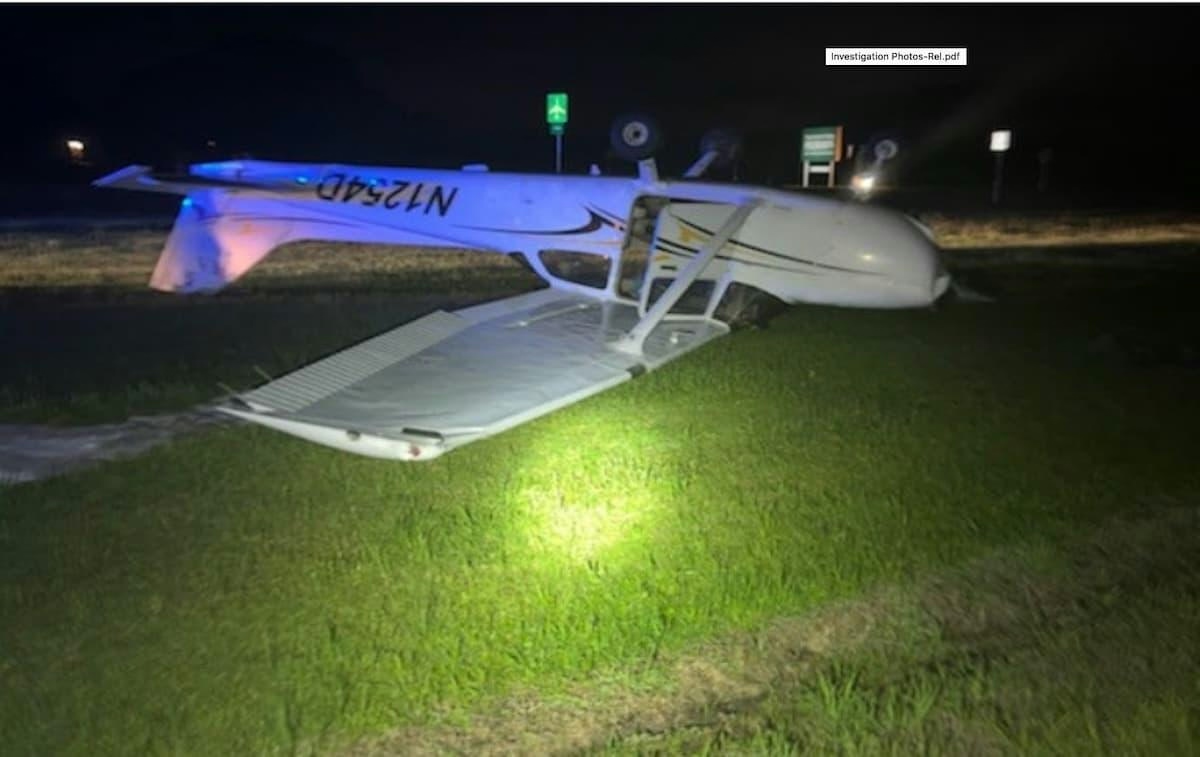
CFI Emergency Landing Highlights Consequences of Past Decisions
CFI Emergency Landing Highlights Consequences of Past Decisions
Incident Overview and Investigation Findings
A recent emergency landing involving a certified flight instructor (CFI) and a pilot in Pierson, Florida, has drawn attention to the lasting impact of prior decisions in aviation safety and training. The flight was a training exercise simulating emergency engine-out procedures in preparation for a commercial check ride. During the exercise, the pilot simulated an engine fire and power loss, initiating a steep spiral descent from 2,500 feet mean sea level (MSL) down to 1,200 feet before joining the left downwind leg of the traffic pattern.
Investigators reported that as the aircraft turned from downwind to base, the CFI abruptly assumed control when the engine oil temperature annunciator illuminated. The instructor executed a sharp turn onto final approach and declared an emergency. The Cessna 172S was high on approach, prompting the CFI to extend flaps and perform a maximum forward slip to lose altitude. Despite these measures, the aircraft touched down more than halfway down the 2,600-foot turf runway, struck a ditch, and nosed over. Both occupants sustained minor injuries, while the aircraft incurred substantial damage to its vertical stabilizer, rudder, and wing strut.
Significantly, the engine never lost power and continued running until impact. The CFI, referencing a prior emergency three months earlier involving a cracked engine case and abnormal vibrations, expressed reluctance to attempt a go-around due to concerns about potential engine failure or fire linked to the high oil temperature indication.
Post-accident examinations found no mechanical deficiencies. The engine started immediately during testing, with all parameters within normal limits. The oil temperature probe also functioned correctly. Flight data revealed that repeated throttle reductions during the simulated engine-out procedures caused a progressive increase in oil temperature, likely because the engine lacked sufficient cooling time between simulations.
The National Transportation Safety Board (NTSB) determined the probable cause to be the instructor’s failure to achieve a proper touchdown point during the precautionary landing, which resulted in a runway excursion.
Broader Implications for Aviation Safety
This incident highlights broader challenges confronting the aviation industry. Recent near-collisions and fatal accidents, including a notable event at LaGuardia International Airport, have intensified scrutiny of the aviation safety system. Critics argue that the industry often responds reactively rather than proactively in adopting new safety technologies. Such events typically trigger increased regulatory oversight, shifts in consumer confidence, and strategic adjustments by airlines and competitors, including the implementation of enhanced safety protocols and public reassurances.
The aviation sector continues to navigate the complexities of maintaining safety amid evolving risks, such as geopolitical tensions, trade restrictions, and economic fluctuations. This case underscores how decisions made during training and emergency response exercises can have significant operational and safety consequences, emphasizing the ongoing need for continuous improvement and proactive risk management within the industry.

Etihad Airways Suspends Airbus A380 Flights on Key Route

Aditya Birla Group Seeks Approval for Aircraft Leasing in GIFT City

Qatar Airways Highlights Innovation and Connectivity at Arabian Travel Market 2026

Hong Kong's Five-Year Plan Includes Andrew Fan's Aircraft Parts Processing Hub Proposal

ACIA Aero Leasing Delivers ATR72-600 to Air Nostrum

RTX Appoints Jill Albertelli as Head of Pratt & Whitney

TAT Technologies Joins Beyond Aero Hydrogen Aircraft Program

AURAK Study Highlights Barriers to Air Taxi Adoption in Emerging Economies

Xiamen Air Selects Altitude for 787 Maintenance at Heathrow

Etihad and Swissport Extend Global Partnership
