
Orchestrer les insights d’IA pour les transformer en actions

Tendances
Categories
China Reaches Key Milestone in Megawatt-Class Liquid Hydrogen Aviation Engine
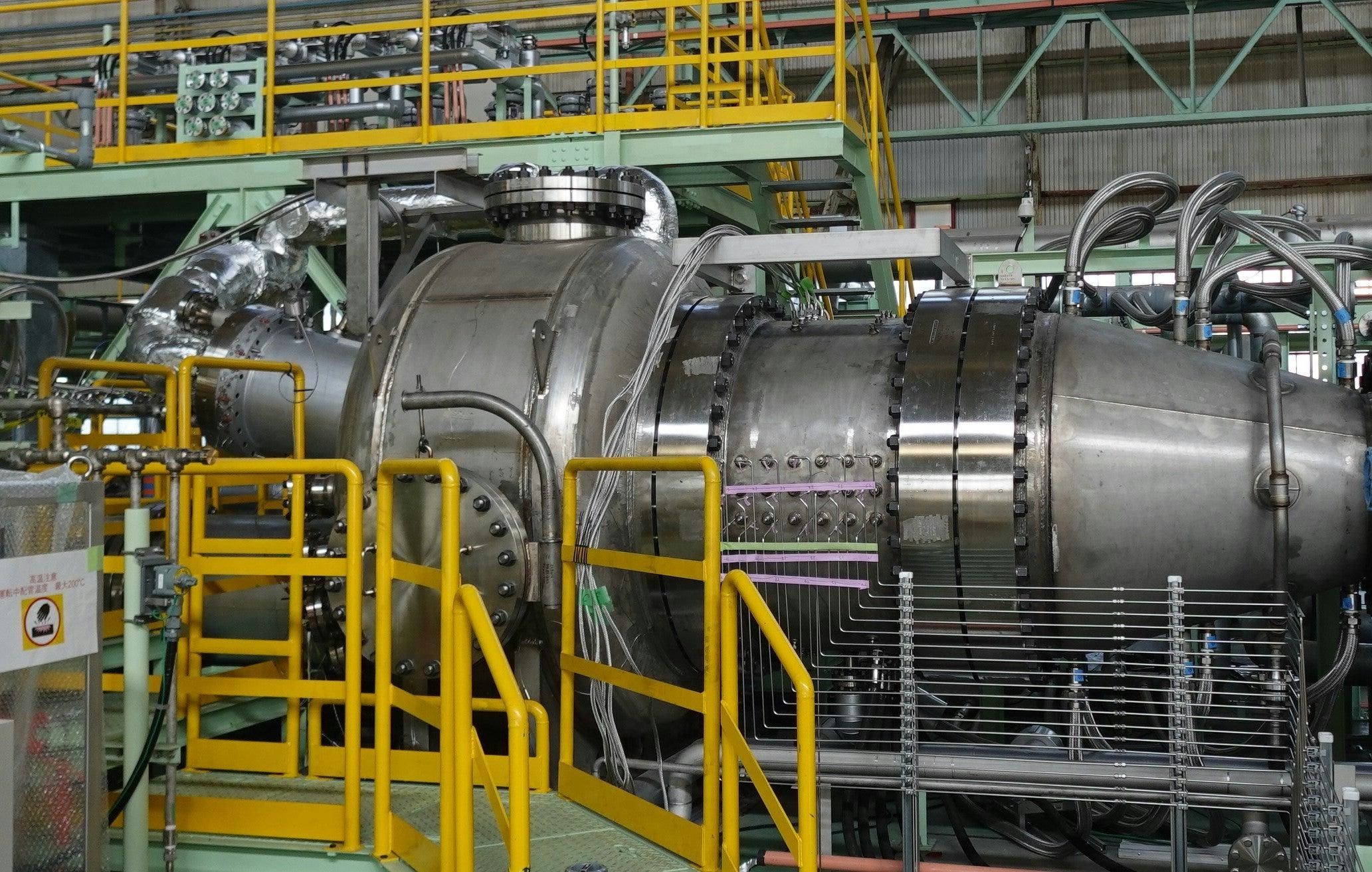
China Advances Megawatt-Class Liquid Hydrogen Aviation Engine
China has achieved a pivotal breakthrough in aviation technology with the successful ground testing of its first megawatt-class liquid hydrogen engine, the AEP100 turboprop. Developed independently by the Aero Engine Corporation of China (AECC) Hunan Aviation Powerplant Research Institute in Zhuzhou, Hunan province, the engine completed a series of ignition and performance adjustment tests, meeting all full-performance standards, according to Science and Technology Daily. Throughout the testing phase, both the engine and the liquid hydrogen transport system operated stably, with all performance indicators remaining within normal parameters.
Technological Significance and Industry Implications
This milestone represents a significant advancement in China’s liquid hydrogen turbine power technology, demonstrating the technical feasibility of employing liquid hydrogen—a fuel noted for its high energy density and zero emissions—in aviation applications. The successful tests pave the way for transitioning liquid hydrogen turbine power from experimental stages to practical engineering use. In the near term, the technology is expected to be deployed in unmanned aerial logistics and regional aviation, with plans for gradual expansion into mainline aviation sectors.
The development is poised to stimulate the growth of a trillion-yuan industrial chain encompassing green hydrogen production, hydrogen liquefaction, cryogenic storage and transport, and refueling infrastructure. Additionally, it is anticipated to drive innovation in high-end equipment manufacturing and new materials, reinforcing China’s position in advanced aviation technology and strategic emerging industries.
Global Context and Challenges Ahead
China’s progress unfolds amid intensifying global competition in hydrogen technology. As the world’s leading producer of electrolysers, China’s advancements in liquid hydrogen aviation engines are likely to attract increased scrutiny and potential resistance from international competitors. Major aerospace companies such as Airbus, which is advancing its ZEROe hydrogen fuel cell aircraft concept, may accelerate their own development efforts and forge strategic partnerships to enhance hydrogen propulsion systems. The broader geopolitical environment, including trade policies and ongoing tensions, is expected to influence market dynamics and shape responses from global aviation firms.
Despite the promise of decarbonization, experts caution that liquid hydrogen aviation engines remain largely in the exploratory phase worldwide. Wang Yanan, editor-in-chief of Aerospace Knowledge magazine, highlighted ongoing challenges related to equipment lifespan, energy density, storage costs, and safety, which currently limit the immediate application of such engines in commercial passenger aircraft. Initial uses are more likely to focus on research and specialized aviation fields, with the feasibility of emerging low-altitude applications yet to be demonstrated.
Wang further emphasized that for new technologies to supplant existing aviation engine systems, they must not only achieve decarbonization but also meet or exceed current standards in cost, performance, safety, and reliability. While China’s breakthrough marks a major step forward, significant obstacles remain before liquid hydrogen engines can become a mainstream solution in global aviation.

Etihad Airways Suspends Airbus A380 Flights on Key Route

Aditya Birla Group Seeks Approval for Aircraft Leasing in GIFT City

Qatar Airways Highlights Innovation and Connectivity at Arabian Travel Market 2026

Hong Kong's Five-Year Plan Includes Andrew Fan's Aircraft Parts Processing Hub Proposal

ACIA Aero Leasing Delivers ATR72-600 to Air Nostrum

RTX Appoints Jill Albertelli as Head of Pratt & Whitney

TAT Technologies Joins Beyond Aero Hydrogen Aircraft Program

AURAK Study Highlights Barriers to Air Taxi Adoption in Emerging Economies

Xiamen Air Selects Altitude for 787 Maintenance at Heathrow

Etihad and Swissport Extend Global Partnership
