
Orchestrer les insights d’IA pour les transformer en actions

Tendances
Categories
China Tests Hydrogen-Powered Engine in Flight, Advancing Beyond Jet Fuel
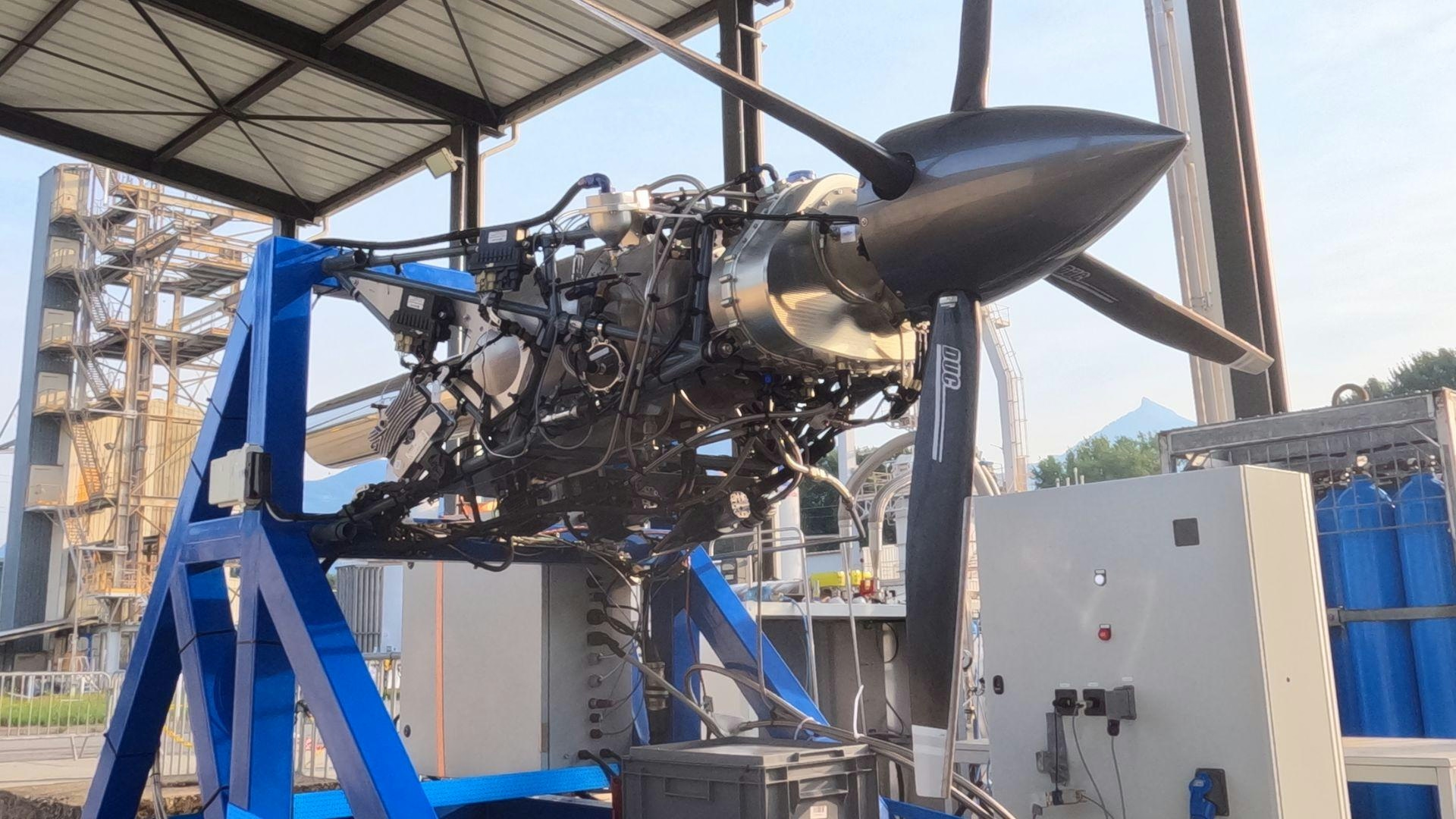
China Advances Sustainable Aviation with Successful Hydrogen-Powered Flight Test
China has marked a significant milestone in sustainable aviation by successfully conducting a test flight of an aircraft powered by a liquid hydrogen engine. The trial, held on April 4, 2026, in Zhuzhou, involved a 7.5-ton unmanned cargo aircraft that ascended to 300 meters and maintained flight for 16 minutes, covering a distance of 36 kilometers at a speed of 220 km/h. The propulsion system, known as the AEP100, was developed by the Aero Engine Corporation of China, a key entity in the country’s industrial strategy aimed at reducing carbon emissions in aviation.
Innovative Hydrogen Combustion Technology
Distinct from many Western efforts that emphasize hydrogen fuel cells, the AEP100 engine operates by burning liquid hydrogen directly in a turbine. This method closely resembles the functioning of conventional kerosene engines but differs fundamentally in its environmental impact, as it emits only water vapor during flight. The technology utilizes hydrogen derived from water rather than water itself as fuel, thereby eliminating reliance on petroleum-based fuels and producing zero carbon emissions during operation.
China’s achievement arrives at a critical juncture for the global aviation industry, which remains heavily dependent on oil and faces increasing pressure to decarbonize. Western aerospace manufacturers such as Airbus and Rolls-Royce have been exploring hydrogen propulsion through both combustion and fuel cell technologies. Airbus’s ZEROe program has tested various hydrogen propulsion concepts, recently prioritizing fuel cells as a long-term solution, while Rolls-Royce and easyJet have demonstrated hydrogen combustion in ground tests. Meanwhile, U.S. companies including Boeing continue to investigate hydrogen’s potential, acknowledging the substantial technical and infrastructural challenges that must be addressed before widespread adoption.
What sets China’s test apart is its early demonstration of hydrogen combustion in actual flight conditions, rather than limiting development to ground-based trials or focusing exclusively on fuel cells. This real-world validation, albeit on a smaller scale, underscores China’s determination to accelerate the transition away from fossil fuels in aviation.
Challenges and Strategic Implications
Despite this progress, the transition to hydrogen-powered flight faces considerable obstacles. The technology demands the establishment of extensive new infrastructure for hydrogen production, storage, and refueling at airports. Initial costs remain high, and ensuring the reliability and safety of hydrogen combustion engines presents significant engineering challenges. Nevertheless, the successful test flight is expected to stimulate greater interest among airlines and aviation stakeholders seeking sustainable fuel alternatives.
The market is already responding to these developments, with companies such as Beyond Aero advancing hydrogen-electric designs for business aircraft. China’s progress may prompt competitors to intensify their own research and investment in hydrogen technologies to maintain competitiveness in the emerging green aviation sector.
This breakthrough occurs amid global energy uncertainties characterized by geopolitical tensions, volatile oil prices, and strategic reserve releases, all of which highlight the risks associated with continued dependence on fossil fuels. For China, advancing hydrogen propulsion represents not only an environmental imperative but also a strategic effort to reduce reliance on imported energy and secure a leading position in the future of aviation.

Etihad Airways Suspends Airbus A380 Flights on Key Route

Aditya Birla Group Seeks Approval for Aircraft Leasing in GIFT City

Qatar Airways Highlights Innovation and Connectivity at Arabian Travel Market 2026

Hong Kong's Five-Year Plan Includes Andrew Fan's Aircraft Parts Processing Hub Proposal

ACIA Aero Leasing Delivers ATR72-600 to Air Nostrum

RTX Appoints Jill Albertelli as Head of Pratt & Whitney

TAT Technologies Joins Beyond Aero Hydrogen Aircraft Program

AURAK Study Highlights Barriers to Air Taxi Adoption in Emerging Economies

Xiamen Air Selects Altitude for 787 Maintenance at Heathrow

Etihad and Swissport Extend Global Partnership
