Image

AeroGenie — Votre copilote intelligent.

Posez n'importe quelle question. Analysez tout. Agissez instantanément.

Tendances

Categories

Comparing the Costs of the Boeing 787 and Airbus A330neo
November 26, 2025By ePlane AI
Comparing the Costs of the Boeing 787 and Airbus A330neo
0
0
Boeing 787 Dreamliner
Airbus A330neo
Aircraft Operating Costs

Comparing the Costs of the Boeing 787 and Airbus A330neo

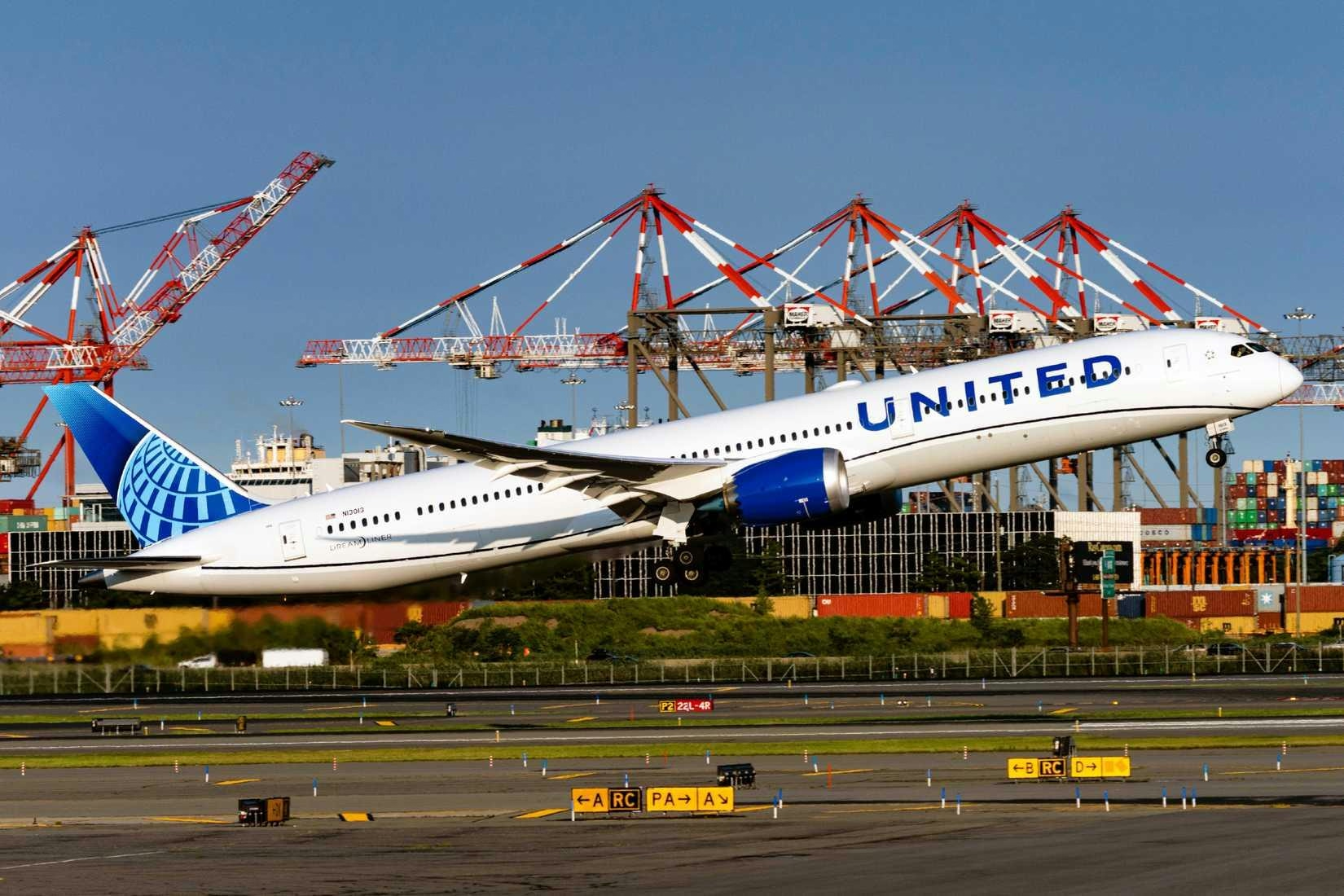
The commercial aviation industry has been shaped by the enduring rivalry between Boeing and Airbus, whose competition has established a near-duopoly since the 1990s. Within the mid-sized widebody segment, the Boeing 787 Dreamliner and Airbus A330neo families stand as the principal contenders, each striving to capture market share among airlines seeking an optimal balance of range, efficiency, and cost.

Cost Considerations Beyond the Price Tag

When airlines decide to acquire new aircraft, the sticker price represents only a fraction of the overall financial equation. Critical factors such as order volume, leasing arrangements, and long-term operating expenses significantly influence purchasing decisions. Both the 787 and A330neo are favored for their competitive range capabilities and operational economics. However, evolving market dynamics and technological advancements continue to shape airline preferences and procurement strategies.

Development and Design: A Brief Overview

Boeing initiated the 787 Dreamliner program in 2004 with the objective of achieving a 20% reduction in fuel consumption compared to the 767. The Dreamliner’s pioneering use of composite materials—accounting for 50% of its airframe—and its advanced engine technology set new benchmarks for efficiency in commercial aviation. The 787 family comprises three variants: the 787-8, an entry-level model priced at approximately $248 million; the 787-9, the most popular variant offering the longest range of 8,500 nautical miles at $293 million; and the 787-10, which provides the largest passenger capacity of up to 375 seats, priced around $338 million. The total development cost of the program is estimated at $32 billion.

In response, Airbus initially contemplated an updated version of the A330 but ultimately launched the A350 program following market feedback. Nevertheless, sustained airline interest in a re-engined A330 for mid-range routes led to the introduction of the A330neo at the 2014 Farnborough Airshow. Equipped with two Rolls-Royce Trent 7000 engines, the A330neo delivers a 14% improvement in fuel burn per seat compared to its predecessor. The A330neo family includes the A330-800neo, which offers a longer range of 8,100 nautical miles and is priced at approximately $260 million, and the A330-900neo, which accommodates up to 465 passengers and costs around $296 million. Unlike the 787, the A330neo’s development cost was considerably lower—about $2 billion—reflecting its status as an upgraded rather than a clean-sheet design.

Shifting Market Dynamics

Recent developments have begun to alter the competitive landscape between these aircraft families. Rolls-Royce has expressed increasing confidence in its Trent 1000 XE engine, citing successful upgrades on the A330neo as evidence of its ability to compete effectively against the Boeing 787. This technological progress is influencing airline procurement decisions. For instance, Etihad Airways’ recent order for both the A330-900neo and A350-1000 aircraft indicates a strategic preference for Airbus products, as airlines seldom operate both the 787 and a combination of A330/A350 aircraft simultaneously.

Furthermore, Airbus’s A320 has surpassed Boeing’s 737 in annual deliveries, signaling a broader shift in market momentum beyond the widebody segment. Concurrently, AirAsia’s plan to retire its A330 fleet within the next five to six years highlights the ongoing contest for dominance in both the widebody and narrowbody markets.

Conclusion

Although the list prices for the Boeing 787 and Airbus A330neo are broadly comparable—ranging from $248 million to $338 million depending on the variant—actual transaction prices are typically subject to negotiation. Airlines must carefully evaluate not only acquisition costs but also operational efficiency, engine performance, and evolving market trends when selecting between these two flagship aircraft families.

More news
AMETEK to Acquire First Aviation for Defense Aircraft Repairs

AMETEK to Acquire First Aviation for Defense Aircraft Repairs

AMETEK to Acquire First Aviation, Enhancing Defense Aircraft Repair Services AMETEK, Inc. (NYSE: AME) has announced a definitive agreement to acquire First Aviation Services, a leading provider of mission-critical maintenance, repair, and overhaul (MRO) services for defense and aviation sectors. First Aviation is also a manufacturer of proprietary components, specializing in advanced electronics, rotor blades, propellers, landing gear, and flight controls. The company designs and produces essential parts for a broad range of defense and aviation platforms, positioning it as a strategic addition to AMETEK’s existing MRO capabilities. David A. Zapico, AMETEK’s Chairman and Chief Executive Officer, emphasized the strategic alignment of the acquisition, noting that First Aviation’s offerings will expand AMETEK’s market reach and enhance its portfolio of component MRO services. He highlighted the complementary nature of the two companies’ products and services, which serve mission-critical applications, and expressed confidence in leveraging their combined operational, engineering, and distribution strengths to drive growth. First Aviation Services, which generates approximately $80 million in annual sales and operates six centers of excellence across the United States, will strengthen AMETEK’s position within the defense and aviation MRO market. The transaction is subject to customary closing conditions, including regulatory approvals. Competitive Landscape and Industry Context This acquisition occurs amid intensifying competition in the aerospace and defense maintenance sector. Competitors such as Talica have recently expanded through acquisitions like AeroDynamics Metal Finishing, while GE Aerospace is investing $1 billion to increase U.S. manufacturing capacity. These developments underscore the competitive pressures AMETEK faces as it seeks to broaden its market share. The broader aviation maintenance industry is also navigating challenges including elevated fuel prices, which may affect demand for MRO services, according to industry analysis from FlightGlobal. Additionally, heightened competitive vigilance is evident in recent disputes such as Archer Aviation’s complaint against Joby Aviation over alleged import violations, reflecting the strategic efforts companies are undertaking to protect and advance their market positions. About AMETEK AMETEK, with annual sales of approximately $7.5 billion, is a global provider of industrial technology solutions serving a diverse array of niche markets. The company’s growth strategy emphasizes operational excellence, technological innovation, global expansion, and strategic acquisitions, supported by disciplined cash generation and capital deployment. Founded in 1930 and publicly traded on the New York Stock Exchange for over 95 years, AMETEK is a component of the S&P 500 index. For further information, visit www.ametek.com.
Atlas Air Expands Aircraft Maintenance Division

Atlas Air Expands Aircraft Maintenance Division

Atlas Air Expands Aircraft Maintenance Division Atlas Air Service, headquartered in Bremen, Germany, has announced a significant expansion of its aircraft maintenance division, accompanied by a reinforced management structure aimed at driving strategic growth within the business jet maintenance sector. Leadership Restructuring and Strategic Focus In January 2026, the company appointed Florian Kohlmann to its executive board as head of aircraft maintenance. Kohlmann will be responsible for overseeing the strategic development, marketing, and sales activities across the entire Atlas Group in this segment. He will also maintain his role as managing director of Augsburg Air Service, facilitating close coordination among the group’s principal locations in Bremen, Augsburg, and Altenrhein, Switzerland. Complementing this leadership enhancement, Dennis Klose has been named director of Maintenance, Repair, and Overhaul (MRO) at the Bremen facility. Klose’s mandate centers on refining operational processes and increasing efficiency throughout the division. Operational Integration and Market Challenges The expanded management framework is designed to optimize processes across all sites and better align services with customer requirements. By fostering tighter collaboration between Bremen, Augsburg, and Altenrhein, Atlas Air Service aims to capitalize on synergies and elevate overall group performance. Nonetheless, the company faces several challenges as it broadens its maintenance capabilities. Ensuring regulatory compliance remains paramount, particularly as new services and technologies are integrated. The complexity of merging operations across multiple locations while upholding stringent safety and quality standards presents an ongoing challenge. Additionally, Atlas Air must contend with intense competition from established aircraft maintenance providers, who may respond by enhancing their own service offerings. Market Response and Future Outlook Despite these hurdles, the market has responded positively to Atlas Air’s expansion, with a noticeable increase in investor interest in its maintenance services. Industry analysts suggest that the company’s strategic initiatives could prompt competitors to accelerate their development efforts to preserve market share. Atlas Air Service’s leadership expresses confidence that the strengthened management team and integrated operational approach will position the group for sustained growth and improved service delivery in the evolving business jet maintenance landscape.
Trifork Acquires VION AI to Enhance Real-Time Operational Intelligence in Aviation

Trifork Acquires VION AI to Enhance Real-Time Operational Intelligence in Aviation

Trifork Acquires VION AI to Enhance Real-Time Operational Intelligence in Aviation **Switzerland, 30 April 2026** – Trifork Group AG has announced the acquisition of VION AI, a strategic move designed to accelerate the adoption of real-time operational intelligence within the aviation industry. This acquisition aims to strengthen Trifork’s aviation business by enhancing its capacity to deliver data-driven solutions that improve airline operations and customer service amid increasing cost pressures, operational complexities, and rising passenger expectations. Advancing Real-Time Data Capabilities in Aviation VION AI specializes in capturing and structuring real-time data from frontline operations, with a particular focus on aircraft turnaround processes. By leveraging artificial intelligence at the edge, VION AI’s technology reveals critical operational insights that have traditionally been delayed or remained unseen. This innovation offers airlines and airports a new level of situational awareness, enabling more informed and timely decision-making. Kristian Dollerup, Head of Aviation at Trifork, emphasized the transformative potential of this acquisition, stating, “By unlocking real-time insights from the frontline and providing actionable data and communication tools, we enable a fundamentally new way of managing turn operations—simpler, faster, and more intelligent wherever airlines fly. Together with VION AI, we aim to push the industry toward a more proactive and data-driven future.” The integration of VION AI’s capabilities with Trifork’s existing iFly4 App Suite and platform is expected to provide airlines with unprecedented, granular visibility into their operations. This enhanced real-time intelligence will facilitate immediate, data-driven actions that reduce operational complexity, lower costs, and significantly improve on-time performance. Strategic Fit and Industry Implications Michael Busch, CEO of VION AI, expressed enthusiasm about the partnership, noting, “We are incredibly excited to join forces with Trifork. From the outset, we shared a vision of making frontline operations visible and actionable in real time. Trifork’s robust platform, industry reach, and commitment to modern technology create the ideal environment to scale our solution and deliver meaningful impact globally.” Jørn Larsen, CEO of Trifork, highlighted the cultural and strategic alignment between the two companies. He remarked, “This acquisition is both a cultural and strategic fit. VION AI brings cutting-edge technology, innovative AI training methods, and deep aviation expertise. Combined with Trifork’s platforms and global reach, we anticipate strong synergies that will accelerate innovation and create immediate value for our customers.” Despite the promising outlook, integrating advanced AI technologies into existing aviation systems presents significant challenges. The process may encounter both cultural and technical hurdles as AI becomes increasingly central to enterprise infrastructure. The broader market is expected to respond with heightened interest in AI-driven operational solutions, prompting competitors to accelerate their own AI initiatives or pursue strategic partnerships to enhance their technological capabilities. This acquisition occurs amid volatility in the AI sector, with companies such as Oracle and CoreWeave facing investor concerns due to financial pressures on AI model providers, despite recent stock sell-offs. This context underscores the importance of robust integration and execution as AI technologies mature within critical industries like aviation. Trifork anticipates completing the core product integration with VION AI within approximately six weeks, enabling rapid deployment and early customer impact. The combined teams will collaborate closely to deliver measurable improvements in efficiency, operational reliability, and passenger experience for both existing and new clients. The acquisition is not expected to have a material impact on Trifork’s financial outlook in the near term.
Rolls-Royce Engine Flight Hours Recovering After Middle East Conflict

Rolls-Royce Engine Flight Hours Recovering After Middle East Conflict

Rolls-Royce Engine Flight Hours Recovering After Middle East Conflict Rolls-Royce has reported a robust recovery in engine flying hours following the recent Middle East conflict, with no lasting impact anticipated on its civil aerospace division. In its first-quarter trading update, the company confirmed that flying hours for Trent XWB engines, which power the Airbus A350, have fully returned to pre-conflict levels among regional customers. Impact on Aircraft Operations and Engine Performance The manufacturer highlighted that reductions in airline capacity have predominantly affected narrowbody aircraft, rather than the widebody jets typically equipped with Rolls-Royce engines. Consequently, the company does not expect any changes to the retirement schedule of Trent 700-powered Airbus A330s. Rolls-Royce maintains its forecast that overall large-engine flying hours will exceed 2019 levels by 15 to 20 percent this year, with first-quarter figures already reflecting a 5 to 15 percent increase. This resilience is attributed to strong growth in regions outside the Middle East, which have benefited from reallocated capacity and operational enhancements. Additionally, Rolls-Royce has upgraded more than one-third of the operational Boeing 787 fleet powered by Trent 1000 TEN engines, fitting them with improved high-pressure turbine blades designed to match the durability of the Trent 1000 XE powerplant. Orders and Market Position Recent orders for the Trent 1000 XE, including a notable agreement in April for three Boeing 787s with LATAM Airlines, have reinforced Rolls-Royce’s confidence. The company described these deals as clear evidence that its investment in durability improvements has positioned the XE engine as a competitive and order-winning product. Rolls-Royce has not revised its full-year guidance for large engine deliveries, which increased by 18 percent in the first quarter. It also does not anticipate any changes to its shop-visit profile for these engines this year or next as a result of the Middle East situation. Industry Context Within the broader aerospace industry, Safran remains optimistic despite the conflict, reporting a high volume of shop visits and a 63 percent increase in Leap engine deliveries during the first quarter. In contrast, GE Aviation has cautioned that the fallout from the Iran war could adversely affect its aftermarket business, forecasting a double-digit decline in Middle East flights and potentially reduced volumes in shop visits, spare parts, and engine sales. Nonetheless, GE is maintaining its full-year revenue and profit guidance. While the Middle East conflict has presented challenges for some aerospace manufacturers, the strong recoveries and continued growth reported by Rolls-Royce and Safran underscore the resilience of the civil aerospace sector.
SMBC Aviation Capital Increases Facility to $3.7 Billion

SMBC Aviation Capital Increases Facility to $3.7 Billion

SMBC Aviation Capital Expands Financing Facility to $3.7 Billion SMBC Aviation Capital has completed a significant upsizing of its syndicated financing facility, increasing it by US$1.7 billion to a total of US$3.7 billion. This expansion builds on the original US$2 billion facility announced in February, which was arranged to support the company’s acquisition of Sumisho Air Lease Corporation. The additional capital is intended for general corporate purposes, particularly to facilitate the integration of Air Lease’s extensive orderbook and fleet, which includes approximately 420 aircraft commitments with Airbus and Boeing. Broad Financial Support and Strategic Banking Relationships The upsized facility attracted considerable interest from the financial sector, with 33 institutions participating in the general syndication phase. This brings the total number of banks involved to 40, following the initial US$2 billion raised from seven banks during the senior syndication earlier this year. The participating banks span a wide geographic range, covering Asia, Europe, and the United States. Notably, the transaction has enabled SMBC Aviation Capital to establish 15 new banking relationships, further diversifying and strengthening its financial network. The revised facility structure increases the five-year tranche to US$2.28 billion and the seven-year tranche to US$1.42 billion, providing the company with long-term, competitively priced capital. This enhanced financial position is expected to underpin SMBC Aviation Capital’s expanded scale and growth prospects, particularly as it undertakes the complex task of integrating Air Lease’s fleet and orderbook into its operations. Navigating Industry Challenges Amid Expansion The expansion occurs within a highly competitive aircraft leasing market. The integration of Air Lease’s assets presents operational challenges, and industry observers anticipate intensified competition as other major lessors implement strategic measures to safeguard their market positions and capitalize on their own strengths. Despite these pressures, SMBC Aviation Capital’s move aligns with its strategic objective to establish itself as one of the most competitive and well-capitalized leasing platforms globally. Aisling Kenny, Chief Financial Officer of SMBC Aviation Capital, commented on the transaction, stating, “The upsizing of this facility provides long-term, competitively priced capital to support SMBC Aviation Capital’s increased scale and strong growth trajectory. This transaction also deepens our existing banking relationships, and we are pleased to welcome an additional fifteen new banking partners. The strong reception to this transaction, reflected in both its scale and the geographic diversity of participating banks, underlines the strength of our franchise and the global reach of our business.” As SMBC Aviation Capital continues to expand its global footprint, the increased facility is poised to play a crucial role in supporting its ambitions and managing the evolving dynamics of the aircraft leasing industry.
China Southern and Xiamen Airlines Order 137 Airbus Narrow-Body Jets

China Southern and Xiamen Airlines Order 137 Airbus Narrow-Body Jets

China Southern and Xiamen Airlines Place Landmark Order for 137 Airbus A320neo Jets Airbus has secured a substantial new order from China Southern Airlines, which announced on April 29 its intention to acquire 102 A320neo family aircraft for its own operations, alongside an additional 35 jets for its majority-owned subsidiary, Xiamen Airlines. This combined purchase of 137 narrow-body aircraft is valued at approximately $21.4 billion at list prices, although China Southern has negotiated undisclosed discounts. Delivery Schedule and Market Context The deliveries are slated to commence in 2028 and extend through 2032, following closely on the heels of a previous order for 96 aircraft placed in July 2022. This latest agreement arrives just weeks after China Eastern Airlines revealed an order for 101 A320neo family jets, underscoring intensifying competition among China’s leading carriers as they expand their Airbus narrow-body fleets. This surge in orders is particularly notable given Airbus’s current slowdown in A320neo deliveries, even as order activity remains robust. The extended delivery timeline for China Southern and Xiamen’s new aircraft may present challenges, especially if supply chain disruptions persist or if Airbus’s production delays continue. The evolving market dynamics suggest that airlines are prioritizing long-term fleet expansion despite potential near-term constraints. Fleet Composition and Strategic Objectives According to Airbus data, China Southern still has five unfilled A320neo orders out of 38 and 41 unfilled A321neo orders out of 99, with all nine A319neos already delivered. Xiamen Airlines maintains a backlog of 18 A320neos and 18 A321neos, totaling 22 and 20 orders respectively. Engine suppliers for the new aircraft have not yet been disclosed. Currently, China Southern operates A320neo family aircraft powered by both Pratt & Whitney Geared Turbofan and CFM LEAP-1A engines, while Xiamen’s fleet exclusively uses CFM engines. This order aligns with China Southern’s broader strategy to consolidate its presence in the Guangdong-Hong Kong-Macau Greater Bay Area, advance its footprint in the Beijing-Tianjin-Hebei region, and support China’s national “Belt and Road” initiative. The airline emphasized that the purchase “will help enhance the Group’s market competitiveness by increasing its flight capacity.” Industry Implications and Financial Performance Market analysts anticipate that this significant acquisition may trigger further orders from competitors seeking to maintain or expand their market share amid a rapidly evolving aviation landscape. Meanwhile, Boeing remains on the sidelines, reportedly awaiting potential deals as high-level negotiations between U.S. and Chinese officials continue to be postponed. Financially, China Southern reported a strong first quarter, posting a net profit of RMB 1.5 billion, a reversal from a RMB 747 million loss in the same period last year. Revenues increased by 10 percent to RMB 47.8 billion, with operating profit reaching RMB 2.5 billion. Other major Chinese carriers also demonstrated improved results: China Eastern returned to profitability with a RMB 1.6 billion net profit, and Air China reported a net profit of RMB 1.7 billion for the quarter. As Chinese airlines continue to expand their fleets and Airbus sustains strong order momentum despite delivery challenges, competition within the region’s aviation market is poised to intensify in the coming years.
China Strengthens Aviation Partnerships to Accelerate C929 Certification

China Strengthens Aviation Partnerships to Accelerate C929 Certification

China Strengthens Aviation Partnerships to Accelerate C929 Certification Enhanced Regional Collaboration for Certification China’s national aviation regulator has formalized new partnership agreements with aviation authorities in Hong Kong and Macau to expedite the type certification process for the C929, the country’s next-generation widebody airliner currently under development. Positioned to compete directly with Boeing’s 787 and Airbus’s A350, the C929 represents a significant step in China’s ambition to establish itself as a major player in the global commercial aviation market. Building on the cooperative framework established during the certification of the domestically produced C919 narrowbody jet, the Civil Aviation Administration of China (CAAC) and the Hong Kong Civil Aviation Department announced plans to deepen their collaboration on the C929’s certification. This includes expanding mutual recognition and acceptance of aircraft certification standards, as reported by state media. A dedicated agreement focusing specifically on the safety and airworthiness certification of the C929 has also been signed, underscoring the commitment to a rigorous and harmonized approval process. Under these new arrangements, the CAAC will invite technical experts from Hong Kong and Macau to participate directly in the certification activities for the C929. The partnership will also extend to the management of overseas aircraft maintenance and training bases approved by any of the three authorities. Furthermore, mutual recognition will cover environmental standards, including certification related to aviation fuel and associated chemical products, reflecting a comprehensive approach to regulatory alignment. Strategic Implications and Challenges These strengthened partnerships align with China’s broader strategy to reduce dependence on Western aerospace manufacturers and to challenge the longstanding duopoly of Boeing and Airbus. Both the C919 and C929 are central to this ambition, representing China’s drive to develop indigenous commercial airliners capable of competing on the global stage. However, accelerating the C929’s certification through expanded regional cooperation presents significant challenges. The process requires navigating complex regulatory environments across multiple jurisdictions while ensuring compliance with international aviation standards. Geopolitical factors may also influence the certification timeline and costs, particularly given China’s strategic leverage over rare earth elements essential to aerospace manufacturing. These elements are critical components in the supply chains that underpin aircraft production and certification. Market dynamics are evolving as China’s aviation sector recovers from the pandemic. Increased competition is expected, with Chinese airlines potentially adopting more aggressive pricing strategies and expanding their route networks. This intensifying competition may prompt global manufacturers and airlines to reinforce their own certification processes and partnerships to maintain market share. Airlines such as Malaysia Airlines, which are expanding routes to China and Japan, exemplify the growing competitive pressures in the region. As China advances with the C929 program, the effectiveness of these new aviation partnerships and the ability to manage regulatory and geopolitical complexities will be closely monitored by industry stakeholders and international competitors alike.
Commission Requests Input on New EU Aviation and Aeronautics Strategy

Commission Requests Input on New EU Aviation and Aeronautics Strategy

European Commission Launches Public Consultation on New Aviation and Aeronautics Strategy The European Commission has embarked on the development of a comprehensive new EU Aviation and Aeronautics Strategy, inviting input from citizens, businesses, and industry stakeholders through a public consultation. This initiative seeks to establish a robust framework aimed at strengthening Europe’s aviation and aeronautical sectors amid growing global competition and increasing uncertainty. Addressing Challenges and Strategic Priorities Europe’s aviation industry remains a vital contributor to economic growth and connectivity across the continent. However, it currently confronts a range of significant challenges, including rising energy costs, geopolitical tensions, supply chain disruptions, and intensified competition from international players. In response, the Commission’s forthcoming strategy will prioritise enhancing the sectors’ competitiveness, resilience, and decarbonization efforts, while safeguarding Europe’s strategic autonomy and industrial leadership. A key proposal under consideration involves extending the EU Emissions Trading System (EU ETS) to encompass all flights departing from European airports. This measure aims to accelerate the sector’s transition to greener operations and reduce carbon emissions. Nonetheless, it is anticipated to face opposition from some industry stakeholders concerned about the potential increase in operational costs and logistical complexities. Market reactions are expected to vary, with some organisations supporting the environmental objectives and others wary of the financial implications. The strategy also highlights the necessity of strengthening crisis management and security response mechanisms within the aviation sector. Recent developments have underscored the importance of maintaining operational stability, prompting plans to establish an EU observatory tasked with monitoring aviation fuel stocks to prevent shortages. This initiative is likely to garner support from European airports and other key actors. Ensuring Fair Competition and Fostering Innovation In the context of global competition, the strategy recognises the challenges posed by regulatory investigations and allegations of anti-competitive practices affecting both European and international companies. Notable cases include scrutiny of firms such as Joby Aviation over trade practices and allegations directed at companies like MakeMyTrip. The Commission aims to uphold a level playing field for all market participants, ensuring fair competition within the sector. Additional priorities outlined in the strategy include accelerating digital innovation, mobilising investment in emerging technologies, and maintaining the highest safety standards. The development of a skilled and motivated workforce is also emphasised as essential to sustaining the sector’s long-term success and ensuring effective connectivity for citizens and businesses throughout the European Union. The public consultation remains open until 21 May 2026 and can be accessed via the Commission’s Have Your Say portal in all official EU languages. The Commission encourages wide participation to help shape a strategy that effectively addresses the evolving needs of Europe’s aviation and aeronautics industries.
Africa’s Largest Refinery Exports Jet Fuel to Europe as Ethiopian Airlines Joins Supply Chain

Africa’s Largest Refinery Exports Jet Fuel to Europe as Ethiopian Airlines Joins Supply Chain

Africa’s Largest Refinery Begins Jet Fuel Exports to Europe Amid Growing Role in Aviation Supply Chain Africa’s largest oil refinery has commenced exporting jet fuel to Europe, marking a pivotal development in the global aviation fuel supply landscape. Ethiopian Airlines has become a direct recipient of these exports, underscoring the refinery’s expanding influence beyond the continent. At a recent energy conference in Lagos, Managing Director David Bird revealed that the refinery, now operating at full capacity following maintenance, has achieved output levels sufficient to satisfy Nigeria’s domestic demand while also supplying refined products—including jet fuel, diesel, and petrol—to international markets. Expanding Export Strategy Amid Global Supply Challenges Since the escalation of the Middle East crisis in late February, the refinery has extended its export reach to 11 African countries, reflecting a strategic shift driven by surplus production capacity. Bird emphasized the company’s commitment to prioritizing African markets, stating, “We’re proud to have done a direct delivery to Ethiopian Airlines, and we will continue to export surplus production to neighbouring African countries.” This expansion comes at a time when global aviation fuel supply chains are under strain due to geopolitical tensions and rising demand. Global oil prices have surged to approximately $112 per barrel, exerting upward pressure on aviation fuel costs worldwide. Bird highlighted that the primary challenge facing the industry is not merely price volatility but the availability of fuel, particularly in import-dependent nations such as Australia, Bangladesh, Sri Lanka, and the Philippines. “What is worse than $100 or $120 oil is no oil at all,” he remarked, underscoring the critical nature of supply security. Domestic Stability and Export Profitability Despite these global pressures, Nigeria’s domestic fuel supply has remained stable, a development attributed to significant investments led by industrialist Aliko Dangote, which have reduced the country’s dependence on imported refined products. Industry data indicates that the refinery is capitalizing on robust profit margins for jet fuel, especially in export markets. European buyers, facing peak summer travel demand, have paid a premium for Nigerian jet fuel imports, which reached record volumes of 78,000 to 96,000 barrels per day in April. While European refiners typically earn around $15 per barrel, analysts estimate that margins at the Dangote facility exceed double that figure, benefiting from access to locally sourced crude and the refinery’s large scale. According to refinery official Devakumar Edwin, the facility produces approximately 24 million litres of jet fuel daily. While a substantial portion is exported to Europe, the refinery also supplies Nigerian airlines, whose combined demand is estimated at 2.1 million litres per day. However, rising fuel prices continue to place pressure on the domestic aviation sector, with local carriers warning of potential operational disruptions as costs escalate. This situation highlights the tension between the refinery’s export-driven profitability and the affordability of fuel for domestic users. Strategic Positioning in Global Refined Fuel Markets The refinery sources much of its crude oil from the United States, other African producers, and Brazil, positioning itself as a significant player in global refined fuel markets. The surge in jet fuel exports from the Dangote Refinery has been met with positive market reactions, signaling a realignment in global aviation fuel supply chains. Competitors across Africa are now reevaluating their strategies to leverage these shifting dynamics, even as the sector remains vulnerable to geopolitical risks, fluctuating demand, and intensifying competition among refineries.
Using AI to Find Better Summer Flight Deals

Using AI to Find Better Summer Flight Deals

Using AI to Find Better Summer Flight Deals As summer vacation planning intensifies, travel experts are encouraging consumers to utilize artificial intelligence (AI) flight booking tools to secure more competitive fares and reduce travel expenses. Airlines themselves are increasingly employing AI to adjust ticket prices dynamically—sometimes on an hourly basis—responding to fluctuations in demand and competitor pricing. This rapid fare adjustment means traditional online flight searches may no longer suffice to guarantee the best deals. The Role of AI in Dynamic Pricing Farhana Nusrat, a marketing professor at the University of San Diego, explains that airlines continuously update fares throughout the day. “All of the airlines are using AI themselves, so it’s not just daily that they’re changing fares, it’s hourly,” she said. “They’re responding to demand for particular routes and to how their competitors are moving.” Given this environment, travelers can improve their chances of finding better prices by strategically employing AI-powered flight search technologies. Nusrat advises booking domestic flights between one and three months in advance, while international flights should ideally be booked two to six months ahead. She also emphasizes the importance of providing detailed information when using AI tools. “The first message you send should include all the important information—your travel dates, flexibility, and preferred airports. For example, ‘I can fly any day between June 2nd and June 21st, from San Diego or nearby airports,’” she recommended. Tools and Features for Smarter Booking Popular free AI-enabled flight search platforms such as Google Flights, Kayak, and Skyscanner offer travelers accessible options to compare fares. For those seeking enhanced capabilities, paid subscription services—typically costing between $30 and $50 annually—provide features like deal tracking and price monitoring across both major and lesser-known airlines. Some of these services offer price freezing, allowing travelers to lock in a fare for several days. Nusrat explains, “If the price drops, you can buy at the lower rate. If it goes up, you’re protected by the frozen price.” Additionally, certain platforms can identify “mistake fares,” which are rare pricing errors that can yield substantial savings if booked promptly. Industry Implications and Future Trends The growing influence of AI in travel booking is also reshaping the broader industry landscape. AI travel agents increasingly rely on third-party sources such as NerdWallet and Reddit for value comparisons, rather than directing consumers to official hotel or airline websites. This trend poses a challenge for major hotels and airlines, which risk losing control over how their offerings are presented, as AI-driven recommendations may prioritize independent reviews and aggregated deals. While consumer-facing AI adoption in the travel sector remains in its early stages, the emergence of large language models (LLMs) for trip planning represents a significant opportunity. Vertical online travel agencies (OTAs) like Agoda are exploring deeper operational integration and more sophisticated agent designs to enhance user experience. At the same time, marketers who depend solely on technology shortcuts may find themselves at a disadvantage, as travelers increasingly assess options across a wider array of sources. As AI technology continues to evolve, both travelers and industry stakeholders will need to adapt accordingly. For now, employing AI tools thoughtfully and maintaining awareness of how recommendations are generated can help consumers secure better summer flight deals and make more informed travel decisions.
line










