
Orchestrer les insights d’IA pour les transformer en actions

Tendances
Categories
CubCrafters Introduces Turbine-Powered Carbon Cub ULT
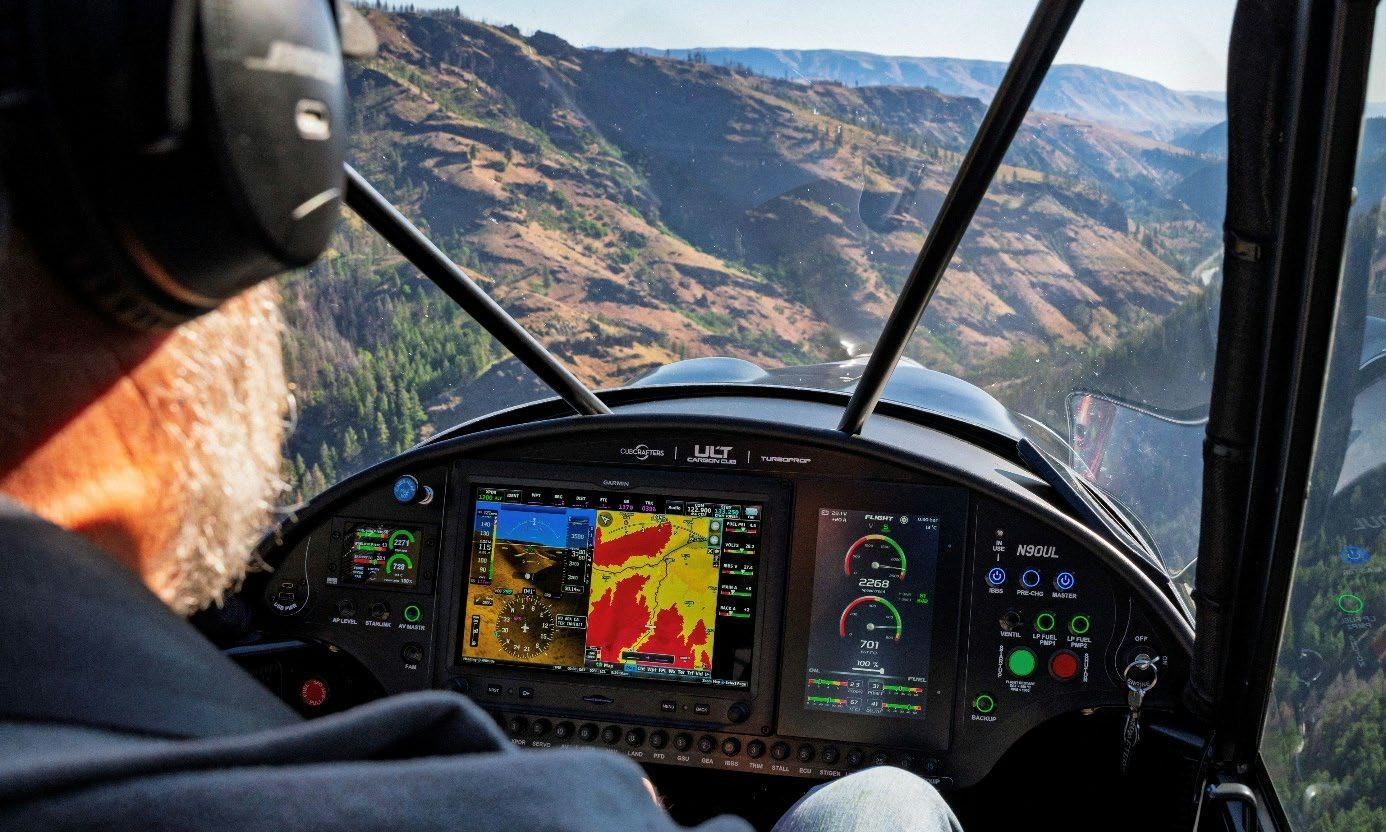
CubCrafters Introduces Turbine-Powered Carbon Cub ULT
CubCrafters has unveiled the Carbon Cub ULT, a turbine-powered advancement of its Carbon Cub UL model, marking a notable progression in backcountry aviation technology. This new iteration replaces the conventional Rotax piston engine with a French-manufactured TurboTech TP-R90 regenerative turboprop engine, establishing the ULT as one of the lightest high-performance backcountry aircraft currently available.
Drawing inspiration from the iconic Piper Super Cub, the Carbon Cub ULT is engineered to comply with the Federal Aviation Administration’s (FAA) recently introduced MOSAIC regulations. These rules broaden the scope of light-sport aircraft certification and permit alternative propulsion systems, including turbine engines. CubCrafters stresses that the ULT is not merely a faster or more powerful variant of the UL but a distinct model that integrates the smooth operation of a turbine, compatibility with Jet-A and diesel fuels, push-button engine start, and single-lever FADEC (Full Authority Digital Engine Control) management, all while maintaining performance metrics comparable to the Rotax-powered UL.
The company announced the Carbon Cub ULT on July 7, 2026, ahead of its scheduled public debut at the EAA AirVenture Oshkosh event later in the month. Customer deposits are currently being accepted, with initial deliveries expected to commence in 2027.
Designed for the MOSAIC Era
CubCrafters positions the Carbon Cub ULT as the first turboprop aircraft manufactured in the United States eligible for operation by sport pilots under the FAA’s MOSAIC framework. Central to this innovation is the TurboTech engine’s FADEC system, which automates critical functions such as fuel flow, ignition timing, engine temperature regulation, and propeller control, thereby reducing pilot workload. Engine start-up is simplified to activating the master switch and pressing a single button, with the FADEC system managing the entire sequence.
The prototype cockpit is equipped with Garmin G3X Touch avionics alongside a dedicated turbine engine display. The TurboTech engine employs a regenerative cycle design that recovers exhaust heat to preheat intake air prior to combustion. This approach enhances fuel efficiency, aiming to achieve consumption rates comparable to modern piston engines while retaining the operational advantages of turbine power and the ability to run on Jet-A or diesel fuel.
TurboTech, founded by former Safran engineers, has developed its engines over several years, with applications in European ultralight aircraft and helicopters. The TP-R90 and TP-R150 models are rated at 160 horsepower with a combined turbine and electric boost. Current specifications for the TP-R150 indicate a maximum output of 141 horsepower, an eco-cruise fuel burn of approximately five gallons per hour at 50 percent power, a weight near 190 pounds, and a time between overhauls of 3,000 hours.
Market and Industry Outlook
The introduction of the Carbon Cub ULT represents a significant technological advancement, yet CubCrafters faces several challenges in bringing the aircraft to market. Regulatory approval processes, competition from established manufacturers, and market acceptance of this novel design will be critical factors influencing its success. While traditional ultralight aviation enthusiasts may initially approach the turbine-powered ULT with caution, the aircraft’s innovative features are expected to appeal to backcountry pilots seeking enhanced technology and operational versatility.
Competitors within the industry may respond by intensifying marketing efforts for their existing models or accelerating the development of turbine-powered ultralight aircraft to maintain their market positions. Despite these challenges, the Carbon Cub ULT positions CubCrafters at the forefront of a new chapter in light-sport and backcountry aviation, combining contemporary engineering advancements with a legacy of proven performance.

Hong Kong's Five-Year Plan Includes Andrew Fan's Aircraft Parts Processing Hub Proposal

ACIA Aero Leasing Delivers ATR72-600 to Air Nostrum

RTX Appoints Jill Albertelli as Head of Pratt & Whitney

TAT Technologies Joins Beyond Aero Hydrogen Aircraft Program

AURAK Study Highlights Barriers to Air Taxi Adoption in Emerging Economies

Xiamen Air Selects Altitude for 787 Maintenance at Heathrow

Etihad and Swissport Extend Global Partnership

Sepehran Airlines B737 Returns to Mashhad After Tyre and Engine Issues

Etihad Deploys Widebody Fleet to Meet Strong Demand

Korean Air Finalizes $36.2 Billion Deal with Boeing
