
Orchestrer les insights d’IA pour les transformer en actions

Tendances
Categories
Cyberattack on Collins Aerospace Disrupts Operations at European Airports
Cyberattack on Collins Aerospace Disrupts Operations at European Airports
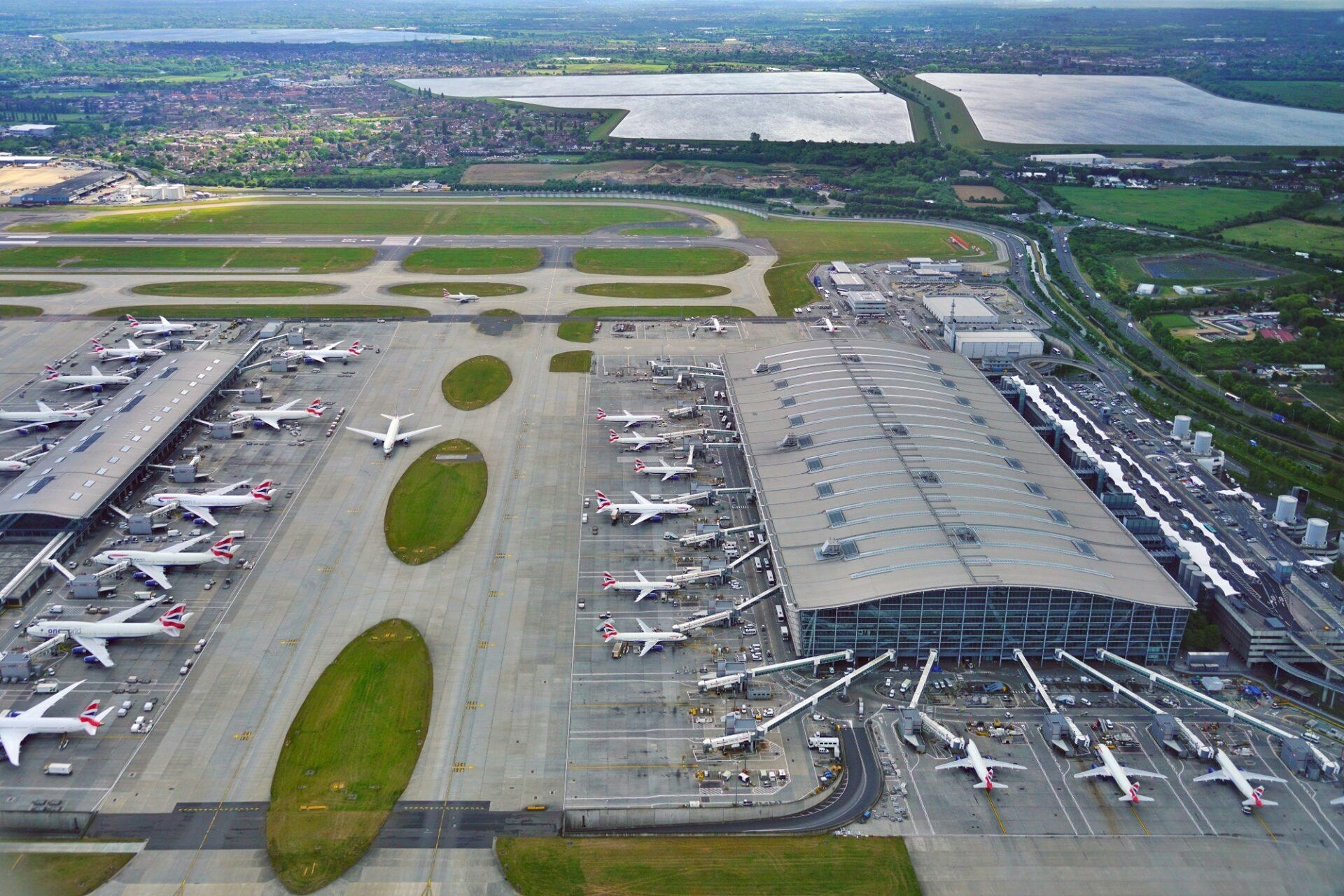
A significant cyberattack targeting Collins Aerospace’s MUSE check-in and boarding software caused widespread disruption across major European airports over the weekend. The incident, which began late on Friday, September 19, 2025, resulted in extensive delays, cancellations, and long queues at key hubs including London Heathrow, Brussels, and Berlin Brandenburg airports.
Disruption and Response
Collins Aerospace, a subsidiary of RTX, confirmed the event as a “cyber-related disruption” affecting its multi-user system responsible for electronic check-in, bag tagging, and boarding processes. The attack compelled airports to revert to manual procedures, considerably slowing passenger processing and prompting advisories for travelers to verify their flight details and arrive earlier than usual.
Heathrow Airport experienced the most severe impact, with operations gradually returning to normal by the morning of September 21. Despite the resumption of most flights, manual processing continued to cause delays. Brussels Airport warned of ongoing schedule disruptions, while Berlin Brandenburg maintained contingency measures, reporting moderate delays throughout the weekend.
Broader Implications and Investigations
The disruption extended across multiple European airports, highlighting the vulnerabilities inherent in shared passenger-processing platforms utilized by aviation technology providers. Airport authorities emphasized that the incident was confined to a vendor platform and did not compromise airport safety systems or air traffic control operations. Nevertheless, the outage underscored the operational risks posed by cyberattacks on critical infrastructure.
Investigations have been launched by authorities in several countries to determine the origin of the attack and assess the resilience of the affected systems. Collins Aerospace and RTX have refrained from releasing detailed technical information beyond confirming the cyber incident.
By midday on September 21, delays had eased at Heathrow, remained moderate at Berlin, and were improving but still significant at Brussels, according to airport updates and aggregated flight-status data. Airlines continued to assist passengers whose check-in was processed manually during the outage.
This episode has drawn renewed attention to the cybersecurity challenges facing the aviation sector, particularly the risks associated with dependence on centralized technology platforms. While flight safety was not directly compromised, the loss of automated check-in capabilities triggered increased staffing demands, gate holds, and cascading delays across airline networks, illustrating the broader operational vulnerabilities exposed by such cyberattacks.

Etihad Airways Suspends Airbus A380 Flights on Key Route

Aditya Birla Group Seeks Approval for Aircraft Leasing in GIFT City

Qatar Airways Highlights Innovation and Connectivity at Arabian Travel Market 2026

Hong Kong's Five-Year Plan Includes Andrew Fan's Aircraft Parts Processing Hub Proposal

ACIA Aero Leasing Delivers ATR72-600 to Air Nostrum

RTX Appoints Jill Albertelli as Head of Pratt & Whitney

TAT Technologies Joins Beyond Aero Hydrogen Aircraft Program

AURAK Study Highlights Barriers to Air Taxi Adoption in Emerging Economies

Xiamen Air Selects Altitude for 787 Maintenance at Heathrow

Etihad and Swissport Extend Global Partnership
