
Orchestrer les insights d’IA pour les transformer en actions

Tendances
Categories
Delta 737-900ER Returns to Atlanta After Engine Issue
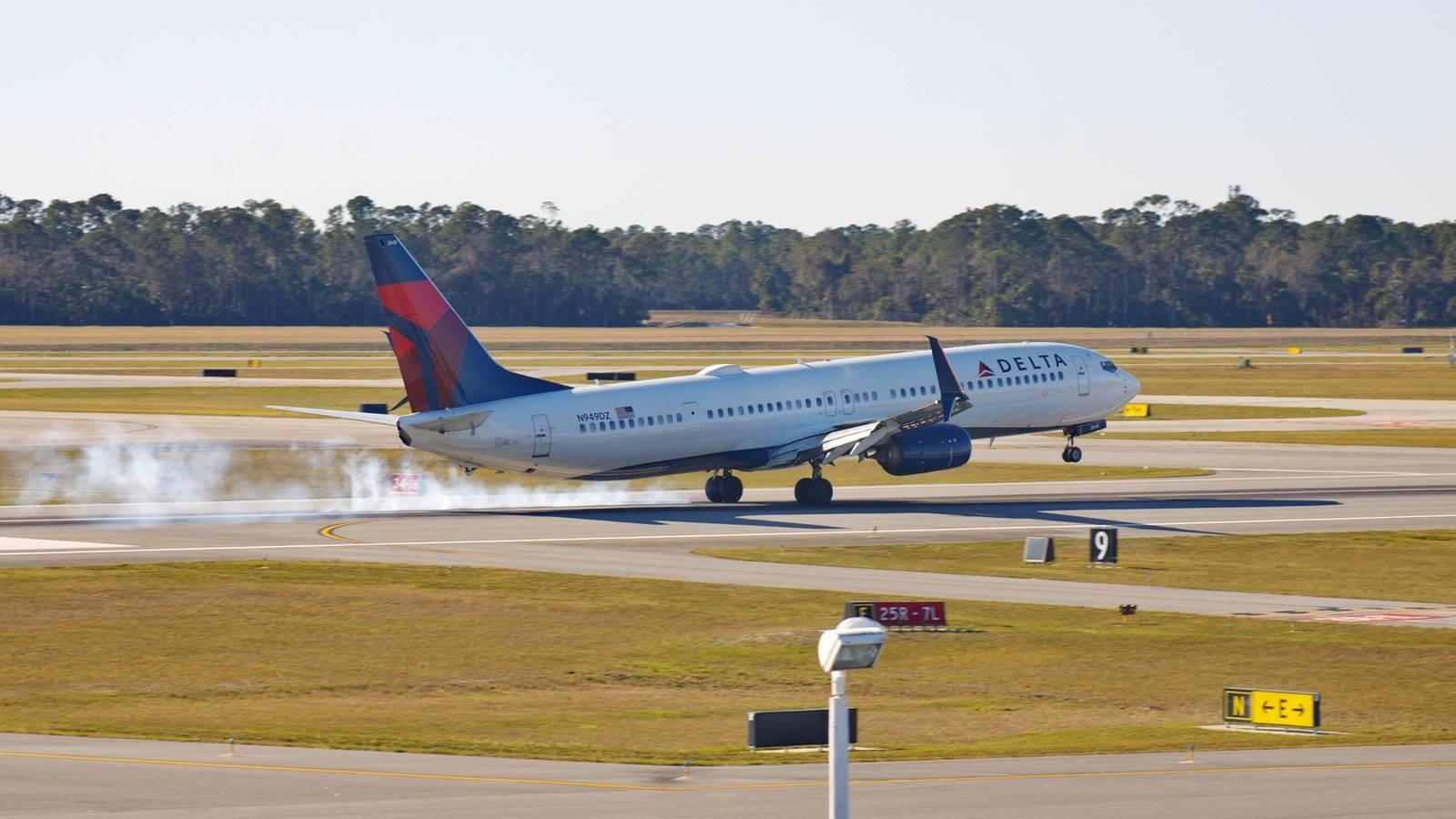
Delta 737-900ER Returns to Atlanta Following Engine Malfunction
A Delta Air Lines Boeing 737-900ER was compelled to return to Hartsfield-Jackson Atlanta International Airport (ATL) on the evening of Thursday, August 20, after encountering a mechanical issue shortly after departure. The flight, DL1518, was en route to Raleigh–Durham International Airport (RDU) with 173 passengers on board when the problem arose. The aircraft landed safely back in Atlanta, where passengers were transferred to a replacement plane to continue their journey.
Incident Details and Response
Flight DL1518 departed ATL at 7:42 PM, approximately eight minutes behind schedule. Within 20 minutes of takeoff, the flight crew identified a malfunction in the aircraft’s right engine and promptly decided to return to Atlanta. The plane, registered as N938DZ, touched down at ATL around 8:00 PM without incident. Passengers disembarked and were accommodated on a substitute aircraft, which departed at 10:53 PM and arrived in Raleigh at 11:54 PM, roughly three hours later than originally planned.
Delta confirmed that the issue involved the right engine, which has since been removed from service for repairs. The airline issued a statement emphasizing its commitment to safety, stating, “Nothing is more important than the safety of our people and customers. We apologize to our customers for this disruption in their travels.”
Aircraft Background and Operational Implications
The affected aircraft, N938DZ, is a 14.5-year-old Boeing 737-900ER originally delivered to Lion Air in 2012 before joining Delta’s fleet in September 2022. Configured with 12 First Class, 24 Delta Comfort+, and 137 Main Cabin seats, the aircraft is powered by two CFMI CFM56-7B27 engines. During the incident, the plane did not exceed an altitude of 4,000 feet before the decision to return was made. The replacement flight was operated by a similar aircraft, N939DZ.
This event underscores several operational challenges for Delta. The crew’s swift communication with air traffic control was critical to ensuring a safe return amid the congested Atlanta airspace. The incident may also trigger heightened regulatory scrutiny and prompt reviews of Delta’s maintenance and safety procedures. Market reactions could include temporary pressures on Delta’s stock price as investors weigh concerns over safety and reliability.
Competitors such as American Airlines may leverage this incident to highlight their own safety records and operational efficiency. Meanwhile, the aviation sector is currently facing increased demand for older engine models, which has led to extended maintenance periods. This trend could further complicate Delta’s efforts to expedite repairs and return affected aircraft to service.
N938DZ is expected to resume scheduled operations on Saturday, August 22, with a planned nonstop flight to Pensacola (PNS) as flight DL2807, contingent upon the completion of all necessary repairs and safety inspections.

Etihad Airways Suspends Airbus A380 Flights on Key Route

Aditya Birla Group Seeks Approval for Aircraft Leasing in GIFT City

Qatar Airways Highlights Innovation and Connectivity at Arabian Travel Market 2026

Hong Kong's Five-Year Plan Includes Andrew Fan's Aircraft Parts Processing Hub Proposal

ACIA Aero Leasing Delivers ATR72-600 to Air Nostrum

RTX Appoints Jill Albertelli as Head of Pratt & Whitney

TAT Technologies Joins Beyond Aero Hydrogen Aircraft Program

AURAK Study Highlights Barriers to Air Taxi Adoption in Emerging Economies

Xiamen Air Selects Altitude for 787 Maintenance at Heathrow

Etihad and Swissport Extend Global Partnership
