
Orchestrer les insights d’IA pour les transformer en actions

Tendances
Categories
Delta Air Lines Orders 31 Additional Airbus Widebody Aircraft
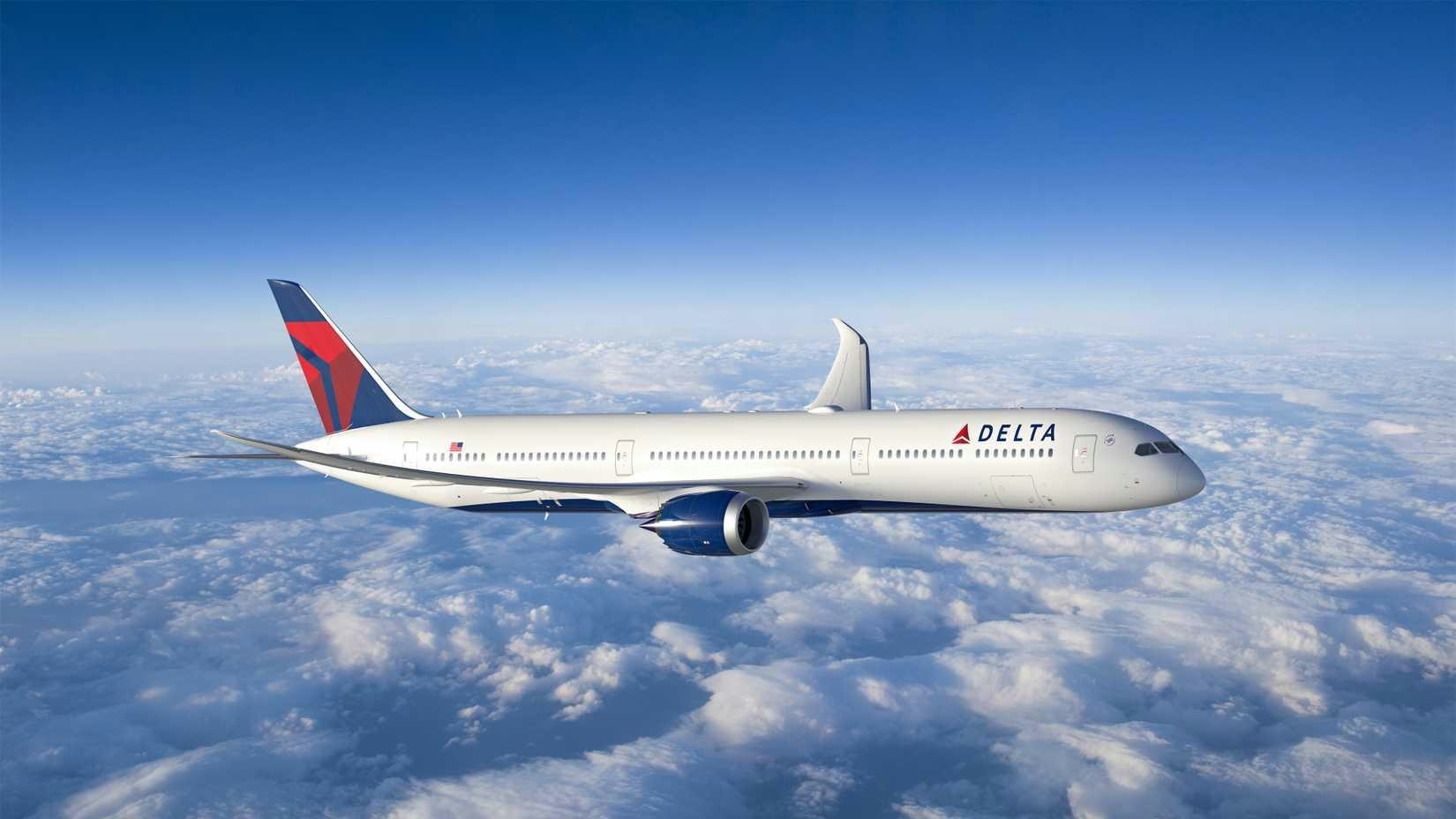
Delta Air Lines Expands Widebody Fleet with Major Airbus Order
Delta Air Lines has confirmed a firm order for 31 additional Airbus widebody aircraft, consisting of 16 A330-900s and 15 A350-900s. This acquisition forms a key part of the airline’s broader fleet modernization strategy aimed at enhancing its long-haul operational capabilities amid an increasingly competitive international aviation market. The agreement also includes options for 20 more aircraft, reflecting Delta’s long-term commitment to expanding and renewing its widebody fleet.
Strengthening Airbus Fleet Presence
Upon delivery of the new aircraft, Delta’s widebody fleet will comprise 55 A330neos and 79 A350 jets, solidifying its status as one of the largest operators of Airbus widebodies globally. The airline currently operates a diverse Airbus fleet exceeding 500 aircraft, ranging from the smaller A220 to the long-range A350-900. Additionally, Delta maintains a substantial backlog of approximately 200 Airbus planes, including the larger A350-1000 variant, underscoring its ongoing investment in Airbus technology.
The A330neo models ordered are equipped with the latest Rolls-Royce Trent 7000 engines, enabling non-stop flights of up to 8,100 nautical miles (15,000 kilometers). These aircraft deliver a 25% improvement in fuel efficiency, CO₂ emissions, and operating costs compared to previous generation models. Meanwhile, the A350-900 is engineered for ultra-long-haul routes, capable of flying up to 9,700 nautical miles (18,000 kilometers), setting new benchmarks for intercontinental travel efficiency.
Both aircraft types are certified to operate with up to 50% Sustainable Aviation Fuel (SAF), aligning with Airbus’s ambition to achieve full SAF capability across its fleet by 2030. As of December 2025, the A350 Family had amassed over 1,500 orders from 67 customers worldwide, while the A330 Family had secured more than 1,900 orders globally.
Market Context and Challenges
Delta’s substantial investment coincides with similar fleet expansion efforts by other major U.S. carriers, including United Airlines and American Airlines, as they seek to meet rising demand for international travel. This intensifying competition is likely to accelerate fleet renewal initiatives across the industry and may influence negotiations with aircraft manufacturers.
Despite positive market reception and investor confidence in Delta’s growth strategy, the airline faces potential headwinds. Ongoing supply chain disruptions and escalating fuel prices pose risks to delivery schedules and operational costs. Nonetheless, Delta’s latest order underscores its determination to maintain a competitive advantage in the global aviation sector while advancing its sustainability goals.

Etihad Airways Suspends Airbus A380 Flights on Key Route

Aditya Birla Group Seeks Approval for Aircraft Leasing in GIFT City

Qatar Airways Highlights Innovation and Connectivity at Arabian Travel Market 2026

Hong Kong's Five-Year Plan Includes Andrew Fan's Aircraft Parts Processing Hub Proposal

ACIA Aero Leasing Delivers ATR72-600 to Air Nostrum

RTX Appoints Jill Albertelli as Head of Pratt & Whitney

TAT Technologies Joins Beyond Aero Hydrogen Aircraft Program

AURAK Study Highlights Barriers to Air Taxi Adoption in Emerging Economies

Xiamen Air Selects Altitude for 787 Maintenance at Heathrow

Etihad and Swissport Extend Global Partnership
