
Orchestrer les insights d’IA pour les transformer en actions

Tendances
Categories
Dornier Technology Increases Maintenance Capacity at Clark MRO
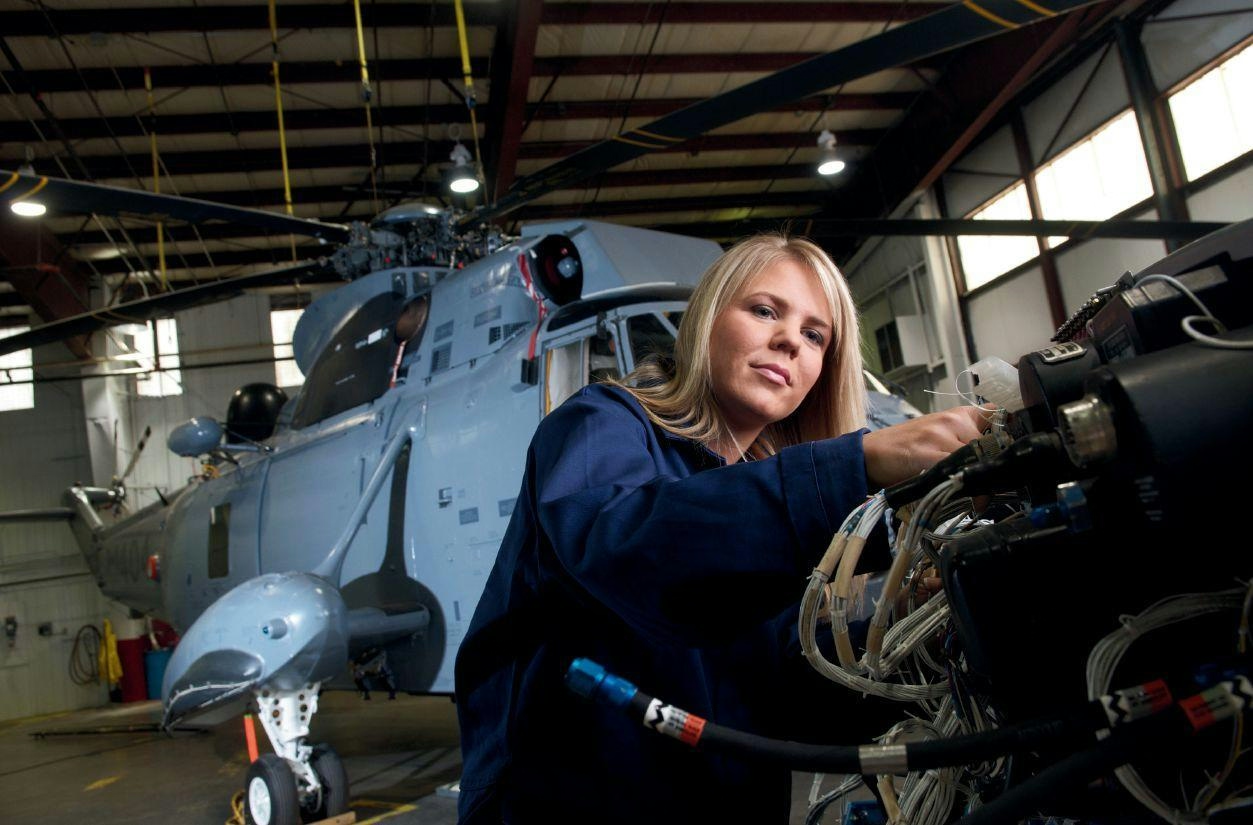
Dornier Technology Expands Maintenance Capacity at Clark MRO Amid Rising Regional Demand
Dornier Technology is undertaking a significant expansion of its maintenance, repair, and overhaul (MRO) operations at Clark International Airport in the Philippines. This move aims to address the escalating demand for aircraft maintenance services across Asia, driven by the rapid growth of airline fleets and a persistent shortage of hangar space in the region. The company has recently commissioned a second hangar and plans to inaugurate a third facility by the end of the third quarter of 2026, reflecting the mounting pressure on the regional MRO infrastructure.
Expansion of Facilities and Capabilities
Currently, Dornier Technology operates Hangar 1, a 4,705 square meter facility capable of accommodating either one narrow-body aircraft or two turboprops simultaneously. The newly operational Hangar 2 adds 4,401 square meters of space, allowing the company to service up to four turboprop aircraft at once. The forthcoming Hangar 3 will provide an additional 4,705 square meters, with capacity for two narrow-body aircraft. In addition, Dornier Technology has access to a fourth hangar measuring 2,250 square meters, designed to handle two turboprop aircraft. This expansion from a single hangar to three represents a 194% increase in capacity, rising to 241% if the fourth hangar is fully utilized.
A notable enhancement accompanying this expansion is the introduction of full aircraft painting capabilities for narrow-body and ATR aircraft. This new service will enable Dornier Technology to offer operators and aircraft lessors a comprehensive maintenance and repaint solution within a single location. Chief Executive Officer Nick Gitsis highlighted that aircraft lessors often face challenges in finding MRO providers capable of delivering both heavy airframe maintenance and full repainting services, positioning Dornier Technology as a more competitive and integrated service provider.
Market Context and Competitive Landscape
The company’s increased capacity arrives amid a highly competitive market environment. According to FTAI Aviation, approximately 12% of the maintenance market for CFM56 and IAE V2500 engines—valued at $25 billion annually—remains contested, underscoring the critical importance of competitive pricing strategies. Furthermore, the business jet maintenance segment is projected to reach $10.4 billion by 2032, which is expected to intensify competition among MRO providers. Industry analysts anticipate that Dornier Technology’s expansion may prompt rival firms to respond through strategic partnerships, enhanced service offerings, or by leveraging their existing market share to counter the company’s growing presence.
Gitsis emphasized that the expansion strategy is primarily driven by strong demand from Asian carriers, particularly low-cost airlines in Southeast Asia and operators in Northeast Asia, where ongoing labor shortages continue to constrain maintenance capacity. As the regional MRO landscape evolves, Dornier Technology’s expanded footprint and enhanced service portfolio are poised to play a pivotal role in meeting the needs of Asia’s rapidly growing aviation sector.

Etihad Airways Suspends Airbus A380 Flights on Key Route

Aditya Birla Group Seeks Approval for Aircraft Leasing in GIFT City

Qatar Airways Highlights Innovation and Connectivity at Arabian Travel Market 2026

Hong Kong's Five-Year Plan Includes Andrew Fan's Aircraft Parts Processing Hub Proposal

ACIA Aero Leasing Delivers ATR72-600 to Air Nostrum

RTX Appoints Jill Albertelli as Head of Pratt & Whitney

TAT Technologies Joins Beyond Aero Hydrogen Aircraft Program

AURAK Study Highlights Barriers to Air Taxi Adoption in Emerging Economies

Xiamen Air Selects Altitude for 787 Maintenance at Heathrow

Etihad and Swissport Extend Global Partnership
